
En el camino de la música, la verdadera esencia y seguridad que le da un artista es estar frente a su instrumento. Cuando todo fluye, cuando las notas encajan y la melodía avanza con naturalidad, su presencia transmite seguridad. Sin embargo, cuando llega el error, la presión o el silencio incómodo prefieren esconderse o incluso evitar enfrentarse a la pieza. Es ahí cuando comienza a percibirse que, quizás, no es realmente pianista.
Un verdadero pianista no solo ejecuta notas; sostiene la obra incluso cuando se rompe el ritmo. No se limita a lo aprendido en partituras ni se apoya únicamente en la memoria mecánica. Disfruta de la interpretación, especialmente en los momentos donde todo puede fallar. A veces, este comportamiento no nace de la falta de talento, sino de una formación incompleta o equivocada, donde se prioriza la perfección superficial por encima de la comprensión real de la música.
In the world of music, the true essence and confidence an artist exudes comes from standing before their instrument. When everything flows, when the notes fall into place and the melody unfolds naturally, their presence radiates confidence. However, when a mistake occurs, or when pressure or an awkward silence sets in, they tend to hide or even avoid facing the piece altogether. That is when one begins to sense that, perhaps, they are not truly a pianist.
A true pianist does not merely play notes; they sustain the piece even when the rhythm breaks. They are not limited to what they have learned from sheet music nor do they rely solely on rote memorization. They enjoy the performance, especially in the moments when everything could go wrong. Sometimes, this behavior stems not from a lack of talent, but from incomplete or misguided training, where superficial perfection is prioritized over a genuine understanding of the music.

Imaginemos por un momento que, en medio de un concierto, una pieza se desmorona, una pausa inesperada, una desconexión con el tempo. Un pianista sin bases sólidas buscará refugio en gestos automáticos, en repetir fragmentos o incluso en detenerse. Pero uno verdadero continuará, adaptará, reconstruirá la interpretación y encontrará una forma de seguir adelante sin perder la esencia.
La formación de un pianista toma años, no solo de práctica, sino de escucha, de comprensión y de experiencia frente al instrumento. Aun así, nunca se está completamente preparado para cada escenario. Siempre habrá piezas que desafían, momentos que incomodan, silencios que pesan. Pero es en esa incertidumbre donde se define quién realmente sostiene la música y el pianista Ethan de risignstar lo ha demostrado.
Por eso el pianista debe aprender a escuchar más allá de las notas, si no es capaz de transmitir incluso en el error y tomar decisiones en tiempo real dentro de la obra, entonces no está liderando la música, solo la está siguiendo. Y en ese punto, deja de ser un verdadero pianista.
Let’s imagine for a moment that, in the middle of a concert, a piece falls apart—an unexpected pause, a loss of connection with the tempo. A pianist without a solid foundation will seek refuge in automatic gestures, in repeating fragments, or even in stopping. But a true pianist will continue, adapt, rebuild the performance, and find a way to move forward without losing the essence.
A pianist’s training takes years—not just of practice, but of listening, understanding, and experience at the instrument. Even so, one is never fully prepared for every situation. There will always be challenging pieces, uncomfortable moments, and heavy silences. But it is in that uncertainty that we see who truly sustains the music, and pianist Ethan de risignstar has proven it.
That is why the pianist must learn to listen beyond the notes; if he is unable to convey meaning even in a mistake and make real-time decisions within the piece, then he is not leading the music—he is merely following it. And at that point, he ceases to be a true pianist.
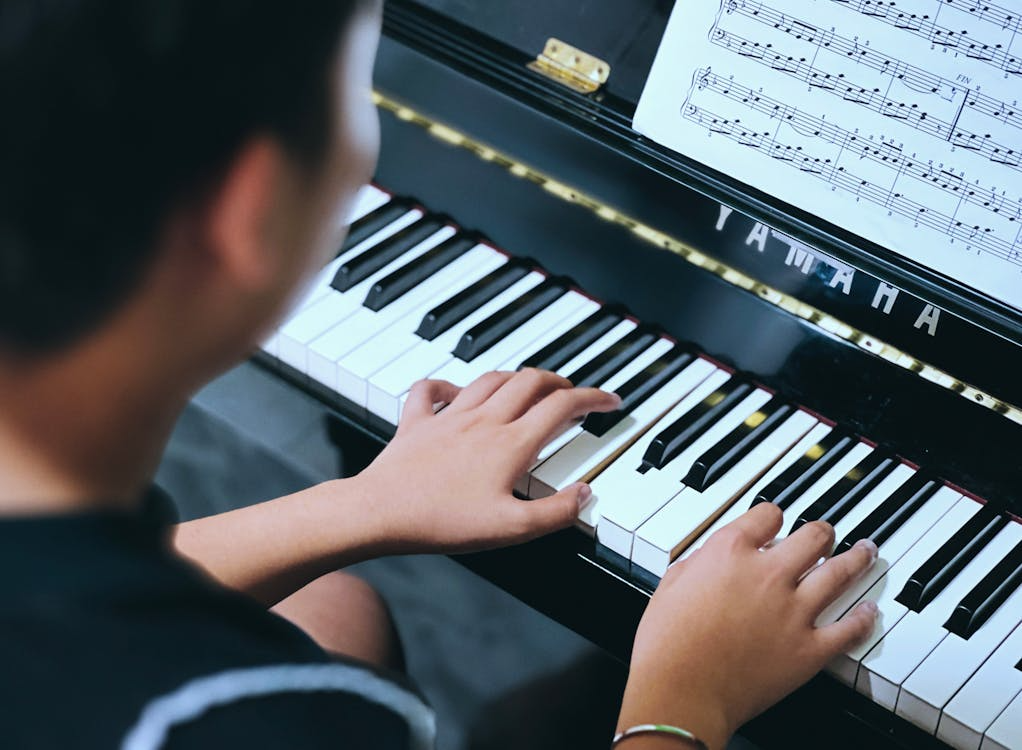

Post de las cartas de Risingstar:
@hivenftgamela/risingstar-concurso-la-historia-de-la-semana-con-stu-daniel-y-ethan-esen