

What really matters is that moment of recognition: when the design of a garment, the irony of a subtle nod, or the power of an image transcends the runway and lodges itself in the viewer’s memory. That is the true story. My sole intention is for the ironic, the enigmatic, and the seemingly incidental to become the catalyst for a personal story.
Ana Locking. Quote from the exhibition catalog.

[With her birthday just a day away (or perhaps now just a few hours), this post is dedicated to someone who, when she reads this, will know it’s for her. Happy birthday! 🎂😊👐 ]
Can fashion design be art? The Community of Madrid, through the Sala Canal de Isabel II, has been addressing this question through various tributes to great Spanish fashion designers: Pertegaz, David Delfin, Sibylla, Lorenzo Caprile (an exhibition to which I’ve already dedicated a post), and, at this time, Ana Locking.
I believe these different tributes make the answer very clear… fashion can be art; in the case of Ana Locking, the answer is a resounding YES.
It was only a few months ago that I resumed my engagement with the art world. In this journey through various art galleries, I have noticed my distance (at times a chasm) from the work of artists born after 1974 (more or less) and my connection, as a viewer, with the work of many artists born before that date.

El tiempo de las luces
Ana Locking has been no exception. Born in 1971 and raised in the working-class neighborhood of Usera (Madrid)—a neighborhood I know very well, both as it is now and as it was in the past.
This background is no mere detail; growing up in the suburbs of Madrid during the 1980s left a deep mark on many of those young people. We belong to a generation born during Franco’s dictatorship that, unlike our parents, had the opportunity to access a cultural spectrum that was out of reach for them.
Thus, Ana Locking recounts how, at night on the the second channel of Spanish public television, she discovered filmmakers like Luis Buñuel, Truffaut, Kurosawa, Godard, Antonioni, and others.
And cinema, as we shall see, is very much present in her creations. Some of her collections are inspired, among other sources, by the seventh art; she has worked for the film industry, and in some collections, I can see references to films like Blade Runner or Black Rain… but these are just my own thoughts.
Just as it’s also my own thing to imagine myself at 16 watching The Exterminating Angel with Ana Locking, on one of those great movie nights on RTVE’s Channel 2—her in Usera and me sitting in front of the TV in Moratalaz. Just as I can imagine that we once crossed paths at a double feature at the Cine Covadonga.
Art is a language... and I believe I have come to intuit, in part, the language of this artist who looks beyond what reality reveals.
 |  |
|---|
Ground Floor
From the very beginning, I understood that my social background would always clash with the elitism of the fashion and art worlds
Ana Locking
The exhibition is located in an exceptional venue, the Sala Canal de Isabel II (Madrid). It is a former circular water tower with a vertical structure that has been converted into an exhibition hall. Consequently, the various pieces on display are distributed across the different floors of the tower, a building notable for its industrial architectural elements.
Right at the entrance, we encounter the unexpected. A large wooden box inside which, on a screen, an interview with Ana Locking is projected.
The five dioramas surrounding the room are striking. In them, behind a glass display case, we find various scenes that are as curious as they are surprising. As surprising as the designer’s unconventional view of the world.

Kaspar Hauser
A boy, who has been raised in complete isolation, suddenly appears in the German city of Nuremberg, with no one knowing where he came from or what his past is. This is Kaspar Hauser, a young boy who mechanically repeats his name.
For Ana Locking, Kaspar Hauser illustrates the fragility of identity construction. Kaspar repeats his name (an empty vessel) as a desperate act of self-affirmation. At the same time, the case of this “wild child” highlights our basic need for authentic and genuine relationships in order to become fully human.
Kaspar can also be seen as a symbol of the social pressure to construct “normality.” In the 21st century, Kaspar has abandoned his role as a “wild child” to become “normality” itself—a symbol of the “normality” that surrounds us, where the digital world shapes self-centered, fragile, and superficial citizens with a constant need for external recognition and validation.

The desert is an ocean
The fractured, primal American Dream. Kaspar Hauser—like those early settlers—seeks a new existence, striving to find an identity that was denied to him during years of captivity. (Paraphrasing Ana Locking)

The storyteller

Great expectations
An apparently uninhabitable territory transformed into a space of affirmation and symbolic conquest (Paraphrasing Ana Locking).

Lo importante es amar
McGuffin
The concept of the McGuffin stems from one of the masters of cinema, Alfred Hitchcock. A McGuffin is the catalyst that sets any story in motion. The conflicts, characters, and plot developments we see on the big screen all revolve around the McGuffin.
Applying this to her work, Ana Locking suggests that elements appear in it deliberately to actively engage the viewer, so that “a relationship is established between what I want to convey and what the viewer internalizes.”
Thus, we encounter a militant work that, far from being a pamphlet, is an invitation to think or rethink. Is it possible for a work of art to reach the general public without distorting the message? Here I leave my question… the answer is yours alone.
 |  |
|---|
 |  |
|---|

Nostalgia. First Floor
What catches the eye right away is the way the exhibition is presented. I’m not entirely sure what this McGuffin is meant to signify, though the presence of wooden boxes and the transformation of the exhibition hall into a warehouse speaks to me of transience—of objects that are here today and may be elsewhere tomorrow. I read the opposite interpretation in a review.
On this first level, we find the collections Spinning Destiny (Fall/Winter 2010–11), Fear (Fall/Winter 2018–19), Kaspar Hauser (Fall/Winter 2019–20), Paranormal (Fall/Winter 2022–23), American Landscape (Fall/Winter 2014), and Under Beauty (Spring/Summer 2012)
 |  |
|---|

 |  |
|---|
 |  |
|---|


Utopia. Second Floor
Because, even when we look back, what saves me from nostalgia is believing in utopias. Even if it’s naive. I still believe that things can be changed starting from your immediate surroundings, moving from the small to the universal
Ana Locking. Quote taken from the exhibition catalogue.
On the second floor, we find the most activist collections. Reentry (Winter 2008–2009), Antídoto (Summer 2010), The Thinker (Spring/Summer 2017), The Dreamer (Autumn/Winter 2017–18), Preachers & Believers (Spring/Summer 2018)
 |  |
|---|
 |  |
|---|


 |  |
|---|
 |  |
|---|
 |  |
|---|

 |  |
|---|
 |  |
|---|


 |  |
|---|
 |  |
|---|
 |  |
|---|

 |  |
|---|


 |  |
|---|
 |  |
|---|
 |  |
|---|

 |  |
|---|

Process. Third floor
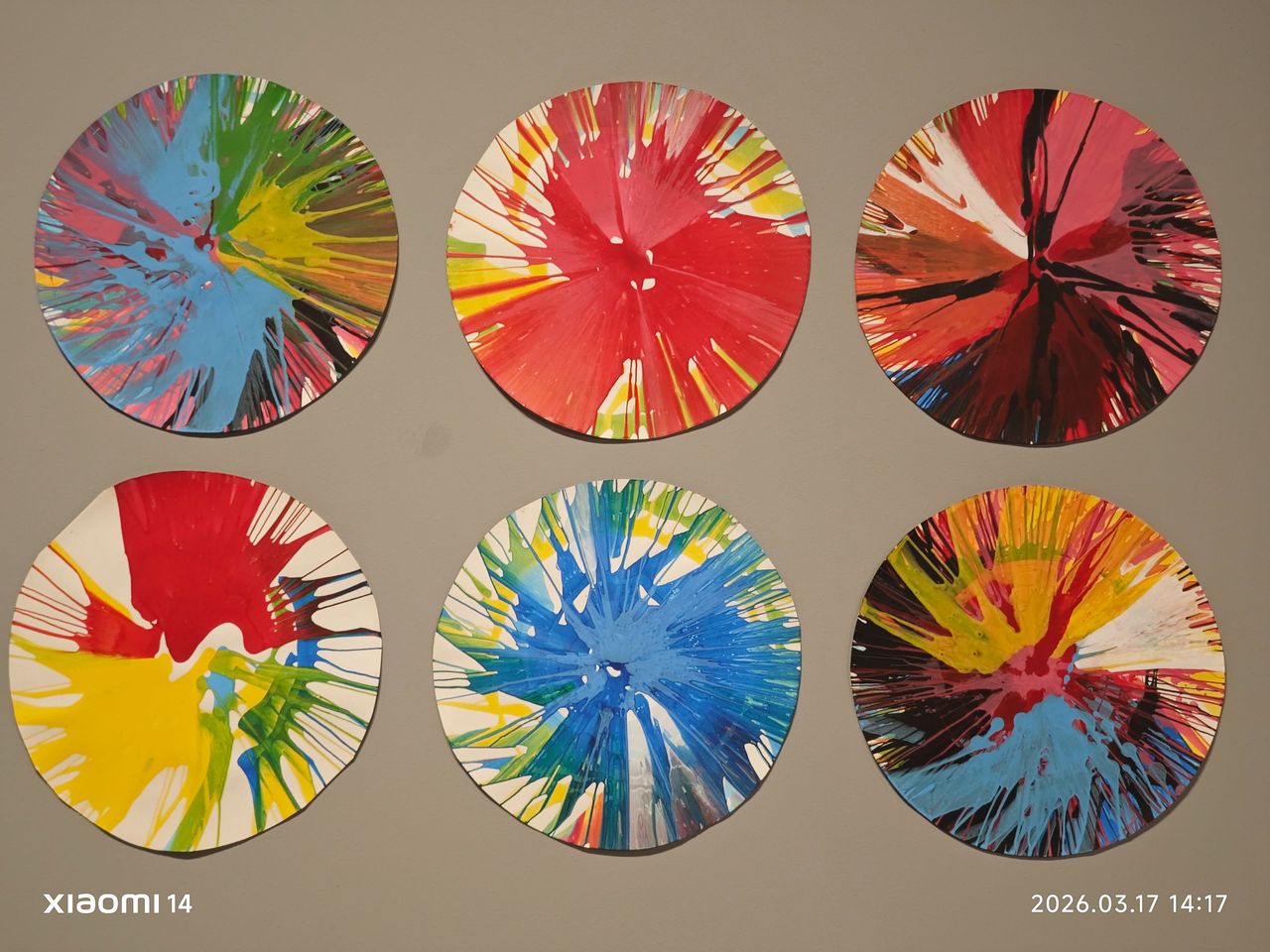
Here we explore the creative process. On this third floor, we encounter the ideas,references—such as one to a road movie or to Thomas Mann, sketches, photographs, notes, and other materials that gave rise to the collections and creations on display in this exhibition. Among the materials on display are also those related to the television series La Vida Breve.
Once again, we encounter McGuffin and Kaspar… and, to top it all off… the false prophets.

McGuffin
 |  |
|---|

Spinning Destiniy


Insides
 |  |
|---|

 |  |
|---|
Foreva
 |  |
|---|

American Landscape / the magic mountain

Kaspar Hauser

Paranormal

 |  |
|---|

 |  |
|---|

The dreamer peachers & belivers 238


What does god say


Doppelgänger
 |  |
|---|

A short story of weid girls
 |  |
|---|
Too young to die old


 |  |
|---|
La Vida Breve
 |  |
|---|
Reentry / Antídoto
I hope you enjoyed this tour.
Note: All the information provided here is taken from the notes displayed at the exhibition and from the exhibition catalog.
Ana Locking.
Nostalgia / Utopia
Sala Canal de Isabel II (Madrid)
March 4–July 12
Acknowledgments
L’Oréal Paris Award – Best Young Collection (2003)
Marie Claire Grand Prix – Best National Designer (2004)
L’Oréal Paris Award – Best Collection at Cibeles (2008)
Cosmopolitan Fun Fearless Female – Best Designer (2009)
CLM Diseño – Best Designer (2009)
MadWomen Award – Mejor diseñadora (2017)
National Fashion Design Award (2020)
Gold Medal for Merit in the Fine Arts (2021)
Community of Madrid Culture Award (2022)
Favorite Daughter of Castilla-La Mancha (2023)
 |  |
|---|
 |  |
|---|
Thank you for joining me here.

Banner edited with Canva pro and cropped with ezgif.com.
Avatar created with IA Ideogram.

Note: All the information provided here is taken from the notes displayed at the exhibition and from the exhibition catalog.
Translated from my native language Spanish with DeepL (free version).
All photographs are my own.