
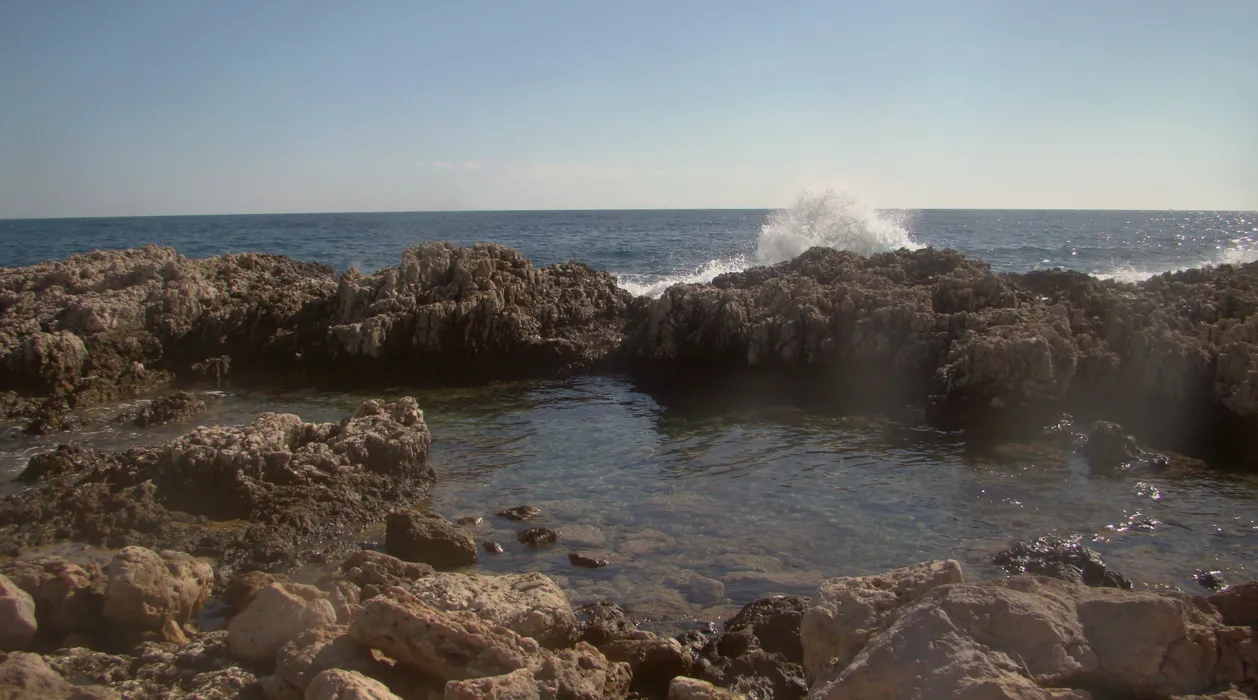
There are many things I enjoy during the summer ... but spending the long, sunny days on the rocky coastline with not many people around ...

... surrounded by crabs ....
... this one is a small Pachygrapsus marmoratus ...
... seagulls ...
... fossils ...

... reptiles ...
... the occasional insects ...
... and some interesting small plants ...
... adapted to the harsh condition ... and regularly showered with salty water ... is definitely on the top of the list.

Many insects, like this small moth ... end up here accidentally ... brought by the wind.

But some species ...
... like this interesting little cricket ... have found here their permanent residence.
This zone between the tides is far from an insect - friendly environment. There isn't much food and the place is often flooded by the sea. However, it has some benefits. It's a nice, hidden place with not much competition. Mediterranean Beach-crickets (Pseudomogoplistes squamiger) you saw on the photographs above, survive here on chunks of sea food and organic particles brought by the tide from the sea, or by wind from the land. This is a rare and endangered species, usually well hidden between the rocks, very fast and a real pain to catch on photograph because they are always tying to stay away from the light, appearing in shady places, and only for short fragments of time.
These tiny flies ... I don't know the exact species ... also spend much of their time in the small coastal caves.
On this picture you can see me and my little dog Bepina, seven years ago, when the photographs of the fly and the cricket were taken.
Here is another shot where you can see how it feels in this kind of places ... and where I try to imitate the beach - cricket :) ... unsuccessfully.
There are different kinds of rocks all around ... and some formations look like melted together in interesting ways.
There are some cool colors too.

Here you can see another Pachygrapsus marmoratus crab passing by ... they are very common and numerous here on the border between the land and sea, always exploring and scavenging around the place.
Limpets are also present in big numbers.
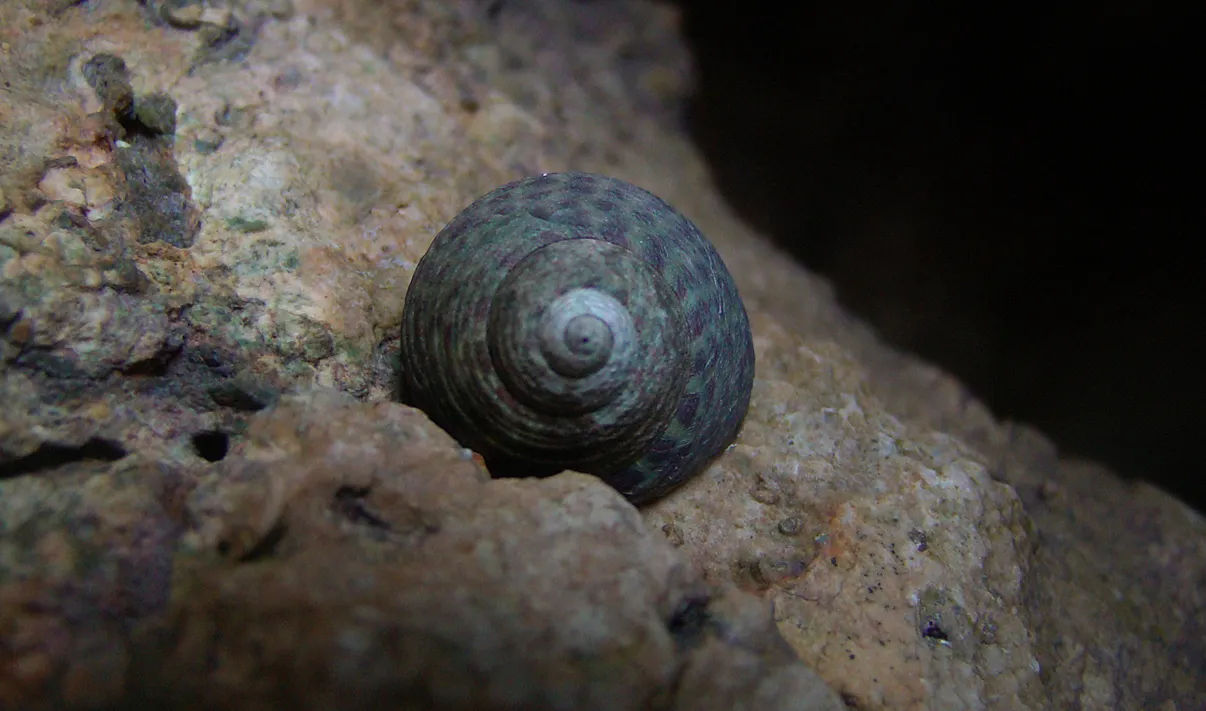
Here is a sea snail ... pretty high above the sea level ... waiting for the high tide.
These minuscule snails always remain closer to the water level.
Here is another shot of Bepina, perfectly camouflaged on these rocks ... and on the following photograph ...

... you can meet another interesting inhabitant of the cave - the Silverfish, common also in humid places in houses. They are even faster and shier than the crickets, I couldn't get close with the camera so you won't see much if you don't enlarge the picture.
And now, after the exploration of this shady, hidden place ...
... is time to go out on the open ...
... to enjoy the sun ... the sea ...
... the occasional waves ...

... or distant sails on the horizon.
Is time ...

... to change the feel of the post ...
... and go into the sunny mood.
One usually sunny summer afternoon, about five years ago, I was lazily observing some Wall lizards (Podarcis siculus) that are present in many subspecies and color variations along the coastline from Italy to Turkey, quietly basking in the strong sun ...
... when suddenly something has caught their attention ...
... making them active and focused.
As a part of the chain reaction, I became more active and focused too.
Lizards started running around, all over the place, hunting something.

At one point the action slowed down a bit, and I could take a good look at what the lizards are eating. The prey was a big black, winged ant queen.
Many winged ants started to appear on the rocks, brought by the gentle wind ... and lizards had a great and easy feeding opportunity.
Then some other ants crawled out from the claustrophobic spaces between the layers of rocks, and started to attack those winged ones.
In a few instants the quiet atmosphere turned into some kind of small scale natural spectacle ... that didn't last long. It's great to be surprised like that, and be given the opportunity to observe these sudden changes in the flow of nature around you.

On one other occasion ... also in that place ...
... an interesting wasp arrived and started to dig ... or just enlarge ... a small hole in the limestone above me.
I don't know what species is this.

Although the sea is usually blue on a sunny day ...
... sometimes ... in some inlets ...

... can be turquoise ( On this photograph a pretty large Chrysaora hysoscella jellyfish is passing by) ...
... or emerald green. In the following (Low quality) video ...
... you can take a short look at some small fishes swimming in the beautiful liquid jewel near the coast.
On this picture is a sea anemone in the shallows.
Here are some small hermit crabs.
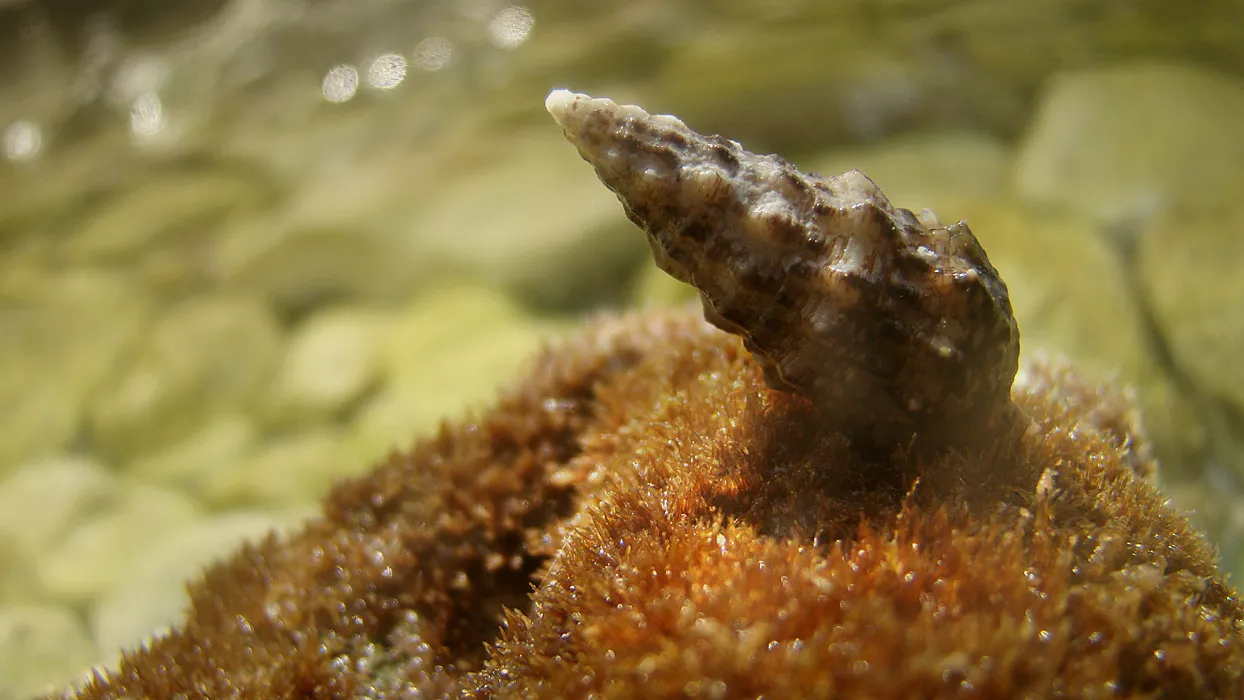
On this photograph you can see an elongated sea snail on the algae - covered rock, during the very low tide ...

... and on this shot ... taken not far from there ... in the rock two or three meters above the sea level ... is a fossilized remain of a similarly shaped mollusk from the distant past.
Fossils like this are very common here. On the following few shots ...

... you can watch another mollusk elegantly swimming in the shallow water... the pretty large sea slug Aplysia depilans ... very common on this coast.
... they feed primarily on algae of the genus Ulva, especially sea lettuce (Ulva lactuca).

For this shot I kidnapped the poor creature for a second to show you better the proportions, how big it is. There was no damage done to the sea slug, he just continued its feeding when I released him. And now ...
... something completely different! :D
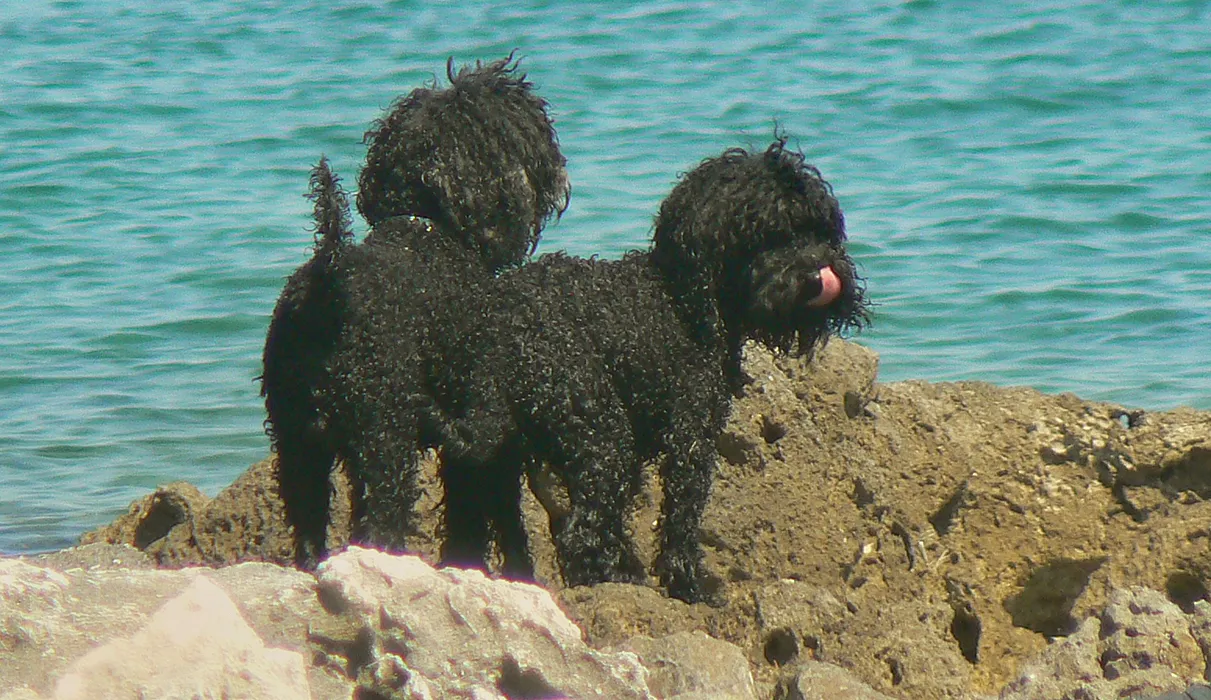
Some cute dogs I saw once in the summer ... they looked a lot like black sheep from the distance. After this sudden pet - twist ...
... let's go back to the wild and self seeding organisms. These lovely flowers ...
... are the most colorful part of the interesting Limonium cancellatum plant, one of the sea - lavender species ...

... endemic to the eastern Adriatic coast.
The plant on this ... and the following picture ...
... is the Crithmum maritimum ... another typical coastal plant with strong and beautiful aroma.
Sometimes ...
... even in summer ...
... the sky can get cloudy and dark ...

... and I like this gloomy atmosphere ... both above and under the sea.
It's a cool time for snorkeling ... the water is warm, but everything looks more dramatic and mysterious ... like in winter.
Sometimes short rain can fall ...
... forming some temporary fresh water pools...
... on the rocks.
Millipedes regularly come out from the holes between the rocks after the rain.
Here is an interesting hole that leads to the large cavity between the layers of rocks ... who knows what hides there ... things like this are always exiting for the imagination.
This is another rock formation that stands out from the other shapes in the rocks ... and now ...
... with this view at sunset ...

... and the closing shot with the sun on the bottom of the shallow coastal pool ... is time to end this summer excursion ... THE END.
As always in these posts on HIVE, all the photographs and Video materials are my work.
The comments and every kind of interaction are always welcomed :)
[//]:# (!pinmapple 44.804106 lat 13.995221 long d3scr)
Here is a link to my tweet :










https://twitter.com/BorjanRadolovic/status/1256956227034189824
- BorjanRadolovic