
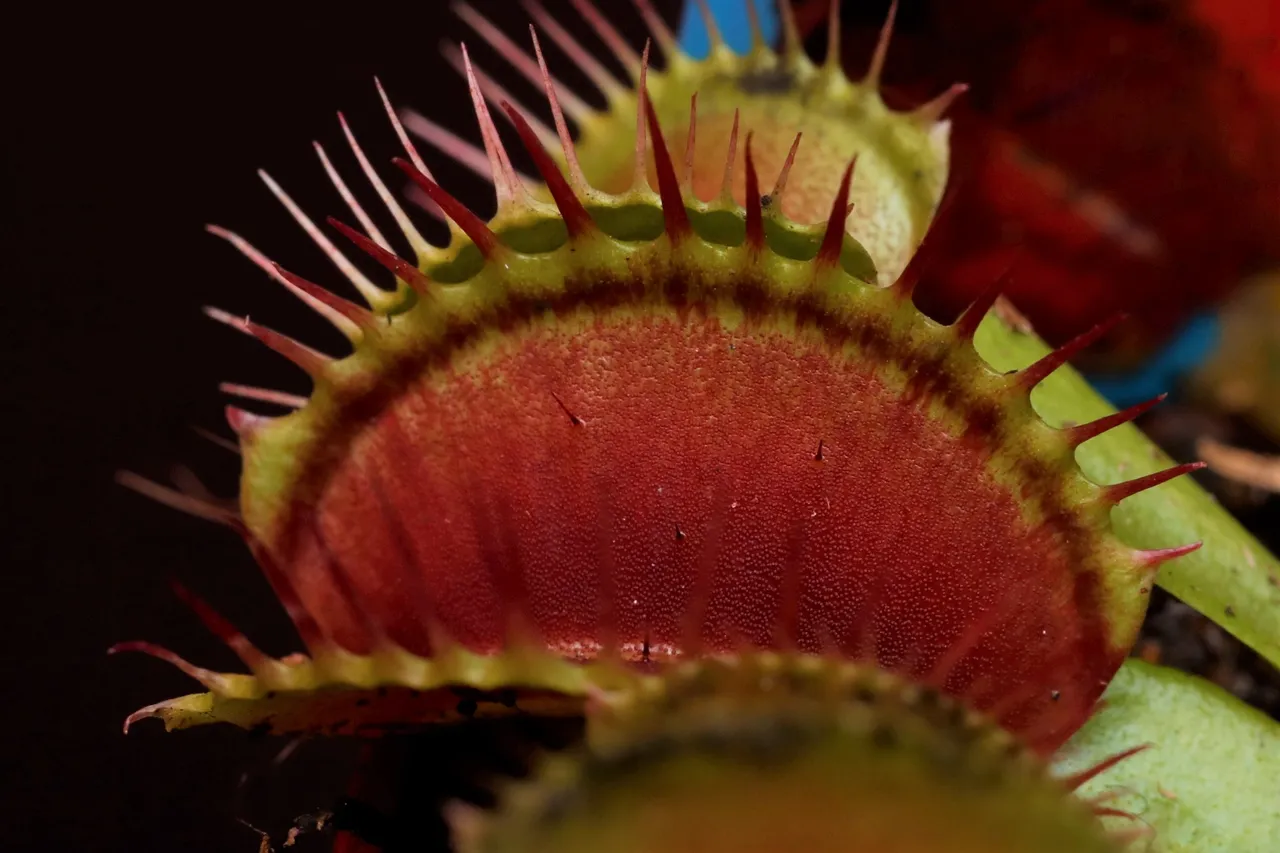
Venus flytrap (Dionaea muscipula)

Regular readers will know I have a wide variety of interests. From Bugs to Birds, and Planes to People, and mushrooms and landscapes I do all sorts of stuff.
There are 2 reasons for that:
Firstly, I get bored very quickly.
Secondly, I am always looking increase my knowledge and experience upon this planet. There is so much to look at around us, from tiny little insects to the absolute vastness of Space.

Today my partner and I visited the local Garden Centre to pick up some bits and pieces for our allotment (before the 2nd UK Lockdown comes into effect in 2 days time). While we were pottering around, I spotted a couple of these Venus Flytraps lurking on one of bottom shelves.
Lots of people will have heard of these plants, they are carnivorous which means they eat live prey (small flies and other insects), and I have always found these fascinating.
I actually had one of these plants a couple of years ago, when I bought it from a Steampunk event of all places. It was awesome to watch. I caught flies in the garden and feed them to the plant, and once I actually witnessed a small spider walk along the leaves up onto the end and get caught when the trap snapped shut.
I had bought the Venus Flytrap along with 2 small Sundew plants. Unfortunately the Venus Flytrap died that Winter. I had no idea what I had done wrong.
Both types of plants are found in Bogs (and other very damp places) in the Wild, so I made sure they had plenty of water. But whereas the Flytrap died the other sundews thrived.

These are those Sundews. They are sometimes referred to as Cape Sundews (Drosera capensis), and are found in South Africa. They are apparently the easiest of all the Drosera species which explains why I managed to turn 2 small sundews into 5 healthy looking plants without very little knowledge.

Here is a close up of a leaf from Drosera capensis, you can see the very different shape in the leaves. Each hair has a sticky substance on the tip, and when a fly lands on the leaf a chain reaction will make it slowly curl around the insect to begin absorbing the nutrients

This is one of our native (to the UK) species of sundews - the Round-leaved Sundew (Drosera rotundifolia). You can see this is a circle shaped blob compared to the longer leave of the Cap Sundew seen previously.
We saw this specimen in the Wild in a muddy field in Scotland, but they are common all over the country in the right (very boggy) conditions.

Back to today...
Today in the Garden Centre when I spotted those little Fly Traps I decided I really wanted to try again, they are a fascinating species to learn about, and as I mentioned at the start of this post, I'm always looking to improve. While there I purchased some special Carnivorous Potting compost, which I suspect I will need to re-pot my Sundews next Spring

But the important purchase was this book... its obvious I need some tips if I am to care for my Venus Flytraps correctly.
I have already found out the reason why my first plant died in its first Winter. In the wild it dies back and goes dormant over the Winter period. And it might look like a tropical plant, but it is actually often seen in temperate (warm/cold environments). This means that not only can it cope with the cold conditions, it actually needs it as part of its natural lifecycle
So when my Sundews sat on my bedroom windowsill all warm and toasty, the Flytrap slowly turned black and dormant, and never recovered...

...and on that note I am going to finish this and head back to the book and see what other techniques I need to learn to take care of these amazing plants


Thank you for reading, I hope you found it interesting.
If you have any thoughts or opinions on this article then I'd love to see your comments.
And if you really like the content then maybe you would like to upvote or re-hive it.

All Photos taken by 
Check out my website for more of my work.