
¡Saludos amantes de la naturaleza! 🍃| ¡Greetings nature lovers! 🍃
¡Feliz viernes para todos! Espero que tengan un muy lindo día y un grandioso fin de semana, en esta ocasión me gustaría compartirles algunas fotografías e información sobre unas lindas plantas que vi hace unos días en un pequeño jardín cerca de mi casa, como amante de las plantas no me pude resistir a acercarme a ellas y tomarles fotos pero al no conocerlas todas quedé con la duda de sus nombre, por suerte tengo una app en mi celular para descubrirlo y ahora que lo he hecho quiero compartirlo con ustedes, espero que este post sea de su agrado, sin más que añadir, ¡comencemos!
¡Happy Friday for everyone! I hope you have a very nice day and a great weekend, this time I would like to share some photos and information about some beautiful plants that I saw a few days ago in a small garden near my house, as a plant lover I could not to get closer to them and take photos but resisting not knowing all of them I was left with the doubt of their name, luckily I have an app on my cell phone to discover it and now that I have done it I want to share it with you, I hope you like this post , without further ado, let's begin!

Imagen de mi propiedad editada en canva/Image of my property edited in canva

La primera planta que vi y que llamó mi mayor parte de mi atención fue un cactus, de hecho eran 2 pero ambos aprecian ser del mismo tipo y luego de investigar definitivamente lo eran, se trata de un cactus de nombre Castillo de Hadas, una de las plantas ornamentales más populares en todo el mundo originaria de Centroamérica y parte de Estados Unidos, su mayor característica es que crece en varias columnas que se ramifican unidas, alcanzan una altura no mayor de 70 cm y su cuidado es muy sencillo.
The first plant that I saw and that caught most of my attention was a cactus, in fact there were 2 but both seem to be of the same type and after investigating they definitely were, it is a cactus named Fairy Castle, one of the most popular ornamental plants in the world, native to Central America and part of the United States, its greatest characteristic is that it grows in several columns that branch together, reaching a height of no more than 70 cm and its care is very simple. .


Es una planta que requiere de mucha iluminación pero no debe ser expuesta directamente al sol, sobretodo en la época de verano, requiera de poca agua y solo es necesario su riego cuando el suelo está seco, de lo contrario el exceso de agua así como las temperaturas inferiores a 10º pueden ocasionar daños en la planta como la pudrición de su tallo y raíces.
It is a plant that requires a lot of lighting but it should not be exposed directly to the sun, especially in the summer season, it requires little water and watering is only necessary when the soil is dry, otherwise excess water as well as temperatures below 10º can cause damage to the plant such as rotting of its stem and roots.


La segunda planta al parecer era una variante de menta, aunque para ser sincera no percibí ningún olor, de igual manera en ese momento no lo sabía pero ahora que lo se seguramente lo comprobaré cuando vuelva a ese lugar, pero en fin, el nombre de esta planta es Menta Piperita, es también conocida como Menta negra o Toronjil de menta pero lo más interesante es que se trata de un híbrido entre 2 plantas, la menta acuática y la hierbabuena, algo que desconocía totalmente.
The second floor apparently was a variant of mint, although to be honest I did not perceive any smell, in the same way at that time I did not know it but now that I know it I will surely check it when I return to that place, but anyway, the name of This plant is Piperita Mint, it is also known as Black Mint or Mint Melissa but the most interesting thing is that it is a hybrid between 2 plants, water mint and mint, something I was totally unaware of.

Esta planta es originaria de Europa y su cultivo surgió a raíz de la riqueza de sus componentes aromáticos, su suelo ideal son los húmedos y fértiles, sin embargo, no debe ser expuesta al sol de manera directa ya que no lo tolera. Tiene usos gastronómicos y el más común es su consumo en infusión pero además también suele utilizarse su aromo para dulces y helados, por otro lado también contiene usos medicinales ya que ayuda a controlar los trastornos digestivos, dolores musculares y calambres.
This plant is native to Europe and its cultivation arose as a result of the richness of its aromatic components, its ideal soil is humid and fertile, however, it should not be exposed to direct sunlight as it does not tolerate it. It has gastronomic uses and the most common is its consumption as an infusion but its aroma is also often used for sweets and ice cream, on the other hand it also has medicinal uses as it helps control digestive disorders, muscle pain and cramps.


La siguiente planta es otro tipo de cactus, este lleva por nombre Cactus Monstruo y vaya que le queda bien ese nombre, pues, su forma es un tanto extraña y deforme, es originaria de América del Sur, requiere muy pocos cuidados y es mayormente utilizada en decoraciones hogareñas y como ofrenda en el Día de Muertos debido a su extraña forma y a su peculiar nombre.
The next plant is another type of cactus, this one is called Monster Cactus and that name suits it well, because its shape is somewhat strange and deformed, it is native to South America, it requires very little care and it is mostly used in home decorations and as an offering on the Day of the Dead due to its strange shape and its peculiar name.
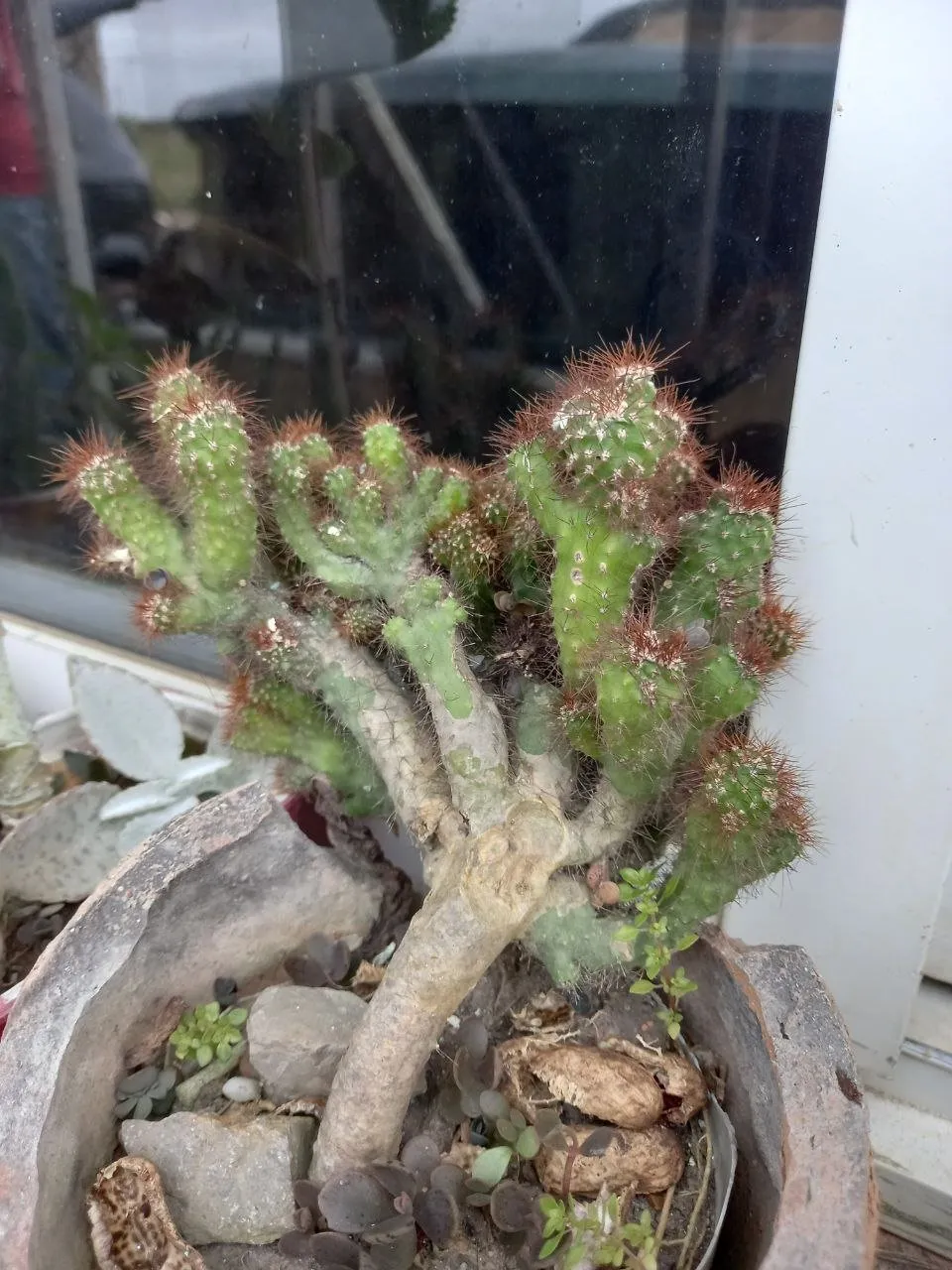
Pese a su forma también es considerada una suculenta ya que al igual que este tipo de plantas también almacena agua para su propio mantenimiento, este cactus puede llegar a medir hasta un metro de altura y sin duda será un gran adorno llamativo dentro del hogar.
Despite its shape, it is also considered a succulent since, like this type of plant, it also stores water for its own maintenance. This cactus can measure up to one meter in height and will undoubtedly be a great eye-catching ornament in the home.

Acá hay otro tipo más de cactus y este es el conocido Nopal, es nativo de México y forma parte de la cultura de este país al punto de tener aparición en su escudo nacional. El nopal es una planta carnosa con tallos planos y con espinas, tienen la capacidad de florecer y lo hacen una vez al año, producen también una especie de fruto en forma de baya ovalada con una pulpa carnosa y muchas semillas, este fruto es comestible e incluso es muy popular en otros países además de México.
Here is another type of cactus and this is the well-known Nopal, it is native to Mexico and is part of the culture of this country to the point of appearing on its national coat of arms. The nopal is a fleshy plant with flat stems and thorns, they have the ability to flower and do so once a year, they also produce a kind of fruit in the shape of an oval berry with a fleshy pulp and many seeds, this fruit is edible and It is even very popular in other countries besides Mexico.


Esta otra planta lleva por nombre Peperomia pero es más conocida como Cucharita, hay muchas variantes de esta planta, todos muy diferentes entre sí y algunas pueden ser confundidas con una suculenta ya que poseen hojas gruesas pero en realidad no lo son y de hecho tienen cuidados muy diferentes aunque muy sencillos, sin embargo, para que puedan crecer y desarrollarse de manera eficiente es necesario que sean plantadas en macetas con suficiente espacio para su crecimiento y una tierra bien nutrida que además sea fácil de drenar el agua ya que el exceso de esta puede acabar con la vida de esta planta.
This other plant is called Peperomia but it is better known as Spoon, there are many variants of this plant, all very different from each other and some can be confused with a succulent since they have thick leaves but in reality They are not, and in fact they have very different care, although very simple. However, in order for them to grow and develop efficiently, they need to be planted in pots with enough space for their growth and a well-nourished soil that is also easy to drain. the water since the excess of this can end the life of this plant.


Estas fueron las plantas que conocí hace unos días y ahora que se sus nombre y un poco de información sobre ellas me han encantado aún más, mis favoritos fueron los cactus, siempre me han atraído ese tipo de plantas y en mi jardín no tengo ninguno de esos que vi ese día pero si me gustaría tenerlos, espero poder conseguir pronto para agregarlos a m pequeña colección. Espero que les haya gustado este post y hayan aprendido un poco sobre estas plantas, a mí en lo personal me gusta mucho investigar sobre las plantas que veo y desconozco y es algo que no puedo evitar compartirles en mi blog.
These were the plants I met a few days ago and now that I know their names and a bit of information about them I have loved them even more, my favorites were cacti, I have always been attracted to these types of plants and in my garden I don't have any of them those that I saw that day but I would like to have them, I hope to be able to get them soon to add them to my small collection. I hope you liked this post and have learned a little about these plants. Personally, I really like to investigate the plants that I see and don't know about and it's something that I can't help but share on my blog.


¡Gracias por detenerte a leer!
Todas las fotografías son de mi propiedad.
Fotografías capturadas con mi Samsung Galaxy A12
Separador de texto elaborado en Canva.
Nos vemos en mi próxima publicación.
¡Tengan un feliz día!
¡Thanks for stopping to read!
All photographs are my property.
Photos captured with my Samsung Galaxy A12
Text separator made in Canva.
See you in my next post.
¡Have a happy day!