
Amigos de la comunidad Naturaleza Asombrosa, en esta oportunidad, les hablaré de un animalito, que aunque no es la primera vez que se escribe sobre él y su especie, aún no todo se ha dicho. Sé que van a encontrar algo diferente e interesante al respecto. Seguidamente, les presentaré a una pareja de Morrocoyes, que hacen vida en dos casas de familia. Ambos han sido muy prolijos y han tenido muchas crías. Esas casas son la de mi madre, y la casa de uno de mis hermanos.

Resulta, que los hermosos acorazados que yo conocí cuando era pequeña, además de llamarse Morrocoy, son llamados, “Tortuga terrestre de patas rojas”, y pertenecen al género de los “Chelonoidis carbonaria”.
En casa de mis familiares, aún hay varios ejemplares con sus críos, estos siempre han sido tratados como mascotas. Tristemente, hay lugares donde los crían para comida y para usar su plastrón, o caparazón, como adorno o trofeo. Es muy lamentable que, en esta época, aún se continúe con estos crímenes.

Ahora les contaré, una experiencia hermosa
Mi hermana caminaba hacia el patio trasero de la casa, para limpiar de hojas el terreno, pues se trata de una casa rodeada de árboles y hojas secas. De pronto, se encontró con un nido, y semi enterrados había varios huevitos de morrocoy. Recordemos que ellos anidan bajo la tierra y luego, entre 2 a 3 meses después, las mismas crías rompen la cáscara, que es muy suave, con un dientito que solo sale para esa función y luego desaparece. Mi hermana descubrió cinco huevitos. Los tapó con la misma tierra y esperó siempre vigilante hasta que salieron las crías.

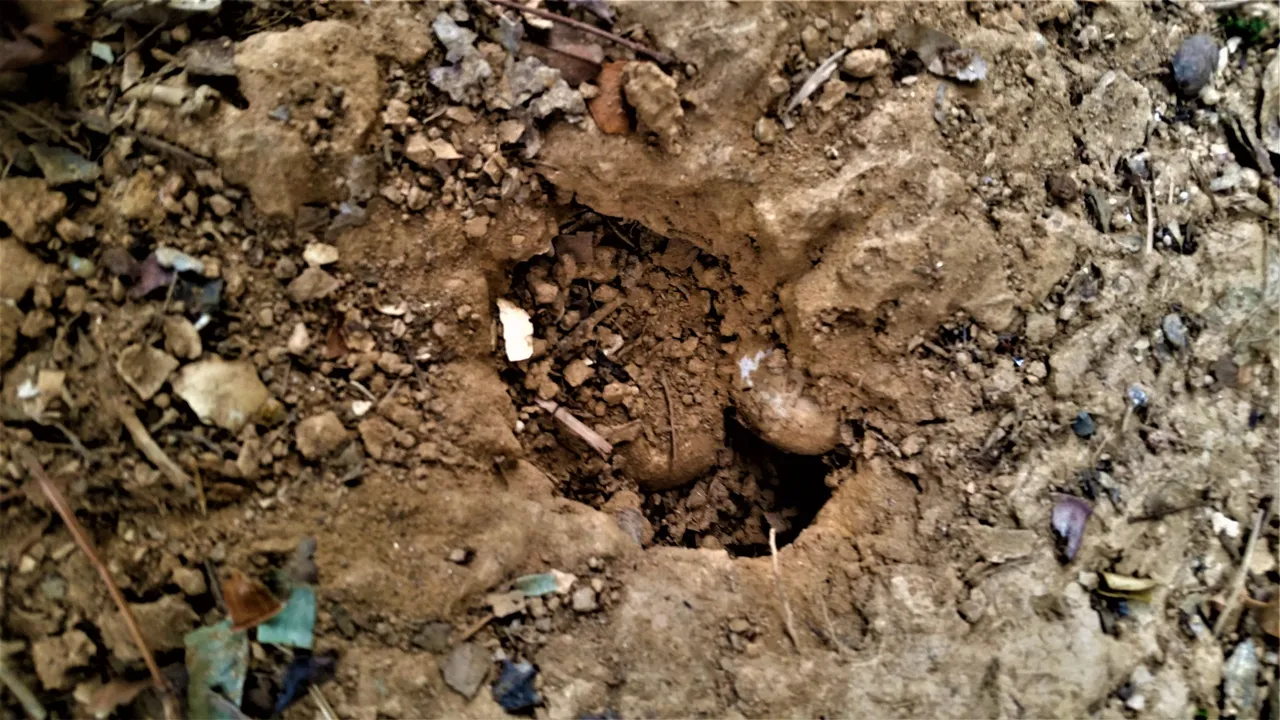
Ella corrió al terreno, porque la gatita Michí le avisó, desesperada que habían nacido los cinco hermosos bebés. Eran demasiado bellos. Con su plastrón achatado y redondo. Parecían unas moneditas caminando. Cuando comenzaron a caminar con soltura, los agarró en sus manos y les hizo muchas fotografías.


De esta camada de 5 morrocoyes recién nacidos, se llevaron dos para una escuela de niños especiales en Caracas, cuya función era la de convertirse en motivo de alegría para estos niños que nunca habían visto algo igual.
Como pueden observar en la siguiente imagen, hay cuatro miembros de una familia de morrocoyes.
Ahora paso a contarles acerca de los dos ejemplares que tiene mi hermano en su casa. Y les hablaré de su comportamiento, para reproducirse.

Esta familia de morrocoyes, está conformada por cuatro integrantes. Lo interesante de este caso, es que las crías tienen diferente tiempo de haber nacido. Como pueden observar, una es tan pequeña que cabe en una mano. El otro crío es más grande. Se preguntarán el por qué no son del mismo tiempo, la respuesta es que estos ejemplares se aparean muchas veces, pues entre la comida, el reposo y el apareamiento transcurren sus días, la hembra deposita alrededor de ocho huevos, y puede producir huevos en cualquier momento del año. Eso si, los huevos eclosionan en septiembre. Y si, por ejemplo, ha enterrado huevos sin haber pasado el tiempo de madurez, solo eclosionarán los que ya estén listos.

En la anterior imagen, se visualiza, el plastrón de cada ejemplar. En la hembra, es amarillo, aplanado y totalmente liso. En el macho es hundido en la parte baja, para facilitar el apareamiento. En esta especie, la hembra suele ser más grande que el macho. En sus patas tiene manchas entre amarillo y naranja. Mide alrededor de 35 y 40 cm, de largo.
Para finalizar, esta Tortuga Patas Rojas, o Morrocoy, no puedo dejar de comentar que como otros animales, se encuentra en peligro de extinción, sobre todo en Venezuela, pues siempre están a la caza, ya que las preparan en Semana Santa como un plato típico de la región llamado pastel de morrocoy. Es lamentable que aún suceda semejante aberración. Ellas se alimentan de verduras, frutas y algunos animales como lagartijas. En el terreno, en casa de mi madre, hay varios árboles de mango y cuando es época, ellas disfrutan comiendo hasta culminar la cosecha. Hay que darles mucha agua porque su lengua se reseca muy rápido. Seleccionan ellas mismas las yerbas que se comerán.
Finalmente, nuestros morrocoyes, son tratados igual que nuestros gatos. Siempre con sus debidos cuidados. No puedo dejar de colocar la taxonomía de los mismos, pues es una información muy valiosa para quien esté interesado en conocer más a fondo sus características.

Taxonomía
Reino: Animalia
Filo: Chordata
Clase: Sauropsida
Orden: Testudines
Suborden: Cryptodira
Familia: Testudinidae
Género: Chelonoidis
Especie: Chelonoidis carbonaria
(Spix 1824)
Fuente

Friends of the Amazing Nature community, in this opportunity, I will tell you about a little animal, that although it is not the first time we write about him and his species, not everything has been said yet. I know you will find something different and interesting about him. Next, I will introduce you to a pair of morrocoys, who live in two family homes. Both have been very neat and have had lots of offspring. Those homes are my mother's and one of my brothers'.
It turns out, that the beautiful armored birds that I knew when I was a child, besides being called Morrocoy, are called "Red-footed tortoise", and belong to the genus "Chelonoidis carbonaria".
In my relatives' house, there are still several specimens with their offspring, these have always been treated as pets. Sadly, there are places where they are bred for food and to use their plastron, or shell, as an ornament or trophy. It is very unfortunate that, in this day and age, these crimes still continue.
Now I will tell you about a beautiful experience
My sister was walking to the backyard of the house, to clean the land of leaves, because it is a house surrounded by trees and dry leaves. Suddenly, she found a nest, and half buried there were several morrocoy eggs. Let's remember that they nest under the ground and then, between 2 to 3 months later, the hatchlings themselves break the shell, which is very soft, with a little tooth that only comes out for that function and then disappears. My sister discovered five eggs. She covered them up with the same soil and waited with constant vigilance until the hatchlings came out.
She ran to the field, because the kitten Michí told her, in desperation, that the five beautiful babies had been born. They were too beautiful. With their round, flattened plastron. They looked like little coins walking. When they began to walk with ease, she took them in her hands and took many pictures of them.
From this litter of 5 newborn morrocoys, two were taken to a school for special children in Caracas, whose function was to become a source of joy for these children who had never seen anything like it.
Now I will tell you about the two specimens that my brother has at home. And I will tell you about their behavior, to reproduce. As you can see in the following image, there are the members of a family of morrocoys.

This family is made up of four members. The interesting thing about this case is that the hatchlings are born at different times. As you can see, one is so small that it fits in one hand. The other calf is larger. You may wonder why they are not of the same time, the answer is that these specimens mate many times, because between feeding, resting and mating they spend their days, the female lays about eight eggs, and can produce eggs at any time of the year. However, the eggs hatch in September. And if, for example, she has buried eggs before the time of maturity, only those that are ready to hatch will hatch.

In the previous image, the plastron of each specimen is visualized. In the female, it is yellow, flattened and completely smooth. In the male it is sunken in the lower part, to facilitate mating. In this species, the female is usually larger than the male. It has yellow to orange spots on its legs. It is about 35 to 40 cm long.
This Red-footed Turtle, or Morrocoy, like other animals, is in danger of extinction, especially in Venezuela, as they are always on the hunt, since they are prepared at Easter as a typical dish of the region called morrocoy cake. It is unfortunate that such an aberration still happens.
They feed on vegetables, fruits and some animals such as lizards. On the land at my mother's house, there are several mango trees and when it is the season, they enjoy eating until the harvest is finished. You have to give them a lot of water because their tongues dry out very quickly. They select themselves the herbs they will eat.
Finally, in my family, morrocoyes are treated as pets, just like our cats. Always with their due care. I can not fail to place the taxonomy of the same, because it is a very valuable information for those interested in learning more about their characteristics.
Taxonomy
Kingdom: Animalia
Phylum: Chordata
Class: Sauropsida
Order: Testudines
Suborder: Cryptodira
Family: Testudinidae
Genus: Chelonoidis
Species: Chelonoidis carbonaria
(Spix 1824)
Source

Traductor
Editor
Generador de caracteres
Fotografías pertenecientes a mi álbum familiar.
Twitter