

Greetings to my fellow crafters who are part of #NeedleWorkMonday.
I am happy to say hello to you all. I hope you enjoyed the Carnival holidays and that this beginning of Lent is a positive day of spiritual renewal, conversion of the heart, and preparation to renew our baptismal promises.
Today I wanted to make my first crocheted lavender flower. I have always been curious to make one, and today is the day. I woke up with this project in mind: a flower with its pot to put on my refrigerator.
This project is also perfect for making modern crocheted bouquets to add color and joy to a living room or bedroom. I even have a small amount of leftover yarn that I will use in this post.
And, of course, a step-by-step guide on how to make it.
Hola amigos de la comunidad #hive.
Saludos a mis artesanos que forman parte de #NeedleWorkMonday.
Estoy feliz de saludarles, espero hayan disfrutados los días de fiestas de carnestolendas, y que este inicio de cuaresma sea un día positivo, renovación espiritual, conversión del corazón y preparación para renovar nuestras promesas bautismales.
Hoy quise realizar mi primera flor de lavanda tejida a crochet, siempre he tenido la curiosidad de realizarla, y hoy es el día, me levante con ese proyecto en mi mente, una flor con su macetero, para colocarlo en mi refrigeradora.
Además, este proyecto es perfecto para hacer los modernos ramos de flores a crochet, darle vistosidad y alegría a una sala o habitación, es más tengo una pequeña cantidad de sobrantes de hilos, los cuales usaré en este post.
Y por supuesto que un paso a paso de cómo lo elabore. 🪻
Materials used in the process//Materiales utilizados en el proceso

This time we will use the following materials:
• 1.70 mm crochet hook
• Orange wick thread
• Green wick thread
• Brown wick thread
• Scissors
• Stick for the stem
• Silicone gun
• Magnet
• Plastic cap
En esta oportunidad usaremos los siguientes materiales:
• Ganchillo 1.70 mm
• Hilo pabilo color naranja
• Hilo pabilo color verde
• Hilo pabilo color marrón
• Tijeras
• Palito para el tallo
• Pistola de silicona
• Imán
• Tapa de plástico
Let's get to work//Manos a la obra
The stitches used are:
• Single crochet (sc)
• Slip stitch
• Chain stitch
1.- Flower
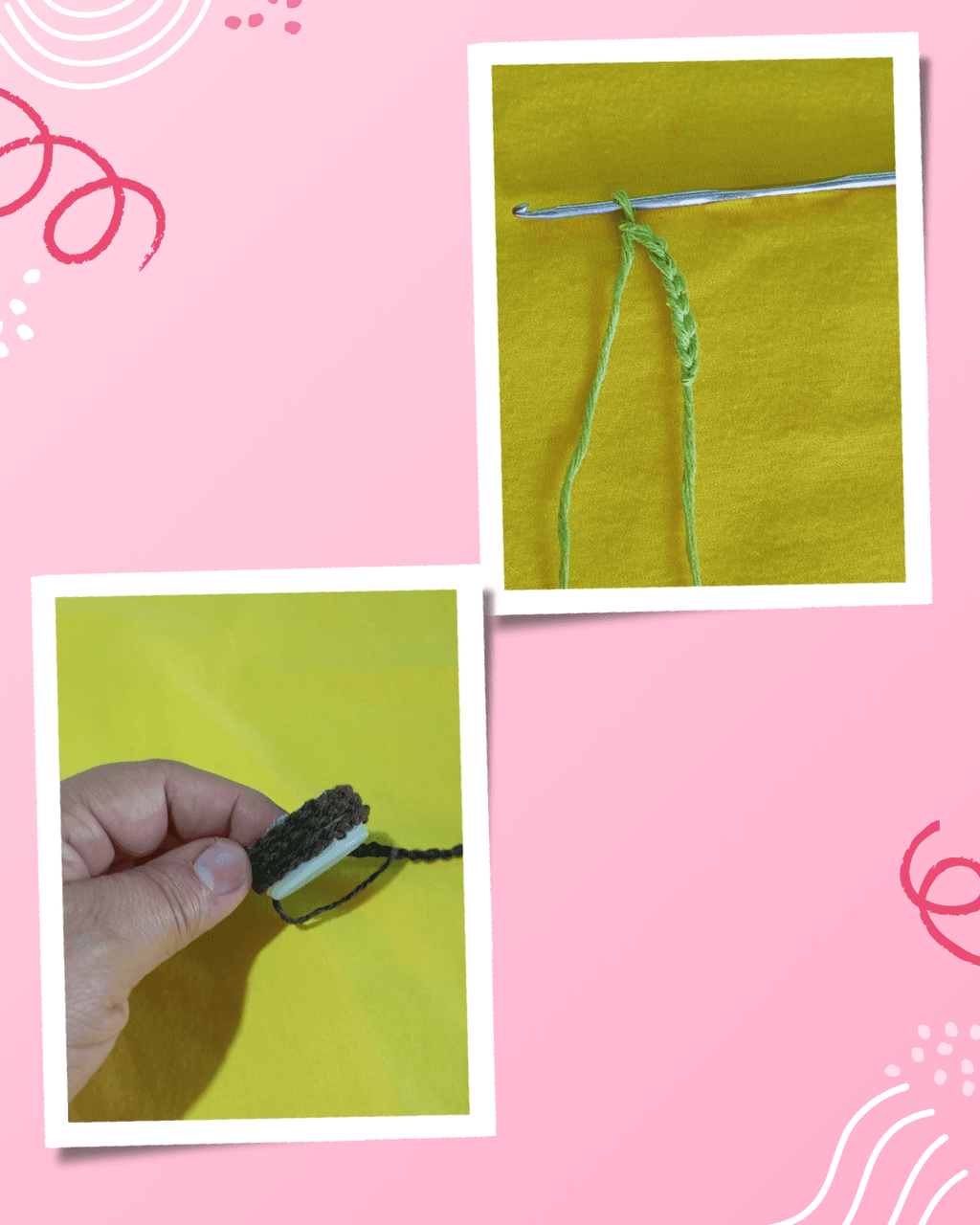
Start with a chain of thirty stitches.
Los puntos utilizados son:
• Punto bajo (pb)
• Punto deslizado
• Punto cadena
1.- Flor
Comenzar una cadeneta de treinta puntos.

In the next round, we will count two low stitches, make our first high stitch, then three chains and insert into the high stitch, where we will grab two strands and close the peak, make a high stitch and repeat the same procedure until we finish with a slip stitch.
When finished, we cut the thread and secure it with 1 knot.
We can hide the excess strands between the fabric with the help of the crochet hook.
En la próxima vuelta, contaremos dos bajos puntos, realizar nuestro primer punto alto, seguidamente tres cadenas e introducir en el punto alto, donde agarraremos dos hebras y cerramos el pico, hacer punto alto y repetir el mismo procedimiento hasta terminar al final con un punto deslizado.
Al terminar cortamos hilo y aseguramos con 1 nudo.
Las hebras sobrantes las podemos esconder entre el tejido con ayuda del ganchillo.

2.- Leaves.
Make seven chains.
Leave two stitches, and start with single crochet stitches around the chain, grabbing the back edge, increase with two single crochet stitches, continue until the end of the last single crochet stitch, make a slip stitch over the gap and close with a slip stitch.
3.- Plastic lid.
Make one hundred chain stitches for the lid, which will be the pot for our flower.
2.- Hojas.
Hacemos siete cadenas.
Dejamos dos puntos, y comenzar con punto bajos alrededor de la cadena, agarrando el borde de atrás, aumentar con dos puntos bajos, seguir al finalizar el último punto bajo, hago un punto deslizado sobre el hueco y cerramos con un punto deslizado.
3.- Tapa plástica.
Realizar cien puntos de cadenas para la tapa será el macetero de nuestra flor.
4.- Glue all the parts together.
Put a drop of glue on the end of the flower and stick it to the stick, wrapping it around the stick so that the stick is not visible. Leave part of the fabric sticking out so that you can cover it with the green thread. The fabric will then cover it completely. Place the leaves on the stem.
Using the glue, cover the recycled lid completely to make the flower pot.
Make a small hole in the flower pot to secure the flower. Apply glue and attach a magnet to one side so that it can be placed on a metal surface.
4.- Pegamos todas las partes
Ponemos una gota de pegamento en el extremo de la flor, palo y vamos enrollando alrededor palo de altura, para que no sea vea el palo, hay que dejar parte del tejido sobresaliendo para aforrar con el hilo verde, luego el tejido cubrirá por completo, colocaremos las hojas en el tallo.
Con el pegamento tomaremos la tapa de reciclaje y la vamos a cubrir por completo, le macetero.
Al macetero le haremos un pequeño agujero para fijar la flor, le pondremos pegamento y un imán por un costado para colocarlo en una superficie de metal.

I'll put this work on my refrigerator. My work is done. It really looks nice.//Este trabajo lo colocare en mi refrigeradora, listo mi trabajo, verad quedo lindo

Canva application cover//Portada de la aplicación Canva
