
I spent a couple of hours in my backyard today, late in the afternoon. A friend was also there with me and we removed some weeds while chatting and enjoying the summer day. At one point I noticed a minuscule moving dot on the leaf of one of the Chenopodium album plants that have grown in that part of the yard, near the tangerine tree. I couldn't tell what that thing is with the naked eye, so I ran into the house to take the macro lens and the camera.

When I returned, the minuscule unidentified thing wasn't there anymore but I found it on the neighboring plant of the same kind. I mounted the lens, adjusted the settings on the camera, and less than a minute later I was looking at the small creature able to see every detail of its external anatomy.
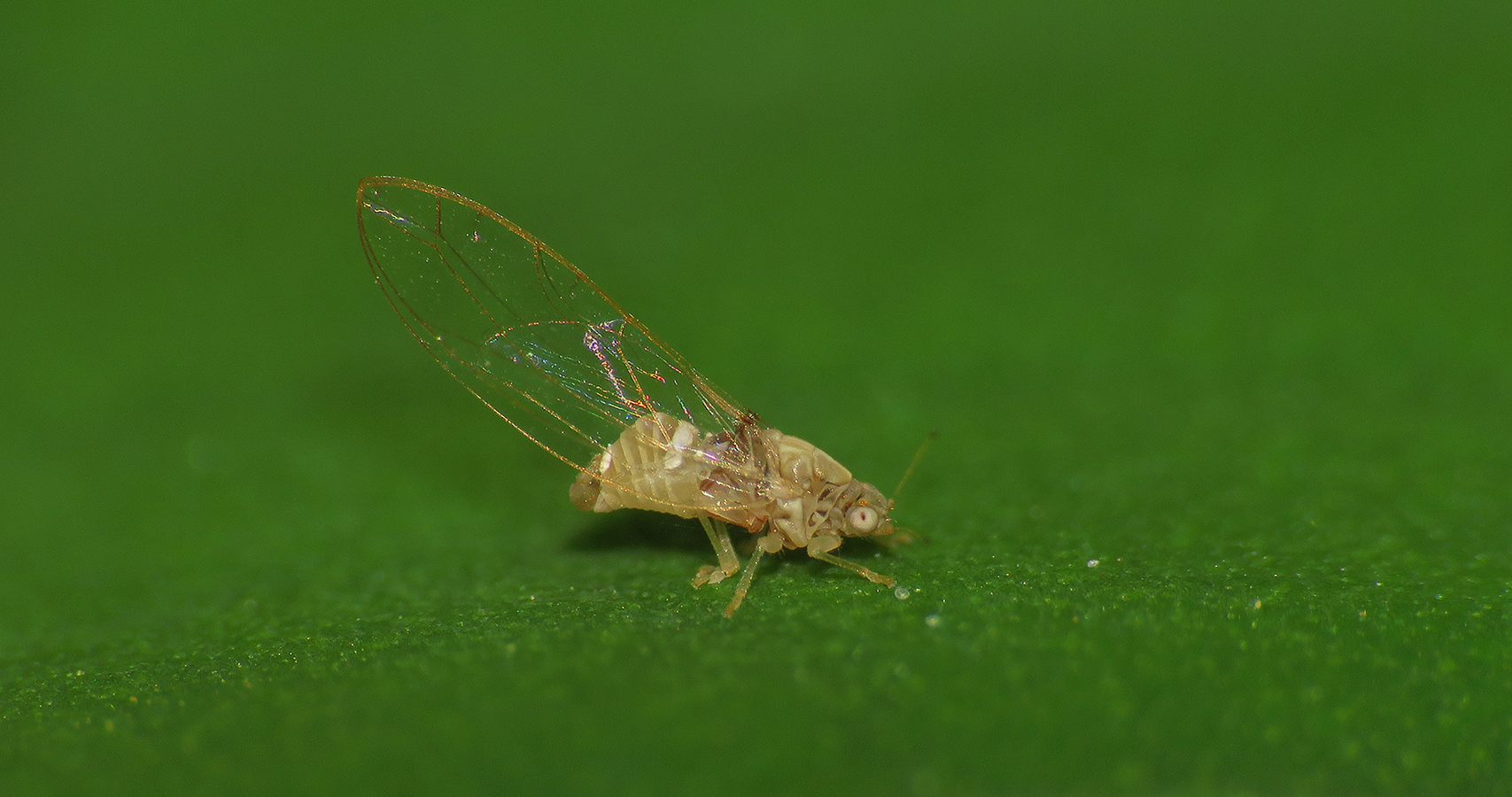
This is the Lauritrioza alacris, a hemipteran insect from the Triozidae family. The species from a group of four to seven (I'm not sure about the exact number because the Internet articles I found are fairly confusing in that regard) hemipteran families including the Triozidae are commonly known as jumping plant lice. In the following photograph ...

... you can take a good look at the plant that provided the nice, uniformly green background for the portrait of the insect. In the upper left corner of the picture, you can see the lower branches of the small tangerine tree.

Lauritrioza alacris feeds and reproduces on another plant, the bay laurel (Laurus nobilis). You won't see those small trees in today's post because they are just outside the frame in every photograph, but the laurels were always nearby, believe me.
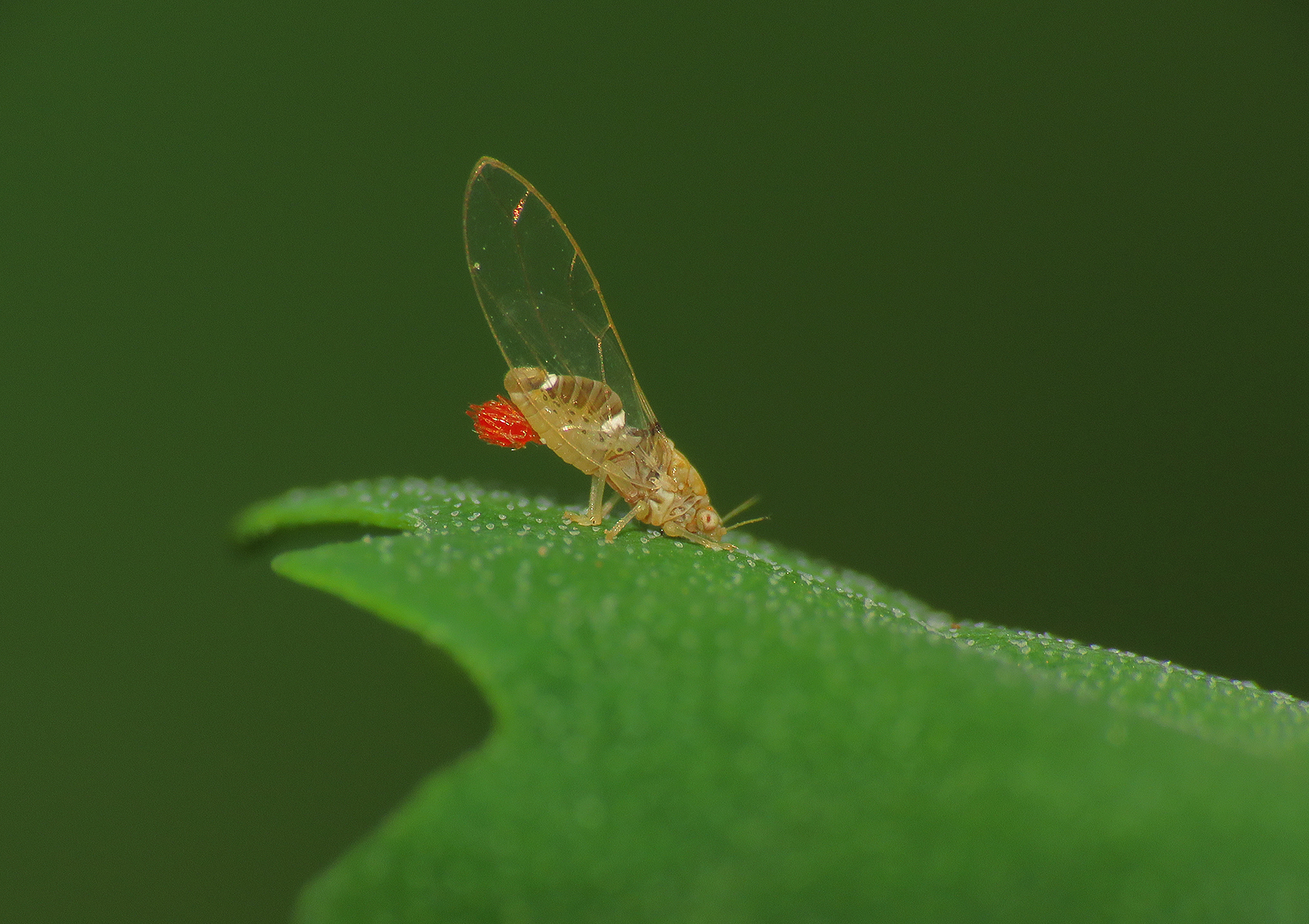
I photographed more than one Lauritrioza alacris today, and one of them had a minuscule parasite attached to its abdomen. When I first saw it, with the naked eye and from a distance, I thought I found a different, more colorful insect. Only through the macro lens, the little red arachnid became clearly distinguishable. The parasite is a larval stage of a mite from the Erythraeidae family - can't tell you the exact species because quite a few very similar ones can be found in this area. In the larval part of their existence, they live attached to various insects and arachnids, and then in their adult life, the mites wander around as minuscule carnivores able to actively hunt.
I spent about half an hour getting these photographs, and then ...
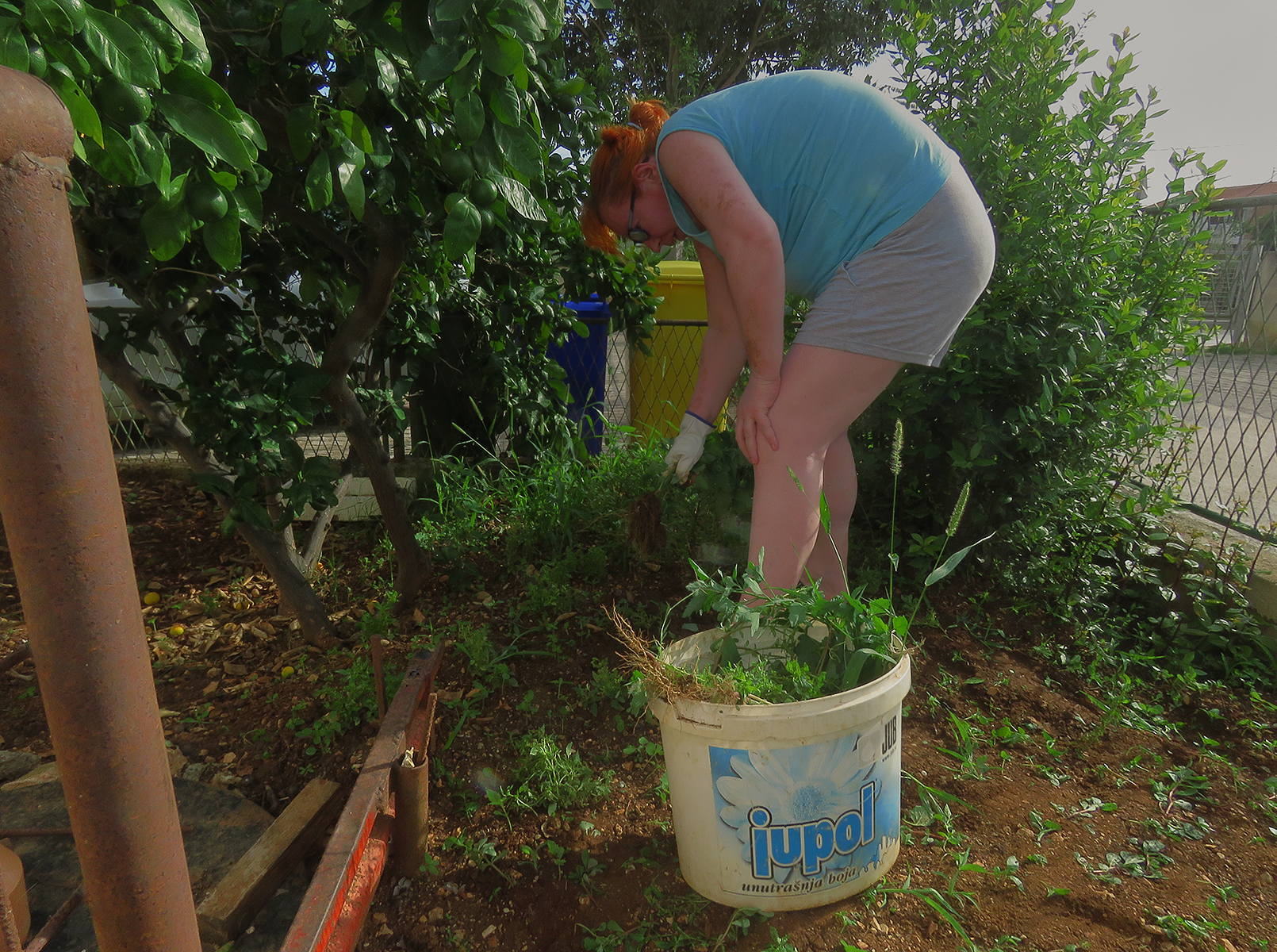
... a friend came and pulled the Chenopodium album plants out of the ground ...

... so the jumping plant lice flew to the nearby bay laurel tree where many of their kind were resting and crawling along the twigs and across the leaves. I'll probably revisit that corner of the yard in the next few days to photograph the Lauritrioza alacris on their host plant. I'm also hoping to find some other insects on the bay laurel trees. That future post could end up being considerably longer than this one.
AND THAT'S IT. AS ALWAYS HERE ON HIVE, THE PHOTOGRAPHS ARE MY WORK.
The following links will take you to the sites with more information about the protagonists of this post. I found some stuff about them there.
https://en.wikipedia.org/wiki/Chenopodium_album
https://www.britishbugs.org.uk/homoptera/Psylloidea/Lauritrioza_alacris.html
https://en.wikipedia.org/wiki/Triozidae
