
This article on free thought comes from this link.
LENIN AND GERMAN ASSISTANCE FOR THE BOLSHEVIK REVOLUTION
It was not until the Bolsheviks had received from us a steady flow of funds through various channels and under varying labels that they were in a position to be able to build up their main organ Pravda, to conduct energetic propaganda and appreciably to extend the originally narrow base of their party.
Von Kuhlmann, minister of foreign affairs, to the kaiser, December 3, 1917
In April 1917 Lenin and a party of 32 Russian revolutionaries, mostly Bolsheviks, journeyed by train from Switzerland across Germany through Sweden to Petrograd, Russia.
They were on their way to join Leon Trotsky to "complete the revolution."
Their trans-Germany transit was approved, facilitated, and financed by the German General Staff.
Lenin's transit to Russia was part of a plan approved by the German Supreme Command, apparently not immediately known to the kaiser, to aid in the disintegration of the Russian army and so eliminate Russia from World War I.
The possibility that the Bolsheviks might be turned against Germany and Europe did not occur to the German General Staff.
Major General Hoffman has written, "We neither knew nor foresaw the danger to humanity from the consequences of this journey of the Bolsheviks to Russia. "
At the highest level the German political officer who approved Lenin's journey to Russia was Chancellor Theobald von Bethmann-Hollweg, a descendant of the Frankfurt banking family Bethmann, which achieved great prosperity in the nineteenth century.
Bethmann-Hollweg was appointed chancellor in 1909 and in November 1913 became the subject of the first vote of censure ever passed by the German Reichstag on a chancellor.
It was Bethmann-Hollweg who in 1914 told the world that the German guarantee to Belgium was a mere "scrap of paper."
Yet on other war matters — such as the use of unrestricted submarine warfare — Bethmann-Hollweg was ambivalent; in January 1917 he told the kaiser, "I can give Your Majesty neither my assent to the unrestricted submarine warfare nor my refusal."
By 1917 Bethmann-Hollweg had lost the Reichstag's support and resigned — but not before approving transit of Bolshevik revolutionaries to Russia.
The transit instructions from Bethmann-Hollweg went through the state secretary Arthur Zimmermann — who was immediately under Bethmann-Hollweg and who handled day-to- day operational details with the German ministers in both Bern and Copenhagen — to the German minister to Bern in early April 1917.
The kaiser himself was not aware of the revolutionary movement until after Lenin had passed into Russia.
While Lenin himself did not know the precise source of the assistance, he certainly knew that the German government was providing some funding.
There were, however, intermediate links between the German foreign ministry and Lenin, as the following shows:
LENIN'S TRANSFER TO RUSSIA IN APRIL 1917
Final decision BETHMANN-HOLLWEG (Chancellor)
Intermediary I ARTHUR ZIMMERMANN (State Secretary)
Intermediary II BROCKDORFF-RANTZAU (German Minister in Copenhagen)
Intermediary III ALEXANDER ISRAEL HELPHAND (alias PARVUS)
Intermediary IV JACOB FURSTENBERG (alias GANETSKY)
LENIN, in Switzerland
From Berlin Zimmermann and Bethmann-Hollweg communicated with the German minister in Copenhagen, Brockdorff-Rantzau.
In turn, Brockdorff-Rantzau was in touch with Alexander Israel Helphand (more commonly known by his alias, Parvus), who was located in Copenhagen.
Parvus was the connection to Jacob Furstenberg, a Pole descended from a wealthy family but better known by his alias, Ganetsky.
And Jacob Furstenberg was the immediate link to Lenin.
Although Chancellor Bethmann-Hollweg was the final authority for Lenin's transfer, and although Lenin was probably aware of the German origins of the assistance, Lenin cannot be termed a German agent.
The German Foreign Ministry assessed Lenin's probable actions in Russia as being consistent with their own objectives in the dissolution of the existing power structure in Russia.
Yet both parties also had hidden objectives: Germany wanted priority access to the postwar markets in Russia, and Lenin intended to establish a Marxist dictatorship.
The idea of using Russian revolutionaries in this way can be traced back to 1915.
On August 14 of that year, Brockdorff-Rantzau wrote the German state undersecretary about a conversation with Helphand (Parvus), and made a strong recommendation to employ Helphand, "an extraordinarily important man whose unusual powers I feel we must employ for duration of the war .... "
Included in the report was a warning: "It might perhaps be risky to want to use the powers ranged behind Helphand, but it would certainly be an admission of our own weakness if we were to refuse their services out of fear of not being able to direct them."
Brockdorff-Rantzau's ideas of directing or controlling the revolutionaries parallel, as we shall see, those of the Wall Street financiers.
It was J.P. Morgan and the American International Corporation that attempted to control both domestic and foreign revolutionaries in the United States for their own purposes.
A subsequent document- outlined the terms demanded by Lenin, of which the most interesting was point number seven, which allowed "Russian troops to move into India"; this suggested that Lenin intended to continue the tsarist expansionist program.
Zeman also records the role of Max Warburg in establishing a Russian publishing house and adverts to an agreement dated August 12, 1916, in which the German industrialist Stinnes agreed to contribute two million rubles for financing a publishing house in Russia.
Consequently, on April 16, 1917, a trainload of thirty-two, including Lenin, his wife Nadezhda Krupskaya, Grigori Zinoviev, Sokolnikov, and Karl Radek, left the Central Station in Bern en route to Stockholm.
When the party reached the Russian frontier only Fritz Plattan and Radek were denied entrance into Russia.
The remainder of the party was allowed to enter.
Several months later they were followed by almost 200 Mensheviks, including Martov and Axelrod.
It is worth noting that Trotsky, at that time in New York, also had funds traceable to German sources.
Further, Von Kuhlmann alludes to Lenin's inability to broaden the base of his Bolshevik party until the Germans supplied funds.
Trotsky was a Menshevik who turned Bolshevik only in 1917.
This suggests that German funds were perhaps related to Trotsky's change of party label.
THE SISSON DOCUMENTS
In early 1918 Edgar Sisson, the Petrograd representative of the U.S. Committee on Public Information, bought a batch of Russian documents purporting to prove that Trotsky, Lenin, and the other Bolshevik revolutionaries were not only in the pay of, but also agents of, the German government.
These documents, later dubbed the "Sisson Documents," were shipped to the United States in great haste and secrecy.
In Washington, D.C. they were submitted to the National Board for Historical Service for authentication.
Two prominent historians, J. Franklin Jameson and Samuel N. Harper, testified to their genuineness.
These historians divided the Sisson papers into three groups.
Regarding Group I, they concluded:
We have subjected them with great care to all the applicable tests to which historical students are accustomed and . . . upon the basis of these investigations, we have no hesitation in declaring that we see no reason to doubt the genuineness or authenticity of these fifty-three documents.
The historians were less confident about material in Group II.
This group was not rejected as outright forgeries, but it was suggested that they were copies of original documents.
Although the historians made "no confident declaration" on Group III, they were not prepared to reject the documents as outright forgeries.
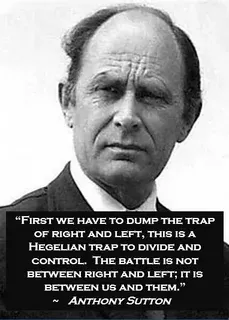
This series of posts will insure that these free thinkers' works live on in living memory.
If only a few.
There is a reason these books are not taught in the modern skools.
Setting rewards to burn only burns the author portion of the payout.
If you think this type of content should be eligible for author rewards, make your voice heard in this community:
created/hive-104940