

Hundreds of scientists from various countries found evidence of the corona virus spreading in the air and urged the World Health Organization (WHO) to revise its recommendations.
Previously, WHO had long assumed that the SARS-CoV-2 virus only spread through droplets or breathing sparks when someone coughs or sneezes. However, evidence of the presence of smaller virus particles in the air that can infect humans has been revealed by scientists in an open letter to WHO.
A total of 239 scientists who wrote open letters to WHO, the United States CDC and other health institutions, urged changes to public guidelines on the spread of the SARS-CoV-2 virus.
WHO guidelines focus on several health protocols, namely washing hands, maintaining social distance (physical distancing) and preventive measures against droplets with the use of masks.
An open letter from world scientists to WHO was published last Monday in the journal Clinical Infectious Diseases.

Aerosols behave like cigarette smoke
Scientists say health institutions are thought to be still ignorant of small drops of the virus that spurts from our mouths, become aerosols and float in the air, which is likely to be a way of transmitting Covid-19.
"They do not want to talk about airborne transmission, because that would make people afraid," said Donald Milton, professor of environmental health at the University of Maryland as reported by CNN on Wednesday (07/08/2020).
A study published in mid-March found that the new corona virus can survive in microscopic respiratory droplets about 2.5 microns in diameter, even smaller and can last up to 3 hours.
Meanwhile, Harvard researchers, Allen and Linsey Marr, professor of civil and environmental engineering at Virginia Tech, published a paper that revealed the role of smaller air particles in the spread of the corona virus that causes Covid-19.
They say it's impossible for someone to release large droplets (> 5 microns) without releasing smaller ones.
Marr discovered the flu virus could float in the air in microscopic droplets for an hour or more, to explain it he used cigarettes to show how the virus spreads.
Small microscopic particles called aerosols behave like cigarette smoke. So they will be more concentrated closer to smokers who might be infected. When you get farther away, the exposure will be far less," explained Marr.
Fabric masks need to be coated with filters
Infectious disease expert William Schaffner Schaffner, professor of preventive medicine and infectious diseases at Vanderbilt University School of Medicine in Nashville agreed with the CDC, that most Covid-19 transmission occurs within a distance of 3-6 feet from an infected person.
However, is there another way where the virus can become aerosolic and spread in the air?
Schaffner acknowledged that the potential exists, if future public health investigations find that aerosol transmission events are more common than currently thought, it can change priorities.
"But I don't think we need to change all air-conditioning units (air conditioners) in the United States, even throughout the world based on this transmission route," Schaffner said.
He emphasized the importance of maintaining social distance and avoiding crowds to reduce virus transmission.
So whether the mask can protect from microscopic droplets in the air?
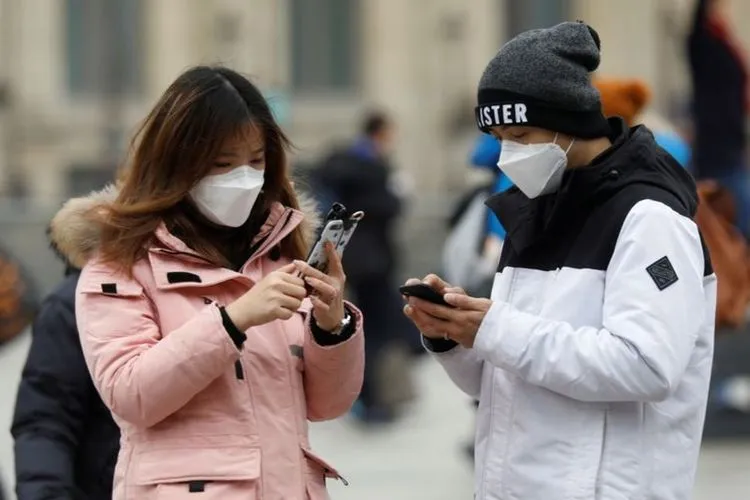
N95 masks and surgical masks are considered capable of holding droplets, both from the wearer, and those in the air. Therefore, scientists continue to study the effectiveness of homemade masks to be able to ward off virus particles in the air.
"Most fabric masks, not coated in filtration, can hold harmful particles," said Sara Greenstein, CEO of Lydall, the company producing N95 masks.
Milton said the best vaccine against fear is knowledge and empowers people to look after themselves.
"Why masks are important, because they block aerosols from their source, it's easy to block them (corona virus transmission)," Milton explained.