


Español
Saludos, comunidad de Holos&Lotus, espero que se encuentren muy bien en esta ocasión, ¿qué tal? 💙✨
Lo anterior fue un ejemplo acerca del tema del cual quiero hablar hoy: la idealización, la cual puede llevar a que “Daniel” trate mal a “Cecilia”, porque ella cree que él es mejor de lo que realmente es (o también podría ser al contrario, ya que no es cuestión de géneros).
He oído decir: si no esperas algo, entonces no te vas a decepcionar.
Nadie es perfecto, partamos de ahí, somos personas con virtudes y defectos. La idealización hacia un individuo es dañina no solo para uno mismo, sino para la otra persona, porque de un lado ponemos un gran peso sobre la otra persona con tantas expectativas que esperamos que cumpla, y, por otro lado, terminas viviendo en una fantasía, donde nos relacionamos con alguien que quizá de plano no existe, como vimos en el caso del principio. Esto sucede porque, precisamente, la idealización consiste en exagerar las cualidades positivas de una persona, pasando por alto sus cualidades no tan positivas o defectos, por lo que precisamente terminamos teniendo una falsa idea de esa persona.
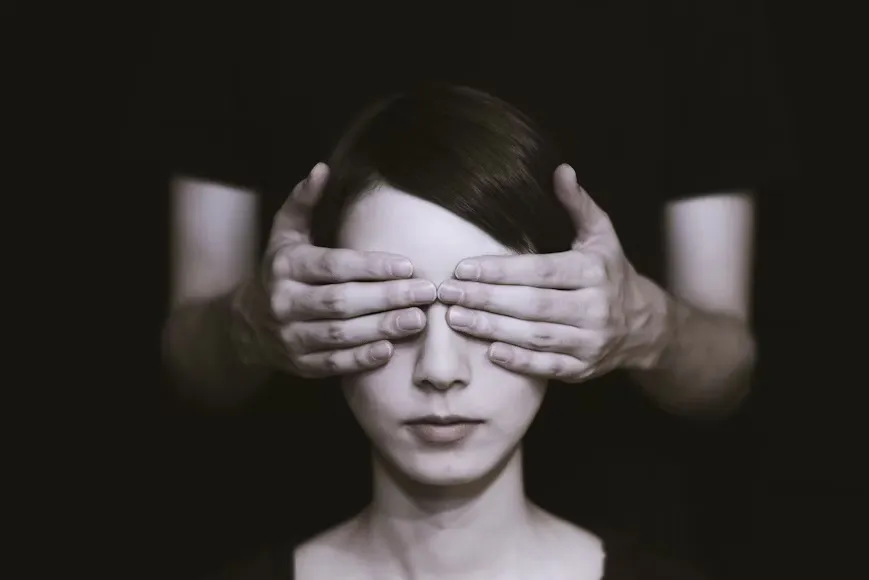 Foto de Ryoji Iwata en Unsplash
Aunque, esto puede llegar a ser algo ¿normal? Al iniciar una relación, por eso al principio solemos ver a las personas como si fueran perfectas, como si fueran lo mejor del mundo, y como si fueran increíbles, pero esta ilusión termina desvaneciéndose con el tiempo, lo que termina dando paso a lo que algunas personas conocen como “amor real” que es cuando quieres a una persona con todo y sus defectos, porque al final todos los tenemos. Pero hay algo importante que quiero recalcar aquí:
Primero, las personas tienden a llamar “defectos” a una cuestión que de plano está mal, por ejemplo, si tienes una pareja controladora, o que es egocéntrica, o no te respeta, eso de plano ya no son pequeños defectos, son problemas que esa persona y nadie más que esa persona debería tratar de mejorar. Como, por ejemplo, en el caso de Daniel, una persona con mal temperamento y que trata mal a su pareja. No son actitudes que sean solo defectos, parte de la forma de ser de una persona, yo pienso que ya son cuestiones que deberían lograrse para poder convivir de forma sana con nuestro entorno.
Lo segundo, es que hay opiniones que, sé que hay que respetarlas todas, pero hay unas que ya meramente me parecen dañinas, y es cuando una persona piensa que el amor real en las relaciones comienza cuando se pelean, se llevan mal, no se soportan… ¿Qué?
Lo único que quiero decir que el amor real es aquel que te hace sentir bien, te hace sentir seguro, te hace sentir en paz (al menos es lo que yo pienso), pero si no se soportan y no se tratan bien, tal vez no deberían estar en una relación. El amor no se trata de sufrir.
Por último, y antes de pasar a lo siguiente, también he llegado a leer que hay personas que afirman que “a los 3 meses de relación, ya se deja de idealizar a la pareja” y a ver, no puedo confirmarlo ni negarlo, simplemente me pregunto ¿cuál es la necesidad de medir todo con tiempos y demás? Son cosas que pueden variar de persona a persona, y si estoy escribiendo esto es porque precisamente hay quienes nunca dejan de idealizar. Yo pienso que el amor no es algo que la gente deba tratar de medir, explicar, controlar, o intentar crear protocolos raros solo para sentirlo. Es un sentimiento, que no siempre termina como uno quiere, pero si todo fuera como uno quisiera y como uno esperara, ¿qué sentido tendría la vida?
 Foto de Ryan Franco en Unsplash
Como dije anteriormente, el problema con la idealización, es lo que viene después: la decepción. Con el pasar del tiempo, es posible que se deje de ver al otro como un ser perfecto, y es cuando se siente la decepción y hasta la traición por parte de la otra persona, que sobra decir que la percepción que tenga otro acerca de nosotros no siempre es culpa nuestra, sobre todo en este caso.
O la otra salida es quizás aún más triste, vendría siendo el caso en el que no se sale de la idealización, donde las personas evitan la realidad y buscan las mil y una excusas para seguir manteniendo esa percepción acerca de la otra persona, cosa que es especialmente peligrosa si tenemos en cuenta que se suelen dejar pasar por alto actitudes inaceptables solo para evadir la verdad. Como tal vez sea el caso de Cecilia, quien quizá termine justificándolo y soportando lo que no debería, hasta que la relación acabe.
 Foto de Tina Markova en Unsplash
No es sano idealizar, y no diré que evitemos caer en esto porque puede llegar a ser algo que escape de nuestras manos, y es tan tonto como decirle a alguien triste “no estés triste”. De hecho, una de las causas de la idealización es precisamente la baja autoestima, y la única manera de lidiar con esta situación es cuestionándonos a nosotros mismos, e intentando fortalecer nuestra autoestima, porque recuerda que antes de amar a alguien, tenemos que amarnos a nosotros mismos, para así no tolerar actitudes injustas hacia nuestra persona. No sean como Cecilia, una mujer con baja autoestima que deja pasar los malos tratos porque piensa que “no es para tanto” y que seguro está entendiendo mal el comportamiento de Daniel. Eso sí, no todas las personas que idealicemos sean siempre malas, con mal temperamento y malas actitudes, a veces son simplemente personas, porque nadie es perfecto.
Es importante aceptar a las personas tal y como son, y no como nosotros queremos que sean, que es cuando realmente se da un amor bonito y sano. Y sin nada más que añadir, queridos, espero que hayan disfrutado leer mi post tanto como yo disfruté escribirlo. Se me cuidan, pórtense bien y no se olviden de sonreír. Haaasta la próxima, muaaak. 💙✨
English
Greetings, Holos&Lotus community, I hope you are very well this time, how are you? 💙✨
The above was an example about the topic I want to talk about today: idealization, which can lead to “Daniel” treating “Cecilia” badly, because she thinks he is better than he really is (or it could also be the other way around, since it is not a matter of gender).
I've heard it being said: if you don't expect something, then you won't be disappointed.
Nobody is perfect, let's start from there, we are people with virtues and defects. Idealization towards an individual is harmful not only for oneself, but also for the other person, because on one hand we put a great weight on the other person with so many expectations that we expect him/her to fulfill, and on the other hand, we end up living in a fantasy, where we relate to someone who may not exist, as we saw in the case at the beginning. This happens precisely because idealization consists of exaggerating the positive qualities of a person, overlooking their not so positive qualities or defects, so we end up having a false idea of that person.
Photo by Ryoji Iwata in Unsplash
Although, this can become something... normal? When starting a relationship, that's why at the beginning we usually see people as if they were perfect, as if they were the best in the world, and as if they were amazing, but this illusion ends up fading over time, which ends up hopefully becoming to what some people know as “real love” which is when you love a person with everything and their flaws, because in the end we all have them. But there is something important I want to emphasize here:
First, people tend to call “defects” to an issue that is flatly wrong, for example, if you have a controlling partner, or who is self-centered, or does not respect you, these are not flatly small defects, they are problems that that person and no one else but that person should try to improve. As, for example, in the case of Daniel, a person with a bad temper and who treats his partner badly. These attitudes are not just defects, part of a person's way of being, I think they are issues that should be solved in order to be able to live in a healthy way with our environment.
The second thing is that there are opinions that, I know we have to respect them all, but there are some that seem to me merely harmful, and that is when a person thinks that real love in relationships begins when they fight, get along badly, can't stand each other... What?
All I want to say is that real love is the one that makes you feel good, makes you feel safe, makes you feel at peace (at least that's what I think), but if you can't stand each other and don't treat each other well, maybe you shouldn't be in a relationship. Love isn’t about suffering.
Finally, and before moving on, I have also read that there are people who claim that “after 3 months of relationship, you stop idealizing your partner” and let's see, I can neither confirm nor deny it, I just wonder what is the need to measure everything in time and so? These are things that can vary from person to person, and if I am writing this is precisely because there are those who never stop idealizing. I think that love is not something that people should try to measure, explain, control, or try to create weird protocols just to feel it. It is a feeling, which does not always end up the way you want it to, but if everything was the way you wanted it to be and the way you expected it to be, what would be the meaning of life?
Photo by Ryan Franco in Unsplash
As I said before, the problem with idealization is what comes next: disappointment. As time goes by, it is possible that we stop seeing the other person as a perfect being, and it is when we feel the disappointment and even betrayal by the other person, needless to say that the perception that the other person has about us is not always our fault, especially in this case.
The alternative is perhaps even sadder, it would be the case in which there is no way out of the idealization, where people avoid reality and look for a thousand and one excuses to continue maintaining that perception about the other person, which is especially dangerous if we take into account that unacceptable attitudes are often overlooked just to avoid the truth. As may be the case of Cecilia, who may end up justifying it and putting up with what she should not, until the relationship ends.
Photo by Tina Markova in Unsplash
It is not healthy to idealize, and I will not say that won't fall into this because it can become something that escapes from our hands, and it is as silly as telling someone sad “don't be sad”. In fact, one of the causes of idealization is precisely low self-esteem, and the only way to deal with this situation is to question ourselves, and try to strengthen our self-esteem, because we have to remember that before we can love someone, we have to love ourselves, so as not to tolerate unfair attitudes towards ourselves. Don't be like Cecilia, a woman with low self-esteem who lets abuse pass because she thinks that “it's not that bad” and that she is surely misunderstanding Daniel's behavior. Of course, not all the people we idealize are always bad, with bad temperament and bad attitudes, sometimes they are just people, because nobody is perfect.
It is important to accept people as they are, and not as we want them to be, which is when beautiful and healthy love really happens. And with nothing more to add, my dears, I hope you enjoyed reading my post as much as I enjoyed writing it. Take care, be well and don't forget to smile. See you neeeext time, mwaaah. 💙✨
Créditos | Credits
Portada | Cover: Foto de Annie Spratt en Unsplash. Editada en Canva | Photo by Annie Spratt in Unsplash. Edited in Canva
Traducción al inglés | English translation: DeepL