
Caituco que parece flor.
Aliviará las penas de la malherida.
Dicen que con aceite alivia las quemaduras y da color a la masa.
Mal querida por sus hijos que probaron algún poder.

Amarga hiel cubre la otrora feliz ciudad, cuna de los poetas.
Ahora a un leproso Cumaná busca que su suplicio alivie.
Un Salmerón dispuesto a rimar y conjurar con su final la sed.
Del castillo a Santa Inés pasear, con sarna y sin agua.
Triste deambular del Turimiquire a San Juan, sin dragar.
No hay sosiego ni paz. De La Guanota al Tacal, descarnado canalizar.
Aliviadero seco y canales de riego tapiados cual sanitario relleno.
Manzanares, no los dejes pasar. Zamurito los va a llevar.
No caerá el justo, no hay. Solo turbios aplaudidores de palmas secas.
Calle larga, el tamarindo se seca, el teatro tan solo como el polo norte.
Quien te viera y quien te ve. Primogénita sultana vendida por tres lochas.
El indio desnudo y Bartolomé, convidados de piedra en la atrocidad.

Primogénita del continente, cuna del Abel de América. Mientras los zamuros la invaden atraídos por lo que los alcaldes no llevan a enterrar al Peñón y no aparece un gobernador un poco mejor que aquel de cuando quemó el palacio y quedó la fachada en su cumpleaños 69.
Fachadas y cascarones vacíos, simuladores erigiendo monolitos cual mojones marcando la ruta de la destrucción.
A Pompeya la enterró la lava, a Cumaná la desesperación. Semanas sin agua por un acueducto en ruinas y, como si faltase una guinda al pastel, a la falta de gas se sumará el racionamiento de electricidad.
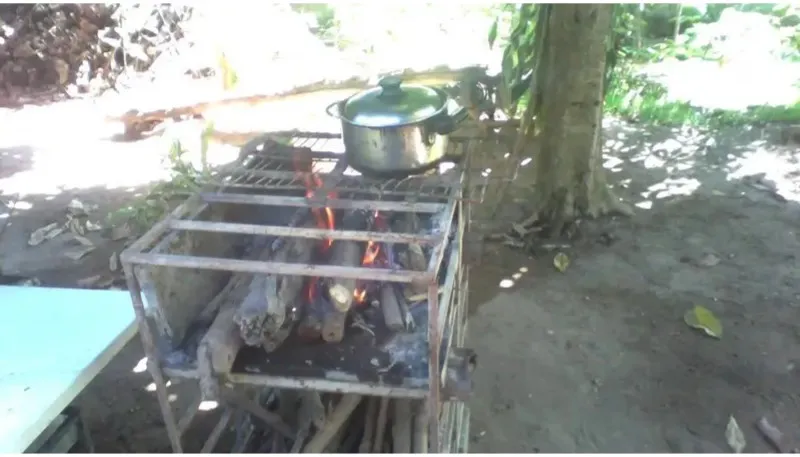
Mariscala y bolivariana, qué triste y sola se queda. ¿Quién cruzará los puentes sobre el Manzanares? Ya nadie lo quiere pasar.
Carnaval sin Tarzán, ni Pituca. Semana Mayor sin procesión ni empanadas de cazón. Ni siquiera sonarán las campanas. ¿Quién se lo puede creer? Pero fue que se las robaron también.
Tal vez alegarán que no es verdad, que todo es mentira, como aquel; yo digo que todo es según el cristal con que se mira.
Esta célebre frase pertenece al poeta español Ramón de Campoamor (1817-1901), extraída de su poema "Las dos linternas". El verso completo es: "En este mundo traidor, nada es verdad ni mentira; todo es según el color del cristal con que se mira".
Cumaná
Caituco, which looks like a flower.
It will soothe the wounds of the badly hurt.
They say that with oil it soothes burns and gives color to dough.
Ill-loved by her children who tasted some power.
Bitter gall covers the once happy city, cradle of poets.
Now Cumaná seeks to relieve the suffering of a leper.
A Salmerón ready to rhyme and conjure away thirst with his end.
From the castle to Santa Inés, to wander, with mange and without water.
Sad wandering from Turimiquire to San Juan, without dredging.
There is no rest or peace. From La Guanota to Tacal, a stark channeling.
Dry spillway and clogged irrigation canals like a landfilled toilet.
Manzanares, don't let them pass. Zamurito will take them.
The righteous will not fall, there are none. Only murky applauders with withered palms. Long street, the tamarind tree dries up, the theater as lonely as the North Pole.
Who would have thought it then, and who sees it now? Firstborn sultana sold for three coins.
The naked Indian and Bartolomé, silent witnesses to the atrocity.
Firstborn of the continent, cradle of the Abel of America. While vultures swarm, drawn by what the mayors fail to bury at the Rock, and no governor appears who's even slightly better than the one who burned down the palace, leaving only the facade standing on his 69th birthday. Facades and empty shells, pretenders erecting monoliths like milestones marking the path of destruction.
Pompeii was buried by lava, Cumaná by despair. Weeks without water due to a ruined aqueduct, and, as if the cherry on top weren't enough, the gas shortage will now be compounded by electricity rationing.
Marshal and Bolivarian, how sad and alone she remains. Who will cross the bridges over the Manzanares? No one wants to cross it anymore.
Carnival without Tarzan, without Pituca. Holy Week without processions or shark empanadas. Not even the bells will ring. Who can believe it? But they were stolen too.
Perhaps they'll claim it's not true, that it's all a lie, like that one; I say that everything depends on the lens through which it's viewed.
This famous phrase belongs to the Spanish poet Ramón de Campoamor (1817-1901), taken from his poem "The Two Lanterns." The complete verse is: "In this treacherous world, nothing is true or false; everything depends on the color of the lens through which it's viewed."
Photographs from my personal archive; the English version has been translated by Google Translate.

Fotografías de mi archivo personal; la versión en inglés ha sido traducida por Google Translate.