
El escenario entre la vida y el dolor
Todos tenían realidades y dolencias distintas, sin embargo, todos coincidían en la espera, una que era larga y tardía.
Las caras de dolor, sueño, hambre y cansancio, se podían observar en cada una de las personas en la sala de espera del hospital.
Algunos niños jugaban con botellas de agua vacía, mismas que habían bebido hacía varias horas atrás. El silencio no estaba presente en absoluto y el bullicio de las voces y sus propios quejidos impregnaban las paredes manchadas de la sala de espera, mismas que alguna vez fueron blancas.
Aquel bullicio cesaba ante el sonido de un parlante lejano, una voz algo distorsionada recitaba los nombres de aquellos suertudos qué por fin recibirán la atención médica necesaria.

Seguían pasando los segundos, seguidos por los minutos para convertirse en eternas horas, horas sentados en sillas duras de frío metal, de ese que te recuerda que estás vivo, dolorido, pero vivo y que la espera que ilusamente pensaron sería breve se ha hecho tan extensa como un libro grueso de latín antiguo.
Algunos se iban, la espera era el motor de su decisión, otros permanecían y otras tantas llegaban, era como si fuese un recambio de trabajadores o actores en esta obra dramática de dolencias eternas y distintas. Caras nuevas, otras viejas, conversaciones entre extraños unidos por el mismo padecimiento, dolores de cabeza, estómago, otros tantos con contusiones y claro está, los graves, esos que pasan saltando el protocolo del mesón de admisión, aquel que está custodiado por simples mortales que se creen dioses en un falso olímpo sin togas ni tocados de olivo.
Nuevamente la voz distorsionada llamaba a alguien, sin embargo este llamado se volvía nada ya que la persona nombrada se ha marchado, aburrido, cansado y dolorido, pero se ha ido, tres veces se canta el nombre, mismas en las que no hay respuesta, y en lugar de llamar al siguiente en esta larga y eterna lista, queda el silencio, la voz de aquel tras el micrófono y parlante aún con más poder que los de afuera se silencia, dejando al resto a la disyuntiva de saber cuantas horas más faltan, cuántas personas están por sobre sí mismas.
El bullicio de antes, monótono y resignado, estalla ahora eufórico y enojado; las caras antes dóciles ahora parecen ser dragones de esos que escupen fuego al ver llegar al caballero. La espera sigue, sin piedad alguna, los quejidos aumentan tratando de crear una súplica en cadena, una que no se escucha y queda tatuado en las paredes opacas de la sala de espera.
De pronto la luz del sol se apaga al igual que se apaga la esperanza, comienzan a encenderse las lámparas en el techo , una tras otra siguiendo su propia pauta. Nuevamente el silencio se apodera de aquella sala de espera, misma donde ahora han entrado perros callejeros, aquellos que usan esta sala de enfermos como su propio hogar. Algunas personas duermen tumbados en esas sillas duras, frías, sin calor de hogar ni menos comodidad.
El llanto aparece como lo hace el actor en su escena, entra suave volviéndose gigante, haciéndose ver y notar por todos, llama al público sin querer hacerlo y en medio del escenario de baldosas sucias, migajas y sangre el público lanza sus miradas curiosas. Llegan al blanco del que ya no aguanta, del que cae y ruega, el llanto del dolor profundo ruge antes de perder la fuerza y dejarse vencer como el león anciano. En medio de este, los gritos de los mismos pacientes emergen como una alegoría furiosa, reclaman, golpean la puerta que los divide como sintiendo que el derribarla acabará el dolor colectivo como si esto fuera una insulsa magia.
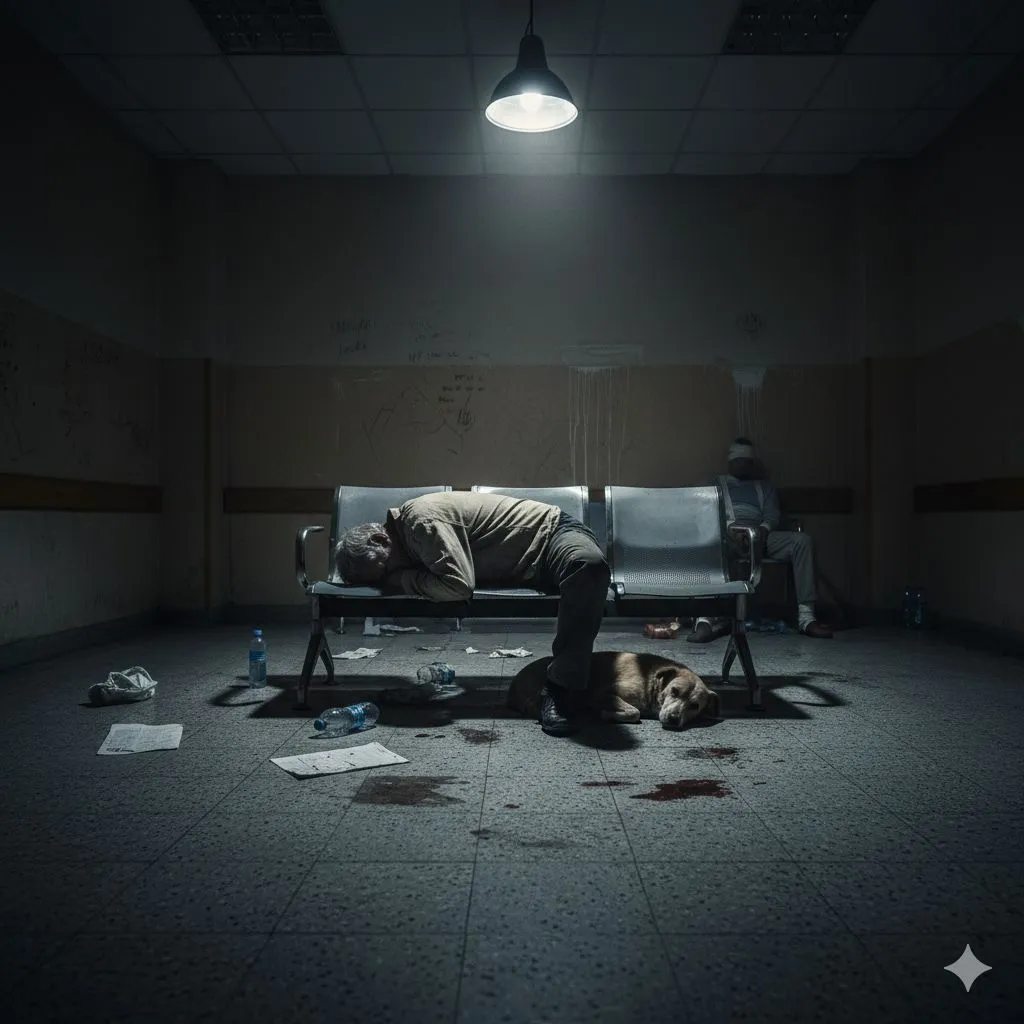
Vivencias que duelen, a las que nadie quiere llegar, sin embargo es algo que hay que saber llegará algún día cuando la salud huya de nuestro propio cuerpo y seamos uno más en esta obra donde pocos aguantan y muchos lloran.
English
The scenario between life and pain
They all had different realities and ailments, yet they all shared the same long and delayed wait.
The faces of pain, sleepiness, hunger, and exhaustion could be seen on each of the people in the hospital waiting room.
Some children played with empty water bottles, which they had drunk from several hours earlier. Silence was nowhere to be found, and the hubbub of voices and their own moans permeated the stained walls of the waiting room, which were once white.
That noise ceased at the sound of a distant loudspeaker, a somewhat distorted voice reciting the names of those lucky ones who would finally receive the necessary medical attention.
The seconds passed, followed by the minutes, turning into endless hours, hours spent sitting on hard, cold metal chairs, the kind that remind you that you are alive, in pain, but alive, and that the wait they had naively thought would be brief has become as long as a thick book of ancient Latin.
Some left, the wait being the driving force behind their decision, others remained, and still others arrived. It was as if they were a replacement cast of workers or actors in this dramatic play of eternal and varied ailments. New faces, old faces, conversations between strangers united by the same suffering, headaches, stomachaches, others with bruises and, of course, the serious ones, those who skip the protocol of the reception desk, guarded by mere mortals who believe themselves to be gods in a false Olympus without togas or olive wreaths.
Once again, the distorted voice called out to someone, but this call came to nothing as the person named had left, bored, tired and in pain, but gone. The name is sung three times, with no response, and instead of calling the next person on this long and endless list, there is silence. The voice behind the microphone and loudspeaker, even more powerful than those outside, falls silent, leaving the rest with the dilemma of knowing how many more hours are left, how many people are above them.
The previous monotonous and resigned hubbub now explodes into euphoria and anger; the previously docile faces now look like dragons spitting fire at the sight of the knight arriving. The wait continues, without mercy, the moans increase, trying to create a chain of pleas, one that is not heard and remains tattooed on the opaque walls of the waiting room.
Suddenly, the sunlight fades, as does hope, and the lamps on the ceiling begin to light up, one after another, following their own pattern. Once again, silence takes over the waiting room, where stray dogs have now entered, using this sick room as their own home. Some people sleep lying on those hard, cold chairs, without the warmth of home or comfort.
The crying appears as the actor does in his scene, entering softly and becoming giant, making himself seen and noticed by everyone. He calls out to the audience without meaning to, and in the middle of the stage of dirty tiles, crumbs and blood, the audience casts its curious glances. They reach the target who can no longer bear it, who falls and begs, the cry of deep pain roars before losing strength and giving in like the old lion. In the midst of this, the cries of the patients themselves emerge like a furious allegory, they protest, they bang on the door that divides them as if they feel that knocking it down will end the collective pain, as if this were some kind of insipid magic.
Experiences that hurt, that no one wants to go through, yet it is something we must know will come one day when health flees from our own bodies and we become one more in this play where few endure and many cry.
