

¡Hola, gente de internet! Hoy quiero hablarles sobre la Psiquiatría en la antigüedad. Soy de las personas que suelen leer acerca de todo tipo de temas, y la psiquiatría siempre me ha llamado la atención. Vamos a conocer sus nefastos orígenes a continuación:
Hello internet people! Today I want to talk to you about Psychiatry in ancient times. I'm one of the people who usually read about all kinds of topics and psychiatry has always caught my attention. We are going to know its nefarious origins below:

En un inicio, los enfermos mentales eran temidos debido a que las personas asociaban sus comportamientos erráticos y fuera de lugar, con el diablo o procesiones demoníacas. El temor derivaba de sus férreas creencias religiosas del desconocimiento de uno de los órganos más importantes que tenemos, el cerebro.
Initially, the mentally ill were feared because people associated their erratic and misplaced behaviors with the devil or demonic processions. The fear derived from their strong religious beliefs of ignorance of one of the most important organs we have, the brain.
Es así como ese hecho da lugar al primer método de «cura» para los pacientes mentales... La Trepanación.
This is how this fact gives rise to the first method of "cure" for mental patients ... Trepanation.

Este método consistía en abrir un orificio en el cráneo para ahuyentar a los malos espíritus que los pacientes guardaban en su cabeza... Suena terrible y realmente lo era pues, lógicamente no ayudaba en nada, sino todo lo contrario, la herida abierta y el cerebro expuesto solo podía dar cabida a otras enfermedades por infección.
This method consisted of opening a hole in the skull to scare away the evil spirits that the patients kept locked in their heads... It sounds terrible and it really was because, logically it didn't help at all but quite the opposite, the open wound and the The exposed brain produced other diseases by infection.
Se han hallado cráneos con uno o más agujeros, evidencias de este catastrófico tratamiento.
Skulls with one or more holes have been found, evidence of this catastrophic treatment.

En la antigua Roma, se creía que los astros, sobre todo la luna, tenían que ver en los comportamientos de los pacientes mentales, de hecho de ahí deriva el término despectivo «lunático». Se cree que el propio Calygula era esquizofrénico y que a medida que avanzó el tiempo, su mal fue empeorando, pero que su estatus lo salvó de correr la misma suerte que los demás enfermos mentales.
In ancient Rome, it was believed that the stars, especially the moon, had to do with the behavior of mental patients, in fact, the derogatory term "lunatic" derives from this. It's believed that Calygula was schizophrenic and that as time progressed his illness was getting worst but his status saved him from suffering the same fate as the other mentally ill.
Entre 1500 y 1700, los fervientes religiosos quemaron en hogueras a miles de enfermos mentales por creerlos descarriados y hechiceros. Digamos que era el mismo diagnóstico que con la Trepanación, pero el tratamiento era más sádico, pues no tenía la intención de «ayudar», sino de exterminar.
Between 1500 and 1700, fervent religious people burned thousands of mentally ill people at stake, believing them to be misguided and sorcerers. Let's say it was the same diagnosis as Trepanation, but the treatment was more sadistic, not intended to "help", but to exterminate.

En el siglo XVI se popularizó la Exanguinación, práctica que consistía en abrir heridas y dejar salir la sangre por cierta cantidad de tiempo. Otra método que tenían los médicos era emplear sanguijuelas sobre el cuerpo del enfermo y dejarlas succionar la sangre del paciente.
In the sixteenth century Exsanguination became popular, a practice that consisted of opening wounds and letting the blood come out for a certain amount of time. Another method that doctors had, was to use leeches on the body of the patient and let them suck the blood of the patient.

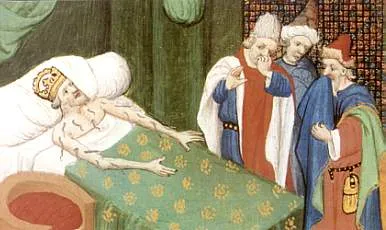
Los médicos creían que los males se concentraban en la sangre y que, por lo tanto, sacándola del cuerpo, también sacaban el mal.
Doctors believed that the evils were concentrated in the blood and that, therefore, by removing it from the body, they also removed the evil.
Siguiendo el mismo diagnóstico de que las enfermedades mentales se debían a lo que llamaban, «sangre contaminada», el Dr. Benjamin Rush, diseñó La caja giratoria. Según él, la fuerza de centrifugado, distribuiría correctamente la sangre del cerebro a las extremidades, manos y dedos. En el caso de que el paciente vomitara, tanto mejor pues, ya habrían expulsado los líquidos malignos del cuerpo.
Following the same diagnosis that mental illnesses were due to what they called, "contaminated blood", Dr. Benjamin Rush, designed "The spinning box". According to him, the force of centrifugation, would correctly distribute the blood from the brain to the extremities, hands and fingers. In the event that the patient vomited, so much the better, they would have already expelled the malignant fluids from the body.

Posteriormente, se creó El sillón tanquilizador que simplemente condensó todos los métodos anteriores en uno solo (a excepción del centrifugado). Se trataba de una silla con correas donde el paciente era atado muchas veces por más de seis meses, con una caja en la cabeza que les cubría la visión, y allí eran exanginizados, les ponían agua caliente o fría encima y también bolsas de hielo en los pies.
Subsequently, "The reassuring chair" was created which simply condensed all of the above methods into one (with the exception of spinning). It was a chair with straps where the patient was tied many times for more than six months, with a box on the head that covered their vision and there they were exanginized, they put hot or cold water on top and also ice bags in the feet.

A partir del siglo XVII, las poseciones demoníacas fueron descartadas como diagnóstico. A los «locos» se les mantenía encerrados en calabozos, lejos de la sociedad. Estos claustros fueron llamados Manicomios.
Beginning in the 17th century, demonic possessions were ruled out as a diagnosis. "The crazy people" were kept locked up in dungeons, away from society. These cloisters were called Madhouses.
A mediados del siglo XVIII, muchos de estos lugares funcionaban prácticamente como un circo donde los pertenecientes a la alta sociedad, pagaban una entrada y podían asistir para divertirse o entretenerse con los enfermos mentales.
In the middle of the 18th century, many of these places practically functioned as a circus where those belonging to high society paid and could attend to make fun of the mentally ill.
El primer médico en tomar un actitud diferente fue Felipe Pinel, en 1790 quien a su llegada al hospital que iba a dirigir y ver el estado de los pacientes, se horrorizó y ante la crítica y el espanto de sus compañeros, mandó a liberar a los pacientes, a darles habitaciones con buena ventilación y luz solar, además de darles acceso a los jardines.
The first doctor to take a different attitude was Felipe Pinel, in 1790, who upon arrival at the hospital who was going to direct and see the condition of the patients, was horrified and faced with the criticism and fright of his companions, he ordered the release of the patients, to give them rooms with good ventilation and sunlight, he also give them access to the gardens.
En 1813 una investigación expuso el destino de un paciente que fue atado en una especie de estructura que le apresaba el cuerpo del cuello hacia abajo, en el sótano del hospital en el que residía por 14 años consecutivos.
In 1813 an investigation exposed the fate of a patient who was tied up in a kind of structure that seized his body from the neck down, in the basement of the hospital where he had resided for 14 consecutive years.
Debido a que la sociedad estaba cambiando, ese hecho generó indignación, de modo que los calabozos de locos fueron convertidos en hospitales «adecuados a la rehabilitación»
Because society was changing, that fact generated outrage, so that the insane cells were turned into hospitals "fit for rehabilitation."
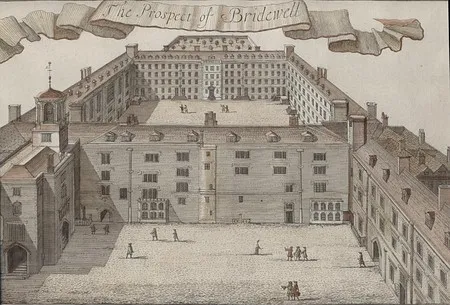
A partir de 1800 el término Manicomio fue reemplazado por Hospital mental.
From 1800 the term Madhouse was replaced by Mental Hospital.
La psiquiatría como tal llegó, y los psiquiatras ahora adjudicaban las enfermedades mentales a un origen físico en el cerebro, y aunque no se equivocaban del todo, no existía aún la neurociencia, los estudios estaban supremamente limitados y no se podía diferenciar unas enfermedades mentales de otras, siemplemente se había determinado que en un paciente mental el cerebro estaba enfermo.
Psychiatry as such arrived, and psychiatrists attributed mental illnesses to a physical origin in the brain, and although they were not entirely wrong, neuroscience did not yet exist, studies were extremely limited and mental illnesses could not be differentiated from others, it had simply been determined that in a mental patient the brain was diseased.
Uno de los nuevos métodos de tratamiento fue «El Mesmerismo» (llamado así en honor a su creador) que trataba de influenciar la mente del paciente mediante el método de ponerlo en trance.
One of the new methods of treatment was "Mesmerism" (named after its creator) which tried to influence the mind of the patient by putting him into a trance.
Si bien los psiquiatras no tomaban muy en serio a Mesmer, ni a sus teorías, sí tomaron los principios básicos del trance, y tras unas modificaciones, inventaron la Hipnosis.
Although the psychiatrists didn't take Mesmer or his theories very seriously, they did take the basic principles of trance and after some modifications, they invented Hypnosis.

Sigmund Freud es quien luego de diversas hipótesis, llega a la conclusión de que no es necesaria la Hipnosis, sino el psicoanálisis, pues, según él, las enfermedades mentales no se originaban propiamente en el cerebro, sino que estaban arraigadas a un incidente en la etapa temprana de socialización de in infante.
Sigmund Freud is the one who, after various hypotheses, reaches the conclusion that hypnosis is not necessary but psychoanalysis, because, according to him, mental illnesses didn't originate in the brain, but were rooted in an incident in the early stage of life socialization of an infant.
En términos más simples, con el psicoanálisis, Freud quería extraer los deseos y recuerdos perdidos, reprimidos en el subconsciente del paciente, haciendo preguntas claves muy bien formuladas y analizando cuidadosamente las respuestas.
In simpler terms, with psychoanalysis, Freud wanted to extract the lost wishes and memories, repressed in the subconscious of the patient, asking well-formulated key questions and carefully analyzing the answers.
Aunque era un gran avance para pacientes turbados, con depresión o alguna enfermedad leve, no funcionaba para los pacientes más graves.
Although it was a breakthrough for troubled patients, those with depression or some mild illness, it didn't work for the more serious patients.
Se empezó a emplear insulina para hacer convulsionar a los pacientes, posteriormente se les suministraba glucosa para detener la convulsión, y así crear una relajación artificial en el cuerpo para los pacientes más activos o violentos, sin embargo, estos métodos eran muy peligrosos pues, de no hacerse correctamente, los pacientes corrían peligro de morir.
Insulin was used to make patients convulse, later they were given glucose to stop the seizure, and thus create an artificial relaxation in the body for the most active or violent patients, however, these methods were very dangerous because, of not done correctly, patients were in danger of dying.
En 1937 se empleó por vez primera el Electroshock a manos de dos médicos italianos. La práctica fue un éxito y no tardó en extenderse por todos los hospitales psiquiátricos. Funcionó más que todo en pacientes depresivos.
In 1937 the Electroshock was used for the first time by two Italian doctors. The practice was successful and soon spread to all psychiatric hospitals. It worked most of all in depressed patients.

Sin embargo, el abuso sobre los pacientes llevó al declive a esta práctica, Mientras que normalmente se usaba de tres a cinco sesiones, habían pacientes en quienes eran usadas entre 300 a 500 sesiones sin parar, atrofiando el cerebro. Además, se empezó a utilizar el método como castigo.
However, abuse on patients led to the decline of this practice. While it was normally used for three to five sessions, there were patients in whom 300 to 500 sessions were used non-stop, atrophying the brain. In addition, the method began to be used as punishment.
La lobotomía empezó llamándose «Lobotomia frontal» pues, se trataba de una intervención quirúrgica en donde se insertaba un instrumento fino por un lado de la cabeza y se raspaba hasta cortar las conexiones entre ambos lóbulos del cerebro, con el fin de lograr un cambio contrario en la personalidad errática o agresiva de un paciente. Tuvo un gran éxito en su momento y Egas Moniz ganó un premio Nobel de medicina por su aporte.
The lobotomy began by being called "Frontal Lobotomy" because it was a surgical intervention where a fine instrument was inserted on one side of the head and scraped until the connections between both lobes of the brain were cut, in order to achieve an opposite change. in the erratic or aggressive personality of a patient. It was very successful at the time and Egas Moniz won a Nobel Prize in medicine for his contribution.
Pese a que Moniz era reacio a emplear esta cirugía en todo paciente debido a que según él había riesgos y no en todos funcionaba igual, Walter Freeman vio en la lobotomía una opción para calmar a los pacientes agresivos hacinados en los hospitales mentales. Así pues, ideó un método ambulatorio, más rápido y «más eficiente» la Lobotomia transorbital.
Although Moniz was reluctant to use this surgery in all patients because according to him there were risks and it didn't work the same in all, Walter Freeman saw in lobotomy an option to calm aggressive patients crowded in mental hospitals. Thus, he devised an outpatient, faster and "more efficient" method, the transorbital Lobotomy.
También llamada «la técnica del pica hielo» consistía en introducir a fuerza un instrumento parecido a un pica hielos por la cuenca del ojo y sin anestesia de ningún tipo, y cortar las conexiones entre ambos lóbulos frontales del cerebro.
Also called "the ice pick technique" it consisted of forcing an instrument similar to an ice pick through the eye socket and without any kind of anesthesia, cutting the connections between both frontal lobes of the brain.
La primera operación fue un rotundo fracaso pues, a medida que avanzaban los días, la paciente presentó parálisis corporal, vomitaba y perdió la visión de un ojo.
The first operation was a resounding failure because, as the days progressed, the patient presented body paralysis, vomited and lost sight in one eye.

Sin embargo de las más de 5.000 lobotomías que se practicaron, solo se presentaban los pocos casos de éxitos y es por esta razón que en 1951, Freeman era bastante famoso, sin embargo, poco a poco los casos de fracasos (que eran muchísimo más de la mitad de los intervenidos) salieron a la luz, dejando a Freeman muy mal parado y desestimando la práctica como efectiva.
However, of the more than 5,000 lobotomies that were performed, only the few cases of successes were presented and it is for this reason that in 1951, Freeman was quite famous, however, step by step the cases of failures (which were much more than half of those intervened) came to light, leaving Freeman very badly off and dismissing the practice as effective.
Entre los casos nefastos habían pacientes que habían tenido como secuela meningitis, cambios inesperados e inaceptables en el comportamiento, crisis epilépticas, infección cerebral, estado vegetativo, hemorragia cerebral, incontinencia, osteomielitis, aumento de peso, Entre otras patologías.
Among the disastrous cases there were patients who had had meningitis as a sequel, unexpected and unacceptable changes in behavior, seizures, brain infection, vegetative state, brain hemorrhage, incontinence, osteomyelitis, weight gain, among other pathologies.
Asusta pensar en los métodos tan bárbaros que tenían los médicos respecto a los pacientes mentales, sin embargo, por más aterrador que parezca, muchas de estas prácticas se tomaron como bases para verdaderos avances en la medicina que aún se emplean hoy en día. ¿Te ha gustado el post? ¡Espero que sí! Nos encontramos en la próxima oportunidad.
It's scary to think of the barbaric methods that doctors had regarding mental patients, however, as terrifying as it may seem, many of these practices were taken as the basis for true advances in medicine that are still used today. Do you like the post? I hope so! We will see you next time

Thaks for reading and vote!
La imagen de portada y de despedida, son mis diseños, hechos en Canva.
The cover and farewell image are my designs, made in Canva.