

¿Conoces el término «Freak Show»? Mejor conocido en español como «Circo de rarezas o fenómenos» ¿Sabes a lo que se dedicaba este espectáculo y por qué los permitían? Si te gustan estos temas polémicos continúa leyendo, te aseguro que encontrarás mucha información.
Do you know the term "Freak Show"? better known in Spanish as "Circo de rarezas o fenómenos" Do you know what this show was dedicated to and why they allowed them? If you like these controversial topics, continue reading, I assure you that you will find a lot of information.

«¡Vengan! ¡Acérquense! ¡Están a punto de presenciar un espectáculo impresionante y hórrido, pero muy interesante. Por primera vez en sus vidas podrás mirar al alcance de su mano a....... El Hombre Elefante, La Mujer Barbuda y al Hombre de Tres Piernas»
Come on! Come closer! You are about to witness an impressive and horrid spectacle, but very interesting. For the first time in your lives you will be able to look at....... The Elephant man, The bearded woman and the three-legged man»

Más o menos así era que los anfitriones anunciaban sus espectáculos en la entrada de las carpas donde un grupo de seres humanos con terribles deformidades o enfermedades, pero también con sentimientos, esperaba al publico que pagaba para verlos y burlarse de ellos, pero ¿por qué? ¿cómo podían permitirlo? ¿cuando surgió este horrible espectáculo?
More or less like this the showman announced his shows at the entrance of the tents where a group of human beings with terrible deformities or diseases, but also with feelings, waited for the paying public to see them and make fun of them, but why ? How could they allow it? When did this horrible show come about?
Digamos que sus orígenes pueden ser mucho más antiguos, más o menos en el siglo XVII cuando las personas de la clase alta pagaban para ver a los enfermos mentales en los manicomios, como si fuesen animales de zoológico, pero el Freak Show, tal como lo conocemos, un espectáculo con personas con deformidades y demás anomalías congénitas, inició en la época victoriana, a finales del siglo XVIII.
Let's say its origins may be much older, around the 17th century when upper-class people paid to see the mentally ill in madhouses, as if they were zoo animals, but the Freak Show, just like we know it, a show with people with deformities and other congenital anomalies, began in Victorian times, at the end of the 18th century.
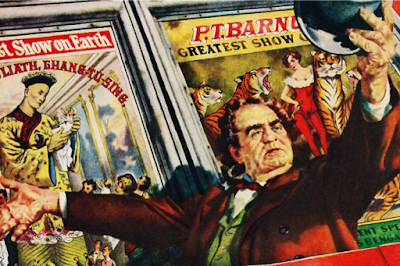
El mayor exponente de este tipo de espectáculo era el empresario Phineas Taylor Barnum. Este hombre fundó el primer acuario en Estados Unidos, dentro de un museo que llevaba su nombre, posteriormente compró un circo y un tren para viajar por todo el país, mostrando sus extrañas adquisiciones, como La Sirena de Fiyi.
The greatest exponent of this type of show was the businessman Phineas Taylor Barnum. This man founded the first aquarium in the United States, within a museum that bore his name, later he bought a circus and a train to travel around the country, showing his strange acquisitions as The Mermaid of Fiji.
En este panfleto podemos ver las atracciones que anunciaba entre las que destacaba una hermosa sirena. Los adultos solo tendrían que pagar 50 centavos y los niños menores de doce años, la mitad del precio.
In this pamphlet we can see the attractions that it advertised among which a beautiful mermaid stood out. Adults would only have to pay 50 cents and children under twelve, half the price.

La supuesta sirena no era más que la mitad de un mono, cosida a la cola de un salmón (ambos animales momificados)
The supposed mermaid was not more than a half monkey, sewn to the tail of a salmon (both animals mummified)

Actualmente está en el museo de rarezas de Ripley.
It's currently in the Ripley Museum of Oddities.

Barnum fue demandado en muchas ocasiones por sus engaños, pero nada lo detuvo, así que posteriormente continuó en el mundo del espectáculo, reclutando en cada ciudad a personas que tuvieran alguna anomalía congénita o enfermedades extrañas, que les parecieran lo suficientemente atractivas al publico, logrando así un gran éxito.
Barnum was sued on many occasions for his scams, but nothing stopped him, so later he continued in show business, recruiting in each city, people who had a congenital anomaly or strange diseases, who seemed attractive enough to the public, achieving well a great success.
El mundo del Freak show continuó creciendo y expandiéndose por el mundo, incluso después de la muerte de Phineas Barnum.
The world of the Freak show continued to grow and expand throughout the world, even after the death of Phineas Barnum.
Algunas de estas personas llegaron voluntariamente a trabajar a estos circos, atraídos por la idea de ganar su propio dinero, algo que les resultaba imposible en la sociedad de ese entonces, pues a ellos no les permitían trabajar en cualquier sitio.
Some of these people voluntarily came to work in these circuses, attracted by the idea of getting their own money, something that was impossible for them in society at the time, because they were not allowed to work anywhere.

¿Cuáles eran las estrellas de Freak Show más populares?
Who were the most popular Freak Show stars?
El niño con rostro de perro
The boy with the dog's face

Este joven, anunciado en los espectáculos como «El Niño con Cara de Perro» o «El Niño Lobo» no era más que una persona normal que padecía hipertricósis congénita, también conocida como El Síndorme del Hombre Lobo, por la gran cantidad de vello que aparece en todo el cuerpo, en especial, en el rostro.
This young man, advertised in the shows as "The Boy with the Dog's Face" or "The Wolf Boy" was nothing more than an ordinary person who suffered from congenital hypertricosis, also known as The Werewolf Syndrome, due to the large amount of hair that appears all over the body, especially the face
Myrtle Corbin, la niña de las cuatro piernas
Myrtle Corbin, the girl with four legs

En este caso, la chica tenía lo que se conoce como «un gemelo parásito» o «gemelo arcadio» Es una condición que sucede durante la gestación de gemelos cuando uno de ellos se fusiona con el otro y crece dentro de él. Generalmente es acéfalo, es decir, no tiene cabeza.
In this case, the girl had what is known as "a parasitic twin" or "Arcadian twin." It's a condition that occurs during the gestation of twins when one of them fuses with the other and grows within it. It's generally headless.
John Merrick, «El Hombre Elefante»
John Merrick, "The Elephant Man"

Esta es una de las estrellas más famosas del espectáculo. Su enfermedad es conocida como El síndrome de Proteus, y provoca que los huesos o tejidos de los enfermos crezcan de forma desproporcionada. Su vida llena de injusticias y dolor fue llevada al cine cuando David Lynch rodó un film llamado «El Hombre Elefante» que fue bastante alabado por la crítica
This is one of the most famous stars of the show. His disease is known as Proteus syndrome and causes the bones or tissues of the sick to grow disproportionately. His life full of injustices and pain was taken to the cinema when David Lynch made a film called "The Elephant Man" that was widely praised by critics.
La Parada de los Monstruos/Monsters Parade
En 1932, el director de la película Drácula, Tod Browning, decidió hacer una nueva película, basada en la historia de los actores de circo que tanto llamaban la atención y despertaban el morbo de la gente de esa época.
In 1932, the director of the film Dracula, Tod Browning, decided to make a new film, based on the story of the circus actors who attracted so much attention and aroused the curiosity of the people of that time.
Él había vivido y trabajado por muchos años en circos ambulantes y por lo tanto tenía mucho conocimiento acerca de todo lo que se podía encontrar allí. Originalmente la historia se trataba de un enano de circo que se enamoraba de una trapecista, y con el tiempo logra que ella se case con él, pero la hermosa mujer tiene un amante y ambos logran engañar al enano para quedarse con su fortuna.
He had lived and worked for many years in traveling circuses and therefore was very knowledgeable about everything that could be found there. Originally the story was about a circus dwarf who fell in love with a trapeze artist, and over time he manages to get her to marry him, but the beautiful woman has a lover and they both manage to deceive the dwarf to keep his fortune.

El director de la película decide usar a personas reales para encarnar a los personajes de su historia, y por lo tanto recurre a un antiguo compañero de trabajo que era un enano, él acepta pero sugiere que el director incluya a otros personajes del espectáculo que el publico conoce como «fenómenos» y también le propone un giro a la historia, ya que cuando el enano, protagonista de la película, descubre la traición de la trapecista, los «fenómenos» se unen para tomar venganza, y es allí donde la película se vuelve oscura.
The director of the film decides to use real people to play the characters in his story, and therefore turns to a former co-worker who was a dwarf, he agrees but suggests that the director include other characters than him, those that the public knows as "phenomena" and he also proposes a twist to the story, since when the dwarf, the protagonist of the film, discovers the trapeze artist's betrayal, the "phenomena" unite to take revenge, and that is where the film turns dark.

La película fue llamada «Freaks» en inglés y en español fue conocida como «La Parada de los Monstruos». Causó terror en los espectadores, e incluso fue prohibida por muchos años en varios países. No obstante se despertó una gran curiosidad por los espectáculos Freak, que comenzaron a tener gran auge en esa época.
The film was called "Freaks" in English and in Spanish it was known as "La Parada de los Monstruos." It caused terror in viewers, and was even banned for many years in various countries. However, a great curiosity was aroused by the Freak shows, which began to have a great boom at that time.
El estrés producido por las recesiones económicas, las excesivas horas de trabajo y la guerra, provocaron que las personas quisieran ir a divertirse un poco en estos lugares que les prometían ver cosas desconocidas e inimaginables para ellos, pero en medio de su ignorancia, olvidaban que estaban pagando para ver y contribuir con la humillación de personas a las que les herían los sentimientos al sentirse expuestas de esa manera tan cruel. Para los espectadores, ellos no eran más que «fenómenos», seres carentes de humanidad y dignidad, para los empresarios eran una mina de oro.
The stress produced by economic recessions, excessive working hours and war, caused people to want to go and have a little fun in these places that promised to see things unknown and unimaginable to them, but in the midst of their ignorance, they forgot that they were paying to see and contribute to the humiliation of people whose feelings were hurt by being exposed in such cruel ways. For the spectators, they were nothing more than "freaks", beings devoid of humanity and dignity, for the businessmen they were a gold mine.
Los fotógrafos también llegaban desde todas partes del mundo para inmortalizar el momento, pero en la mayoría de los retratos, vemos a personas con expresiones de abatimiento o resignación, ya que no tienen más alternativa que someterse a la humillación de ser expuestos ante el mundo con tal de ganar un poco de dinero que les permita comer. Al menos allí, su enfermedad, a pesar de la ignominia, los hacía sentir útiles de alguna forma.
Photographers also came from all over the world to immortalize the moment, but in most portraits, we see people with expressions of despondency or resignation, as they have no choice but to undergo the humiliation of being exposed to the world with so as to earn a little money to allow them to eat. At least there, their illness, despite the ignominy, made them feel useful in some way.
La Mujer Elefante, inicios del siglo XVIII.
The Elephant Woman, early 18th century.

No obstante, algunos de estos artistas de circo se sintieron muy orgullosos y felices de formar parte del espectáculo, porque en toda su vida no conocieron otra cosa más que esto, como lo fue el caso de Schlitzie, un hombre con microcefalia (el cráneo y cerebro reducidos). Él vivió en un circo desde que sus padres lo dejaron allí, muy pequeño, normalmente lo vestían de mujer, aunque debajo del vestido tenía pantalones, y realizaba trucos de magia. Se dice que era muy feliz y que le encantaban los aplausos de su público.
However, some of these circus performers felt very proud and happy to be part of the show, because in their entire lives they knew nothing more than this, as was the case with Schlitzie, a man with microcephaly (the skull and reduced brain). He lived in a circus since his parents left him there, very small. They usually dressed him as a woman, although under the dress he had pants, and he performed magic tricks. It's said that he was very happy and that he loved the applause of his audience.

También formó parte de la película «Freaks» y se volvió muy popular. Lamentablemente cuando su cuidador murió en 1960, Schlitzie quedó desamparado, pues la hija de su cuidador no quiso hacerse cargo de él, de modo que lo envió a un asilo de enfermos mentales donde fue maltratado. Posteriormente, otro empresario del espectáculo que le había seguido la pista, lo rescató de ese lugar, y Schlitzie volvió a los escenarios.
He was also part of the movie "Freaks" and became very popular. Sadly when his caregiver died in 1960, Schlitzie was left helpless, as his caregiver's daughter didn't want to take care of him, so he was sent to a mental hospital where he was abused. Later, another businessman of the show who had followed the track, rescued him from that place and Schlitzie returned to the stage.
Schlitzie fue tan popular que inspiró a la producción de American Horror Story para crear un personaje basado en él. Se trata de la simpática, tierna e inocente Pepper.
Schlitzie was so popular that he inspired the production of American Horror Story to create a character based on him. It's about the nice, cute and innocent Pepper.

Amigos, hemos llegado al final de este artículo, en mi opinión personal creo que, a pesar de que hoy en día este tipo de espectáculos no son tan comunes como en el pasado (aunque sí, hay ciudades en la India y otros países donde continúan presentándolos) Todavía el mundo tiene muchos prejuicios hacia los que se ven diferentes, todavía tenemos mucho que aprender de ellos. Todos somos seres humanos, todos tenemos un corazón, y aunque por fuera nos vemos diferentes, por dentro seguimos siendo iguales.
Friends, we have reached the end of this article, in my personal opinion I think that, despite the fact that these types of shows are not as common today as in the past (although yes, there are cities in India and other countries where they continue introducing them) Still the world has many prejudices towards those who look different, we still have a lot to learn from them. We are all human beings, we all have a heart, and although on the outside we look different, on the inside we are all equals.

Thaks for reading and vote!
La imagen de portada, el separador de texto y la imagen de despedida fueron diseñadas por mí, usando el editor de Canva.
The cover image, text separator, and goodbye image were designed by me, using the Canva editor.