
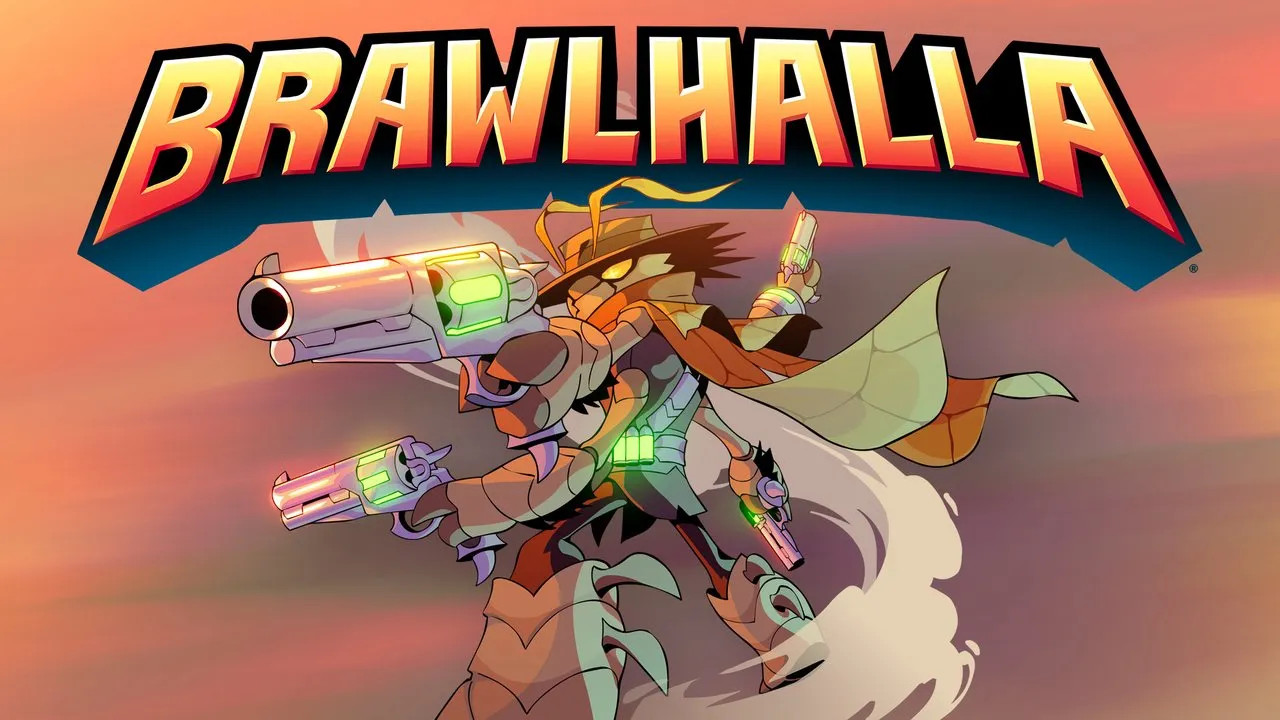
This post is avaliable in both English and Spanish (translation with DeepL. All screenshots were captured by myself.
Este post está disponible en Inglés y Español (translation with DeepL. Todas las fotos capturadas por mí.
English
The "platform-fighter" genre is quite odd in how it was codified by the release of Super Smash Bros. on 1998 for the Nintendo 64, but this doesn't mean that all platform fighters are intended to be Smash clones in gameplay and focus; though many are regarded as such because of how recognizable Smash Bros. gameplay became in general. With the advent of online gameplay, widespread accesibility on computers, and funnily enough, ideas for alternatives to Smash Bros (as the series is officially exclusive to Nintendo consoles and never got good official support for tournaments and such), games like Rivals of Aether and Brawlhalla arrived to provide new platform fighters to the world.

While there's influence from Smash in both games, they go quite different ways in both presentation and gameplay mechanics; Rivals of Aether is often compared to Melee while Brawlhalla is compared to Brawl (ignoring the name), as while RoA emphasizes quick movement and fast reaction to follow-up combos, Brawlhalla is floatier and character attacks get differentiated with the weapons that they can pick up. However, like any deceptively simple game (and most fighting games), a casual-friendly presentation and approach doesn't mean that there isn't something to master, and with Brawlhalla being a free-to-play game, you can bet there are a huge amount of players practicing that will put your own skills to test.

Without a weapon, characters have a set of basic attacks: A light attack, a strong attack that can be charged and that can be used midair for recovery, and a dodge button. On top of being able to pick up and throw bombs and mines, there's the aforementioned weapons that spawn and give you one of two different weapons depending of your character. With an expanded moveset and strength but also varying depending of which weapon you get, knowing to use your weapons moveset as well as adapt to weapon changes mid-fight (including fighting without one until another one spawns) is important, though you can also throw your weapon at others as an attack.

One huge bonus that Brawlhalla has over Smash is the amount of accesibility and competition options: You can opt to play free-for-all or 2v2 with randoms on unranked matches, play 1v1 or 2v2 on ranked matches, and host and join custom lobbies (in which you can set the maximum players of 8). While free characters rotate on a weekly-basis, you can get coins from playing which you can use to buy a character permanently (and you can even use all characters in the Training mode if you want to revisit or check a character that isn't in the free rotation). You can also buy a DLC that unlocks all characters (both present and any future ones).

Since I'm still not very good at Brawlhalla, I can't talk much about the competitive scene and techniques, but it still is definitely a fun game to play casually with friends or even online with randoms. While there aren't many offline modes (play locally, training, and a single player tournament mode), the fun gameplay, the fact that it comes entirely for free (though unlocking characters can take either playing a lot or buying them) and incredibly solid online (as long as your connection doesn't have any issues), this is definitely a game to check out; specially with buddies.

Español
El género de los "luchadores de plataformas" es bastante extraño, ya que se codificó con el lanzamiento de Super Smash Bros. en 1998 para la Nintendo 64, pero esto no significa que todos los luchadores de plataformas pretendan ser clones de Smash en cuanto a jugabilidad y enfoque; aunque muchos se consideran así debido a lo reconocible que se hizo la jugabilidad de Smash Bros. en general. Con la llegada del juego en línea, la accesibilidad generalizada en los ordenadores y, curiosamente, las ideas de alternativas a Smash Bros (ya que la serie es oficialmente exclusiva de las consolas de Nintendo y nunca tuvo un buen apoyo oficial para los torneos y demás), llegaron juegos como Rivals of Aether y Brawlhalla para proporcionar nuevos luchadores de plataformas al mundo.
Aunque hay influencia de Smash en ambos juegos, van por caminos muy diferentes tanto en la presentación como en la mecánica de juego; Rivals of Aether se compara a menudo con Melee mientras que Brawlhalla se compara con Brawl (ignorando el nombre), ya que mientras RoA enfatiza el movimiento rápido y la reacción rápida para seguir los combos, Brawlhalla es más flotante y los ataques de los personajes se diferencian con las armas que pueden recoger. Sin embargo, como cualquier juego aparentemente sencillo (y la mayoría de los juegos de lucha), una presentación y un enfoque casual no significa que no haya algo que dominar, y siendo Brawlhalla un juego free-to-play, puedes apostar que hay una gran cantidad de jugadores practicando que pondrán a prueba tus propias habilidades.
Sin un arma, los personajes tienen un conjunto de ataques básicos: Un ataque ligero, un ataque fuerte que se puede cargar y que se puede utilizar en el aire para recuperarse, y un botón para esquivar. Además de poder recoger y lanzar bombas y minas, están las mencionadas armas que aparecen y te dan una de dos armas diferentes dependiendo de tu personaje. Con un conjunto de movimientos y fuerza ampliados, pero que también varían en función del arma que obtengas, es importante saber utilizar el conjunto de movimientos de tus armas, así como adaptarse a los cambios de arma en mitad del combate (incluso luchar sin una hasta que aparezca otra), aunque también puedes lanzar tu arma a otros como ataque.
Una gran ventaja que tiene Brawlhalla sobre Smash es la cantidad de opciones de accesibilidad y competición: Puedes optar por jugar todos contra todos o 2 contra 2 con jugadores aleatorios en partidas no clasificadas, jugar 1 contra 1 o 2 contra 2 en partidas clasificadas, y organizar y unirte a salas personalizadas (en las que puedes establecer un máximo de 8 jugadores). Mientras que los personajes gratuitos rotan semanalmente, puedes conseguir monedas al jugar que puedes usar para comprar un personaje de forma permanente (e incluso puedes usar todos los personajes en el modo Entrenamiento si quieres volver a visitar o revisar un personaje que no está en la rotación gratuita). También puedes comprar un DLC que desbloquea todos los personajes (tanto los actuales como los futuros).
Como todavía no soy muy bueno en Brawlhalla, no puedo hablar mucho sobre la escena competitiva y las técnicas, pero sigue siendo definitivamente un juego divertido para jugar casualmente con amigos o incluso en línea con randoms. Aunque no hay muchos modos offline (juego local, entrenamiento y un modo de torneo para un solo jugador), la divertida jugabilidad, el hecho de que sea totalmente gratuito (aunque desbloquear personajes puede llevar a jugar mucho o a comprarlos) y un online increíblemente sólido (siempre que tu conexión no tenga problemas), es sin duda un juego al que hay que echarle un vistazo; especialmente con amigos.