
Few studios in gaming have a distinct identity quite like Remedy's games do. There are studios which work on a single genre, often a single franchise. Remedy's games are all different, yet, you can immediately spot one. It's kind of like Stanley Kubrick's films. Which, incidentally, have a lasting influence on Remedy's work. While Max Payne was a universal success, Remedy's recent games - Alan Wake and Quantum Break - have been incredibly ambitious, but were received relatively more divisive. I love Remedy, I love both those games. I can certainly see where the criticisms lie - but they don't detract from being path-breaking narrative experiences. Perhaps the most common criticism of late has been that sometimes, Remedy's games are all about narrative and style, somewhat foregoing gameplay and exploration aspects.

Here comes Control, which is every bit a Remedy game, but also, nothing like Remedy's previous games. The significant departure comes in exploration and level design. Remedy's previous games were fairly linear - they were designed for a certain "directed" narrative experience. Control, however, is a full blown metroidvania game, with vast, open levels. Let me get this out of the way - Control arguably has the most spectacular art direction and world design I've ever seen. Every area is meticulously designed to offer a sense of wonder and awe, as well as being fun to traverse through. Control's world - the Oldest House - is gorgeous, foreboding, intimidating, harrowing, all at the same time. It's not just the wide spaces, but also the micro-level detail that really sells the illusion. What really enhances the sense of atmosphere is the lighting and volumetrics. Often, I find games are too "well lit". Not so here - Remedy clearly know how important lighting (or lack thereof) is to build mood and tension through a world. Living and exploring in Control's world is like nothing I've experienced in gaming - indeed, the closest parallel I can make is The Shining's hotel and parts of Twin Peaks. The metroidvania-style aspects of unlocking areas are also smartly implemented, offering tools and knowledge that tie deeply into the lore, rather than merely being keys to unlock areas.
Control is endlessly spectacular. It's not just the aforementioned art direction and level design, but also, incredibly fancy special effects, explosions and debris physics. Then there's the ray-tracing - turn all of it on and it truly feels like the future of real-time graphics. My favourite is the ray-traced contact shadows, which offer a depth to the world and its myriad objects that the usual ambient occlusion simply can't achieve. There are some glitches and bugs, though, which does signal that this is not quite a AAA game. But for an independent studio, this is a remarkable achievement. A special mention for Control's sound design and music choices - it's pitch perfect throughout. Sound is generally something you only notice when it's done poorly, but Control is one of those rare examples where the subtleties of sound design noticeably enhances immersion.

Control also delivers Remedy's best combat to date. Their games have rightly been criticized in the past for not-so-great combat, but that's not the case here. Yet, looking back, I find myself largely forgetting the combat. It's a regular third person shooter, with some added gimmicks. It looks quite a bit different from your average third person shooter, but it feels much the same. The special effects and supernatural powers do add a different dimension to the mix, though, but it never quite escapes its third person roots. It's only because Control's world is so incredible that I was expecting something a bit more special to live up to the Oldest House.
Finally, and crucially for Remedy's games, is the narrative. Control's narrative does almost everything right - from building a mysterious setting to near-perfect pacing and reveal of information to memorable, off-beat characters, to plenty carthatic moments. However, there are certain questionable choices taken in the execution of all these ideas. Moment-to-moment, I just find myself being distanced, off-and-on. It's a strong narrative, but like Quantum Break, I think it lacks a bit of polish.
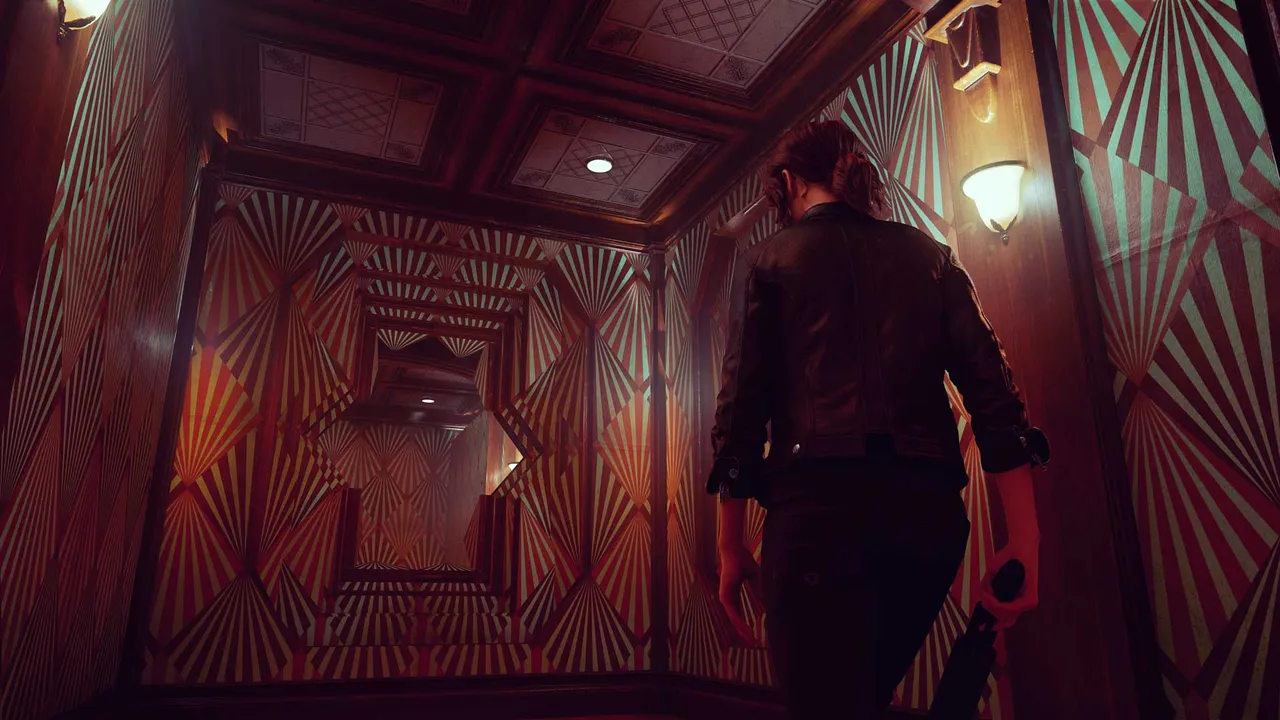
Overall, though, Control is Remedy's best game. It's a game that's unique and familiar at the same time, for better or for worse. I can't really find any weak points, however, given just how mesmerizing the Oldest House is, some other aspects of the game just don't live up to such a high bar. Still, Control is a remarkable game, and particularly a must-play if you are a fan of Stanley Kubrick and David Lynch.