

I am quickly turning into one of those people who will profess that we can change the world with compost! Yet, in the same breath, the philosopher I am, I know this is merely wishful thinking. But that does not stop me from still relishing in the thoughts and the products of my labor. Sweat and sometimes blood (yes I work without shoes in my compost, yes that is stupid) the compost is the lifeblood of my garden. In fact, without compost, I would not be here where I am now. I would not have been on this wonderful journey of self-discovery and knowledge growth. I would not have turned into the quasi-herbalist I am now. And even my cooking skills would not have grown as they did. For example, today I made a spekboom and purslane chutney. (Recipe post will follow soon!) Life is so much better with loads of variety!
In this garden journal post, I will showcase the insane growth of the amaranth in just two weeks, and I will muse about compost (again) and I show you just how much compost influenced my garden. I hope you learn something from this post!
The Deadly Sun: Amaranth and Basil Seedlings
Before showing you the amaranth growth in just two weeks, I want to show you the immense heat we are having here in South Africa and how amazing it is that these plants actually survive at the end of the day.

| Some sad looking swiss chard |
I was a little late to water the plants, and the sun took its toll. Some of the amaranth seedlings did not survive. For a so-called weed, it died pretty quickly! But most survived.

| Seedlings at 22 December, a week after sowing |
And here is the first thing about the wonders of compost: I grow most of my food in straight compost. I follow the simple philosophy that I do not want to spend money to grow free food, it defies the point. So I sow my seeds in compost. Every year, I harvest so much. I place dead timber on the bottom of my holders/buckets and lay the compost over it. In the coming years, the compost with repeated growing seasons turns into what we normally see as soil. It is truly a small miracle.

| Seedlings at 22 December, a week after sowing |
It always looks like a mat of green art. I cannot get enough of it. Some people feed their dopamine addiction with social media, to me it is the new seedlings popping up from the ground. A psychological high I cannot find anywhere else.

| Seedlings at 28 December, two weeks after sowing |
But sadly not all seedlings survive. The summer sun is deadly and some of the seedlings fell victim. I think I should sow some more. I was not home to sow early summer/late spring. But nature is kind to those who live in temperate climate zones. Even some of the salad rocket that fell whilst harvesting the seeds are sprouting and giving me beautiful greens. I think they will bolt sometime soon as they prefer the colder temperatures.

| Seedlings at 28 December, two weeks after sowing with some random basil seedlings I did not plant |
But some of the more established seedlings have rocketed off. They are growing their second set of new leaves. I cannot wait to start harvesting leaves! I have waited six months to make my favorite dish.

| Basil seedlings |
I almost gave up on the basil seedlings. For two weeks, I think, they did not pop their heads out of the compost mixture. But now they are here! I can already taste the basil pesto. I am craving basil pest with purslane, I think the combination will go so well. I also planted lemon basil from my first successful harvest about 6 months ago. Lemon basil is really nice in any salad.
An Ode of Sort to Compost: My Garden and the Continual Nature of Growth

| Successful rosemary cutting |
When you buy plants, you actually see the cost of gardening. It is, like most other hobbies, for the rich. But when you actually garden properly, you begin the see the cyclical and continual nature of gardening. You begin to see the lawn, not as something you need to have in pristine condition, but instead, you see the lawn as the compost feeder. You see the leaves as more compost material, and you wish for that day when your garden reaches a critical point where a quasi-equilibrium is reached. That is when you begin to harvest material from your garden, like grass clippings, for the compost.
As I said, I am a little mad about compost.
But when you begin to make cuttings, and "feed" your garden with new plants, you will begin to realize the infinite possibility of gardening. I have made, in the last year, about 15 new rosemary plants.

| New rosemary cuttings |
Thanks to my continual composting, I have a never-ending supply of growing material. The compost helps me make new plants from cuttings. It is as simple as cutting a plant and sticking it into the compost. I water them daily until roots form. I take them out and place them in a bigger container. In a couple of months, the established plant can go into the garden. See below, I have planted a whole hedge of rosemary! They are about a year old.

| A hedge of rosemary; all from cuttings |
The same goes for all the plants in my garden. Four years ago, my dad gave me permission to take over his lawn. A drought forced us to make changes. Now, the garden is a bush of local fynbos plants. I am not sure how many of the original plants are still alive. But with my continual cuttings, I have fed the garden. And this is, again, all thanks to my compost!

| Local suur vygies/sour figs made from a small cutting a year ago |
From one small cutting I collected from one of my walks, I have planted at least 15 new suur vygie/sour fig plants. It is at a stage where I can cut them because they are growing too wild. But making these cuttings serves two purposes. Compost material, and cuttings for new plants!

| Suur vygies/sour figs cuttings |
I feel like an investment banker who sees infinite and exponential growth. The garden continually supplies. It gives and takes but mostly in balance. I have reached a point where I have too many plants. But this is a good thing, as it always feeds the compost system!
Postscriptim, Thyme will tell
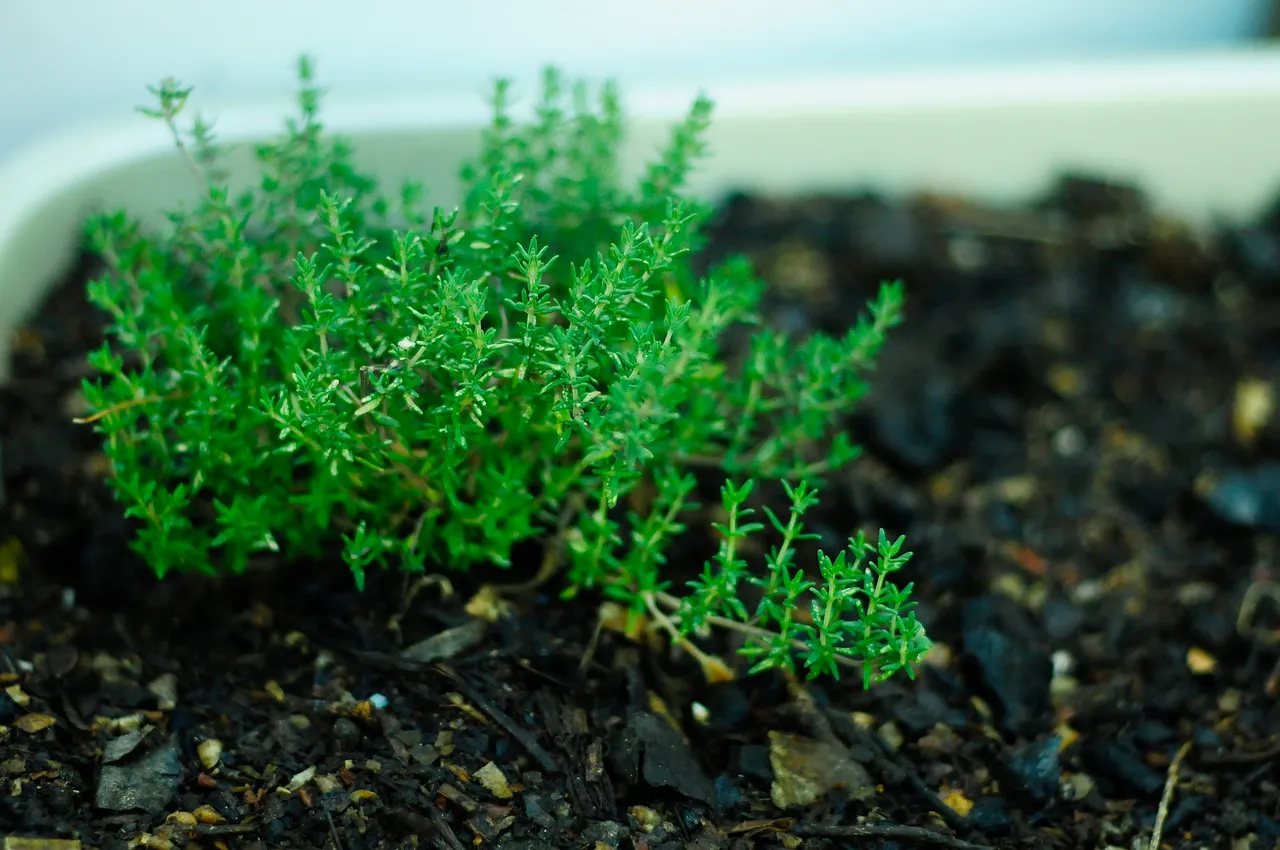
| Established thyme from cuttings |
I got some thyme and it died. Before the last plant died, I took two cuttings. Now, both are established new plants. I made some new cuttings as well.

| Thyme cuttings |
Without compost, nothing of the above would have happened. Without compost, I would not have made spekboom and purslane chutney. Without compost, I would probably not have met 
This post turned out to be a lot wordier than I anticipated. I hope you enjoyed it if you read it all! I hope you learned something from it. I hope you are also making your own compost. It is really a wonderful thing. All of the photographs are my own, taken with my Nikon D300. The musings are also my own. Happy gardening, and stay safe!