


Hola querido hiver.
Hace una semana publiqué mi visita al Museo del Foro de Caesaraugusta. En Zaragoza tenemos cuatro museos dedicados al pasado romano de la ciudad y mi intención es mostrártelos todos para que los conozcas.
Hoy visitaremos el Museo del Puerto Fluvial de Caesaraugusta. Cuando se fundó la ciudad el método de transporte más rápido era por barco. Bueno, al menos si navegabas a favor de la corriente, jajaja. El río Ebro era navegable por entonces, por esa razón contaban con un puerto de carga y descarga a pesar de estar a casi 300 kilómetros del mar.


Este museo es mucho más pequeño que el del Foro. Está bastante escondido, con la entrada refugiada en un porche. Al llegar a su puerta por la noche, puedes ver en la fotografía de arriba que medio escaparate estaba a oscuras. Parece que el ayuntamiento no quiera que lo encontremos.
Tras caminar por un pasillo se accede a una escalera metálica por la que descendemos un nivel por debajo del suelo de la plaza. En realidad es como un semisótano y eso permite que haya unas ventanas para que entre algo de luz natural. Aunque en mi caso no sirvió de ayuda.


La época de construcción coincide con la del foro, alrededor del siglo I a.C. Lo que vemos son sillares en los que se aprecia alguna marca de cantero de las legiones romanas que lo construyeron.
Algo que me llamó mucho la atención fue el "Ebrómetro" (medidor del Ebro). En él se reflejan las diversas alturas en las que se desarrollaba la vida romana y la actual, además de la marca de varias avenidas importantes del río a lo largo de la historia conocida.

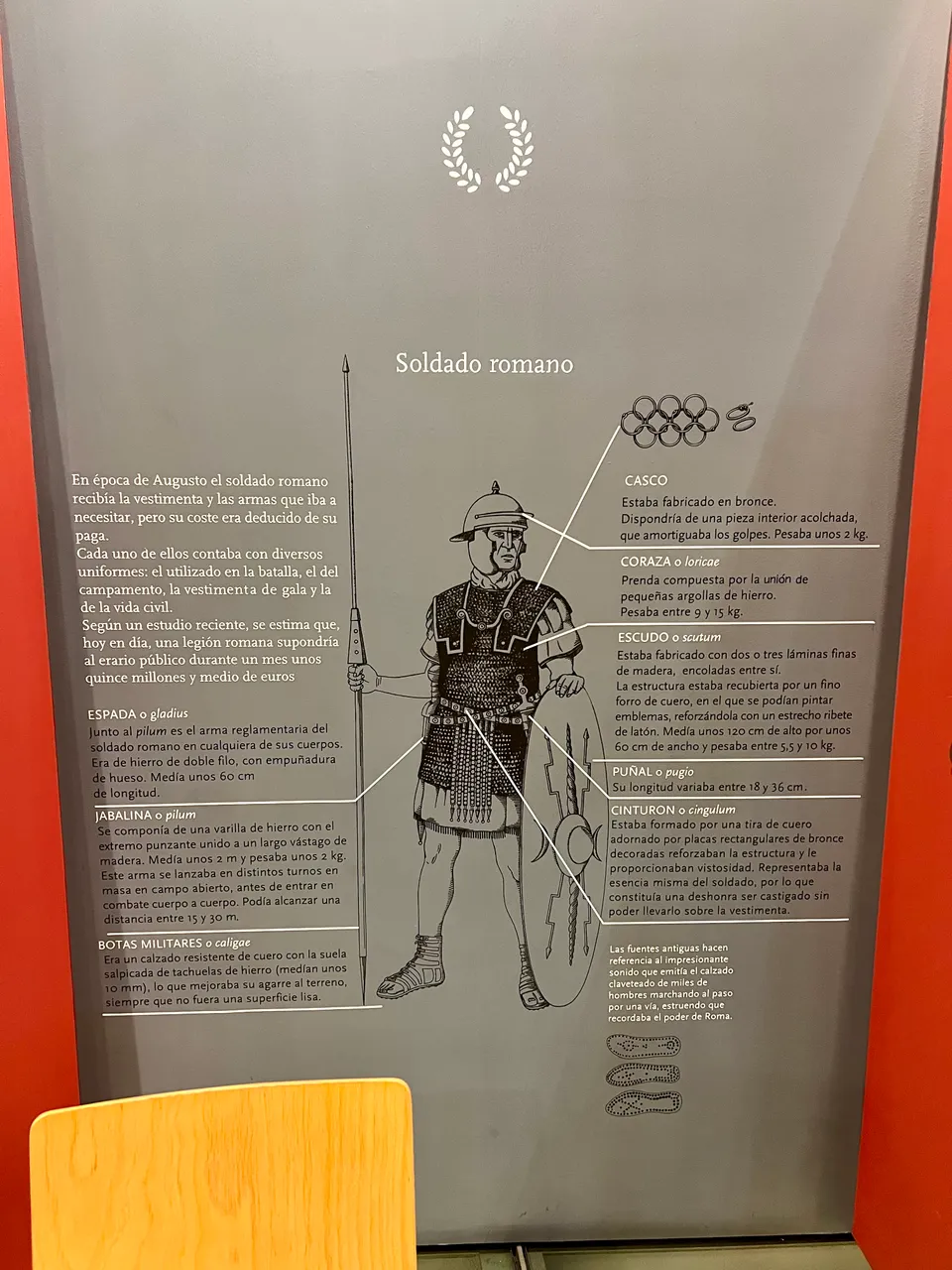

Curiosamente, la información más extensa y que más me gustó fue la que nos enseña cómo se distribuían las legiones romanas, así como la descripción de la vestimenta y objetos que portaban. Eran hombres increíblemente fuertes.
Había una vitrina que contenía una recreación de cómo se imaginaba que serían los barcos que transportaban las mercancías, pero la iluminación no me permitió fotografiarla de cerca.


Al fondo de la sala vemos el inicio de los pilares que sostenían parte de la estructura del foro. También el comienzo de la escalinata de acceso al foro desde el puerto, el elemento más destacable por ser de lo poco que sí estaba a la vista de los romanos y cuyas piedras fueron pisadas por sus pies.

En menos de media hora estaba de nuevo en la calle, donde me recibió esta preciosa estampa de la Catedral de la Seo. Era hora de buscar un lugar para descansar y tomar un café antes de regresar a casa.
Hasta la próxima publicación. Mientras tanto, ¡cuídate!
Otras publicaciones de la Ruta Zaragoza Romana:
Museo del Foro de Caesaraugusta

Herramientas: Cámara iPhone 13 Pro, editor de fotos Mac.
Si te gusta lo que publico, únete a mi Fanbase pinchando aquí

©️Copyright 2024 Paloma Peña Pérez. Todos los derechos reservados.

Hi, dear hiver.
A week ago I published my visit to the Caesaraugusta Forum Museum. In Zaragoza we have four museums dedicated to the Roman past of the city and my intention is to show you all of them so that you can get to know them.
Today we will visit the Museo del Puerto Fluvial de Caesaraugusta. When the city was founded the fastest method of transport was by boat. Well, at least if you were sailing downstream, hahaha. The river Ebro was navigable at that time, which is why they had a port for loading and unloading despite being almost 300 kilometres from the sea.
This museum is much smaller than the one in the Forum. It is quite hidden, with the entrance sheltered in a porch. Arriving at its door at night, you can see in the photograph above that half the window was dark. It looks like the town hall doesn't want us to find it.
After walking down a corridor you come to a metal staircase that takes you down one level below the floor of the square. In reality it is like a semi-basement and this allows some windows to let in some natural light. Although in my case it didn't help.
The construction period coincides with that of the forum, around the 1st century BC. What we can see are ashlars in which we can see some stonemason's marks of the Roman legions that built it.
Something that really caught my attention was the "Ebrometer" (gauge of the Ebro). It shows the different heights at which Roman and present-day life took place, as well as the mark of several important floods of the river throughout known history.
Curiously, the most extensive information and the one I liked the most was the one that shows us how the Roman legions were distributed, as well as the description of the clothes and objects they wore. They were incredibly strong men.
There was a display case containing a recreation of what the ships carrying the goods were imagined to look like, but the lighting did not allow me to photograph it up close.
At the back of the room we see the beginnings of the pillars that supported part of the forum structure. Also the beginning of the staircase leading to the forum from the port, the most remarkable element as it is one of the few things that was visible to the Romans and whose stones were trodden by their feet.
In less than half an hour I was back on the street, where I was greeted by this beautiful view of the Cathedral of La Seo. It was time to find a place to rest and have a coffee before returning home.
Until the next post. In the meantime, take care!
Other publications of the Roman Zaragoza Route:
Museum of the Forum of Caesaraugusta
Tools: iPhone 13 Pro camera, Mac photo editor.
Translated with DeepL
If you like my content, join my Fanbase clicking here

©️Copyright 2024 Paloma Peña Pérez. All rights reserved.
