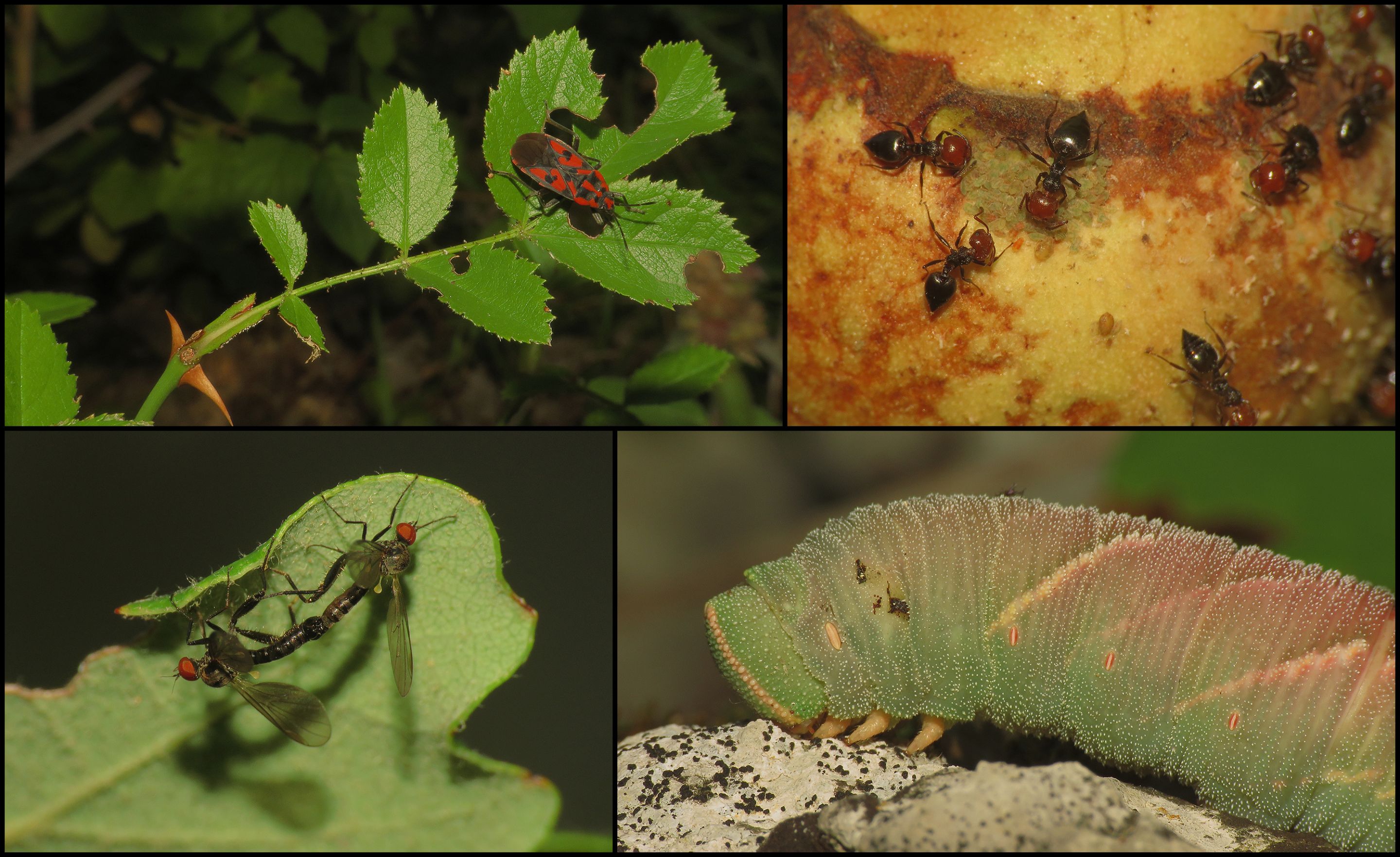
Today, relatively late in the morning, I drove north of my hometown, in search of some nice quiet place in which to explore and photograph spiders, insects, and anything else nature has to offer to my macro lens.
I stopped by the side of the road, somewhere between the small town called Zminj and the village of Kanfanar, about fifty or sixty kilometers from where I live. In the rural area made of small patches of woods, cultivated fields, and large open meadows.
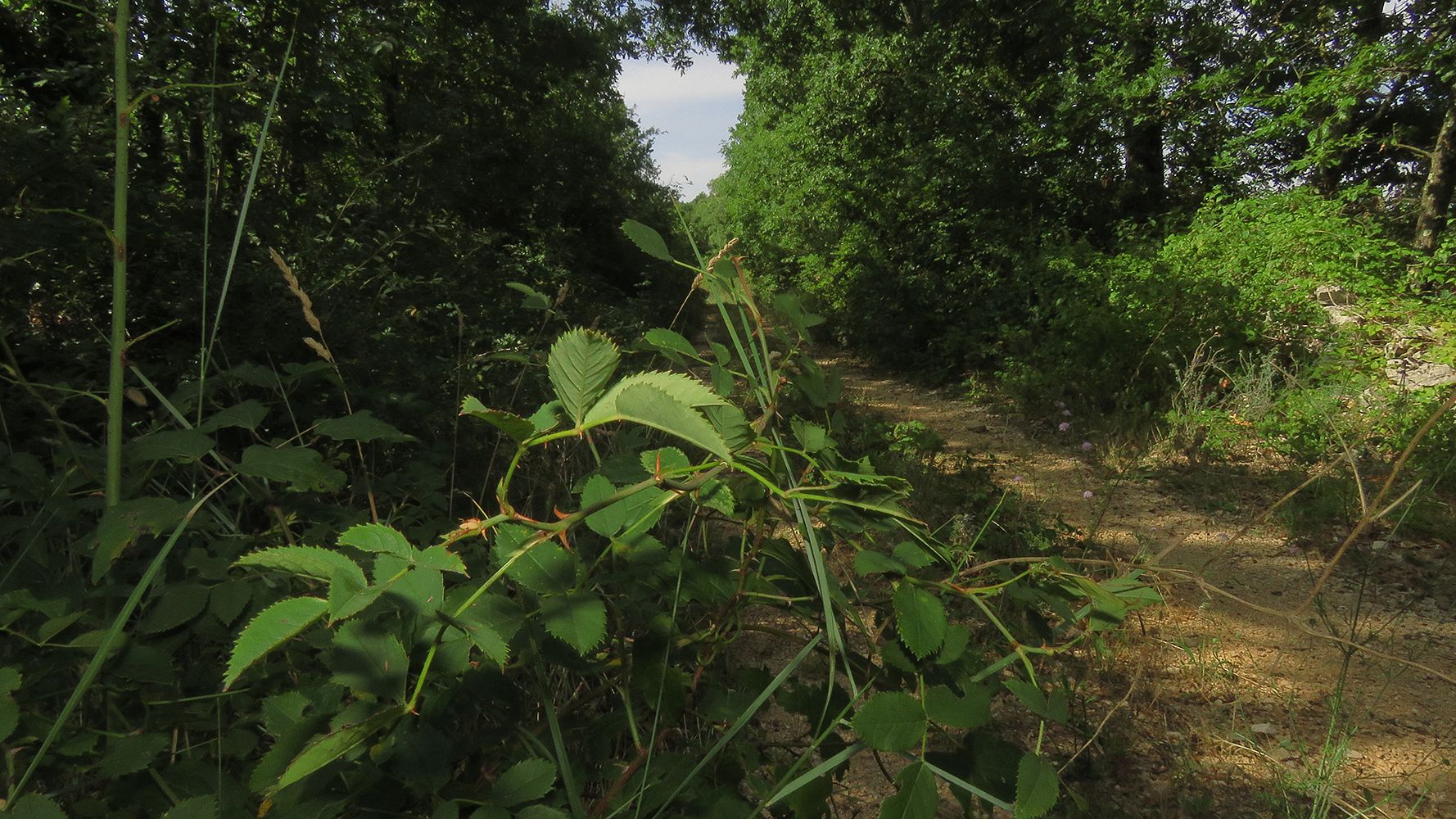
I spent the next few hours walking up and down the unpaved road shown in this photograph and observing the natural beauty around me.

I definitely found more than I expected. Not so much when it comes to the number of things, you won't see hundreds of photographs and dozens of species here, but I did come across some species and situations I rarely encounter.
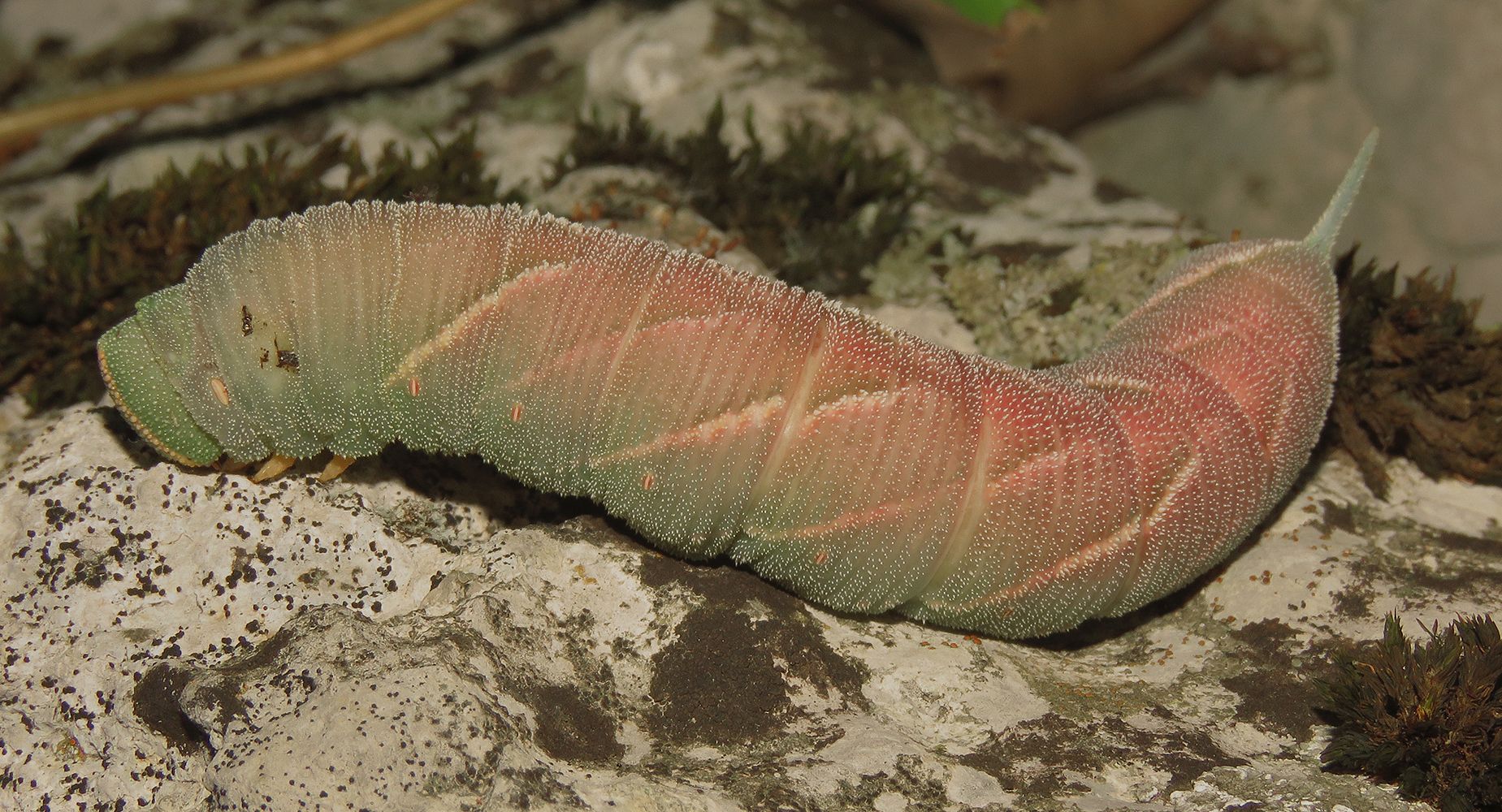
I'll start cataloging the things I saw with this big caterpillar I never saw before.
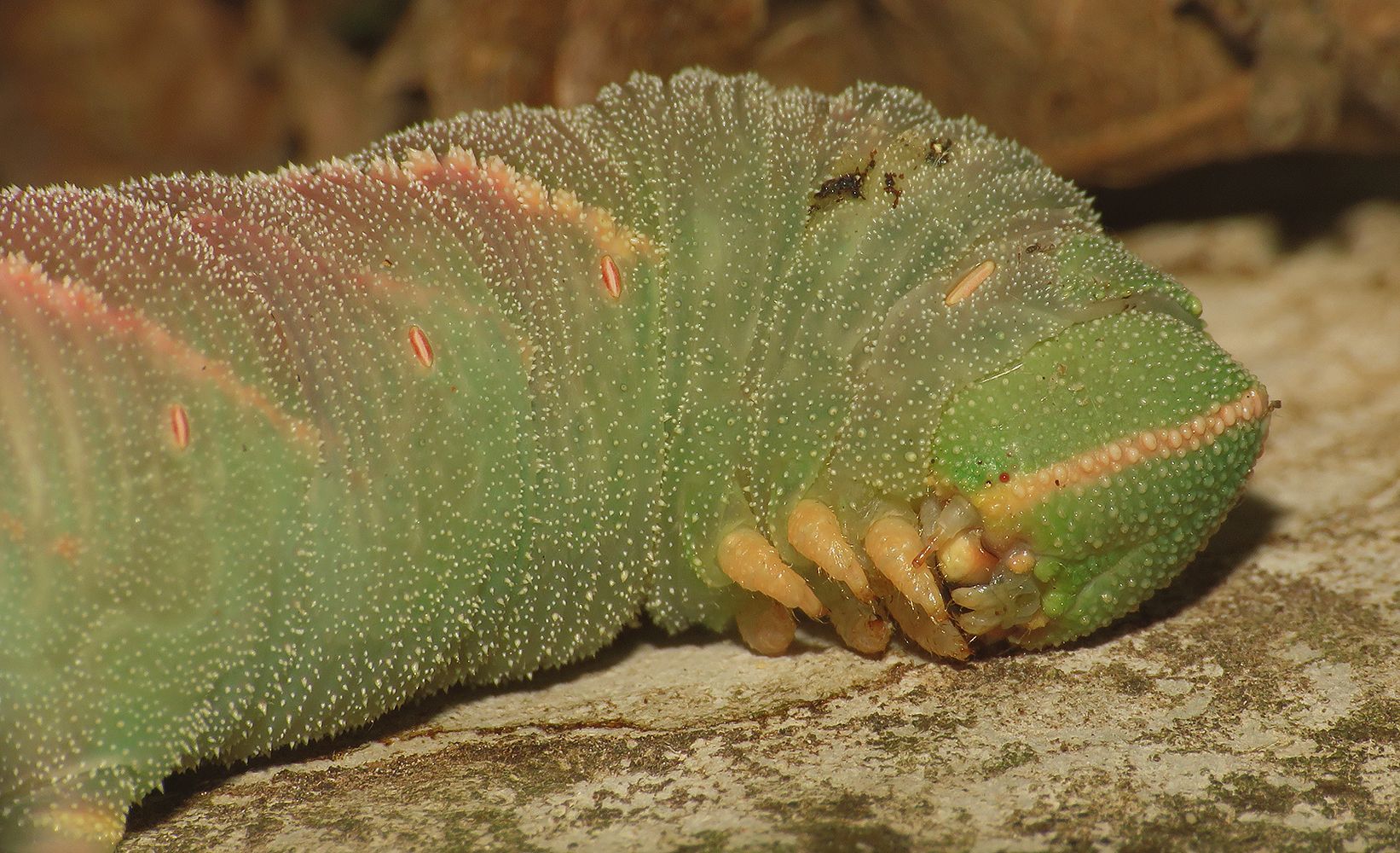
The caterpillar was definitively the highlight of the entire experience.

I saw it on the remains of an old drystone wall by the side of the road.
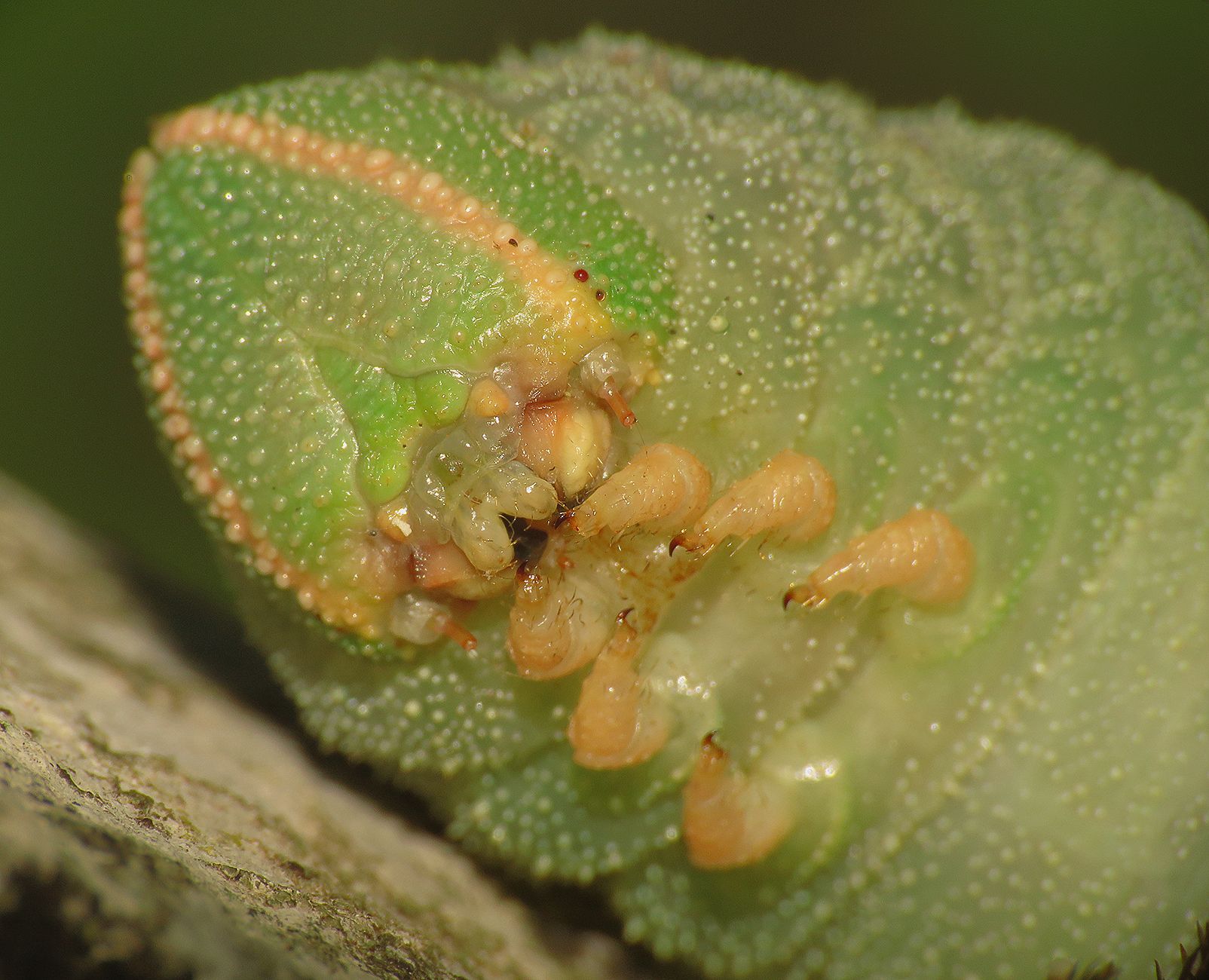
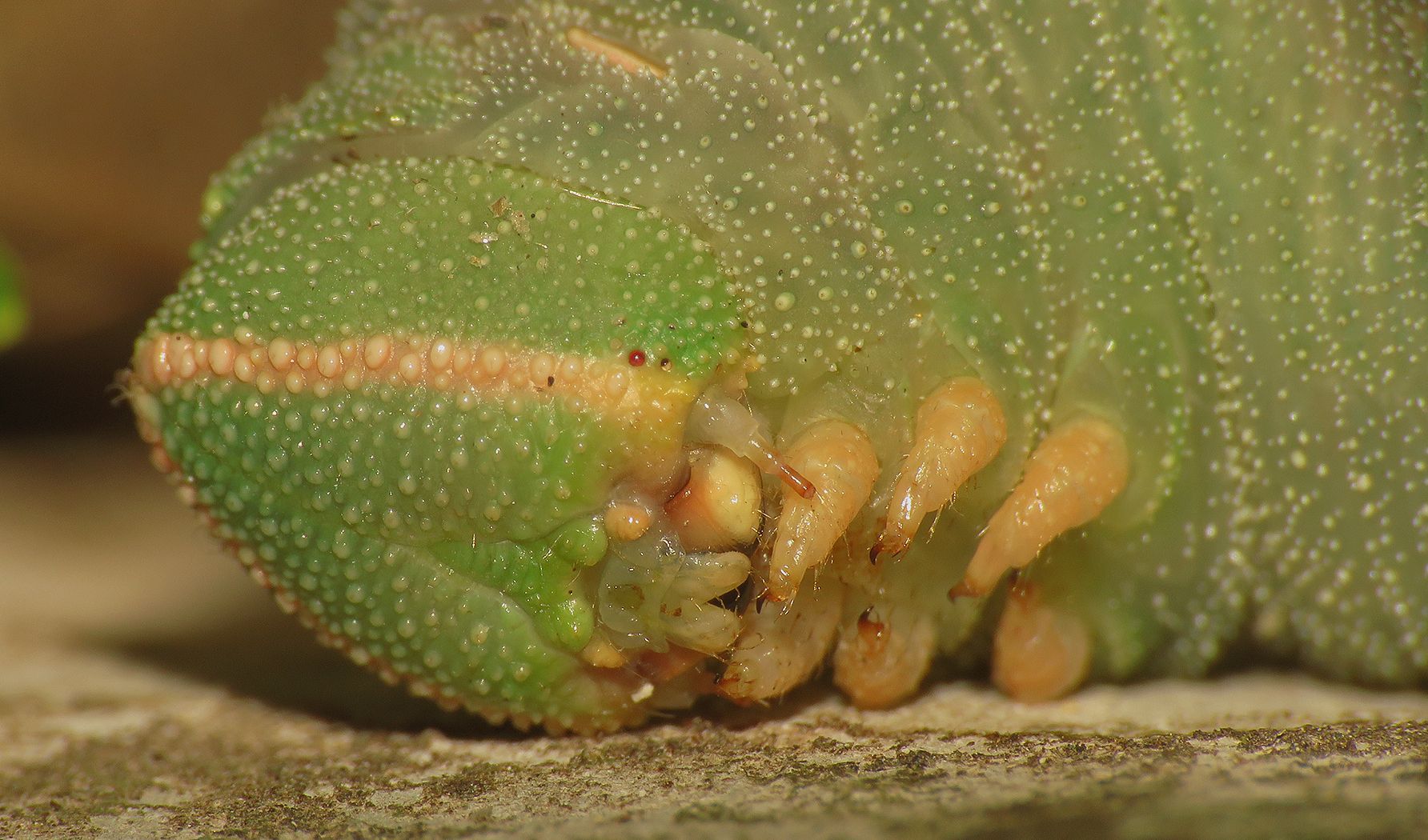
Look at this extraterrestrial face, isn't it amazing?
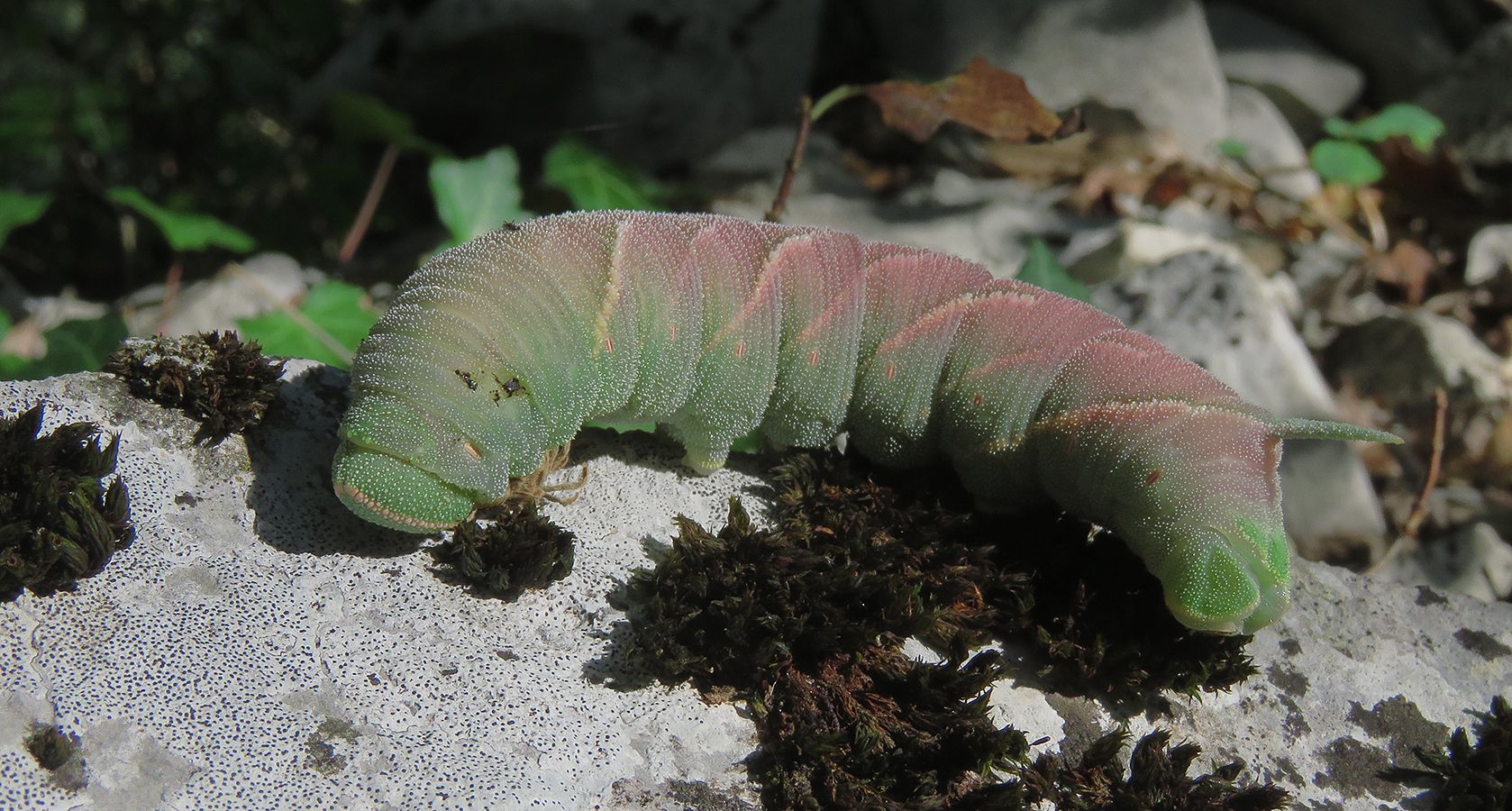
I used the flash in all the previous photographs. In this shot, you can see the scene in ambient light. The caterpillar is less pronounced against the fairly chaotic backdrop when photographed that way.
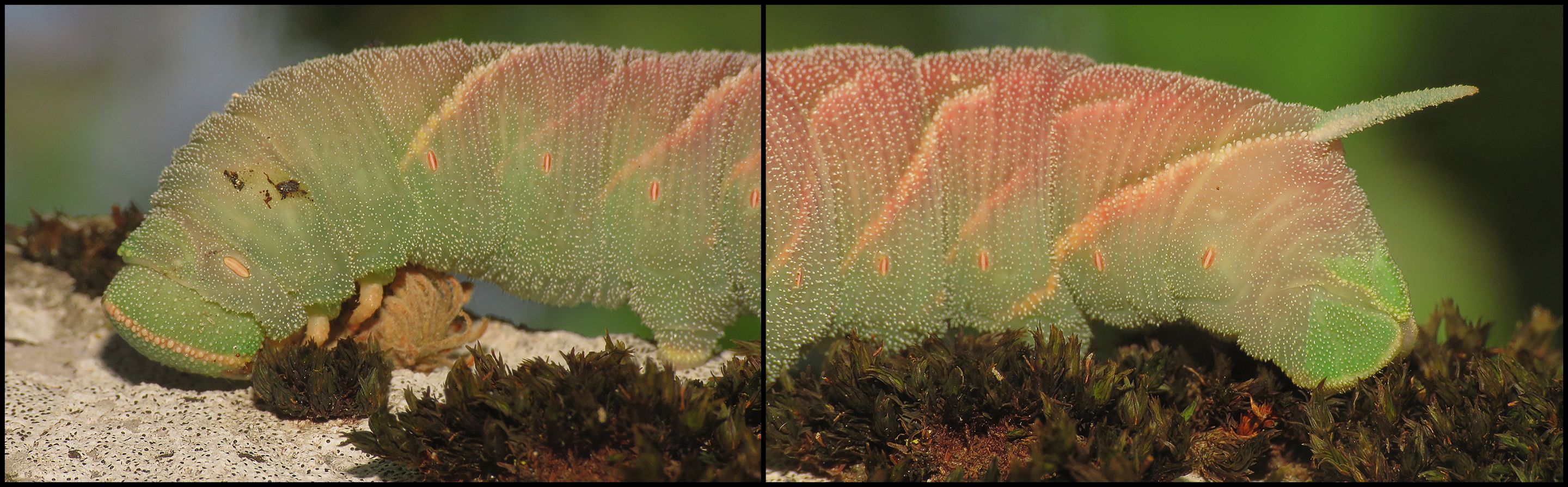
Later at home, after a relatively quick Internet search, I found out that this is the larva of the Marumba quercus, a moth from the Sphingidae family.
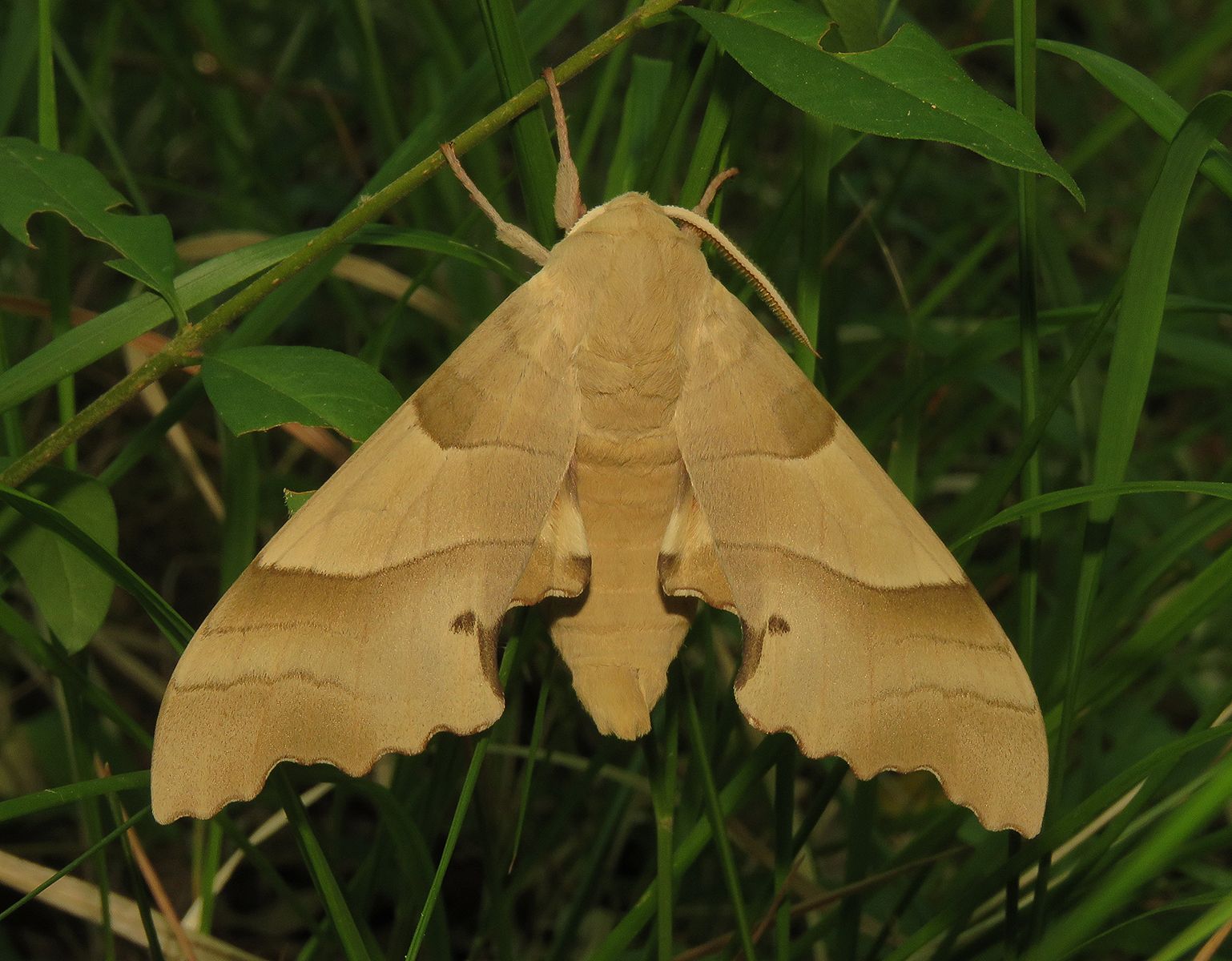
In this older photograph, taken a year ago in the area around the city of Pazin, another twenty kilometers or so from the place I visited today, you can see the beautiful adult moth.
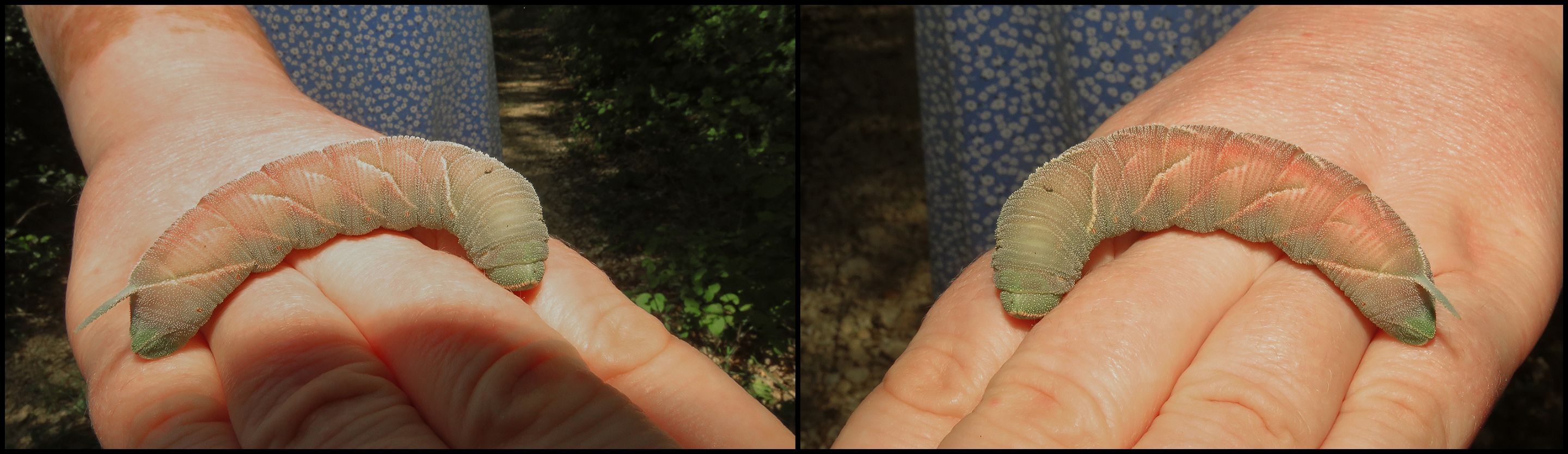
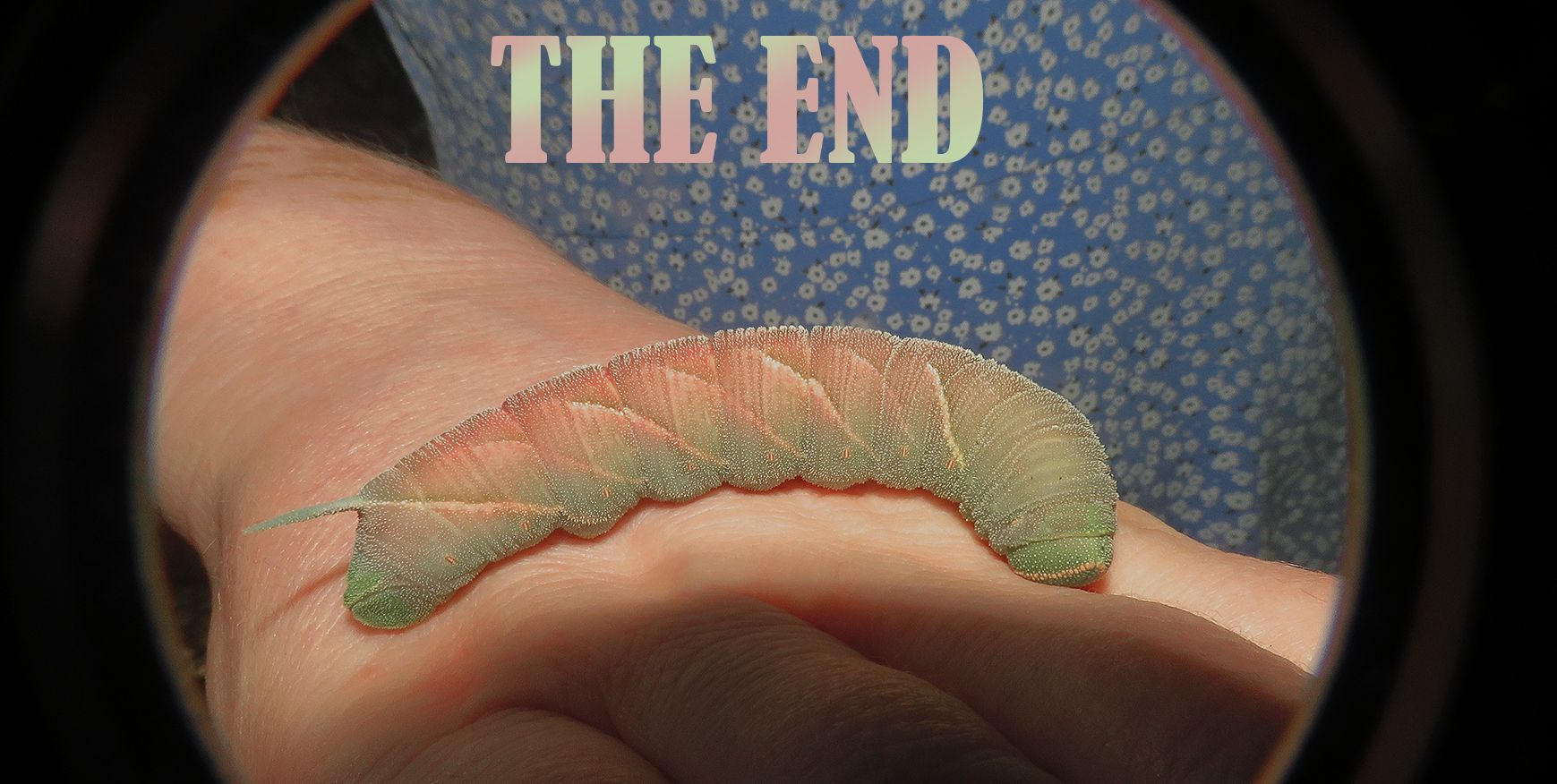
Both, the moth and the larva, are pretty big. Here you can see the caterpillar on the hand of the friend who was there with me. These two shots can give a sense of proportions.
Observing something new in an area that you have regularly visited for decades is always an exciting experience. It feels a bit like traveling far without leaving your region.
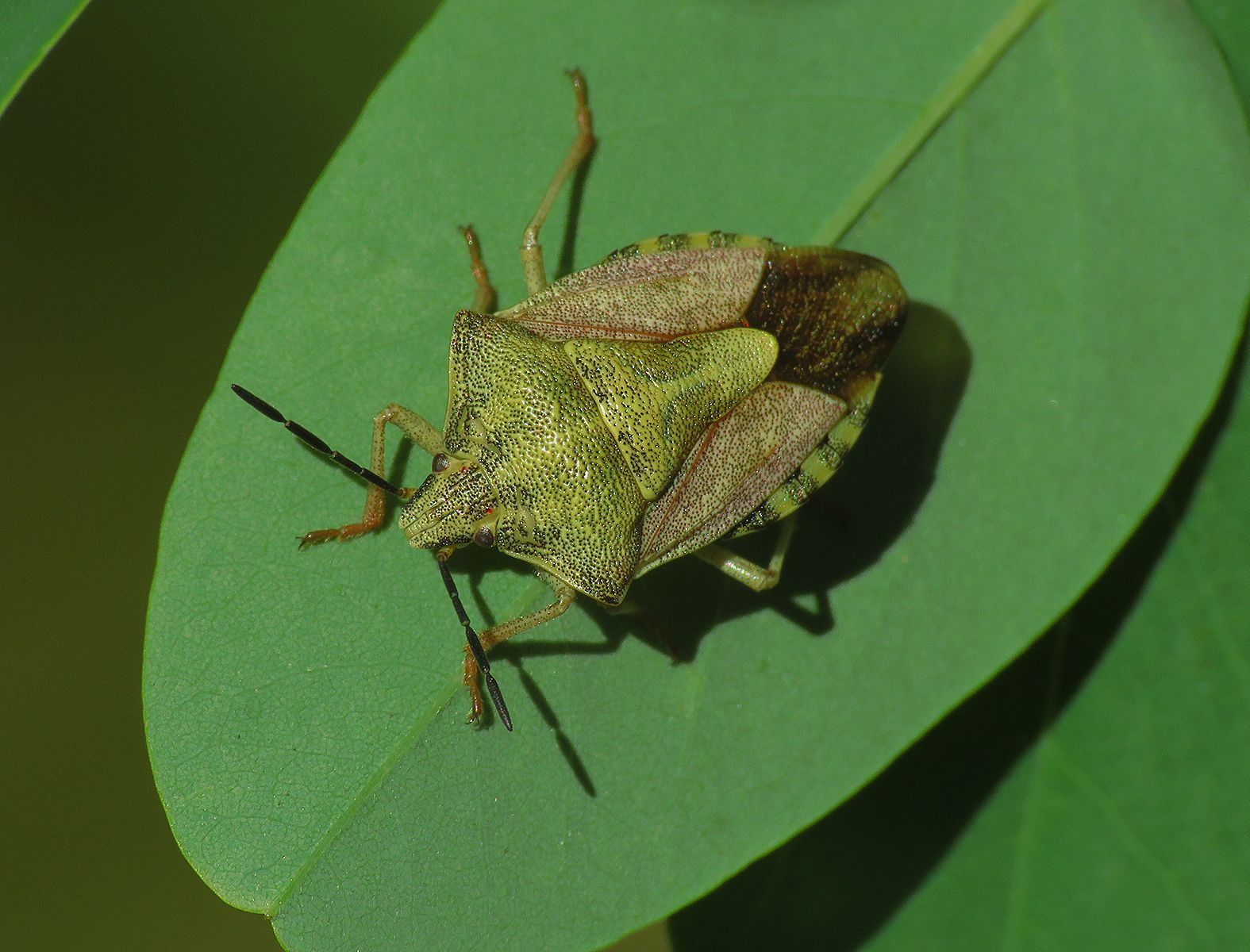
Here you can see the shield bug I encounter very often. Even in my garden sometimes. The Carpocoris purpureipennis shield bug. Sometimes I just pass by this species because I photographed it so many times already. This time the plate-like surface of the Robinia pseudoacacia leaf on which the bug was standing looked visually appealing enough to take a shot or two.
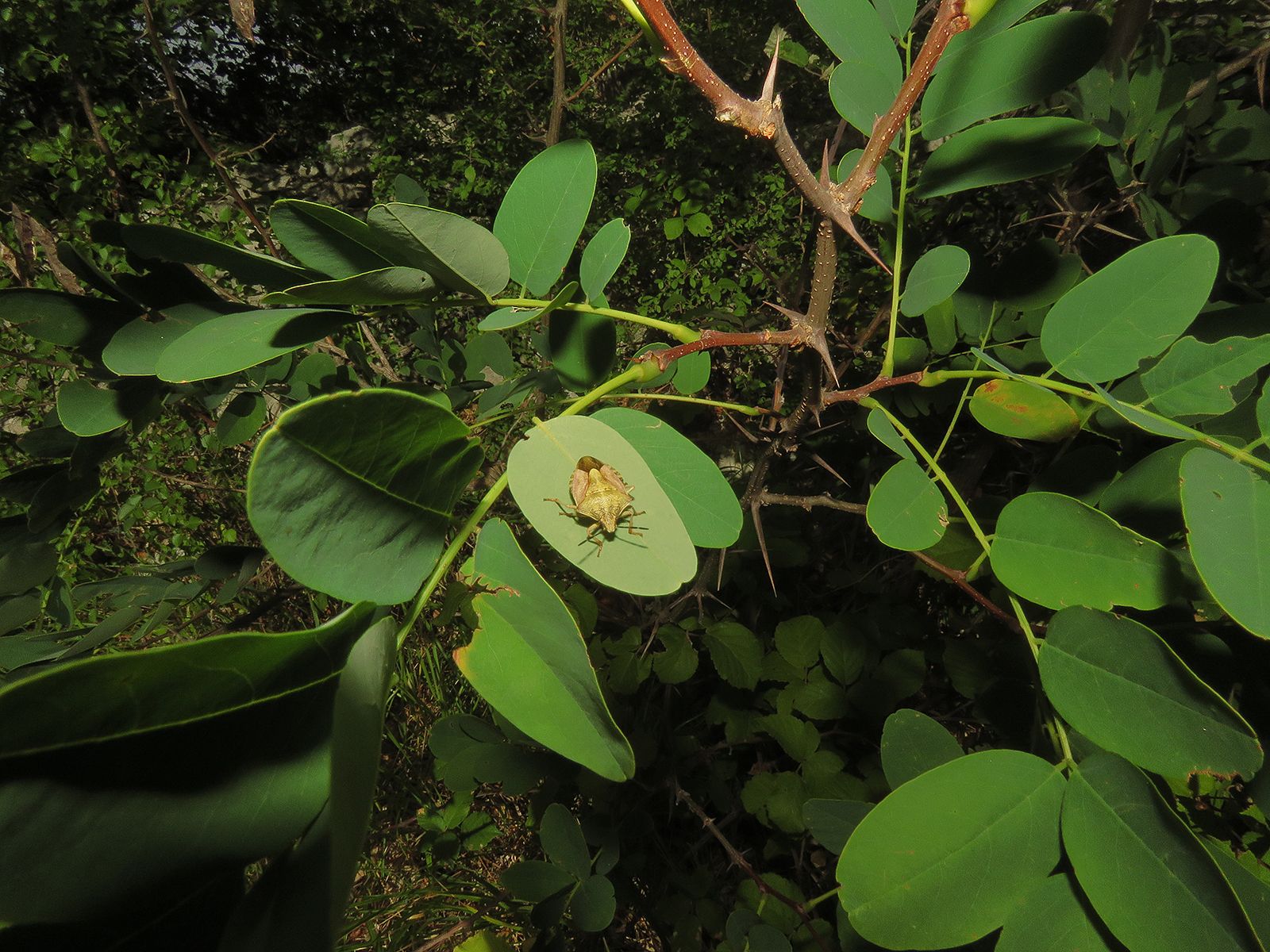
In this wide shot, you can see more of the surroundings. The insect is still visible in the center of the picture.

Not far from there, I found this hairy little spider. It's a crab spider. Heriaeus hirtus from the Thomisidae family.

This bug belongs to the Lygaeidae family.

Just like the spider, it was photographed on the Rosa rubiginosa shrub.
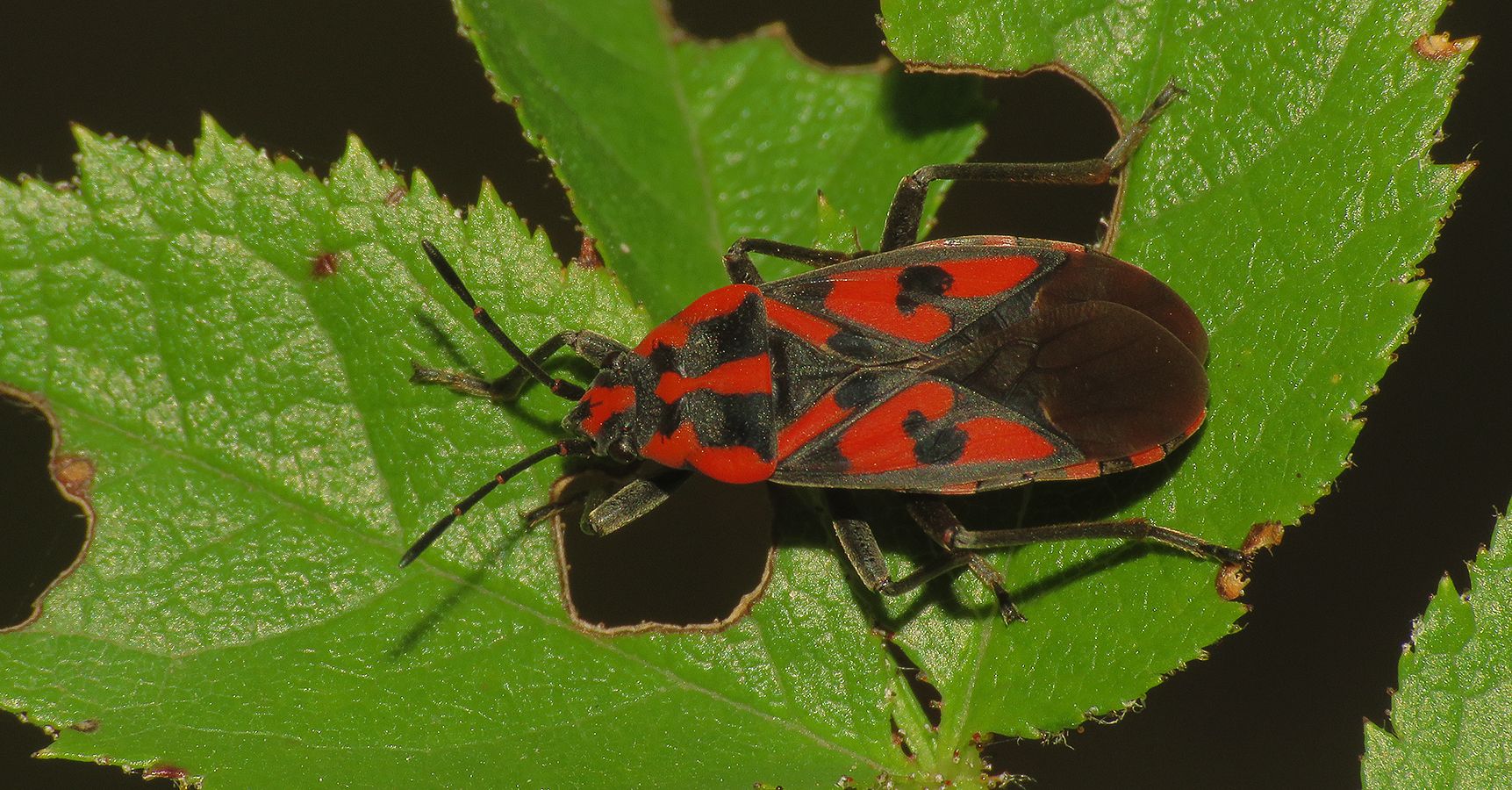
The name of the species is Spilostethus saxatilis.

A bit further, I came across a dead Ectobius vittiventris cockroach. The carcass was partially dismantled so I could see the hind wings that are hidden under the sturdy forewings when the insect is alive. The forewings function as protective covers for the delicate hindwings used for flying.
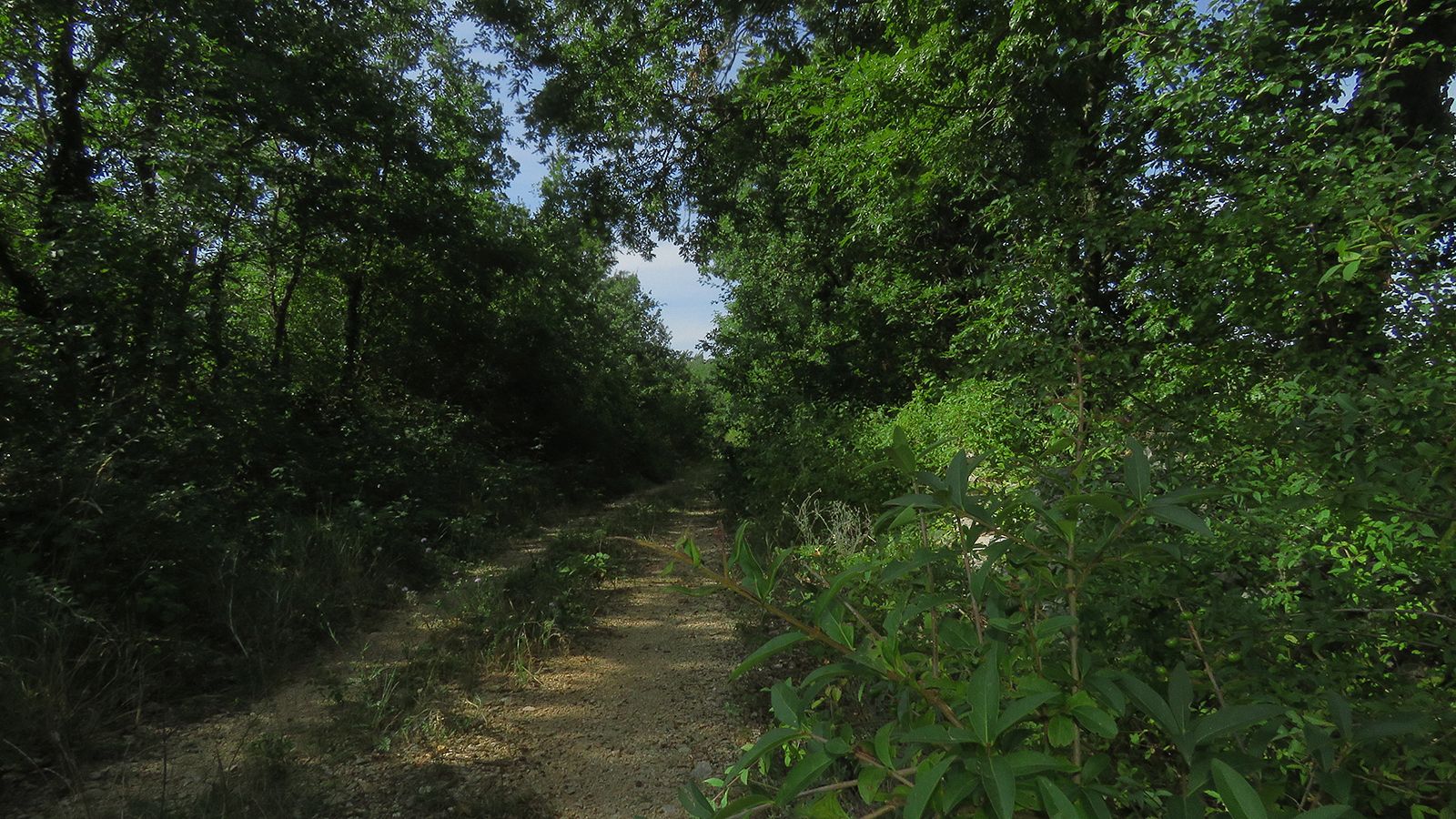
At one point, while walking up & down the same unpaved road ...
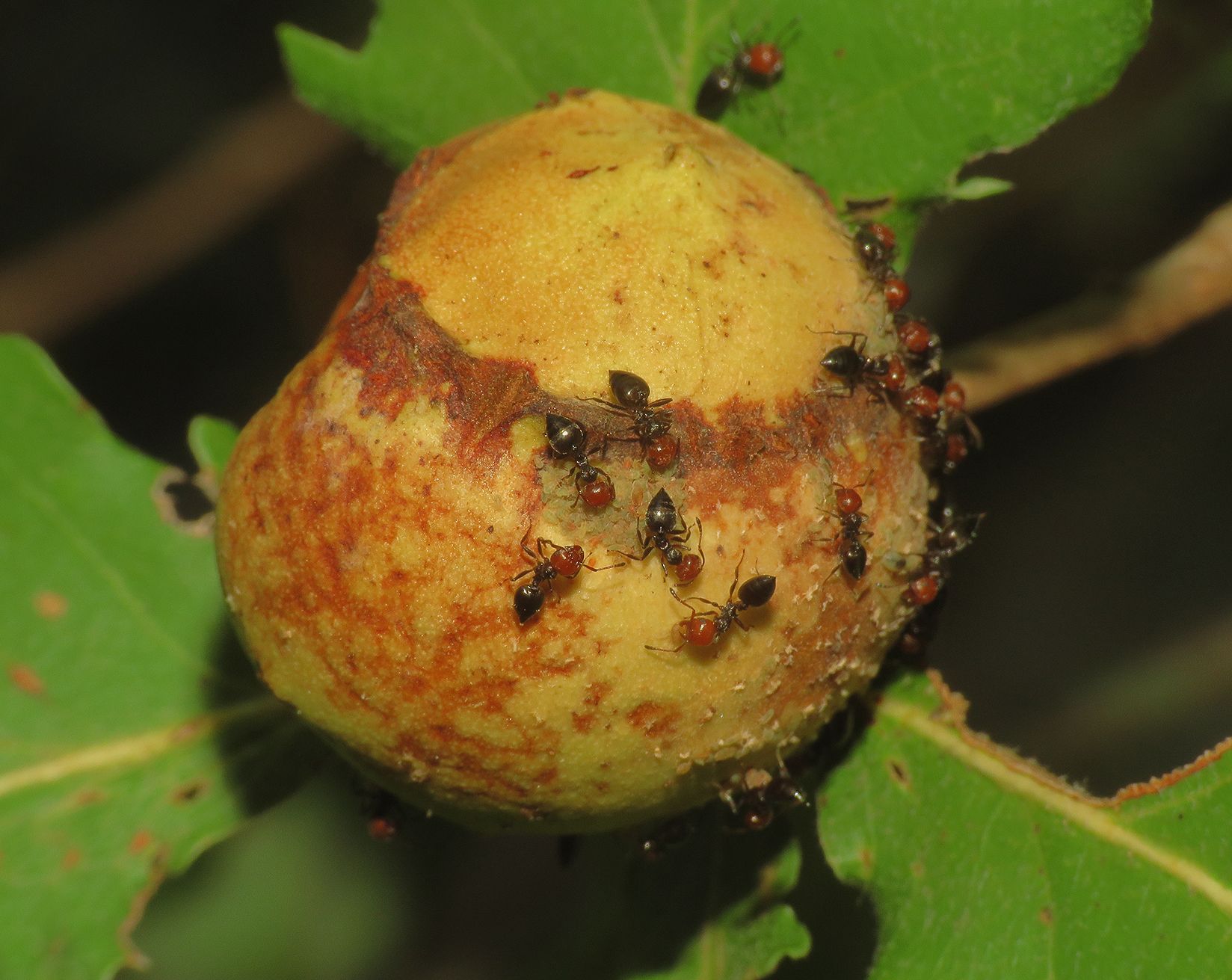
... I noticed some movement on one of the galls made by parasitic wasps on one of the small, shrub-like oak trees along the way.
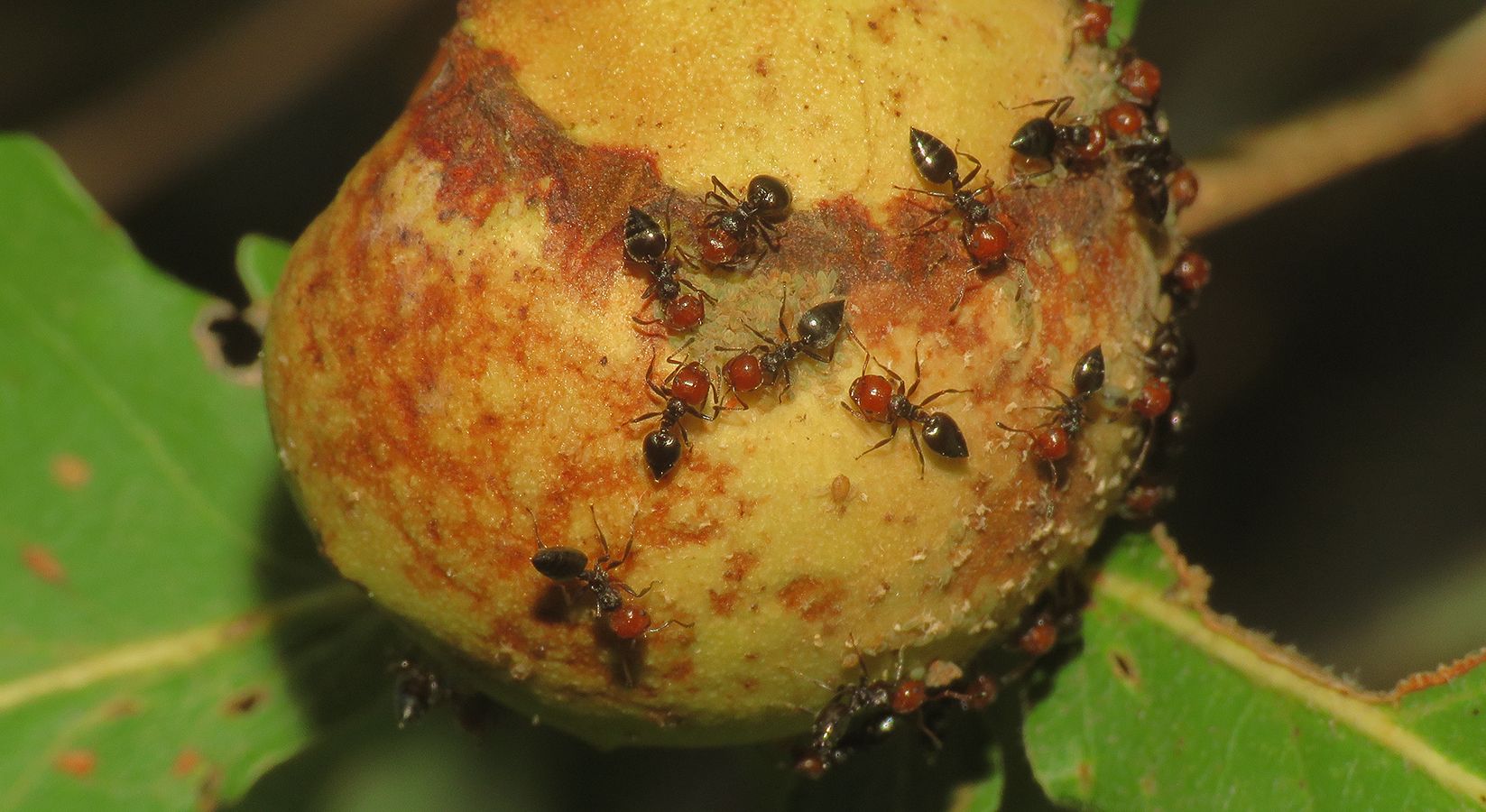
There was a group of ants ...

... but I couldn't tell what was going on from a distance.
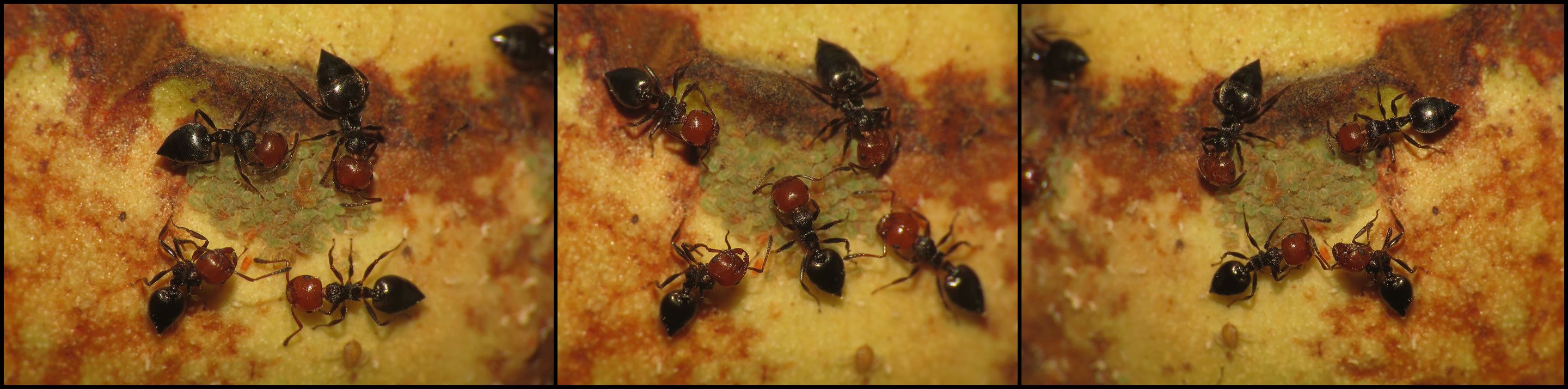
Only when I took a look through the macro lens, did I notice the well-camouflaged aphids that the ants were tending. In the following photograph ...

... I came closer to those Thelaxes suberi aphids.
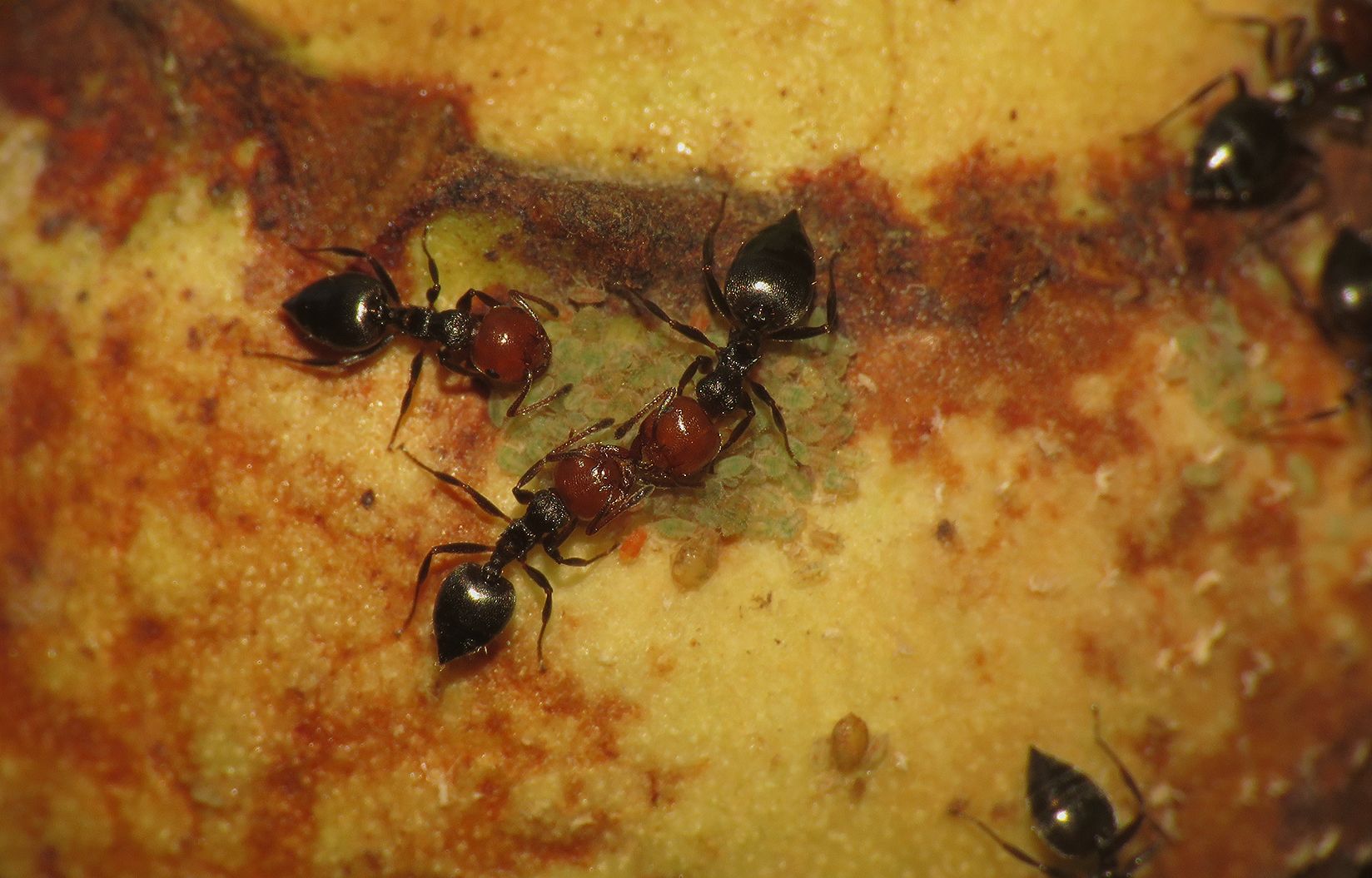
When it comes to the ants, the name of the species is Crematogaster scutellaris.
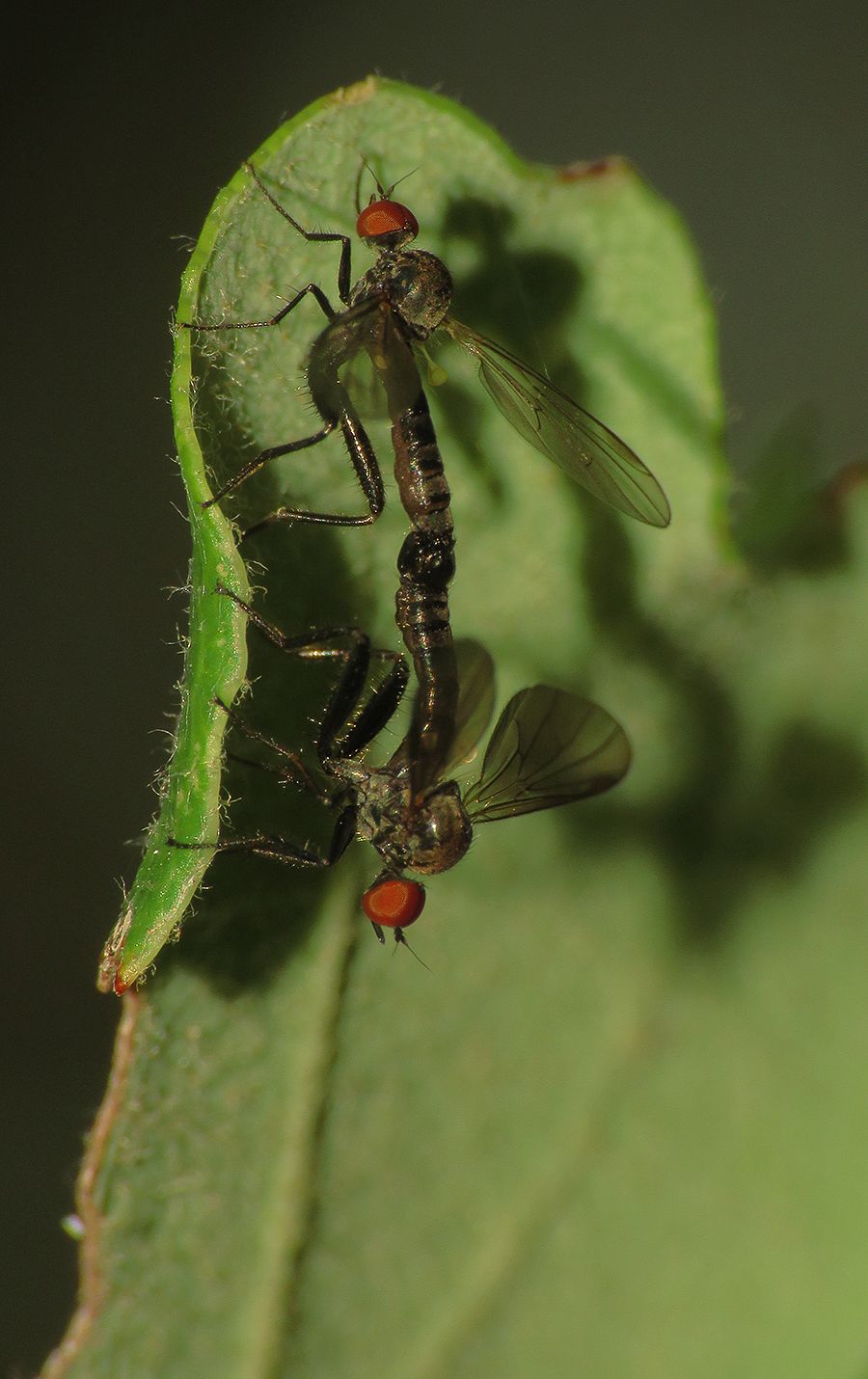
On the leaves of the same tree ...

... I found a mating pair of Hybos culiciformis flies. These small flies from the Hybotidae family are predators. In the following photograph ...
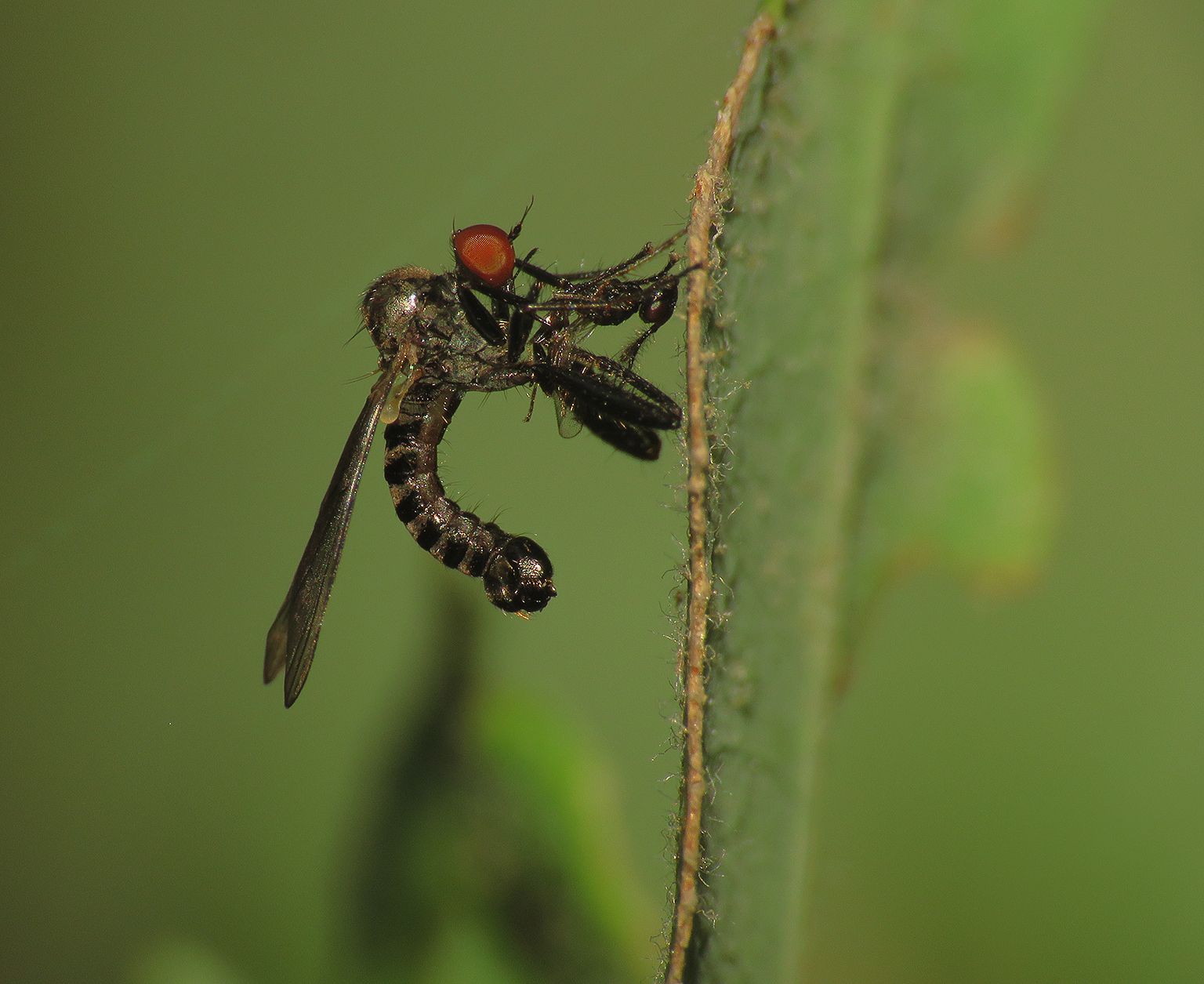
... you can see a fly of the same kind with its prey, some small, probably parasitic wasp. Not far from the oak ...

... down on the ground, in the midlle of the road ...
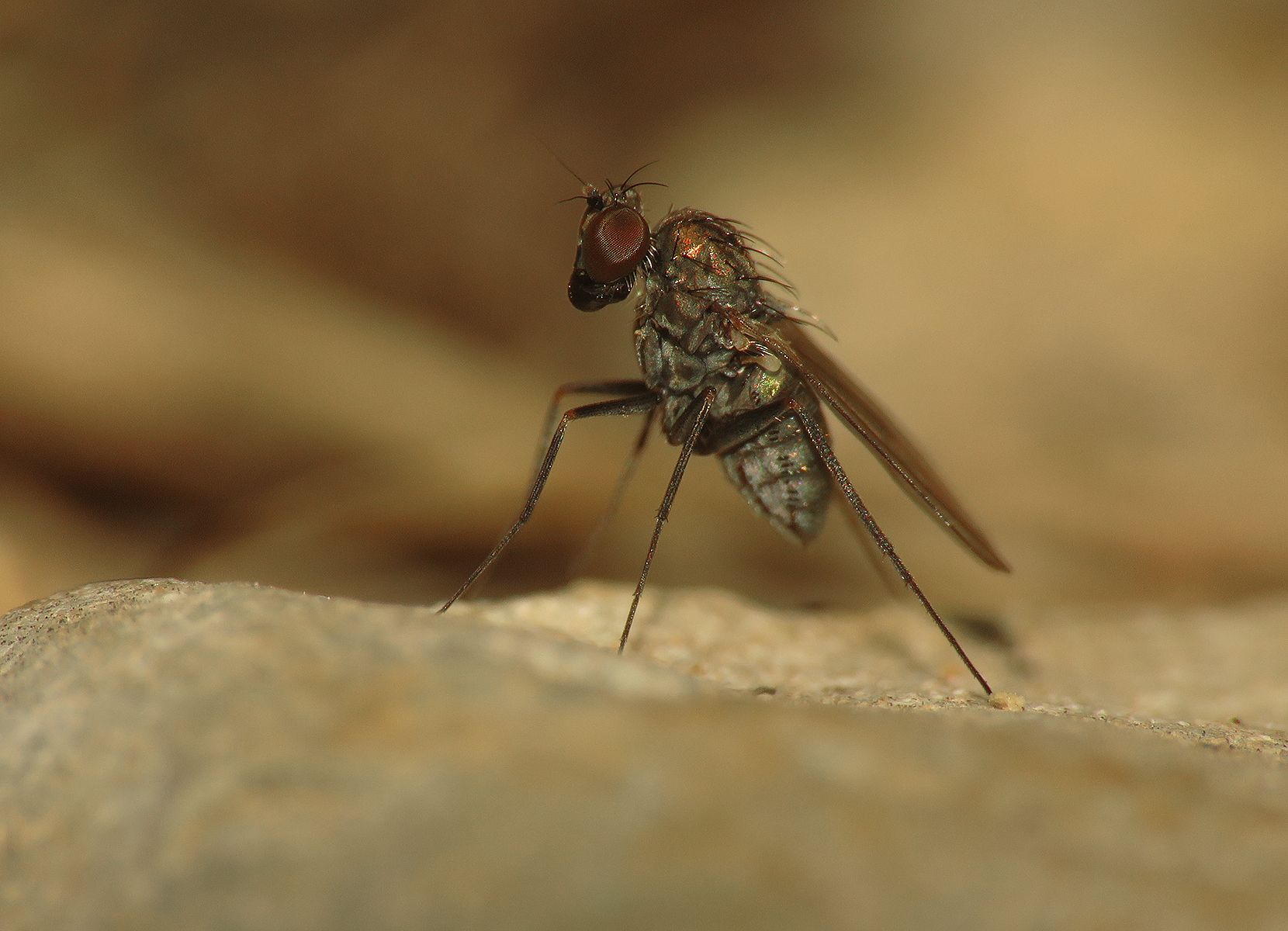
... I photographed an interesting fly from the Dolichopodidae family. The insect was standing in an interesting erected pose that made him look a lot like some intelligent extraterrestrial from Star Wars. Can't tell you the name of the species but the genus is Medetera, I'm sure about that.
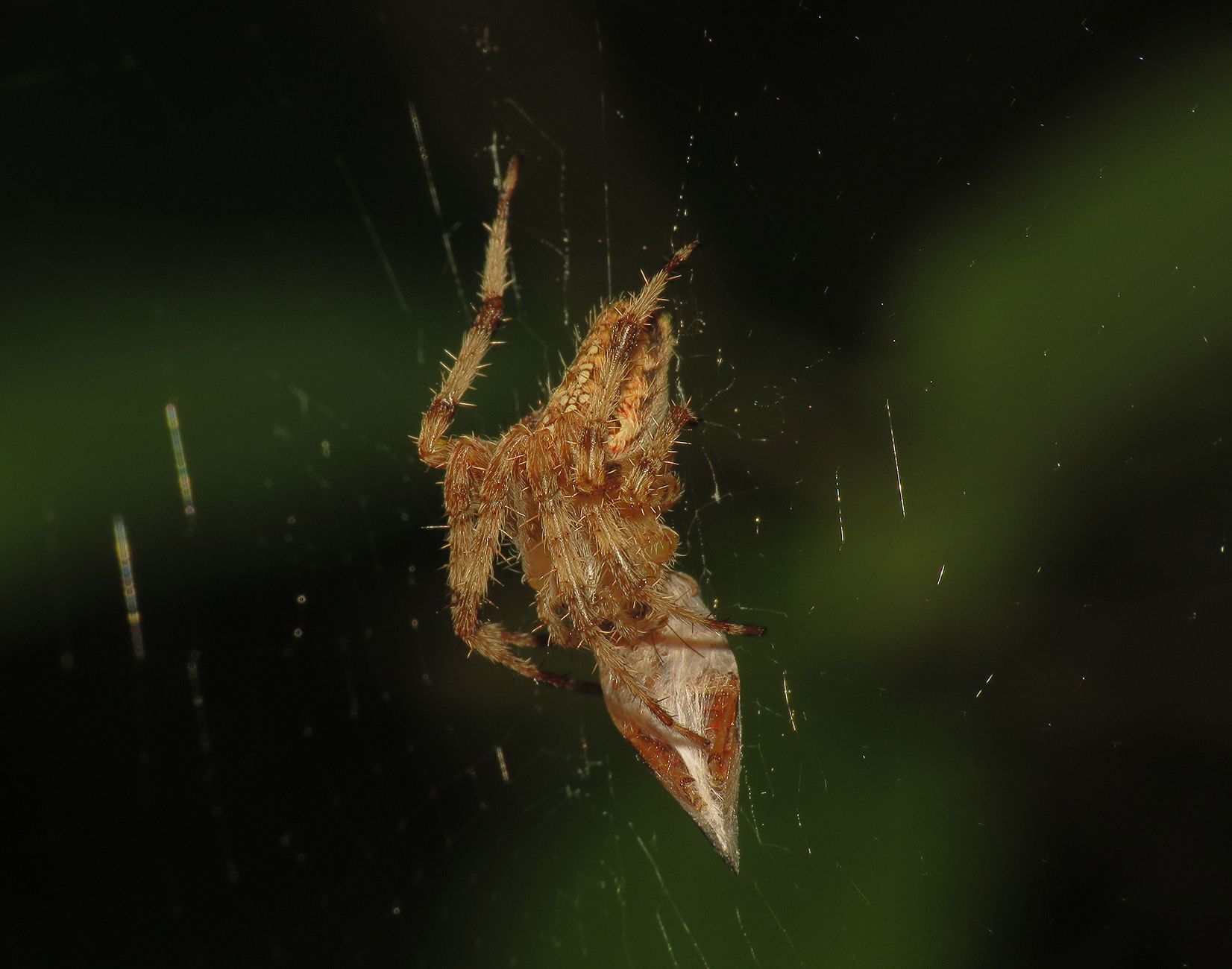
This spider was hanging on its web built on the lower branches of a bigger oak tree, and it was busy feeding on some insect enveloped in silk.

Here you can see the same scene but I rotated the photograph because it looked slightly better that way. Well, to me, at least. Araneus diadematus is the name of this species from the Araneidae family.
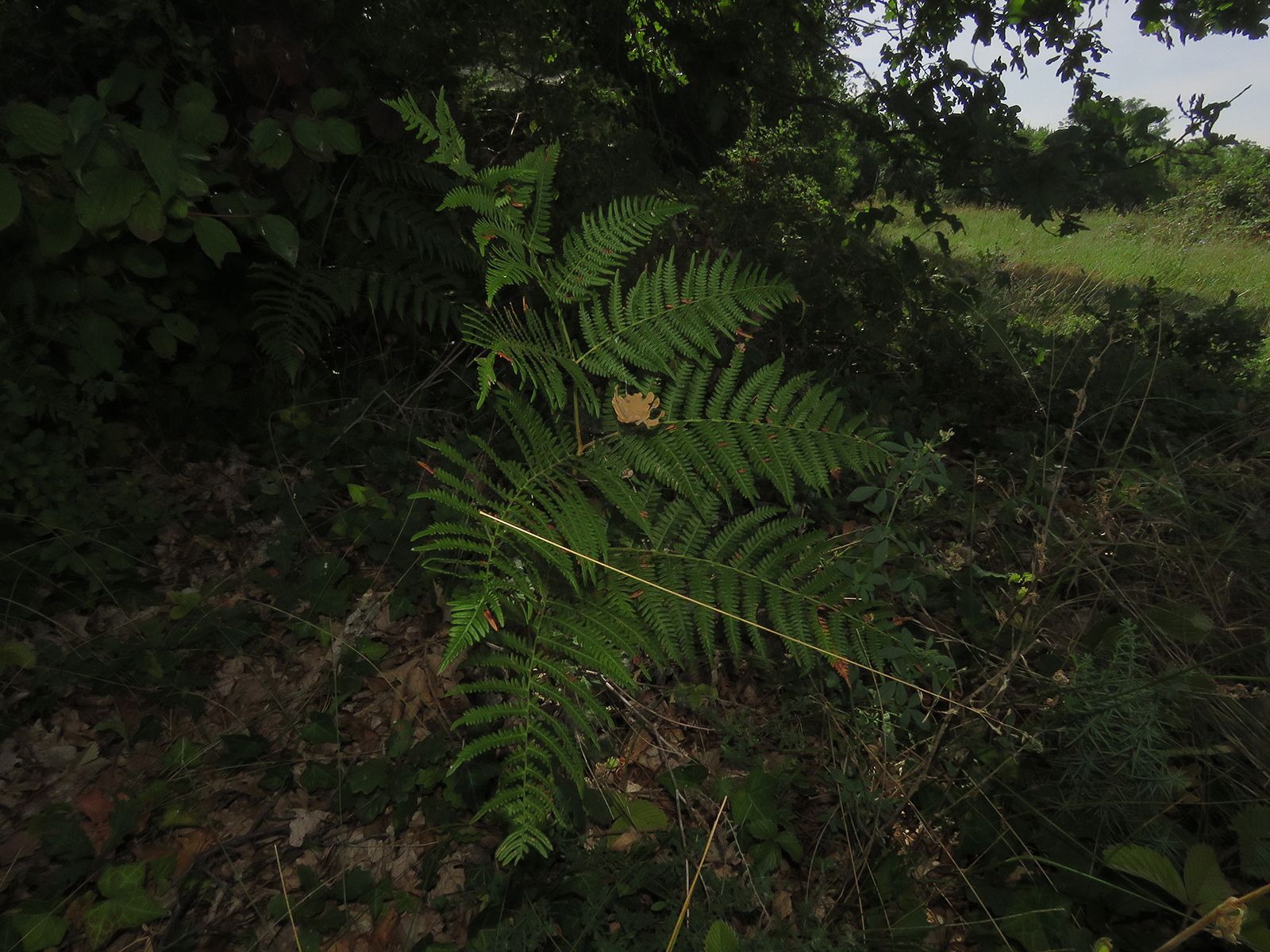
At the end of the road, on the edge of the meadow ...
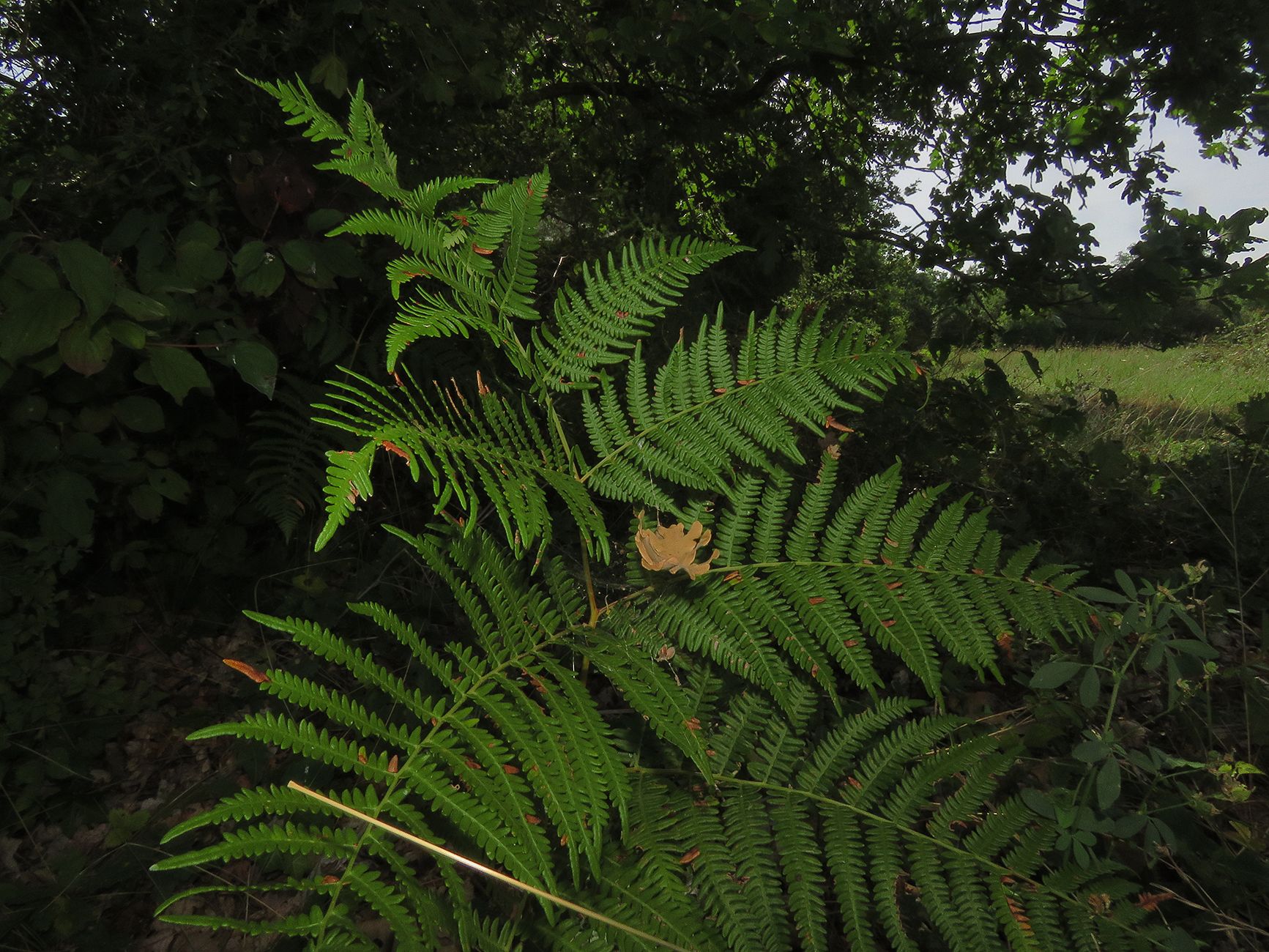
... I stopped by this Pteridium aquilinum fern ...

... because I noticed a moth there.
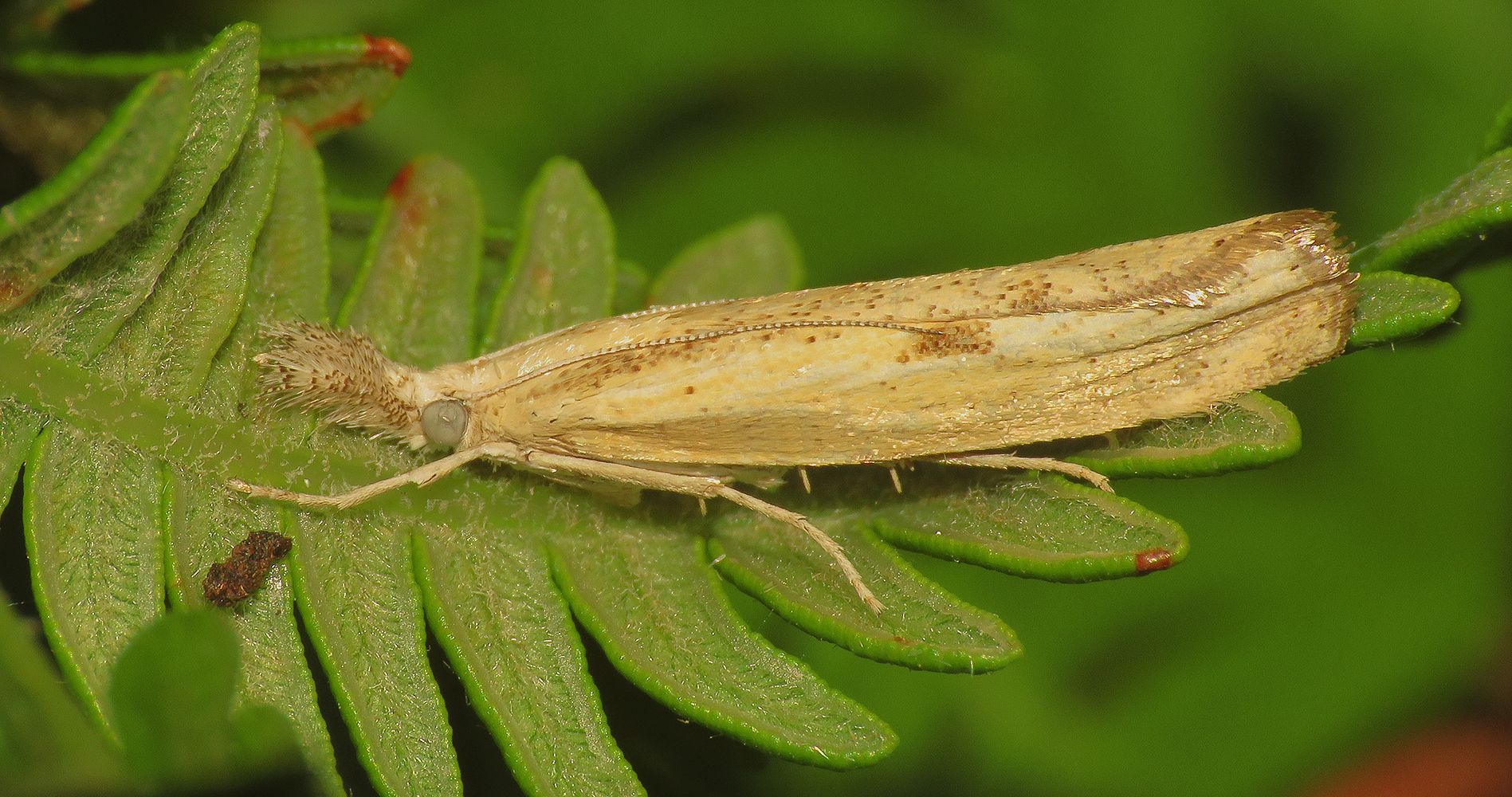
This is the Agriphila inquinatella, a species from the Crambidae family.
The following links will take you to the sites with more information about the protagonists of this post. I found some stuff about them there.
https://en.wikipedia.org/wiki/Marumba_quercus
https://en.wikipedia.org/wiki/Carpocoris_purpureipennis
https://en.wikipedia.org/wiki/Robinia_pseudoacacia
https://en.wikipedia.org/wiki/Heriaeus_hirtus
https://en.wikipedia.org/wiki/Rosa_rubiginosa
https://en.wikipedia.org/wiki/Spilostethus_saxatilis
https://en.wikipedia.org/wiki/Ectobius_vittiventris
https://influentialpoints.com/Gallery/Thelaxes_aphids.htm
https://en.wikipedia.org/wiki/Crematogaster_scutellaris
https://en.wikipedia.org/wiki/Hybos_culiciformis
https://en.wikipedia.org/wiki/Agriphila_inquinatella
https://en.wikipedia.org/wiki/Medetera
https://en.wikipedia.org/wiki/Araneus_diadematus
https://en.wikipedia.org/wiki/Pteridium_aquilinum
AND THAT'S IT. AS ALWAYS HERE ON HIVE, THE PHOTOGRAPHS ARE MY WORK