

Women are complex beings. We experience hormonal changes throughout our lives, from puberty to menopause, which significantly impact our physical and emotional well-being. Understanding these changes is essential for managing symptoms and improving physical wellness. One important hormone we have is estrogen.

Red clover (Trifolium pratense) has been traditionally used for its potential benefits in women's wellness, primarily due to its content of isoflavones, which are phytoestrogens. These isoflavones are structurally similar to human estrogen and can exert estrogen-like effects in the body.
During puberty, these hormones are triggered, leading to the development of secondary sexual characteristics.
Throughout the menstrual cycle, several hormones interplay, leading to symptoms such as mood swings, bloating, breast tenderness, and cramps.
During pregnancy, different hormones are responsible for the development of the baby. After delivery, hormone levels drop, which can lead to depression and emotional changes.
In perimenopause (which begins in the 40s) and menopause (around age 51 on average), progesterone and estrogen levels fluctuate and eventually decline. Common symptoms include hot flashes, night sweats, mood swings, and vaginal dryness.
Like those found in red clover, a balanced diet rich in phytoestrogens can help manage hormonal fluctuations.
Low estrogen levels can also lead to osteoporosis (low bone density) and increase the risk of cardiovascular disease.

I went out to pick today. Plenty was growing by the nearby wheat field, and it was a beautiful day.


It did not take me long to gather enough to work with.
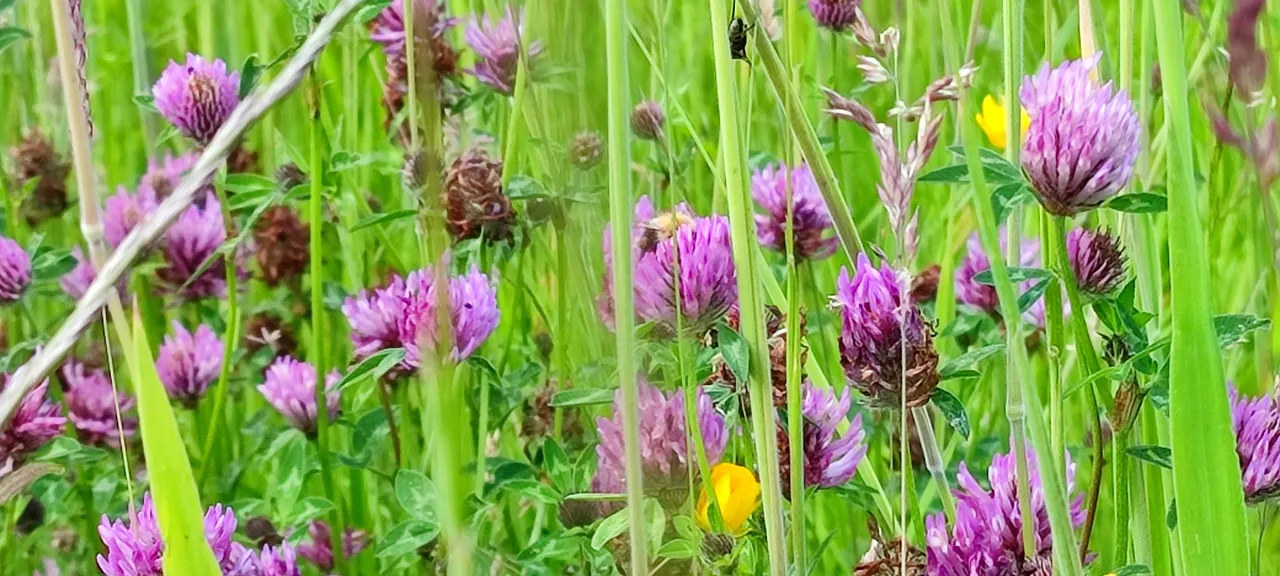
They currently growing everywhere here,

And it is the best time to pick them.


I also picked some white clovers, which is also beneficial, but red clovers are more studied than white clovers.

They have a pleasant, mild, sweet, honey-like fragrance; the bees love them, so It is best to always leave some for them.

I make tea by adding a few flowers and honey to the cup.

Add boiling water.

And a squeeze of lemon. Let steep for a few minutes.

It can be drunk hot or ice cold.
I dry some for future use.

I also infuse some in kombucha vinegar. When my kombucha over-ferments, it turns into vinegar, and I don’t purchase vinegar as I have plenty on hand.
To make the infusion:


Fill a sterilized bottle with the blossoms.

Pour kombucha vinegar over the blossoms until the jar is full. You can also use regular vinegar.
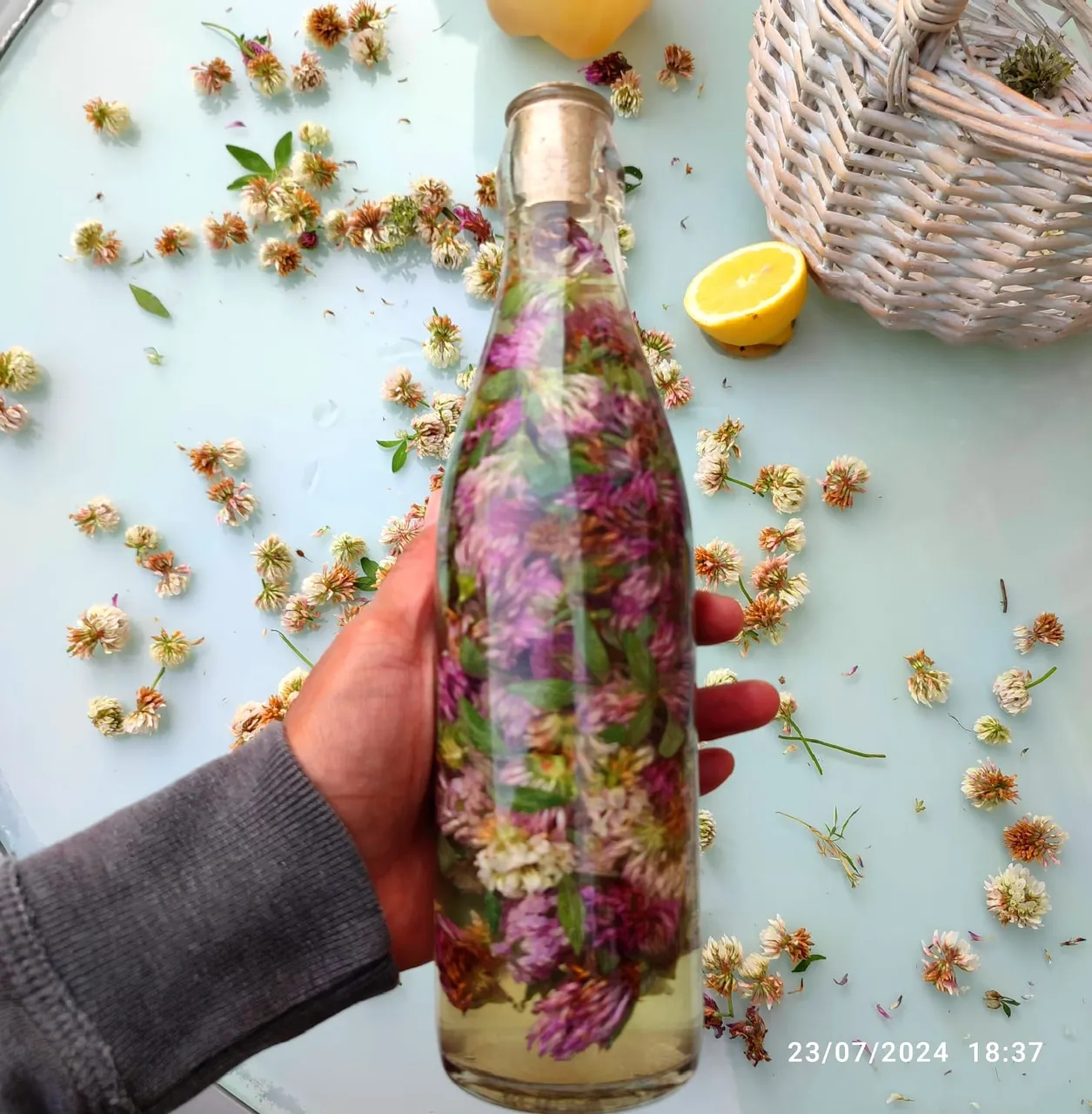
Seal the jar with a non-metallic lid (vinegar can corrode metal).

Store the jar in a cool, dark place for 4-6 weeks, shaking it occasionally.
Strain the vinegar using a fine cloth.
I take one tablespoon per day when I feel my estrogen is out of balance.

The petals are also great in salads or any recipe where they can be used.
One thing to remember is to consume it in moderation, as too much can cause an imbalance in hormones.
Importantly, if you have hormone-related tumors, it is best to avoid hormone therapy or plants with phytoestrogens, like red clover, as they can exacerbate the condition.
It is not suitable if you are pregnant or breastfeeding.

Pink, purplish, and white clover.

Red Clover is pinkish-purplish; the name red is more about the historical naming.
A wonderful day to everyone,
Mariah 💗