

In Cuzco I had the opportunity to attend an exhibition on the use of the coca leaf and its history, in addition to the mention of some other power plants used in ritual contexts in American indigenous peoples.

For various reasons, this story was already familiar to me, in addition to being fascinated by the subject, years before I had also visited the coca museum in La Paz, Bolivia at an informal invitation from one of its directors who, curiously, I had met in Caracas.

So the energizing benefits of this silver native to America were quite clear to me, to the point that I also chewed it during my stay in the highlands but also on my return to Caracas, and I cannot speak if not marvels of that experience.

Many of you will have already heard at some point the origin of Coca-Cola or for a moment the origin of the most unpopular but no less commercialized Cocaine, and its direct connection with the thousand-year-old Coca plant cultivated and used for centuries in almost all the extension of the Andean mountain range in the South American continent.
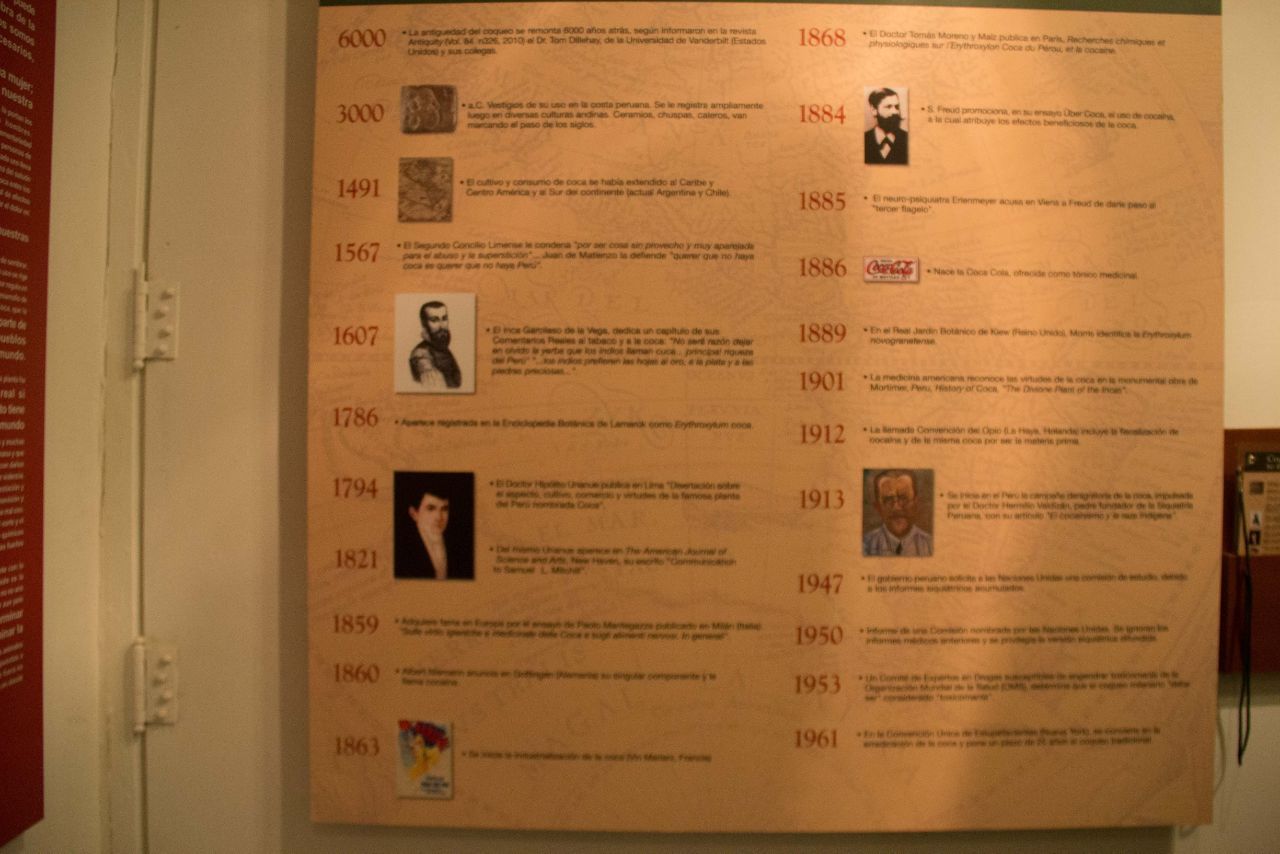
Although this plant was highly known and used by the original peoples who inhabited and inhabit this region, it was not until the mid-nineteenth century EU that cocaine was synthesized mainly as an analgesic and later as a recreational drug in Europe and the United States. , where it also began to be consumed in concoctions, syrups and elixir.

One of those primary syrups of that time was the world famous Coca Cola, which was promoted as a combination of Coca with another stimulant plant grown in Africa called Cola, the combination of these two plants in syrup form as a super stimulant was one of the initial hallmarks of the brand.
Español
Vins Des Incas
En Cuzco tuve la oportunidad de asistir a a una exposición sobre el uso de la hoja de coca y su historia, además de la mención de algunas otras plantas de poder usadas en contextos rituales en pueblos indígenas americanos.

Por diversas razones está historia ya me era familiar, además de fascinarme el tema, años antes también había visitado el museo de la coca en La Paz, Bolivia por una invitación informal de una de su directiva que curiosamente había conocido en Caracas.
Entonces me quedaba bastante claro las bondades energizantes de esta plata originaria de América, al punto que tambien llegue a consumirla masticado en mi estadía por el altiplano pero también en mi regreso a Caracas, y no puedo hablar si no maravillas de esa experiencia.

Muchos de ustedes ya habrán escuchado en algun momento el origen de la Coca-Cola o por coletazo el origen de la más impopular pero no menos comercializada Cocaína, y su conexión directa con la milenaria planta de Coca cultivada y utilizada desde hace siglos en casi toda la extensión de la cordillera andina en el continente sur americano.
.
si bien está planta era altamente conocida y utilizada por los pueblos originarios que habitaban y habitan está región, no fue si no hasta mediados del siglo XIX UE se logró sintetizar la cocaína principalmente como analgésico y luego como droga recreativa en el continente europeo y estados unidos, dónde también empezó a ser consumido en brevajes, jarabes y elixir.
Uno de esos jarabes primarios de esa época fue el mundialmente famoso Coca Cola, que se promocionaba cómo una combinación de Coca con otra planta estimulante ultizada en África llamada Cola, la combinación de estas dos plantas en forma de jarabe como un super estimulante fue uno de los sellos distintivos iniciales de la marca.