

𝔼𝕔𝕠𝕝𝕠𝕘𝕪 𝕒𝕟𝕕 𝕤𝕒𝕧𝕚𝕟𝕘𝕤

Hola mis lindas abejas 🐝 del panal, ¿cómo se encuentran en este día? Yo por este rincón muy bien gracias a Dios haciendo cada día algo nuevo y creativo.
Ya vamos por la mitad de la semana y debemos estar más activos que nunca. Hoy les quiero enseñar a realizar una de las piezas que más he hecho desde que decidí ser costurera: Los pañales ecológicos.
Aprendí a realizarlos cuando mi hijo menor los usaba en 2015 y lo hice por necesidad, ya que acá en esos tiempos era super difícil de conseguirlos.
Tenía yo en ese tiempo una máquina muy básica y fui perfeccionándolos hasta que logre sacar todos los patrones por talla.
Sigan leyendo mi publicación y descubran como ahorrar dinero y ayudar con la ecología.
Hello my beautiful bees 🐝 of the hive, how are you this day? I am doing very well in this corner, thanks to God, doing something new and creative every day.
We are already in the middle of the week and we must be more active than ever. Today I want to show you how to make one of the pieces that I have made the most since I decided to be a seamstress: The ecological diapers.
I learned to make them when my youngest son was using them in 2015 and I did it out of necessity, since here in those times it was super difficult to get them.
At that time I had a very basic machine and I perfected them until I managed to get all the patterns by size.
Keep reading my publication and discover how to save money and help with the ecology.

Los pañales ecológicos nacen de la necesidad de miles de madre que no cuentan con un sustento económico que les permita poder comprar dos o tres paquetes de pañales desechables cada semana.
Sin embargo el impacto que puede llegar a tener en el ambiente es positivo, ya que estamos hablando que no se arrojaran a la basura miles y miles de pañales desechables que tardaran mucho en descomponerse.
Para muchos esto es simplemente asqueroso, tener que lavar algo que está lleno de excremento para volverlo a colocar, sin embargo eso tiene un proceso de desinfección muy sencillo y aun en países desarrollados las mujeres lo usan con sus hijos.
Me gustaría que muchas más se unieran, porque contribuyen a la ecología del planeta.
Esta pieza debe ser elaborada en tela suave y fácil de lavar, recuerden que será usada por bebes que tienen la piel muy sensible.
Ecological diapers are born out of the need of thousands of mothers who do not have the financial means to buy two or three packs of disposable diapers each week.
However, the impact it can have on the environment is positive, since we are talking about not throwing away thousands and thousands of disposable diapers that will take a long time to decompose.
For many this is simply disgusting, having to wash something that is full of excrement to put it back, however this has a very simple disinfection process and even in developed countries women use it with their children.
I would like many more to join in, because they contribute to the ecology of the planet.
This piece should be made of soft fabric and easy to wash, remember that it will be used by babies who have very sensitive skin.

| |
| |
| |
| |
|
| |
| |
| |
| |
| |
|
| |
Patrones
Moulds
 |  |
|---|

Como siempre lo primero que debemos hacer es marcar la el patrón sobre la tela.
Necesitamos dos piezas de tela, como se muestra en la imagen.
As always, the first thing to do is to mark the pattern on the canvas.
We need two pieces of cloth, as shown in the picture.
 |  |
|---|
Cuando ya cortamos, procedemos a coser las tiras que servirán de agarre entre el pañal y la cintura del bebe.
Once we have cut, we proceed to sew the strips that will serve as a grip between the diaper and the baby's waist.
 |  |  |
|---|
Cuando ya tenemos este paso listo, nos toca volver a marcar el molde pero esta vez con una puntada gruesa que nos permita ver por donde coseremos y cortaremos.
También es momento de marcar los puntos donde va la goma elástica. Yo ya yo tengo marcado en cada patrón. Arriba y por los lados de cada pierna.
When we have this step ready, we have to mark the mould again but this time with a thick stitch that allows us to see where we will sew and cut.
It is also time to mark the points where the rubber band goes. I have already marked on each pattern. On the top and sides of each leg.

Lo siguiente que nos toca es colocar el plástico en la otra pieza.
Este servirá de aislante en el pañal para que los líquidos no salgan de él.
The next thing we have to do is put the plastic on the other piece.
This will serve as insulation in the diaper so that liquids do not come out of it.
 |  |
|---|
Cuando ya tenemos las dos piezas terminadas, solo debemos unirlas frente con frente y dar una puntada recta. Siempre dejando una abertura para poder dar vuelta a la pieza.
Cuando finalizamos solo debemos dar una puntada decorativa a la pieza y ya casi la tenemos lista.
When we have the two pieces finished, all we have to do is join them together front to back and sew a straight stitch. Always leaving an opening so we can turn the piece.
When we finish we only have to give a decorative stitch to the piece and we have it almost ready.
 |  |  |
|---|
 |  |  |
|---|
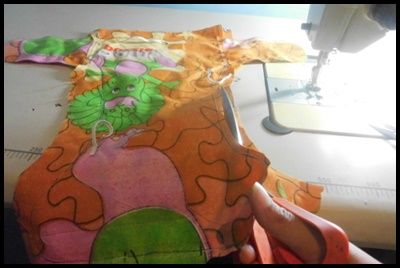
Por último solo debemos estirar la goma y hacer que quede en forma de pañal con la ayuda de la máquina de coser.
Se le coloca en las puntas el cierre velcro y ya nuestro pañal está listo para ser usado.
Finally, we only have to stretch the rubber and make it into a diaper shape with the help of the sewing machine.
Put the Velcro fastener on the ends and our diaper is ready to be used.
 |  |
|---|


Soporte fotográfico de mi autoría, editado en PhotoScape - Canva
Photographic support of my authorship, edited in PhotoScape - Canva