
I'm very excited to write new post for Aquatic Sentinels!🐬🤗
Once again, I bring you content that I consider to be of quality, this takes several hours of reading, comprehension and writing.💡📚
But more than that, this is one more publication so that together we can appreciate and contemplate how wonderful our ocean is!
🦈🦀🐢🐳🐙 I hope you enjoy it!🐟🦈🦀🐢🐳
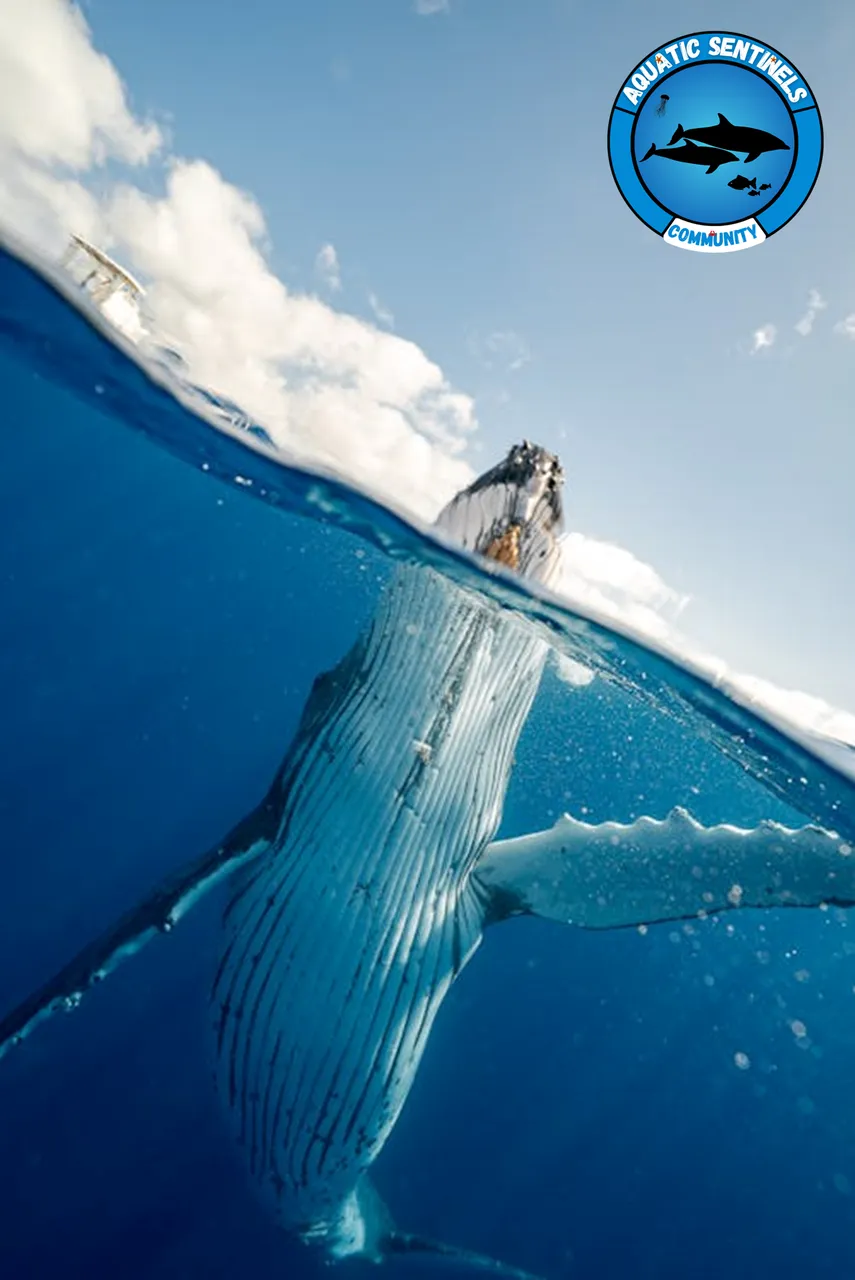
Photos by Elianne Dipp📸 See photo here👈
📍Tonga
In reality, little is said about parasites that may be linked to marine mammals, even among experts. Few researchers decide to delve into the topic of parasites in marine mammals, in part because many believe there are more "important" issues that concern marine mammals, for example, the study of their behavior, the vessels that affect these animals, overfishing, or how they relate to other animals.

Photo by Paolo Cipriani📸 See photo here👈
📍Vasto, Italy
A few years ago, I met a researcher who studies parasites and their relationship with marine mammals. From what I learned from him, it seems to be an even more interesting topic than is believed...
👉Join us until the end of this post to find out all the details👈...
The following information is taken from: Geraci, J. R., & Aubin, D. J. S. (1987). Effects of parasites on marine mammals. International journal for parasitology, 17(2), 407-414. Adapted by

Marine Mammals and parasites🐬💀
Although there are other branches of science that seem to be more important, there are some studies on marine mammals and parasites (Defyamure, 1955). These studies report on the seriousness that parasites can cause to the bodies of these animals.

Photo by Paolo Cipriani📸 See photo here👈
📍Vasto, Italy
In this post we will address adaptive aspects of parasites towards certain animals: baleen whales (mysticetes)🐋 and toothed whales, dolphins and porpoises🐬 (odontocetes); pinnipeds - true seals (phocids), fur seals and sea lions (otariids) and walruses (adobenids); sirens, anathas and dugongs, and the tiny sea otter.
Ectoparasite💀
We refer to "ectoparasite" organisms as those that can range from algae to fish and that somehow attach themselves to the body of marine mammals. They are considered parasites because they damage the skin's integument. For example, a whale that enters the cold waters of Antarctica may acquire a yellow film on its body. The blue whales thus discovered are known as "sulfur-bottomed." The responsible organisms are bacteria called diatoms (Hart, 1935), which adhere to the surface by means of valves. Harmless, suction-like protrusions, but occasionally penetrate the epidermis and become saprophytic (Hart, 1935).

Photo by ballenaswiki.com📸 See photo here👈
📍Unknown "Bernacles in whale"'
There are also arthropods that damage the integument of whales by digging to secure a firm anchorage. We are referring to some species of barnacles that can cause damage so deep that they can leave scars on mammals.
Endoparasites💀
Endoparasitic organisms are those found inside the bodies of marine mammals. Within this broad division, we can find several groups:
👉Protozoa
Little is known about the life cycles of these organisms. An example of protozoa is sarcosporidia, which infect the muscle tissue of pinnipeds (Migaki and Albert, 1980) and cetaceans (Akao, 1970). On land, infection with this parasite requires the animal to consume fecal sporocysts of the genus Surcocystis.
👉Arthropods
Yes, arthropods can also parasitize the nasal passages of animals, as well as the trachea and bronchi of pinnipeds. Nasal mites (Acarina: Gamasidae) of the genus Huluruchne infest phocid seals (Arundel, 1978) and, occasionally, sea otters, Enhydru lutris (Kenyon, Yunker, & Newell, 1965); the genus Orthohaluruchne is found in otariids and walruses, Odobenus rosmurus (Kim, Haas, & Keyes, 1980; Fay & Furman, 1982).

Photo by National Center for Emerging and Zoonotic Infectious Diseases (NCEZID), Division of Parasitic Diseases and Malaria📸 See photo here👈
📍Pulau Pom Pom, Sabah, Malaysia
👉Nematodes
Have you ever heard of mass strandings of marine mammals?👀 Studies suggest that nematodes may be the cause of these mass strandings, specifically the metastrongylid nematodes Stenurus minor and S. globicephalae, which lodge in the middle ear and interfere with echolocation and orientation (Delyamure, 1955).
The list does not end here, with other groups such as Cestodes, Acanthocephala and Digenea.
👉Join the Aquatic Sentinels!🐋
This project is dedicated to the preservation of our sea, our rivers and lakes, our lagoons. Let's make it possible! Let's share scientific and quality information for the good of our aquatic world!

🐟🐋Welcome!🐬🐙

DNA - Densifying Nature-Appreciation :

DNA is an organization to foster and DENSIFY NATURE-APPRECIATION which aims to establish REPORTS OF BIODIVERSITY DATA that is contributed by all of us Hiveans and subsequently cataloged.

DNA animation GIF by @Suheri
Therefore DNA searches for HIGH-QUALITY posts that aim to DESCRIBE and determine the BIODIVERSITY AROUND YOU with added EXPLANATIONS and INFORMATION. For these informative posts they offer a CURATION SERVICE using the 

Aquatic Sentinels animation GIF by

 : Leader of the Aquatic Sentinels Community