
Many people know Prague boasts Prague Castle, recognized by the Guinness Book of Records as the largest in the world. The more enlightened and those who have visited the Czech capital could name Vyšehrad, perched majestically on a rock above the Vltava River, as the second castle of Prague. Despite its name, which includes the Czech word for castle (hrad), Vyšehrad is no longer a castle but a citadel.
However, my #WednesdayWalk did not lead me to either of these landmarks. Instead, I decided to explore another castle within the city limits—or rather, what's left of it. On this sunny, almost summerly day, I found wandering through the woods more appealing than roaming the city streets. So I headed to the ruins of Nový hrad, literally translating to New Castle, which is somewhat lost in Kunratický les. As for the woods? Oh, they're flourishing under this year's hot spring! Witnessing the tsunami of greenery, I couldn't resist making a few snapshots, beginning just two minutes after departing from Roztyly metro station. Yes, that's just a minute or two far from the concrete jungle.


This forest isn't a typical Czech one. Oaks represent almost half of the trees here, with some declared protected veteran trees. While estimates suggest these oaks range from 250 to 500 years old, local legend claims that one was planted over six centuries ago, following the completion of Nový hrad. Regardless of their actual age, the majestic old oaks are beautiful to look at.


The veteran oaks guard the path, rumored to have been trodden by King Wenceslas IV of Bohemia as he rode towards the newly constructed castle, later to become his official seat. It does not look majestic today – here it is.


In the time of Wenceslas IV, these woods teemed with game, a significant factor in the king's decision to favor this location—he dedicated himself to feasts and hunting, neglecting his royal duties. Speaking of Wenceslas IV, the gamers among you may know him. He appears in the hyper-realistic and highly regarded video game Kingdom Come: Deliverance. If you're curious to learn more about him, feel free to watch the game intro, it's just 2 minutes:
Even today, the forest hosts more wildlife than one might anticipate in the city. You can even encounter a herd of mouflon roaming around. Though no royal retinue hunts them any longer, contemporary hunters control their population to prevent them from decimating protected herbs and flowers. Yet, the playgrounds and outdoor gyms draw the attention of most forest visitors rather than rare species nowadays.

Even though the forest enjoys protection, selective woodcutting occurs. As a result, the remaining trees often stand solitary, facing the winds unprotected.


Looking forward to entering the castle? Hang on, we are almost there. The final part leads around this marvelous fairytale-like lake, and then we cross the border of the Cultural Monument.


In December 1420, the Prague Hussites besieged Nový hrad and laid their camp right here, beyond the range of the defenders. They remained encamped here for roughly a month and a half before successfully capturing and burning the castle. You should not just roam around, even though all feasible excavations have likely already been conducted here.


That brings us to the final stretch of a few hundred meters, leading up to what was once a drawbridge, now replaced by a simple wooden bridge.

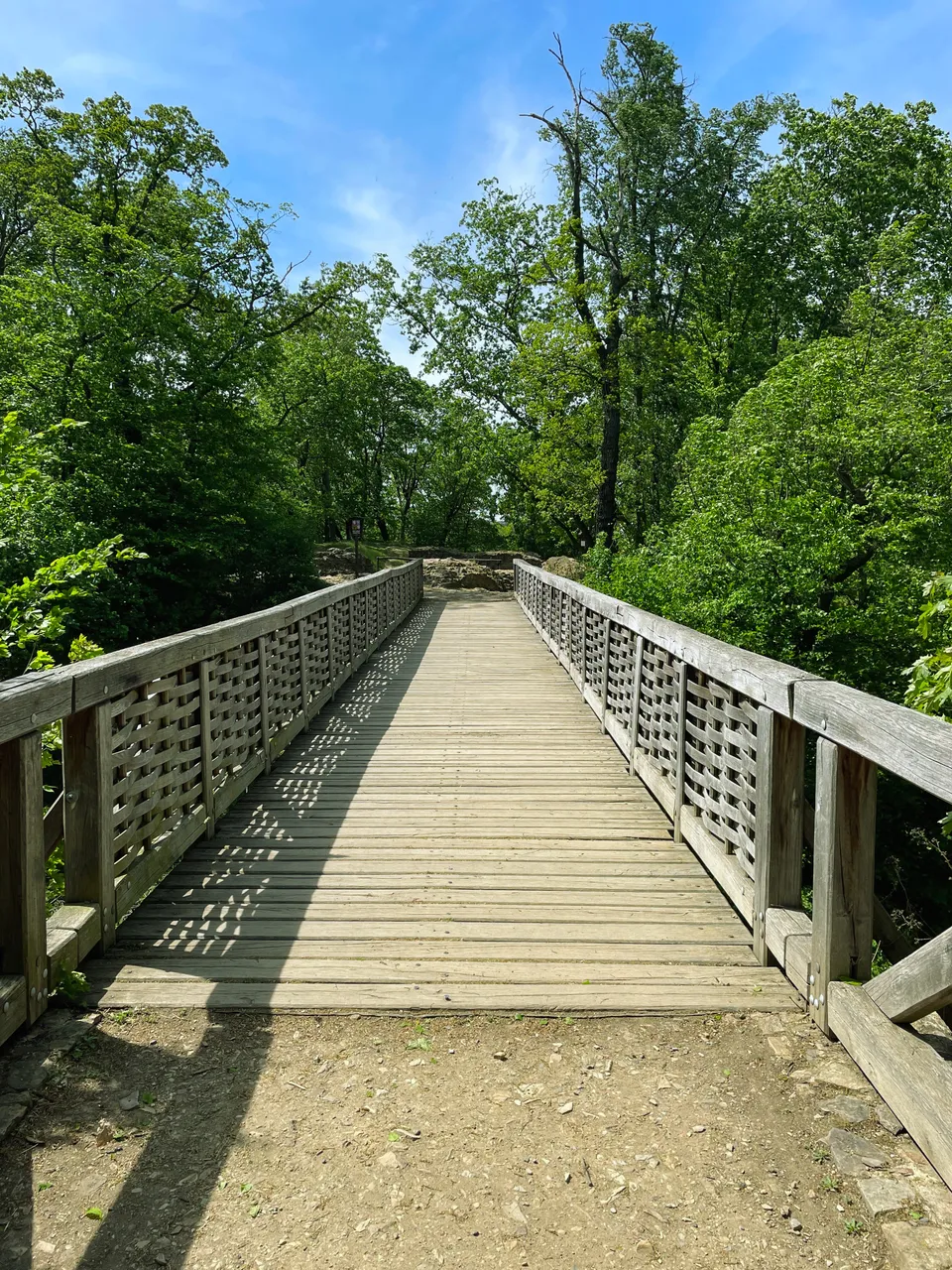
As for the castle... it shares a fate common to many medieval castles in the area. Just a decade after its construction, it was razed to the ground. Subsequently, people began dismantling its walls, recycling the high-quality stone for various purposes. Today, little remains of its former appearance. However, on the bright side, you can still admire the authentic early 15th-century masonry, untouched by major later modifications. While the final part may seem disappointing, I find genuine joy in my #Wednesdaywalk through the forest.

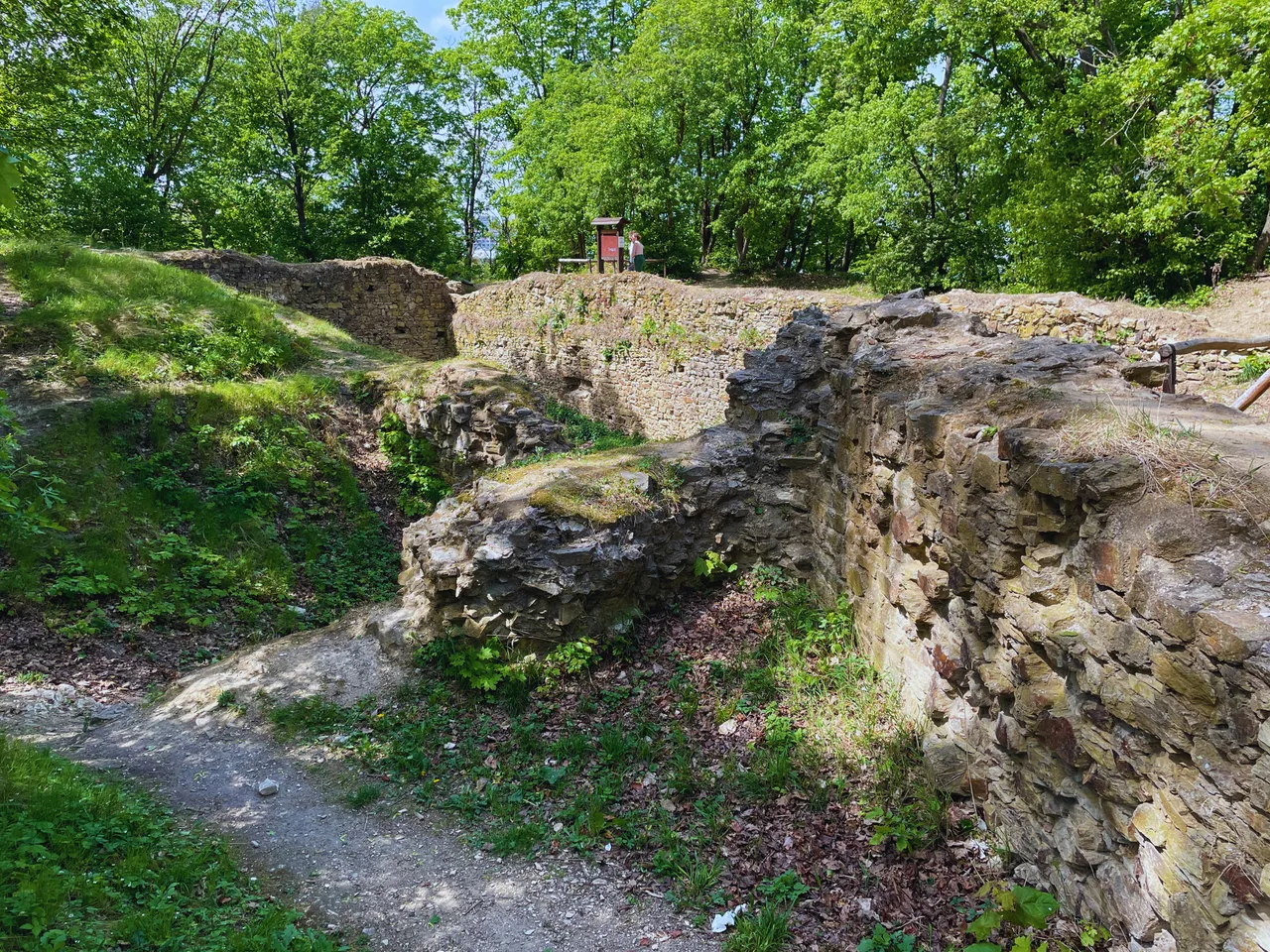


I thought you might be disappointed seeing nothing but ruins, so I found a visualization of Nový hrad published by the Institute of Archaeology of the Czech Academy of Sciences (source).

As for Wenceslas IV, he was a terrible king. During his reign, his brother Sigismund of Luxembourg invaded the country, allowing mercenary armies to pillage freely. Moreover, Wenceslas IV, dubbed as Wenceslas the Idle, helped ignite the flames of the Hussite revolution by his lack of interest, a movement that would later threaten central Europe and the Catholic Church. Despite his legacy, Wenceslas IV has a small commemorative spot in the castle where he passed away at the age of 58, shortly before it fell under siege.

This is my entry for the #WednesdayWalk challenge by 