
Let me share with you a walking tour of the green capital of Slovenia, Ljubljana city, from a different perspective – from under my umbrella ☔. In the past, I’ve walked through the capital numerous times and I've also had the chance to take part in a few city tours. But this one was definitely different since it was done on a rainy Wednesday morning. Even though the weather was bad and the streets of the old town were quite empty, I had a great time wandering around Ljubljana.


Slovenia is a small green country in the middle of Europe with 2 million inhabitants. It is a country that offers something for everyone, from active adventures in unspoilt nature, city breaks, relaxing holidays in spas or gastronomic pleasures with local cuisine in top restaurants. Ljubljana is Slovenia's political, scientific and cultural centre, and with just under 300,000 inhabitants, it is also the largest city in Slovenia and its most important economic centre.

Source

The whole part of the old town center is a pedestrian zone and therefore very pleasant to walk around. The city is relatively small, and the best way to discover it is definitely on foot. Back in 2016, the city won the title of Green Capital of Europe and in fact, you will find numerous green areas all around the city.


Our walk was done in the very heart of the city, where also the major "tourist" sights are located: like the castle, the Three Bridges, the Dragon Bridge, the Presern Square, etc… But let’s go step by step and let me lead you through this virtual tour of the city.

I met our local guide on Congress Square, a large square surrounded by imposing buildings and offering a great view of the Ljubljana Castle. A part of the square is covered with trees that offer pleasant shadows in the summer months, where locals and visitors can enjoy on the benches in the shadows of the trees.


 |  |
|---|
 |  |
|---|
Turning to different angles of the square, you will see the building of the University of Ljubljana, which is the oldest and largest higher education and scientific research institution in Slovenia. In front of the building is a small Europe fountain.


Next to it there is Slovenian Philharmonic Hall, now home to the Slovenian Philharmonic Orchestra, which was constructed in 1891 on the foundations of the former theater.


While the group was still taking photos of the square, I took the short stairs that take you from the square down to the banks of the Ljubljanica River. I think that the river Ljubljanica gives a special charm to the city. Maybe because it runs right through the city center, but it is the main location where city life is concentrated.

I’ve made three quick shots. One right in front of me, to the old buildings and the Ljubljana castle, one on the right side towards the Trnovo area, and one towards the Preseren square.


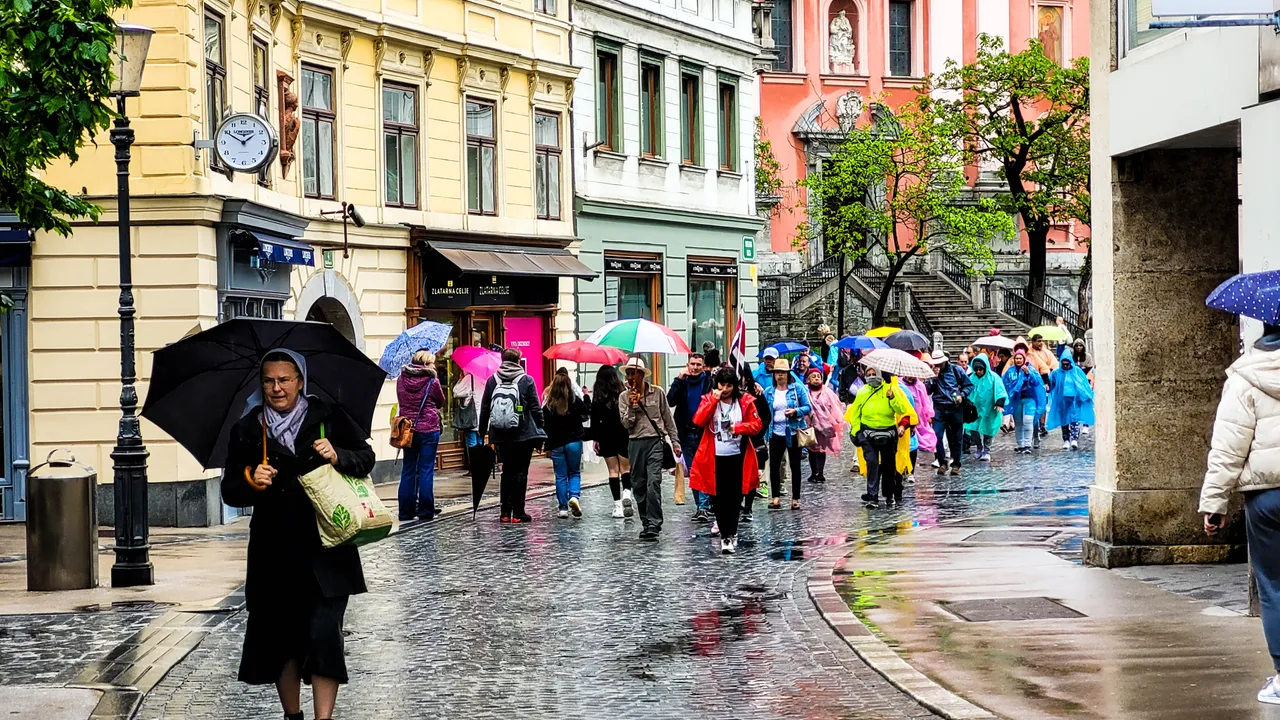
I then jumped back and caught up with the rest of the group that was slowly going down the street leading from Congress Square to Preseren Square. The Preseren square is practically the centre of the city and got its name from the famous Slovenian poet, France Preseren.
 |  |
|---|


 |  |
|---|

God’s blessing on all nations,
Who long and work for that bright day,
When o’er earth’s habitations
No war, no strife shall hold its sway;
Who long to see
That all men free
No more shall foes, but neighbours be.
France Prešeren: Zdravljica (The Toast)
France Prešeren: Zdravljica (The Toast)The seventh verse of the poem, which expresses the ideal of peaceful coexistence of all nations, is chosen as the national anthem.
The seventh verse of the poem, which expresses the ideal of peaceful coexistence of all nations, is chosen as the national anthem.In the square, you will see his statue and if you take a look in the same direction as the poet statue is looking, you will notice a small sculpture on the building. The sculpture presents Primicova Julija, his unrequited love.


On Presern Square you can’t overlook the pink-red Franciscan church. Together with the monastery, they are the dominant buildings of the square.


From the square we crossed the magnificent Triple Bridge. The central bridge has stood in its place since 1842, when it replaced an old, strategically important mediaeval wooden bridge. Around 1930, the two side bridges were added for pedestrians. The Triple Bridge is the work of architect Joze Plecnik, who created many important buildings in the city.


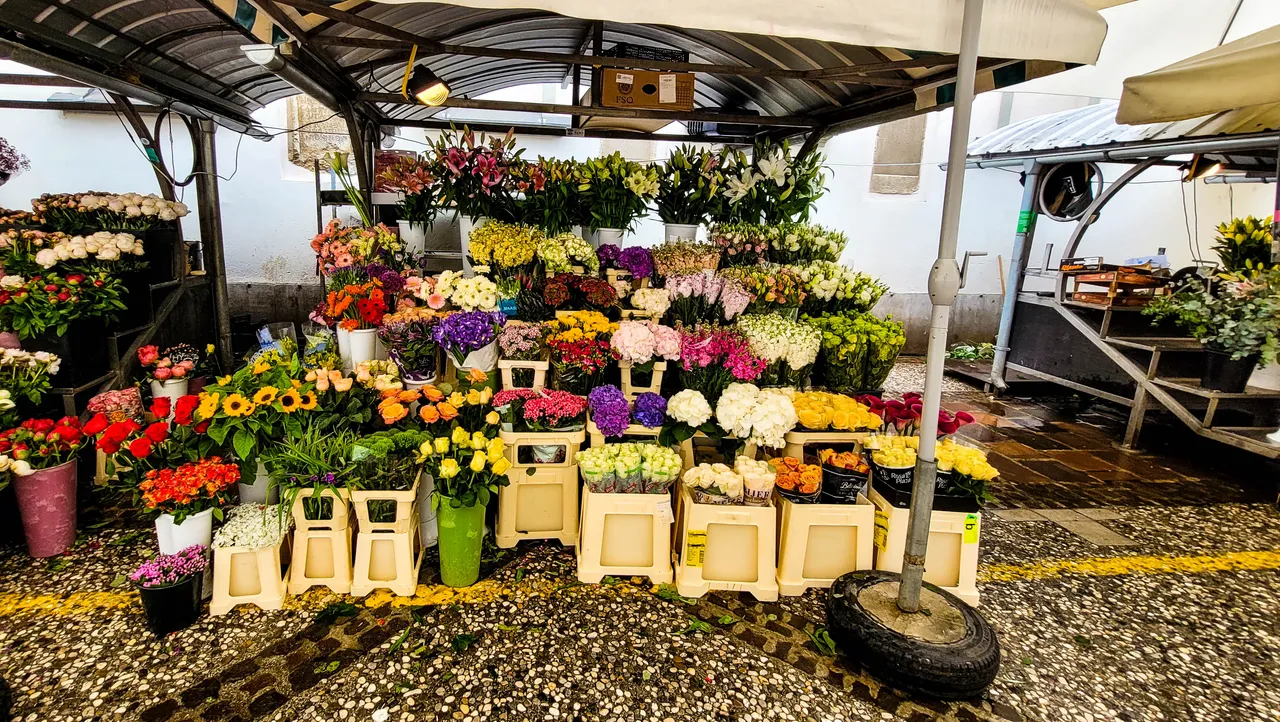
We crossed the Ljubljannica River and arrived at the Central Market. The place is very lively in the mornings, especially on Saturdays and in nice weather. In the middle of the week and in the rain there were only a few stands working. The central market is not just a place to shop but also a place where locals and visitors meet and enjoy themselves.
 |  |
|---|
 |  |
|---|


Every Friday, during the summer months, the central market is also the location of a very nice event called Open Kitchen, where chefs of Slovenian restaurants prepare various dishes and sell them on the stands. The Central Market is also a masterpiece by Joze Plecnik. Despite the rain that day, on the stands they were selling fresh flowers.
 |  |
|---|
 |  |
|---|
 |  |
|---|
Just next to the Central Market, you will find the Ljubljana cathedral, the Church of St. Nicolas. This time I admired the church only from the outside and stopped at the outstanding entrance. A work by Tone Demsar is a relief that represents the history of Slovenia. The bronze door was made in 1996 to commemorate the Pope's first visit to Slovenia.

 |  |
|---|


Our next stop was the Dragon Bridge, the bridge with four dragon statues, a magnificent element of Art Nuveau in Ljubljana.


The dragon is the symbol of the city since Baroque times. It is a part of the city emblems included in the city flag and not to mention numerous souvenirs 😊.
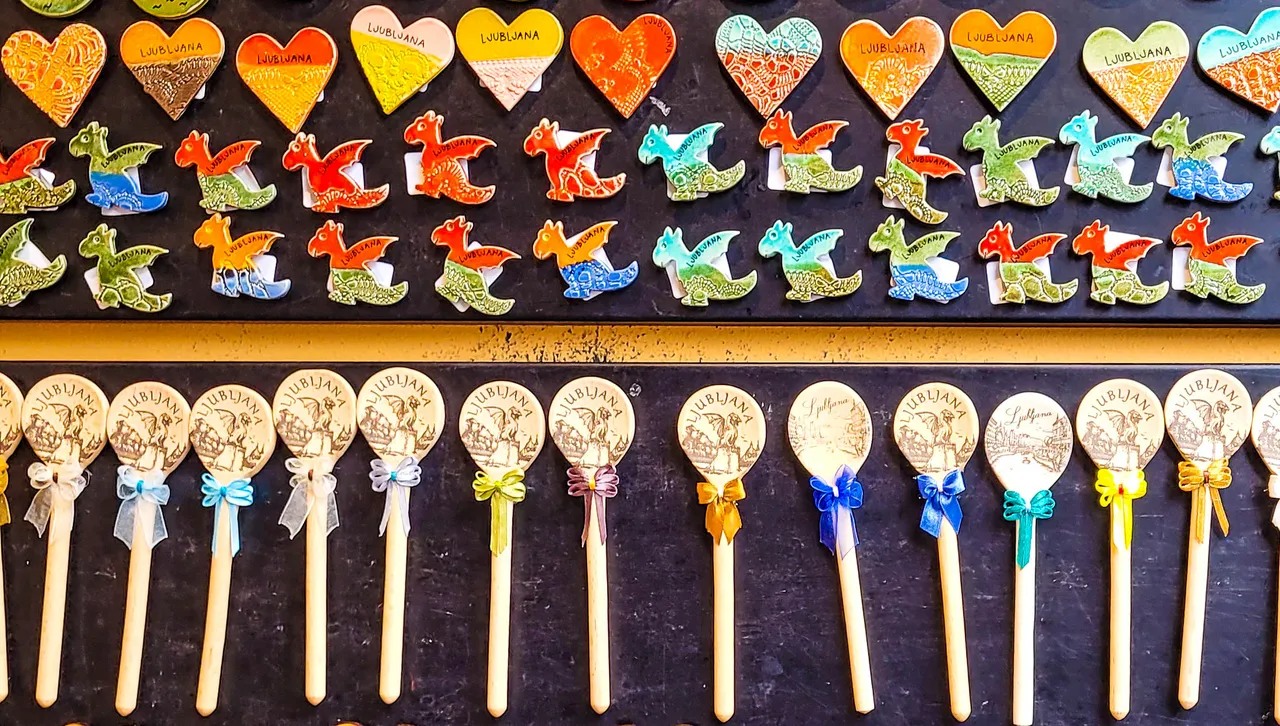
And what is the legend connected to the dragon? The dragon is present in the legend of Jason and the Argonauts. According to the legend, Jason, a Greek hero, stole the Golden Fleece from the king of the Black Sea. Jason and the Argonauts fled on a ship called Argo on the river Danube, and they also reached the Ljubljanica river. Near the river, there was a marsh where a swamp monster lived (a monster that looked like a dragon). Jason killed the monster and he was supposed to be the first citizen of Ljubljana.


We walked back along the cathedral towards the Mestni Trg square and stopped at the Robba Fountain. This fountain is the best-known Baroque monument in Ljubljana. It was created by the Venetian-born sculptor and architect Francesco Robba. Modelled on famous Roman fountains, it is also known as The Fountain of the Three Carniolan Rivers. The statues of three river gods represent three Carniolan rivers: the Sava River, the Ljubljanica River and the Krka River.


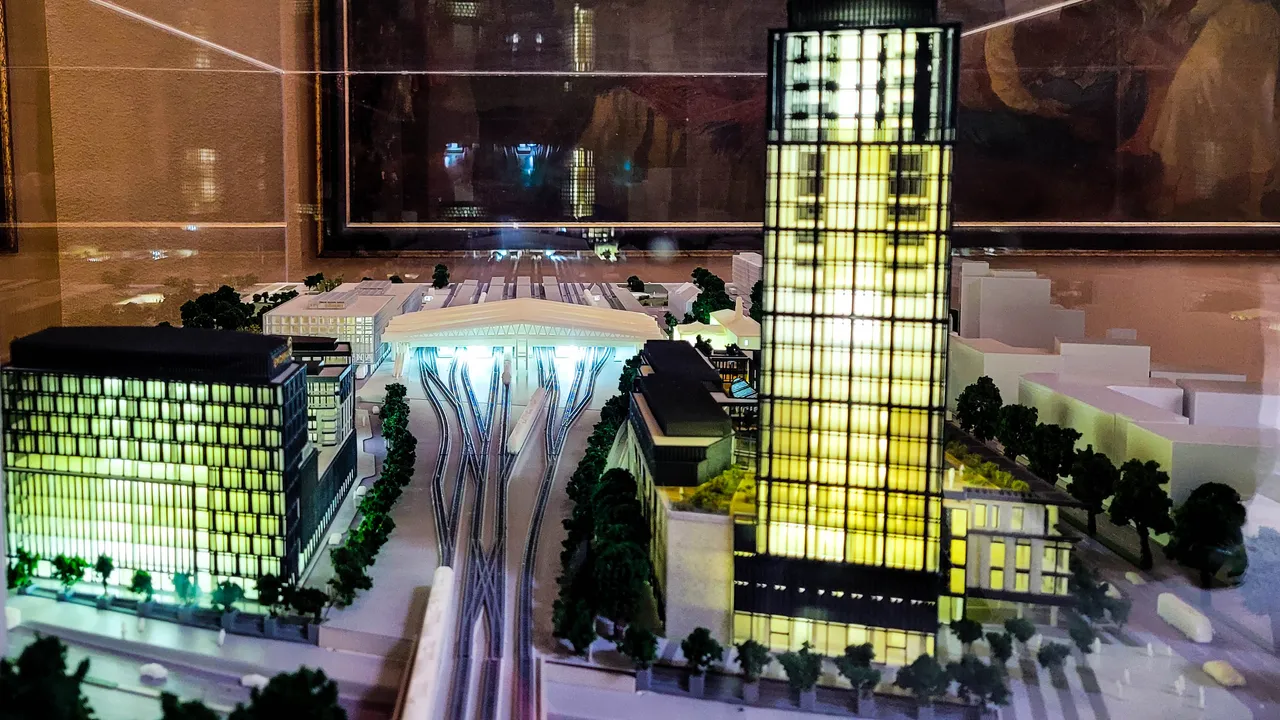
Just near the fountain is the city hall, the seat of the Municipality of Ljubljana. The Town Hall facade reflects Venetian architectural influences.


In the area that is open to the public, they host different exhibitions and present city projects. At the time of my visit, they were presenting the projects for the new train and bus station area.


 |  |
|---|
 |  |
|---|


That was our last stop on the tour. I made a short walk along the banks of the Ljubljanica River, admiring the aligned old houses that have a charm of past times and I realised that even on a rainy day, a city tour is still very enjoyable.


 |  |
|---|
I hope you have enjoyed this small virtual tour and that I’ve inspired you to visit Ljubljana, the green capital of sLOVEenia soon.
Thanks for reading,
feel free to leave a comment, I will be glad to reply to.
Best regards,

