Buenos días amigos de Hive es su amigo Ramaco que en esta oportunidad les trae una publicación que hice partiendo de una de mis revista de pintura llamada "Cómo realizar un caballo", que tenía conmigo más de 30 (treinta) años y que se me estaba deteriorando por lo que decidí rescatar alguna de sus imágenes y pintar un paisaje relacionado al tema que espero que les guste.

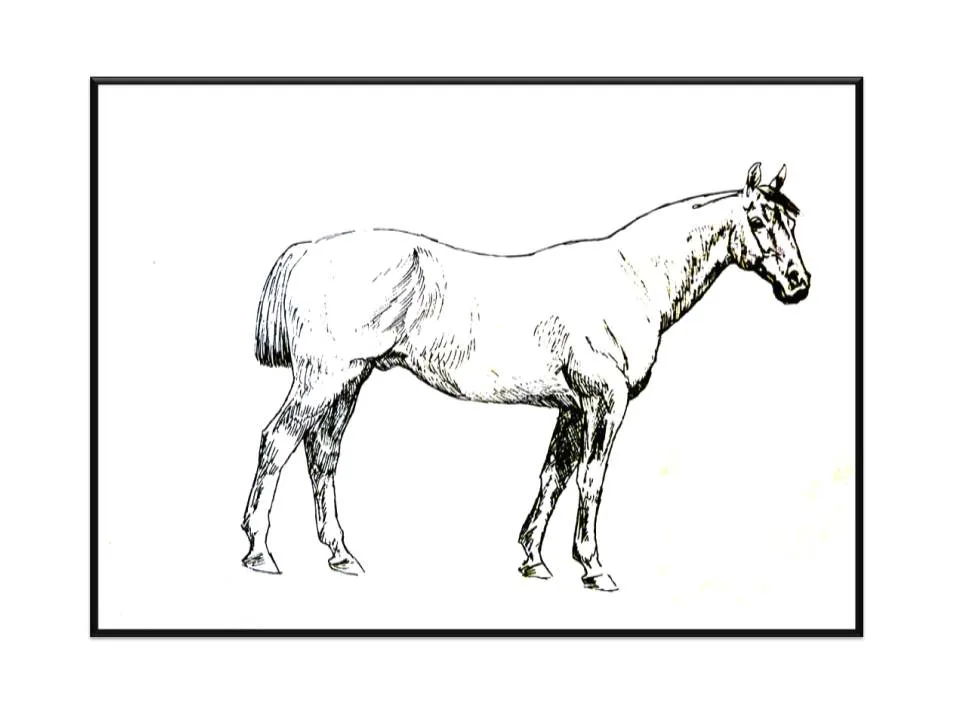
Las imágenes que verán a continuación corresponden a bocetos de partes caballos importantes o caballos en en diferentes posiciones interesantes.
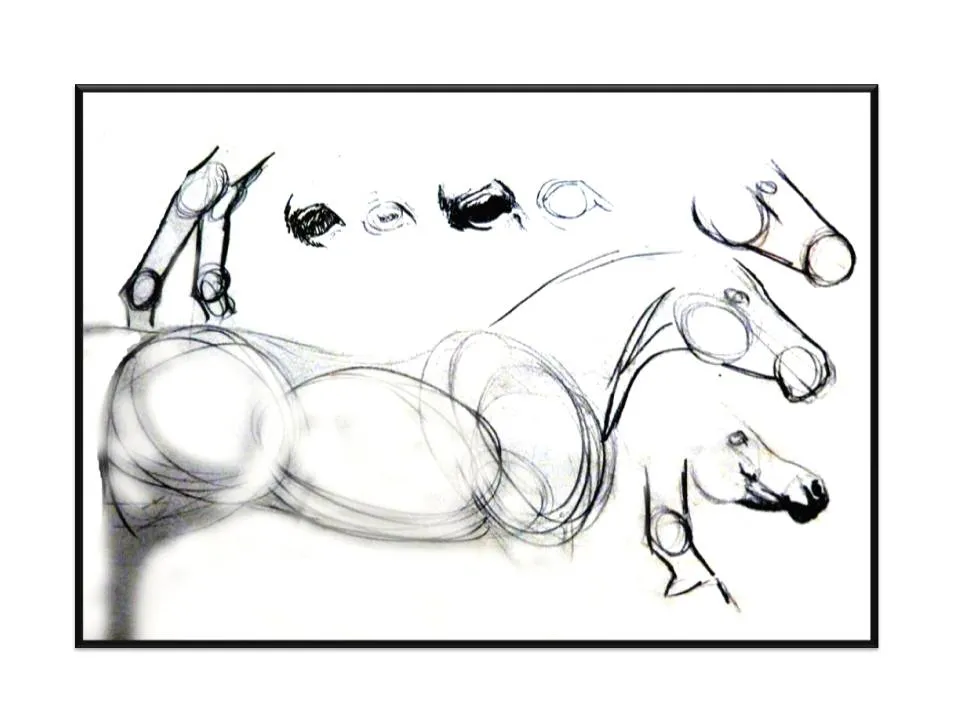
Bocetos explicativos de como formar un caballo con las formas básicas del dibujo, la repetición e como hacer la cabeza el mismo, los ojos y formar sus patas.

Los puntos blanco, negro, gris y rojo son para mostrarles el movimiento el caballo y las uniones de las formas geométricas que forman la figura.

Imágenes de los caballos en diferentes posiciones.

Cabezas de potros I.

Cabezas de potros II.

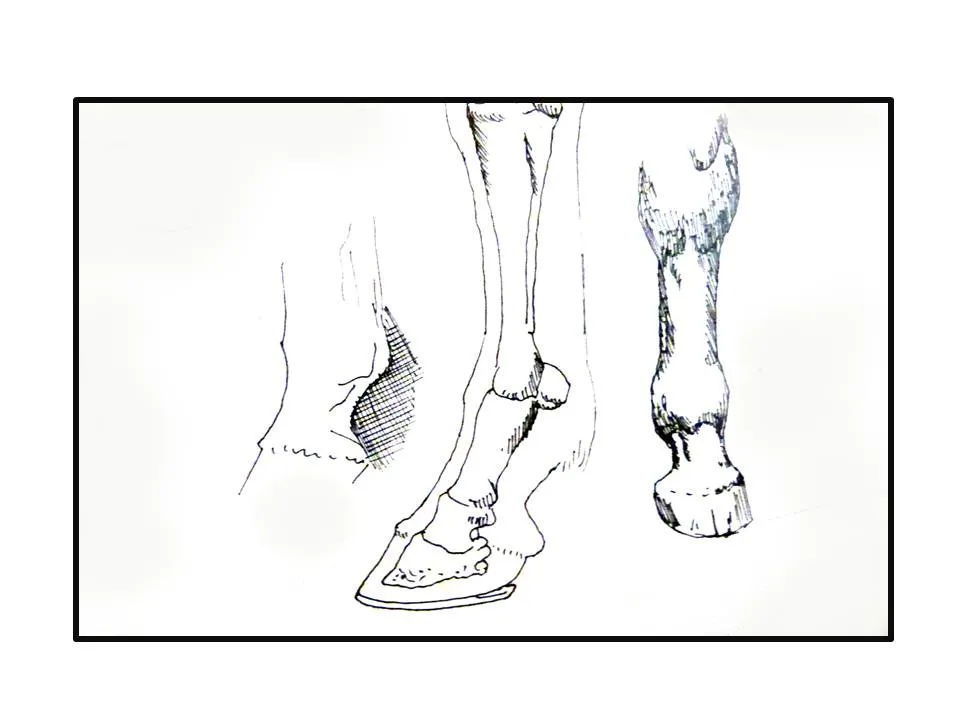
Las patas de los caballos en bocetos I.

Las patas de los caballos en bocetos II, en esta oportunidad se explica visualmente la fortaleza que debe tener a nivel oseo y su musculatura .
Ok mis amigos como ya visualizaron los ejemplos básicos de las imágenes de como dibujar un caballo vamos ahora a darle color de una manera explicativa que espero que entiendan.
Materiales que utilicé para dar color a las imágenes de los caballos.

El rostro del caballo y como lograr la mirada de sus ojos.

La mirada e los ojos e los animales muestran vida, ternura, fortaleza visual y el punto de luz de vida.

Nota: los puntos de colores que observa del lado izquierdo son los que utilicé para realizar el rostro del potro, las diferentes formas de ojos sus puntos de luz y reflejo como se muestra en la figura.

Observa como se va formando el osico del potro, el contorno de la cabeza y cuello del caballo,

Los rostros de los potros en esta imagen muestran la fortaleza en su mirada, musculatura, pelaje y vida.

Aquí se observan como deberían ser las patas de los caballos en reposo desde el boceto inicial hasta completar el trabajo con la pintura en done se distingue la fortaleza y la musculatura del mismos.

Esto es una fotografía de una acuarela rescatada de la revista de la cual voy a sacar el fragmento de la cabeza del potro que verá a continuación.

Esto es la cabeza el potro con aerografía colores y acuarelas se le hizo una fotografía para lograr digitalizarla y poder seguir realizando el trabajo artístico manualmente en el siguiente paso.

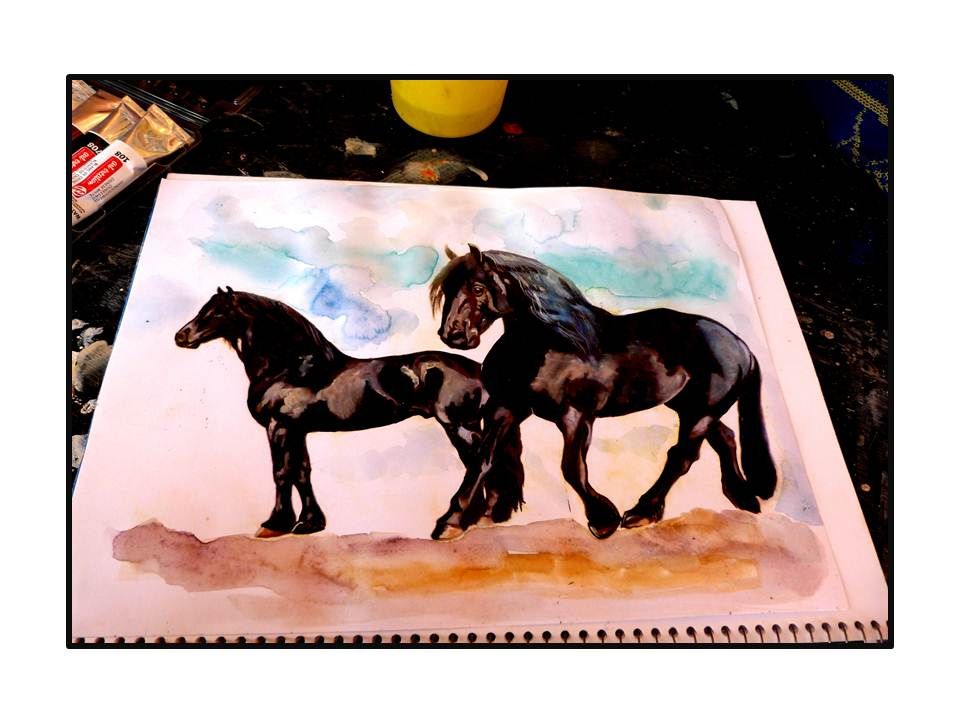
Aquí estoy trabajando manualmente los potros creándole un paisaje en su contorno con acuarela.

Aquí estoy pintando los potros, haciéndoles detalles para hacerlos más realista con mi pincel punta fina de celda suave.

Vean de cerca como va quedando la obra.
Mis pinturas, mis materiales, mi pincel de punta fina que es el más apropiado para los detalles (su pelaje, pestañas, puntos de luz, entre otros) y yo.

La imagen más de cerca para que me vean trabajando los detalles del corcel.

Aquí estoy mostrando la pintura de los potros ya terminada en la noche.

Admiren la pintura de los potros.
Me siento agradecido de mi mismo por haber podido rescatar la revista e "Cómo realizar un caballo",ya que estoy compartiendo con ustedes y les sirva para dibujar o pintar un potro.
Espero que les guste porque hice un gran esfuerzo para realizar estas láminas.
¡GRACIAS!.

Good morning friends from Hive, it's your friend Ramaco who this time brings you a publication I made based on one of my painting magazines called "How to make a horse", which I had with me more than I was 30 (thirty) years old and it was deteriorating so I decided to rescue some of his images and paint a landscape related to the theme that I hope you like.
The images you will see below correspond to sketches of important horse parts or horses in different interesting positions.

Explanatory sketches on how to form a horse with the basic shapes of the drawing, the repetition and how to make the head, the eyes and form its legs.
The white, black, gray and red dots are to show you the movement of the horse and the unions of the geometric shapes that form the figure.

Images of the horses in different positions.

Foal heads I.

Foal heads II.

The legs of the horses in sketches I.

The legs of the horses in sketches II, this time the strength that it must have at the bone level and its musculature is visually explained.

Ok my friends, as you have already seen the basic examples of the images of how to draw a horse, we are now going to color it in an explanatory way that I hope you will understand.
Materials I used to color the images of the horses.

The horse's face and how to achieve the look in his eyes.

The look and the eyes of the animals show life, tenderness, visual strength and the point of light of life.

Note: the colored dots you can see on the left side are the ones I used to make the foal's face, the different shapes of the eyes their points of light and reflection as shown in the figure.

Observe how the foal's osico is formed, the outline of the horse's head and neck,

The faces of the foals in this image show the strength in their eyes, muscles, coat and life.

Here you can see how the legs of the horses should be at rest from the initial sketch until completing the work with the paint where their strength and musculature can be distinguished.

This is a photograph of a watercolor rescued from the magazine from which I am going to take the fragment of the foal's head that you will see below.

This is the head of the colt with airbrushing colors and watercolors. A photograph was taken of it to be able to digitize it and be able to continue doing the artistic work manually in the next step.

Here I am working manually on the foals creating a landscape in its outline with watercolor.
Here I am painting the foals, detailing them to make them more realistic with my soft cell fine tip brush.
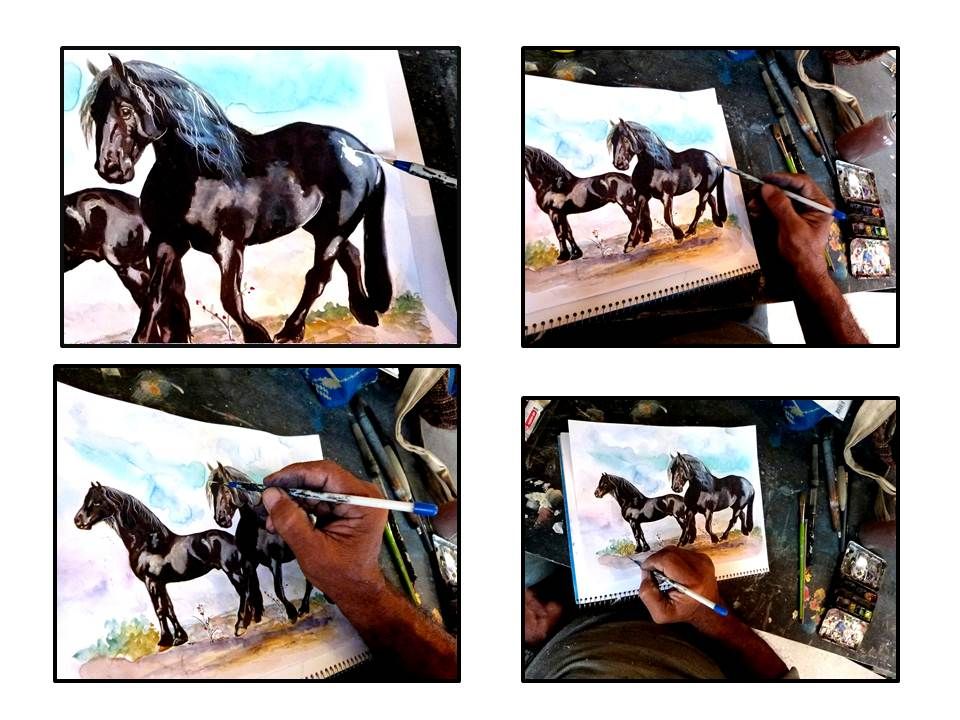
See closely how the work is turning out.
My paints, my materials, my fine-tipped brush which is best suited for details (her fur, eyelashes, highlights, etc.), and me.

The image closer so you can see me working on the details of the steed.

Here I am showing the painting of the foals already finished at night.

Admire the painting of the foals.

I am grateful to myself for having been able to rescue the magazine "How to make a horse", since I am sharing it with you and it helps you to draw or paint a foal.
I hope you like it because I made a lot of effort to make these prints.
THANK YOU!.
