

¡Hola, gente de internet! ¿Cómo están? ¿Quien no ha visto alguna vez en su vida esta hermosa serie animada? Nada más con escuchar la canción del opening me lleno de ternura y nostalgia, pero ¿conoces todo sobre ella? Prepárate para pasar un buen rato porque te voy a contar todos los datos que sé sobre Heidi.
Hello, internet people! How are you? Who hasn't watched this beautiful animated tv show at some point in their lives? Just listening to the opening song fills me with tenderness and nostalgia, but do you know everything about it? Get ready to have a good time because I'm going to tell you all the facts I know about Heidi.

El 6 de enero de 1974 se estrenó en Japón el primer episodio de Heidi, el encargado de llevar esta maravillosa historia al mundo del Anime fue Isao Takahata, un talentoso director de cine y guionista que también fue el creador de la mundialmente conocida serie "Marco" y posteriormente la conmovedora película "La tumba de las luciérnagas" conjuntamente con Los Estudios Ghibli.
On January 6, 1974, the first episode of Heidi was released in Japan. Isao Takahata, a talented film director and screenwriter who was also the creator of the world-renowned "Marco" series and later the moving film "Grave of the Fireflies" in conjunction with Ghibli Studios, was in charge of bringing this wonderful story to the world of Anime.

Takahata quiso incorporar todos los aspectos que se ilustran en la historia original, de hecho, viajó a los alpes suizos con la intención de observar los paisajes naturales para luego incorporarlos dentro de la versión anime.
Takahata wanted to incorporate all the aspects illustrated in the original story, in fact, he traveled to the Swiss Alps with the intention of observing the natural landscapes and then incorporating them into the anime version.
Después de hacer la adaptación y de encargarse de la dirección del proyecto, él le pidió a Hayao Miyazaki, otro talentoso animador, que se encargara de la animación de la serie, entonces Miyazaki solicitó la ayuda de Yasuri Mori (un colega suyo) para dibujar el baile de Pedro y Heidi que está en el opening. Para hacerlo de la forma más real posible, Mori le pidió entonces a Miyazaki y a Yôichi Kotabe (otro animador) que giraran tomados de la mano en el estacionamiento del estudio, Mori los filmó y posteriormente recreó el movimiento en sus dibujos. Así que cuando veas a Pedro y a Heidi bailar, sabrás que ese baile estaba inspirado en dos hombres que estuvieron haciendo lo mismo jaja.
After doing the adaptation and taking over the direction of the project, he asked Hayao Miyazaki, another talented animator, to do the animation for the series, then Miyazaki enlisted the help of Yasuri Mori (a colleague of his) to draw the Peter and Heidi dance that is in the opening. To make it as realistic as possible, Mori then asked Miyazaki and Yôichi Kotabe (another animator) to spin around holding hands in the studio parking lot, Mori filmed them and later recreated the movement in his drawings. So when you see Pedro and Heidi dance, you'll know that dance was inspired by two men who were doing the same thing haha.

Uno de los aspectos que llamó más la atención de Heidi, fue el columpio que aparece en la canción del opening, ese que parecía estar sujeto a las nubes, pues alguien se dedicó a calcular su longitud, tomando en cuenta el tiempo que Heidi tardaba en hacer el recorrido, por lo tanto esta persona calculó que el columpio mediría unos 20.25 metros
One of the aspects that caught Heidi's attention was the swing that appears in the opening song, the one that seemed to be attached to the clouds, because someone calculated its length, taking into account the time it took Heidi to make the journey, so this person calculated that the swing would measure about 20.25 meters.

Aunque no lo creas, en aquellos años la serie fue censurada en Turkia, tan solo porque a Heidi se le veían las panties a veces, cuando el viento levantaba su falda, como en la imagen de arriba donde está en el columpio o en ésta, donde incluso está en ropa interior, pero Heidi era así, una niña libre de convencionalismos, y no había ninguna malicia en ello.
Believe it or not, in those years the show was censored in Turkey, just because Heidi's panties could be seen sometimes, when the wind lifted her skirt, as in the picture above where she is on the swing or in this one, where she is even in her underwear, but Heidi was like that, a girl free of conventionalism, and there was no malice in it.

Cuando Heidi es forzada por su tía a viajar a la ciudad alemana de Frankfurt, ella experimentó un problema psicológico que más tarde afectó su salud física, ya que echaba de menos su vida en los alpes suizos, a esta condición psicologica se le conoce científicamente como Trastorno de Déficit de Naturaleza, condición que tras el éxito de la serie comenzó a conocerse como «Síndrome de Heidi»
When Heidi is forced by her aunt to travel to the German city of Frankfurt, she experienced a psychological problem that later affected her physical health, as she missed her life in the Swiss Alps, this psychological condition is scientifically known as Nature Deficit Disorder, a condition that after the success of the tv show began to be known as "Heidi Syndrome".

¿Sabias que si quieres puedes ir a visitar la casita de Heidi en las montañas? Sí, se trata de un hermoso parque temático ubicado en Suiza, se llama Heididorf, un magnífico lugar que representa de forma natural, varios de los escenarios que pudimos ver en el anime.
Did you know that if you want you can visit Heidi's little house in the mountains? Yes, it's a beautiful theme park located in Switzerland, called Heididorf, a magnificent place that represents in a natural way, several of the scenarios that we could see in the anime.

En lationamérica y en España, escuchamos la canción original del opening del anime, pero versionada al idioma español, no obstante en Italia y en Alemania se escuchó una versión diferente.
In Latin America and Spain, we heard the original opening song of the anime, but in a Spanish version, however in Italy and Germany we heard a different version.
Como pueden ver, la versión japonesa tiene exactamente la misma música que la versión para latinoamérica y España.
As you can see, the Japanese version has exactly the same music as the Latin American and Spanish version.

Para Alemania, tanto la letra como la melodía cambió por completo, aunque conserva su característico yodel alpino, tan tradiconal de la música suiza.
For Germany, both the lyrics and the melody changed completely, although it retains its characteristic alpine yodel, so traditional to Swiss music.

Quizá sabías todos estos datos sobre nuestro anime favorito de la infancia, pero tal vez no sabías que la historia no pertenece Isao Takahata, él solo se encargó de adaptarla para el anime. Originalmente es una novela llamada «Heidi, la niña de los Alpes» (la cuál tuve la dicha de leer) de la escritora suiza Johanna Spyri. Ella publicó el libro en 1880, no obstante la autora fue acusada de plagio, ya que un investigador alemán aseguró que el libro de Spyri estaba basado en la obra «Adelaida, la niña de los Alpes» del escritor alemán Herman Adam Von Kamp, publicado en 1830.
Maybe you knew all these facts about our favorite childhood anime, but maybe you didn't know that the story doesn't belong to Isao Takahata, he was only in charge of adapting it for the anime. It's originally a novel called "Heidi, the girl from the Alps" (which I had the joy of reading) by Swiss writer Johanna Spyri, she published the book in 1880, however the author was accused of plagiarism, as a German researcher claimed that Spyri's book was based on the work "Adelaide, the girl from the Alps" by German writer Herman Adam Von Kamp, published in 1830.

Los que han leído la novela de Spyri, se darán cuanta de que Clarita nunca fue a Los Alpes y mucho menos la señorita Rottenmeier, la historia original concluye cuando Heidi retorna a sus amadas montañas, todas las escenas posteriores que vimos como la evolución de Clara hasta que aprende a caminar, fueron creadas para el anime.
Those who have read Spyri's novel, will realize that Klara never went to the Alps and much less Miss Rottenmeier, the original story concludes when Heidi returns to her beloved mountains, all the later scenes that we saw as the evolution of Klara until she learns to walk, were created for the anime.

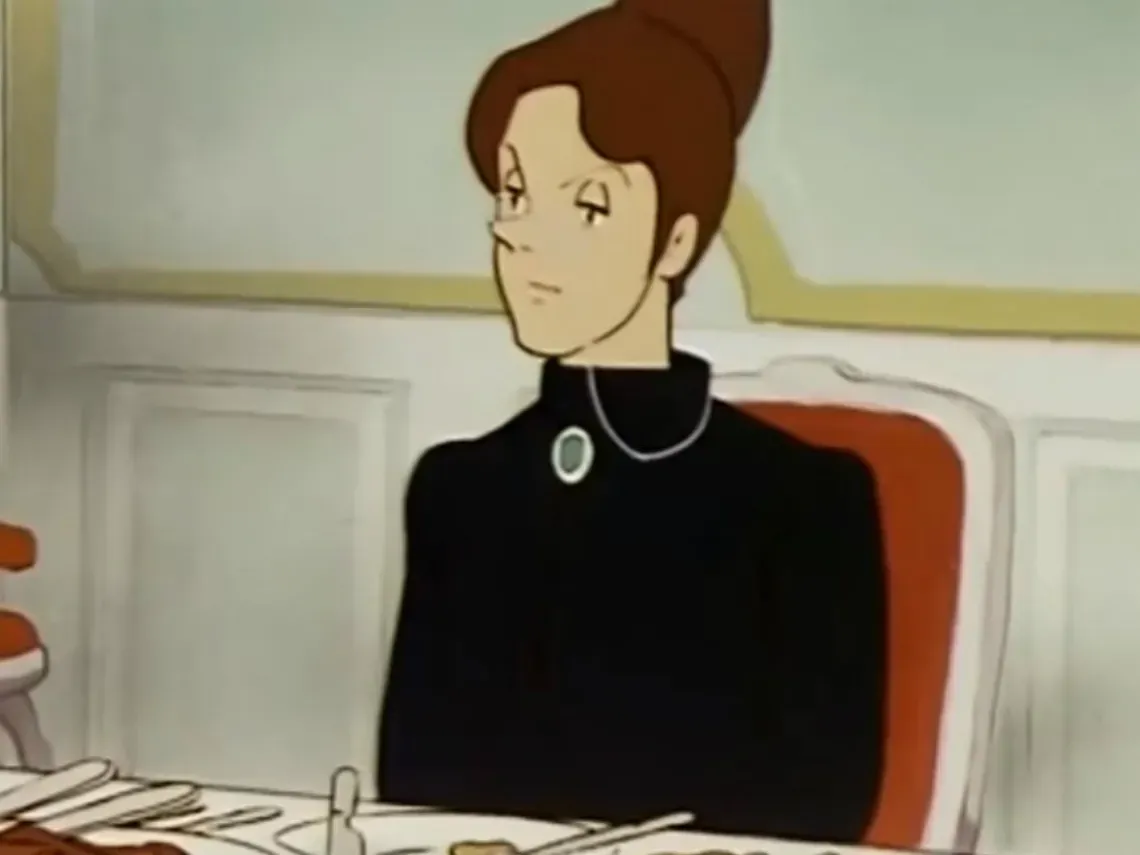
En el libro no están ni el perro Niebla, ni el pájaro «Pichie». Además, al leer el libro noté una enorme diferencia entre la señorita Rottenmeier y su equivalente en el anime. El personaje del libro es mucho más cruel y egoísta, no le interesa el bienestar de Clara e incluso parece estar interesada por el señor Sesman. En la serie animada, aunque es una mujer prejuiciosa y egoísta, se preocupa verdaderamente por Clara y la protege con sinceridad.
Neither the dog Niebla nor the bird "Pichie" are in the book. Also, while reading the book I noticed a huge difference between Miss Rottenmeier and her equivalent in the anime. The character in the book is much more cruel and selfish, she is not interested in Klara's welfare and even seems to be interested in Mr. Sesman. In the animated tv show, although she is a prejudiced and selfish woman, she genuinely cares about Klara and protects her with sincerity.

Y bueno, gente, esto ha sido todo por hoy, espero que les haya gustado mi post, que los haya entretenido y que hayan aprendido algo nuevo. Agradezco el apoyo de mis seguidores y le doy la bienvenida a los nuevos lectores. Nos encontraremos en una próxima oportunidad.
And well, people, that's all for today, I hope you liked my post, that it entertained you and that you learned something new. I appreciate the support of my followers and I welcome new readers. We will meet again next time.

La imagen de despedida la usé en el editor Canva.
I used the farewell image in the Canva editor.
A continuación les dejo un enlace a la pagina en la cual encontré información útil para la realización de este post.
Here is a link to the page where I found useful information for the realization of this post.