

Akira la película japonesa de índole futurista la cual definió el cyberpunk en el anime data del año 1988.
Esta película que “revolucionó” la industria en ese año con su calidad visual y trama presentada en medio de una narrativa algo compleja para la época.
Muchos dicen hasta hoy en día que Akira es una obra maestra, por otro lado guarda varios simbolismos en el tono en el que fue creada.

Su estrenó data del 16 de julio del año 88 entregando nuevos géneros al anime, tales como: el cyberpunk y los escenarios de ciencia ficción postapocalípticos.
Esta película innovadora como expresé para la época en que se desarrolló permitió avanzar en cuanto a nuevos estilos en la animación ya que ahora no era solo el manga escrito sino que aparecían sus versiones animadas.

Por otro lado muchos afirman que Akira permitió la reinvención de una industria, esto se debe a que la animación dejaba de ser para niños y era enfocada a un público más adulto.
Los mejores puntos de esta película sería estos: Trama y fidelidad entre manga y animación, el ritmo y la atmósfera, efectos visuales y de sonido, tiempo de duración de 2 hrs con 4 minutos, sensaciones que se transmiten al espectador por ejemplo: “inquietud, perturbación y emoción son las más recurrentes), contenido explícito en cuanto a batallas y sangre reflejando la violencia sin tapujos.
La trama
Tras la tercera guerra mundial de 2019 en Neo-Tokyo un par de viejos amigos son partícipes de una violenta banda de motociclistas. En una batalla contra una banda rival, los amigos Tetsuo y Kaneda se encuentran con un extraño niño de cara arrugada.
En medio de la pelea Tetsuo es herido e ingresado al hospital es ahí donde un médico y un coronel descubren que el muchacho tiene poderes extraordinarios los cuales les recuerdan a una poderosa entidad llamada Akira el cual ha permanecido inactivo los últimos treinta años.
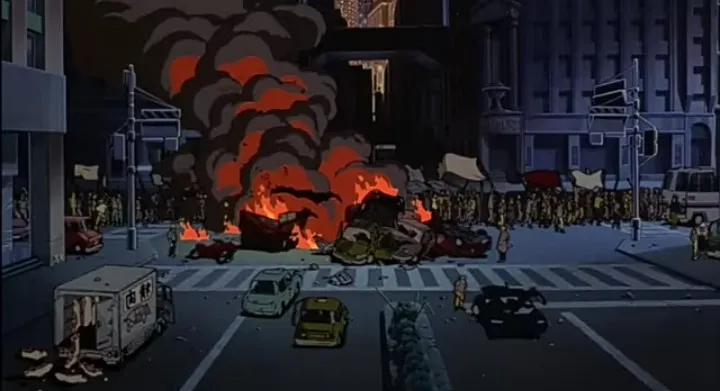

En medio de las batallas, soldados, militares activistas renegados y científicos, Tetsuo comienza a hacerse más fuerte y a comprender la magnitud se poderes en el proceso. Sin embargo, el lugar de inclinar estos poderes al bien lo hace a la inversa y todo hace presagiar qué la historia se recreara al igual que el suceso anterior, donde la ciudad de Tokio fue destruida.

Tetsuo ahora tiene como objetivo investigar la realidad de Akira y saber si es una fuente de poder o una mera arma disponible para los militares y ansias de poder absoluto.
Y así, los últimos 30 minutos de esta película se convierten en una pesadilla de destrucción total; una destrucción anhelada por muchos, en realidad, una aniquilación que arrasará con este mundo culpable y miserable.


La extrañeza de Akira es sorprendente y a veces nos desconcierta. Sin embargo hay un éxtasis en cuanto a su visión de un mundo entero que termina y renace como algo más.
Cómo quien dice “luego del dolor viene la felicidad
Mi opinión
Cuando vi esta película, hace ya varios años atrás, sentí una incomodidad absoluta, no en respecto a la animación y colores explosivos que se dejan ver frecuentemente. Mi incomodidad radicaba en la manera tan explícita de reflejar la violencia, sin tapujos ni paños fríos.


Quizás esta opinión inicial algo infantil radica en lo mismo, la vi siendo una niña sin mayor entendimiento de la misma. Sin embargo, ahora de adulta, aquella primera visión cambió en ciertas partes.
Puedo comprender mucho más el porqué de ser tan explícitos, y es que siento que su mensaje de trasfondo es decir “que la maldad y corrupción existen en todo lados sin miramiento del sector social al que pertenezcamos” y si reflejo de violencia desmedida solo es una bofetada a la realidad que vivimos a diario.


Akira además influenció a la industria en varios sentidos tanto en trama como en la visualización entregando escenas de batallas (no tan explícitas) y dando pie al género post apocalíptico dejando ver grandes entregas de este género.

English
Akira, the futuristic Japanese film that defined cyberpunk in anime, dates back to 1988.
This film "revolutionized" the industry that year with its visual quality and plot presented in the midst of a narrative that was somewhat complex for the time.
Many still say today that Akira is a masterpiece, while others point to the various symbolisms in the tone in which it was created.
It was released on July 16, 1988, introducing new genres to anime, such as cyberpunk and post-apocalyptic science fiction scenarios.
This innovative film, as I said, for the time in which it was developed, allowed for advances in new styles of animation, as it was no longer just written manga, but animated versions also appeared.
On the other hand, many claim that Akira allowed for the reinvention of an industry, as animation was no longer just for children but was aimed at a more adult audience.
The best aspects of this film would be: the plot and fidelity between manga and animation, the pace and atmosphere, visual and sound effects, running time of 2 hours and 4 minutes, feelings conveyed to the viewer (for example, "restlessness, disturbance, and excitement are the most recurrent"), and explicit content in terms of battles and blood, reflecting violence without concealment.
The plot
After the Third World War of 2019 in Neo-Tokyo, a pair of old friends are members of a violent motorcycle gang. In a battle against a rival gang, friends Tetsuo and Kaneda encounter a strange boy with a wrinkled face.
In the midst of the fight, Tetsuo is wounded and admitted to the hospital, where a doctor and a colonel discover that the boy has extraordinary powers reminiscent of a powerful entity called Akira, which has been dormant for the last thirty years.
Amidst battles, soldiers, renegade military activists, and scientists, Tetsuo begins to grow stronger and understand the magnitude of his powers in the process. However, instead of using these powers for good, he does the opposite, and everything seems to foreshadow that history will repeat itself, just like the previous event, where the city of Tokyo was destroyed.
Tetsuo now aims to investigate the reality of Akira and find out if it is a source of power or merely a weapon available to the military and those who crave absolute power.
And so, the last 30 minutes of this film become a nightmare of total destruction; a destruction desired by many, in reality, an annihilation that will wipe out this guilty and miserable world.
The strangeness of Akira is surprising and sometimes baffling. However, there is an ecstasy in its vision of an entire world ending and being reborn as something else.
It's like saying, "after pain comes happiness."
My opinion
When I saw this movie several years ago, I felt completely uncomfortable, not because of the animation and explosive colors that are frequently seen. My discomfort stemmed from the explicit way in which violence was portrayed, without any concealment or sugarcoating.
Perhaps this somewhat childish initial opinion stems from the fact that I saw it as a child without a greater understanding of it. However, now as an adult, that first impression has changed in certain respects.
I can understand much better why it is so explicit, and I feel that its underlying message is to say "that evil and corruption exist everywhere, regardless of the social sector to which we belong," and that the depiction of excessive violence is simply a slap in the face to the reality we live every day.
Akira also influenced the industry in several ways, both in terms of plot and visualization, delivering battle scenes (not so explicit) and giving rise to the post-apocalyptic genre, revealing great works of this genre.
