

Imagen diseñada por mí en el editor de Canva
Hello, friends! Today I want to join my sister and best friend 
¡Hola, amigos! Hoy quiero unirme al @Otaku's Challenge de mi hermana y mejor amiga
Original post/Post Original

First of all it's important to clarify that I don't consider myself as Otaku because I have only seen some anime like Naruto (which I love) or Doraemon when I was a child, and some other Ghibli Studios movies, but precisely one of those movies was the one that encouraged me to participate in this challange, so I skipped to the second topic on the list and chose "The anime with which you have cried". That's why I want to tell you about "Grave of the Fireflies".
En primer lugar es importante aclarar que no me considero Otaku pues tan solo he visto alguno que otro anime como Naruto (que me encanta) o Doraemón cuando era niña, y alguna que otra película de los estudios Ghibli, pero precisamente una de esas películas fue la que me animó a participar en este challange, por eso me salté al segundo tema de la lista y escogí «El anime con el que hayas llorado». Por eso quiero hablarles de «La Tumba de las Luciérnagas»

Grave of the Fireflies is a 1988 animated film produced by Ghibli Studio and directed by Isao Takahata, based on the novel of the same name by Akiyuki Nosaka, published in 1967 and based on the author's experiences during World War II and the American invasion of Japan.
La Tumba de las Luciérnagas es una película de animación de 1.988, producida por estudio Ghibli y dirigida por Isao Takahata, basada en la novela homónima de Akiyuki Nosaka, publicada en 1.967 y que a su vez está basada en las experiencias del autor durante la Segunda Guerra Mundial y la invasión estadounidense a Japón.

This touching film tells the story of a couple of children who try to survive the devastations of World War II. It all takes place in the city of Kōbe. When American troops invade Japan, they begin a brutal and merciless bombing of the country, affecting everyone equally. Seita and Setsuko (the siblings) look for their mother in the city school, which has become a refuge, but when Seita sees his mother, he realizes that she is seriously injured, with burns all over her body, however he doesn't tell his little sister Setsuko to avoid suffering, he only tells her that they will go to visit their aunt in another city.
Esta conmovedora película nos cuenta la historia de un par de niños que intentan sobrevivir a los desmanes de la segunda guerra mundial. Todo transcurre en la ciudad Kōbe. Cuando las tropas estadounidenses invaden Japón, inician un brutal y despiadado bombardeo sobre el país, afectando a todos por igual. Seita y Setsuko (los hermanos) buscan a su madre en la escuela de la ciudad, que se ha vuelto un refugio, pero cuando Seita ve a su madre, se da cuenta de que está gravemente herida, con quemaduras en todo su cuerpo, no obstante él no se lo cuenta a su hermanita Setsuko para evitarle sufrimientos, solo le dice que irán a visitar a su tía en otra ciudad.

Sadly, soon after the mother dies, and after the cremation, Seita takes the ashes and hides them in some bushes at his aunt's house, but he prefers to lie to her and Setsuko about his mother's death, he tells them that she is still sick, but when his aunt says she is going to visit her in the makeshift hospital, he has no choice but to tell the truth and also tells her that he is worried because he still has not received a reply to the letter he sent ten days ago to his father, who is an officer in the Japanese Imperial Navy.
Lamentablemente, poco tiempo después la madre muere, y después de la cremación, Seita toma las cenizas y las esconde en unos arbustos en la casa de su tía, pero prefiere mentirle a ella y a Setsuko acerca de la muerte de su madre, les dice que aún está enferma, pero cuando su tía dice que va a ir a visitarla en el improvisado hospital, él no tiene más remedio que decir la verdad y también le dice que está preocupado porque todavía no ha recibido respuesta a la carta que le envió hace diez días a su padre, quien es oficial de la armada imperial japonesa.
To try to distract his sister from the horrors of war, Seita takes her to the countryside in the evenings and there shows her a group of fireflies, and also gives her one of the candies he had kept in a little box for her, along with the food reserves he had previously saved.
Para tratar de distraer a su hermana de los horrores de la guerra, Seita la lleva por las noches al campo y allí le muestra un grupo de luciérnagas, y además le da uno de los caramelos que había guardado en una cajita para ella, junto a las reservas de comida que él había guardado previamente.

Unfortunately the war brings with it the serious problem of lack of food, and Seita and Setsuko's aunt's house was no exception, soon food stocks began to run low, so Seita is forced to sell her mother's kimonos to buy rice, despite Setsuko's protests. However, at mealtime they don't receive the same ration of food as their cousin and the tenant of the house, because their aunt believes that they don't deserve the same ration as the people who work for the country.
Lamentablemente la guerra trae consigo el grave problema de la falta de comida, y la casa de la tía de Seita y Setsuko no fue la excepción, pronto empezaron a escasear las reservas de alimento, por lo tanto Seita se ve en la necesidad de vender los kimonos de su madre para comprar arroz, a pesar de las protestas de Setsuko. No obstante, a la hora de comer no reciben la misma ración de comida que su prima y el inquilino de la casa, debido a que su tía opina que ellos no merecen la misma ración que la gente que trabaja por el país.

Due to constant conflicts with his aunt, Seita politely thanks her for her hospitality and decides to leave the house, he goes with Setsuko to a shelter that is no longer used, and from there, at night they delight in watching the fireflies. The next morning, Seita discovers that Setsuko is digging a grave to bury the fireflies are dead in piles on the ground, and she tells him that this is where the dead are, like her mother, (her aunt had told her that her mother died).
Debido a los constantes conflictos con su tía, Seita le agradece educadamente su hospitalidad y decide marcharse de la casa, se va junto a Setsuko a un refugio que ya no es utilizado, y desde allí, por las noches se deleitan mirando a las luciérnagas. A la mañana siguiente, Seita descubre que Setsuko está cavando una tumba para enterrar las luciérnagas que amanecieron muertas por montones en el piso, y ella le dice que ahí es dónde están los muertos, como su madre, (su tía le había dicho que su madre murió).


Soon the food Seita had bought before leaving his aunt's house becomes scarce, and so he resorts to all sorts of resources to feed Setsuko, ranging from hunting frogs to stealing a farmer's harvest, but the man finds out and beats him up.
Pronto comienzan a escasear los alimentos que Seita había comprado antes de marcharse de la casa de su tía, y por lo tanto recurre a todo tipo de recursos para alimentar a Setsuko, que van desde cazar ranas, hasta robar la cosecha de un granjero, pero el hombre lo descubre y le da una paliza.
Due to the lack of food, the health of both siblings deteriorates, especially Setsuko's, but Seita doesn't give up, so he takes his sister and continues his journey, but the city where they are going begins to be attacked and they have to flee.
Debido a la falta de alimento, la salud de ambos hermanos se deteriora, en especial la de Setsuko, pero Seita no se rinde, así que toma a su hermana y continua su viaje, pero la ciudad a donde van, comienza a ser atacada y ellos tienen que huir.

Seita takes Setsuko to the shelter where they lived and returns to the city to enter the houses and ransack them in search of objects he can sell to buy food. When he returns to the shelter, he discovers that Setsuko is fainting, the rash she had on her skin has worsened and she looks very weak, so he decides to take her to a doctor who tells him that she is weakening due to malnutrition.
Seita lleva a Setsuko al refugio donde vivían y regresa a la ciudad para entrar a las casas y saquearlas en busca de objetos que pueda vender para poder comprar comida. Cuando él regresa al refugio, descubre que Setsuko está desmayada, la erupción que tenía en su piel ha empeorado y se ve muy débil, por lo tanto decide llevarla con un médico que le dice que ella se está debilitando debido a la desnutrición.

When Seita goes to the bank to withdraw the last amount of money left from his mother's money (which he was spending to buy food and other resources he needed) he hears the conversation of some men who say that Japan surrendered and that there must not be any sea fleet left, so he deduces that his father is dead, then he returns to the shelter with the food he bought and gets Setsuko much weaker, she is even delirious, believing that some mud balls he molded are actually rice balls, and even offers them to his brother.
Cuando Seita va al banco a retirar la última cantidad de dinero que queda del que tenía su madre (la cuál él iba gastando en comprar alimentos y otros recursos que necesitaba) escucha la conversación de unos hombres que dicen que Japón se rindió y que ya no debe quedar ninguna flota marina, por lo tanto él deduce que su padre está muerto, entonces regresa al refugio con la comida que compró y consigue a Setsuko mucho más débil, incluso está delirando, creyendo que unas bolas de barro que moldeó, son en realidad bolas de arroz, e incluso se las ofrece a su hermano.

He tries to feed her but unfortunately she dies, so he takes Satsuko's body, puts it inside a straw coffin along with her doll and sets fire to it. Seita waits for the flames to consume the little body until it turns to ashes, then he takes some of them and keeps them in the candy can that Setsuko loved so much.
Él intenta alimentarla pero lamentablemente ella muere, entonces él toma el cuerpo de Satsuko, lo mete dentro de un ataúd de paja junto con su muñeca y le prende fuego. Seita espera a que las llamas consuman el pequeño cuerpo hasta que se vuelve cenizas, entonces él toma un poco de ellas y las guarda en la lata de caramelos que a Setsuko tanto le gustaban.

Soon after, poor Seita also dies of malnutrition at the city train station. A cleaning employee searches the body for his belongings, and when he discovers the candy can, he throws it into the field where it opens on impact and Setsuko's ashes are scattered, then the girl's spirit is released and meets her brother's while they are surrounded by a group of fireflies, then they board a train and arrive at a beautiful place from where they both contemplate the city of Kōbe in the present day.
Al poco tiempo, el pobre Seita muere también a causa de la desnutrición en la estación de trenes de la ciudad. Un empleado de limpieza revisa el cuerpo en busca de sus pertenencias, y cuando descubre la lata de caramelos, la arroja al campo donde ésta se abre por el impacto y se esparcen las cenizas de Setsuko, entonces el espíritu de la niña se libera y se encuentra con el de su hermano mientras son rodeados por un grupo de luciérnagas, posteriormente abordan un tren y llegan a un lugar hermoso desde donde ambos contemplan la ciudad de Kōbe en la actualidad.


After reading the summary I just made of the movie, I guess you will understand the reason why this movie made me cry so much, I remember that there were scenes that moved me more than others and one of them was when Seito is beaten by the farmer, when he is reunited with his sister, he can't hold back the tears, and of course the other scene that touched my heart to the point of breaking it in two was, of course Setsuko's death.
Luego de leer el resumen que acabo de hacer de la película, supongo que comprenderán la razón por la cual esta película me hizo llorar tanto, recuerdo que hubo escenas que me conmovieron más que otras y una de ellas fue cuando Seito es golpeado por el granjero, cuando se reencuentra con su hermana, él no puede retener las lágrimas, y desde luego la otra escena que tocó mi corazón hasta partirlo en dos fue desde luego la muerte de Setsuko.

Seito's movements while arranging his sister's body in the coffin are very mechanical and his look lost, that made me think that he had lost faith in humanity.
Los movimientos de Seito mientras acomoda el cuerpo de su hermana en el ataúd son muy mecánicos y su mirada pérdida, eso me hizo pensar que él había perdido la fe en la humanidad.
This film puts us in context and makes us reflect on the harshness of war and how hard the situation is for all the people who have to go through it. We constantly complain about everything when we don't really know what it's like to be hungry, cold, thirsty, afraid and hopeless in a world that is totally destroyed.
Esta película nos pone en contexto y nos hace reflexionar acerca de la crudeza de la guerra y lo dura que es la situación de todas las personas que tienen que pasar por eso. Constantemente nos quejamos por todo, cuando no sabemos realmente lo que es el hambre, el frío, la sed, el miedo y la desesperanza de un mundo totalmente destruido.
It also teaches us that war attacks everyone equally, that one day you can have everything, as in the case of Seita, Setsuko and their parents, and suddenly you can lose it, being left in absolute misery because we are not infallible, because no one is the exception to the rule, and because life is a huge wheel of fortune in which we can be at the top or at the bottom.
También nos enseña que la guerra ataca a todos por igual, que un día puedes tenerlo todo, como en el caso de Seita, Setsuko y sus padres, y de repente puedes perderlo, quedando en la más absoluta miseria porque no somos infalibles, porque nadie es la excepción a la regla, y porque la vida es una enorme rueda de la fortuna en la que podemos estar arriba o abajo.
Curiosidades de la película
Curiosities of the film
In the original dub of the movie, Setsuko's voice is done by a four-year-old girl. The voice was recorded first and then the animation was done, so there are not too many shots of Setsuko's mouth.
En el doblaje original de la película, la voz de Setsuko la hace una niña de cuatro años. Primero se grabó la voz y luego se hizo la animación, por esa razón no hay demasiados planos de la boca de Setsuko.
The Tomb of the Fireflies was released the same year as My Neighbor Totoro, however people preferred to go to the movies to see My Neighbor Totoro because it was more cheerful, others who saw The Tomb of the Fireflies first, were relieved to see My Neighbor Totoro because of its fantastic and tender theme.
La Tumba de las Luciérnagas fue estrenada el mismo año que Mi Vecino Totoro, sin embargo la gente prefería ir al cine a ver Mi Vecino Totoro porque era más alegre, otros en cambio que vieron primero La Tumba de las Luciérnagas, sintieron alivio al ver Mi Vecino Totoro debido a su temática fantástica y tierna.

Setsuko's candy can that appears in the movie, are Sakuma Drops, candies produced in Japan since 1908 by the Sakuma Seika brand.
La lata de caramelos de Setsuko que aparece en la película, son unos Sakuma Drops, unos caramelos que se producen en Japón desde 1.908 por la marca Sakuma Seika.

In 2005 a Live action version was made to commemorate 60 years since the end of the war, but this version the story is told from the point of view of the children's aunt.
En el año 2005 se realizó una versión Live action para conmemorar los 60 años desde la finalización de la guerra, pero en esta versión la historia está contada desde el punto de vista de la tía de los niños.
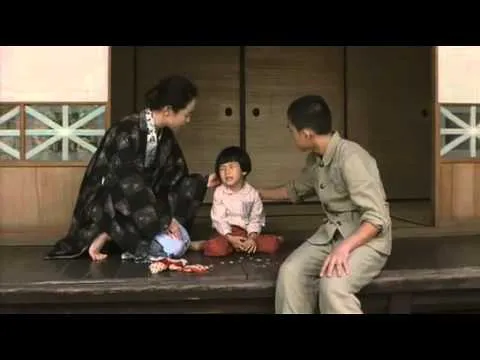
Well, friends, that's it for today, I hope you liked this post and that you are encouraged to participate in
Bueno, amigos, esto ha sido por hoy, espero que les haya gustado este post y que se animen a participar en el #otakuchallange de
Here are the sources in which I found some information for the realization of this post.
A continuación les dejaré las fuentes en las que encontré un poco de información para la realización de este post.
Japón and more

Imagen diseñada por mí en el editor de canva.