
Energy recycling, also known as energy recovery, is a process that seeks to harness and utilise the waste energy generated during various activities and convert it into a useful form of energy.
One of the most common forms of energy recycling is through the incineration of solid waste.
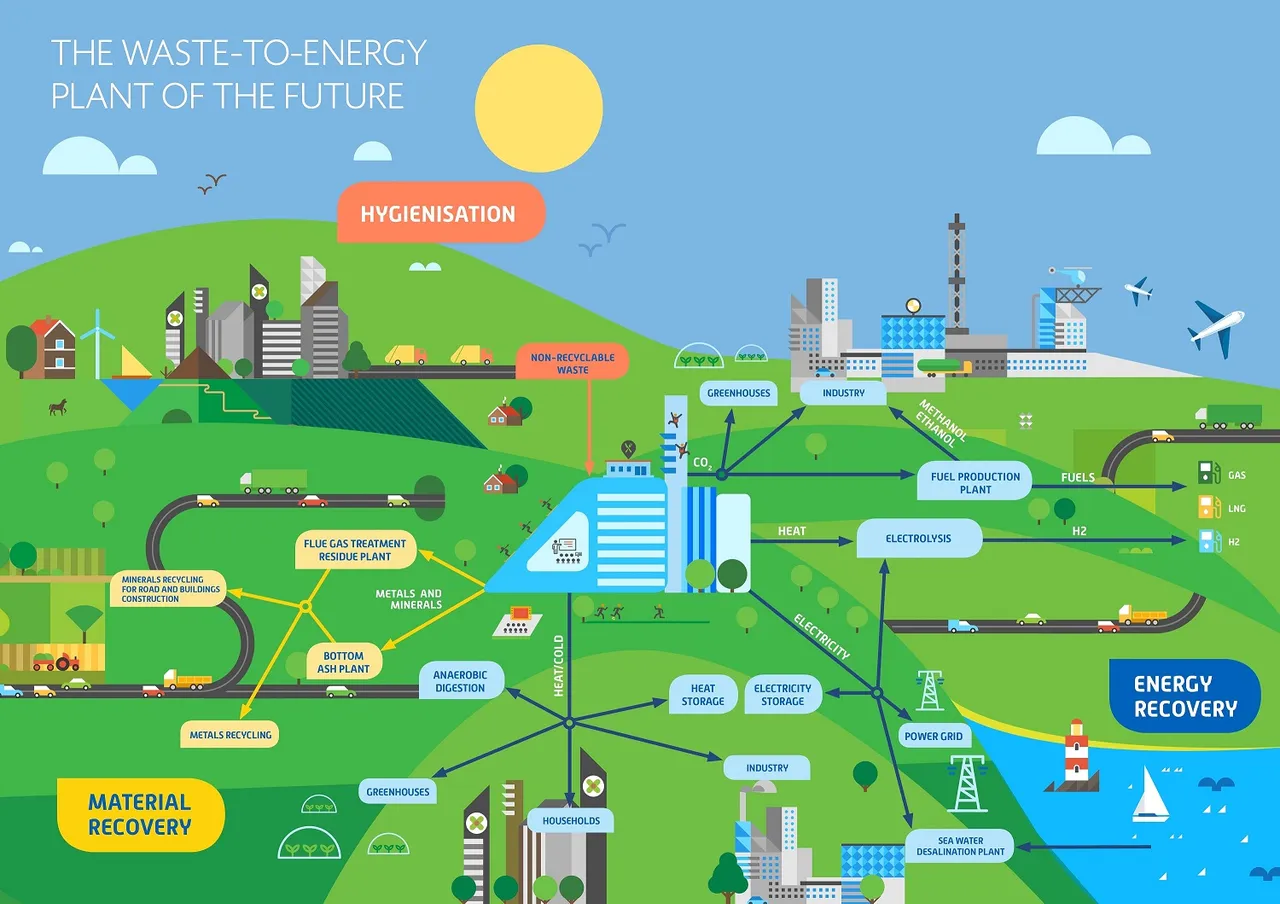
During this process, waste is burned and the resulting thermal energy is used to generate electricity or heat, which helps to reduce the amount of waste sent to landfills and, at the same time, produces energy.

Another form of energy recycling is through the capture and utilisation of greenhouse gases, such as methane, which are produced during the decomposition of organic waste in landfills.
These gases can be captured and used as a source of energy, rather than being released into the atmosphere, thus contributing to the reduction of greenhouse gas emissions.
However, it is important to note that energy recycling is not the ultimate solution to all energy and environmental problems.
While it can be beneficial in terms of resource efficiency and waste reduction, there are also concerns about pollutant emissions and potential negative impacts on health and the environment.