
The name Xcambo also means "Place of Trading", but you have to accept that "Celestial Crocodile" sounds way better, even though it is believed that the former is the correct translation, especially because after several years of research, due to the history and the remnants and vestiges, Xcambo was definitely a center for commerce.

I visited Xcambo around New Year's Eve, so I was surprised it was open because we are also during week 34569 of Covid measures, so you never know what's open and what's closed to the public.
The first thing that caught me off guard is that the entrance is not similar to those archaeological sites that are more touristic and famous, with a toll booth, parking lot and whatnot. Xcambo's entrance consists of a short fence, then a lonely drive reaching a clear where you can park, and then just one old dude asking you to pay, and that's it.


We were the only ones there and only until we were leaving, a small gathering of gringos arrived, but we spent from 8 am to 10:30 all by ourselves.
A little bit of history
I always try to do some research before visiting an archaeological site or ruin, especially because if it is not a trendy one, the INAH - the National Institute of Anthropology and History - has no real budget to properly adapt the site for touristic activity. That means two things (at the very least): there will be no real information within the site, no triptych or the likes and no signs with useful info and images... and there will be a lot of unexplored parts that if you know where to look and how to explore, you will end up finding buildings off the beaten path for yours and only other true explorer's eyes.

I went inside the site through a small corridor that is supposedly one of the main entrances the Mayan's back then used to get to the main plaza.
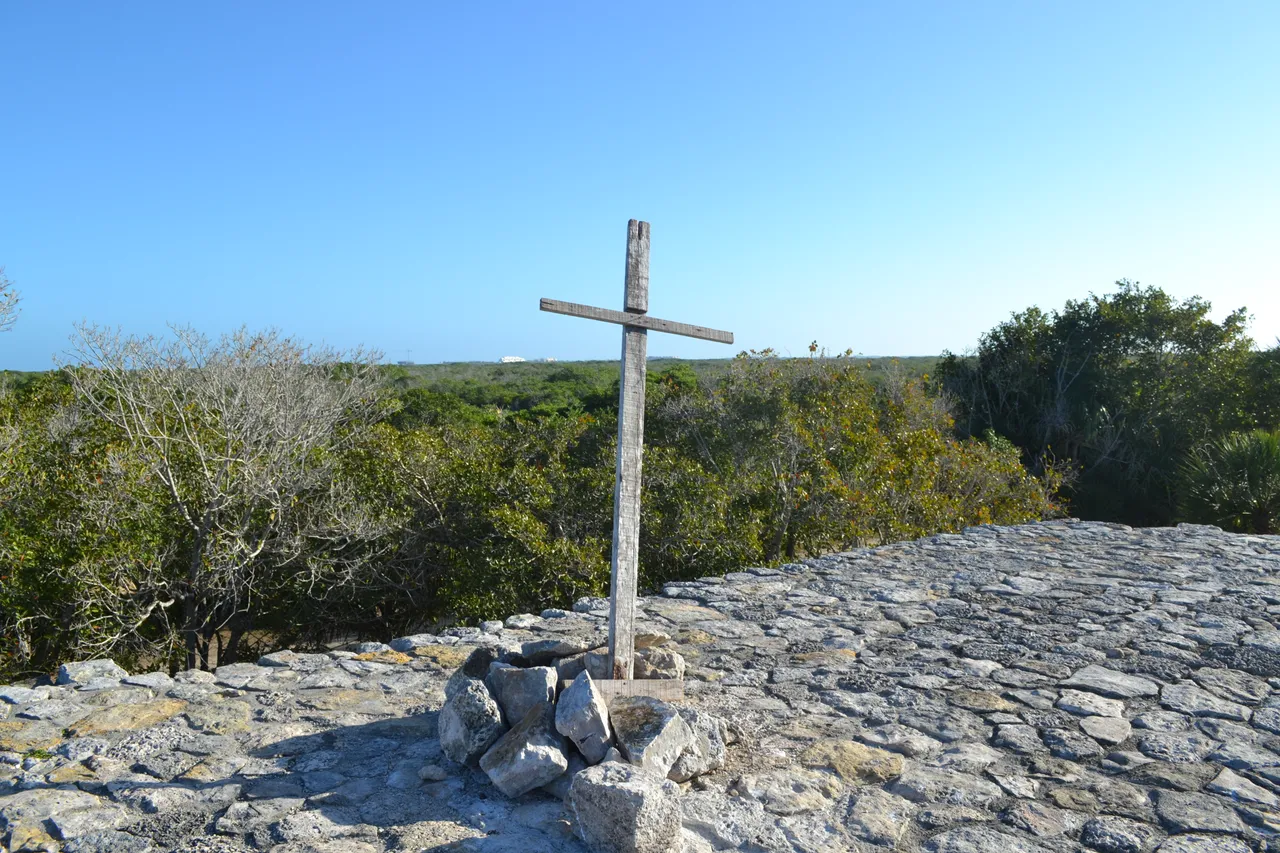
I was received by two vultures patrolling the site on top of a cross set on the top of one of the main buildings. I wasn't sure how to take this but I decided to see it as an Omen of strange things to happen next.

I was able to get close to them, perhaps to less than 5 meters. They weren't spooked and it surely seemed like they weren't used to seeing many people but at the same time, they didn't seem worried about our presence.
 |  |
|---|
It's not uncommon to see Catholic/Christian buildings or ornaments on top of Mayan ruins, after all most of the Catholic Churches were built on top of Mayan Ceremonial sites to keep the holiness of the place, only with a different deity this time.

The people of Xcambo established the city within a peten, the biggest of the region with many useful resources around such as good ground, running water and materials to build proper buildings.
A peten is like an islet with lots of jungle-like sylvan vegetation that is surrounded by mangroves and swamps. Life in these petens revolved around cenotes - you know, those sources of water interconnected with the other thousands in the region, that Mayans believed were like entrances to the underworld - and the balance is maintained by the fresh water above, and the salt water coming from the ocean below.
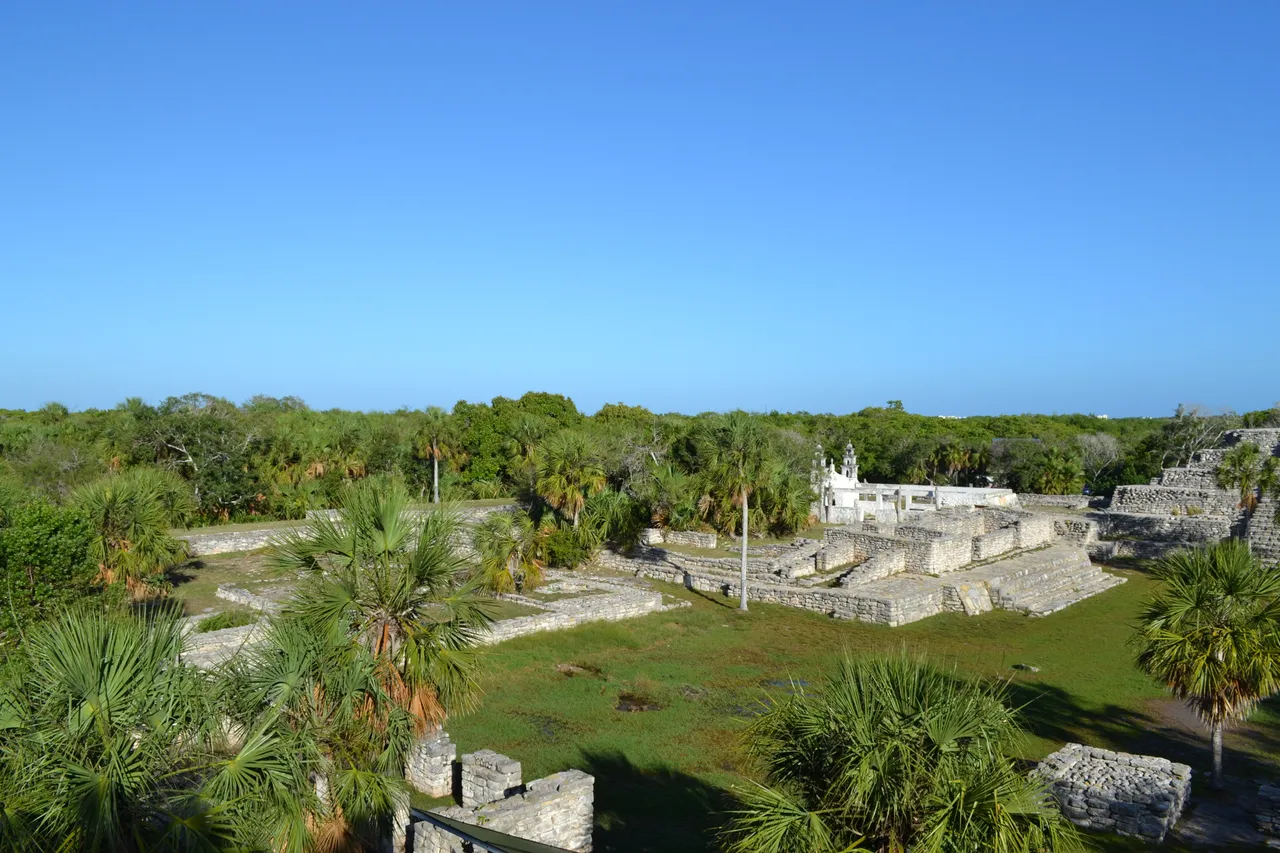
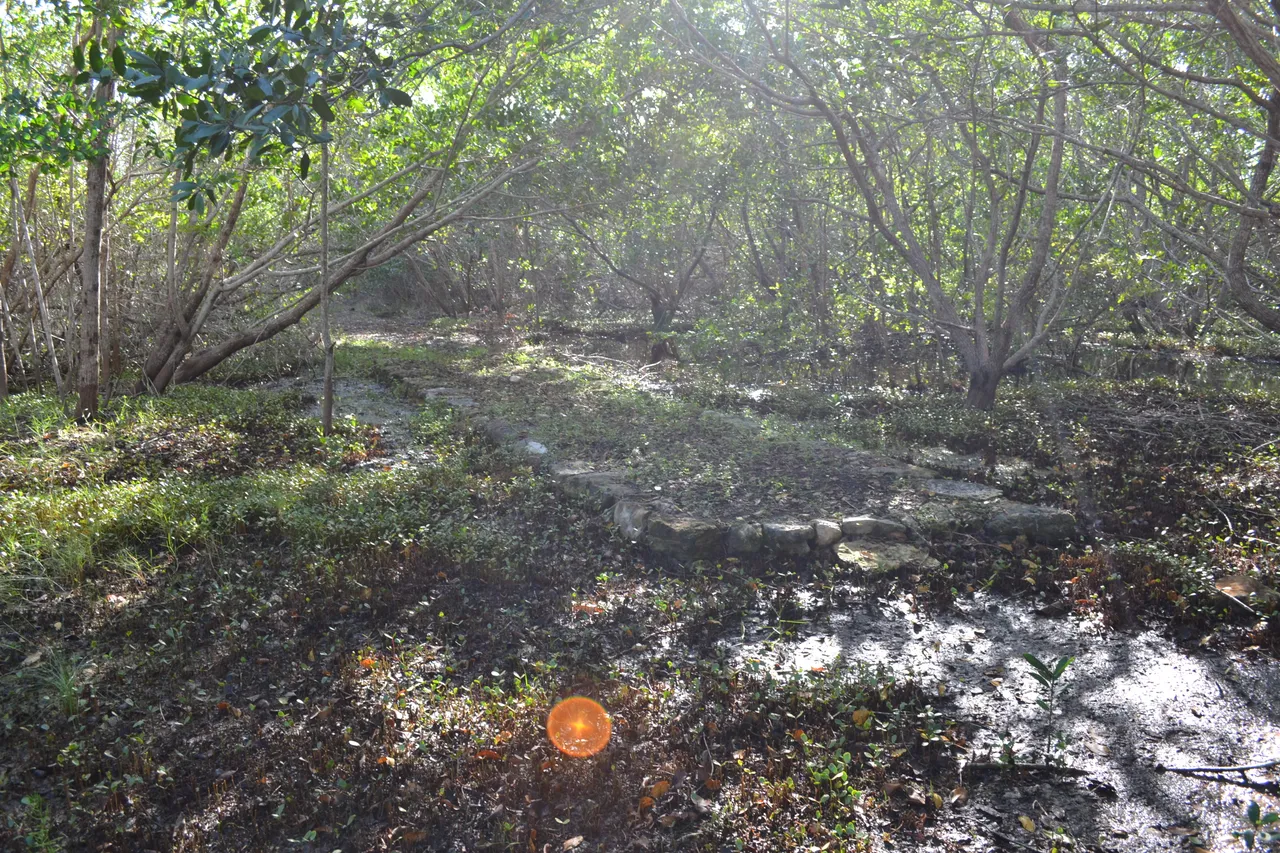
As you can see, the ground looks wet and kind of mushy. It was very difficult to walk around some parts of the ruins because the wet ground got to my ankles. This site was indeed built around swamps and mangroves. These mangroves must have been used as a means of transport between the ocean and the city, which is proven by a small port built inside the city. La ciénega debió ser uno de los lugares de comunicación y contacto con el puerto, lo cual se demuestra por la existencia de un atracadero o muelle para el embarque y desembarque de los bienes de comercio.
Xcambo was erected as a Commercial and Trade harbor around 350 AD. I don't have the real number, but it took like 3 minutes by car to reach this place coming from the ocean.
In this Mayan ruins, the same as in Dzibilchaltún (which I will post about in a few days because I also visited it), there is a small chapel that was built inside the ruins around the 1950's. This little church was erected to honor the Virgin of Xcambo, which was suppsedly seen by the locals right there.


The Chapel of Xcambo's Virgin was built on top of a Mayan ceremonial site, a practice that is tradition in Dzemul, the town that Xcambo belongs to. It is known among locals that this virgin appears in front of those who roam the Mayan buildings and are true catholic believers. To some, she is the real owner and protector of this archaeological site.
Leyend told by the elders of Dzemul goes that there are three Virgins, the one in Izamal, Dzemul and Xcambo and they are all sisters. The Virgin from Xcambo was a jealous woman and demanded respect thus, she didn't like to share the attention of the locals with her sisters, so she left to the mountains and only shows up to those who believe and have faith in her.
The main Plaza

 |  |
|---|
The central Plaza had 11 buildings that show the better carving on stone, and a particular stone set that makes them outstand the other buildings. This plaza was mainly used for civic, religious and administrative activities. It has 9 buildings surrounding the plaza and two around the south end of it.


The buildings were set in such a way that they form a closed plaza in the center of the Ruins, around which the houses, workshops and warehouses were built.
 |  |
|---|
Within the plaza, there are some small cenotes or ponds, known as "eyes of fresh water" and they played an important role in the religious side of the city.

The Pyramid of Masks
This pyramid is part of the Central plaza, and it didn't caught my attention at first because it is located behind some palms and trees, but once I got close I could see why it is one of the most important ones of the site.

This is the building NE-23, also known as "The Pyramid of the Maks" and it holds at least three different periods within its construction, which can only be apreciated by looking at the renovations done over and over. On its final stage it was covered by several stone bodies that resembled a huge staircase and in the main face, a small staircase made of megalithic blocks.
The huge masks carved in stone were painted at one point, and they represent the Celestial Monster composed of the opposition pair Venus and the Sun, which represent the morning star guiding the sun out of the underworld.
 |  |
|---|

Gallery of the Main Central Plaza
I took a lot of pictures, so instead of leaving a huge gallery for the end, I prefer to leave you with small galleries of each part of the ruins. This one consists of pictures taken within the Main Plaza.

 |  |
|---|

 |  |
|---|

 |  |
|---|


About Xcambo
The inhabitants of this city managed the saltworks and salt ponds, as well as all the marine products. This city was the main collection center of goods at a local, regional and supraregional level.
It was the main and biggest trade harbor in the Northern coast during the classic period. In the ruins were found hundreds of items, both local and foreign, which indicates that commerce was strong.
Even after being abandoned, it remained a place of worship during the postclassic period.
It is estimated that Xcambo was founded around the 100AD although it only took importance regionally until the IV century. It covers 700 meters from east to west, and due to the paths that connect it to other cities, it was definitely a city of importance.

 |  |
|---|

 |  |
|---|
I spent in Xcambo around 3 hours, and I would've spent more time if my girlfriend hadn't told me she was tired and wanted to leave on hour two, but I was still able to explore the whole place.
Once you start to move away from the main plaza, the construction style and materials begin to change and one can tell how different the class is from one building to another. The higher class used solid rocks for both the foundations, the walls and the ceiling, and as the class went low, the ceilings stops being made of rock, and then the walls, and then the foundations.
Walking around the Mayan ruins, I could tell the inhabitants were very numerous because I found hundreds of houses throughout the territory - you can tell it was a house because you can only see the rock perimeter of the foundation, there are no walls not ceiling, just the square of rocks at ground level.

 |  |
|---|

 |  |
|---|

 |  |
|---|

The role of Salt in Xcambo
This side of Mexico has a lot of Salt ponds/mines, and the commerce of this mineral was crucial and vital to the economic and social power this and a couple other Mayan cities held.
It is believe that Xcambó must have had control of at least two extensive salt ponds/mines.

These holes served as storage for salt. They were digged under the base's surface and they measure between 1.50 m and 2.50 m diameter and have a depth of 1 to 2 meters.

 |  |
|---|
Off the Beaten Path
Once you realize every Mayan ruin has only been uncovered to a small percentage, you start exploring the vicinity, expecting to find something off the beaten path.
I was not wrong...


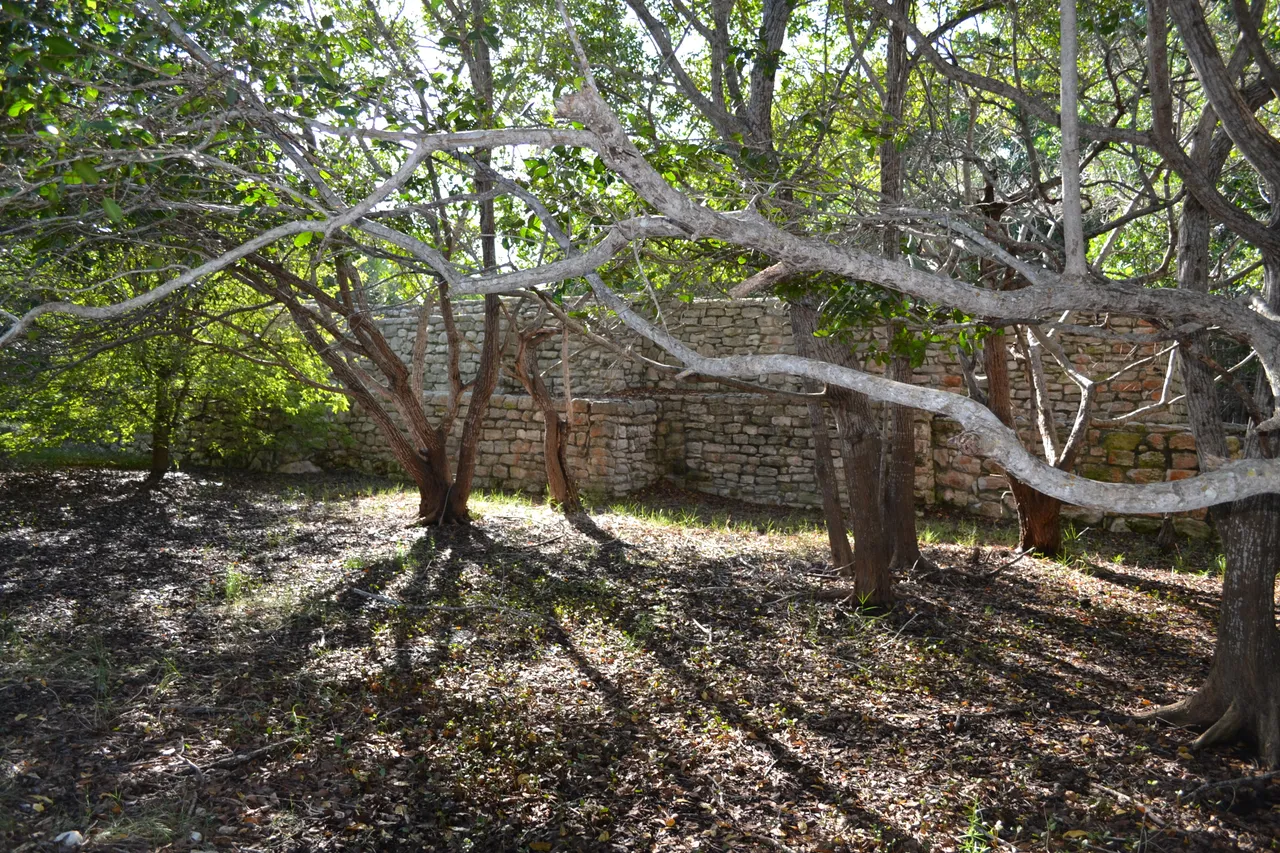

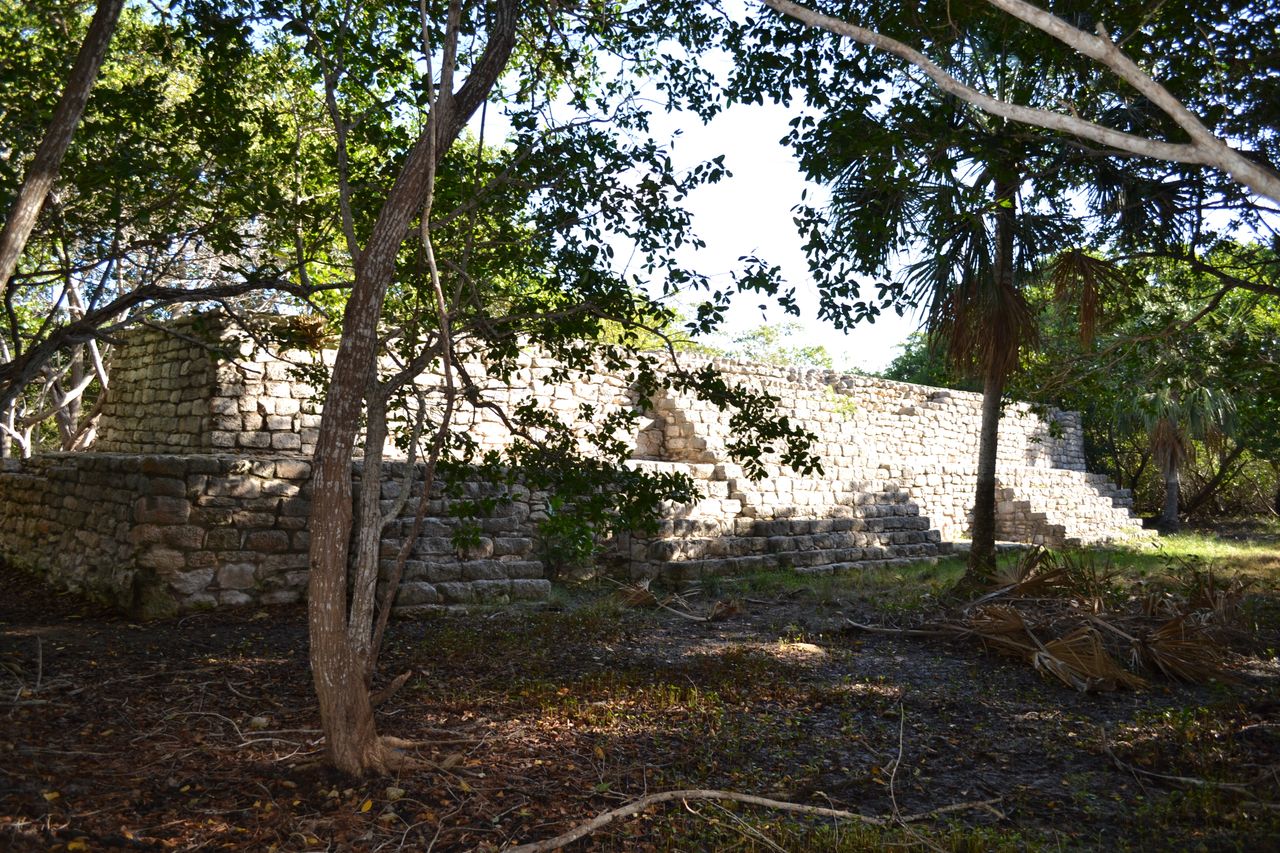




This Mayan Ruin is located North of Merida, Mexico and you can get there pretty easily from the city.
I hope you liked exploring this archaeological site with me!
This post was made via 