


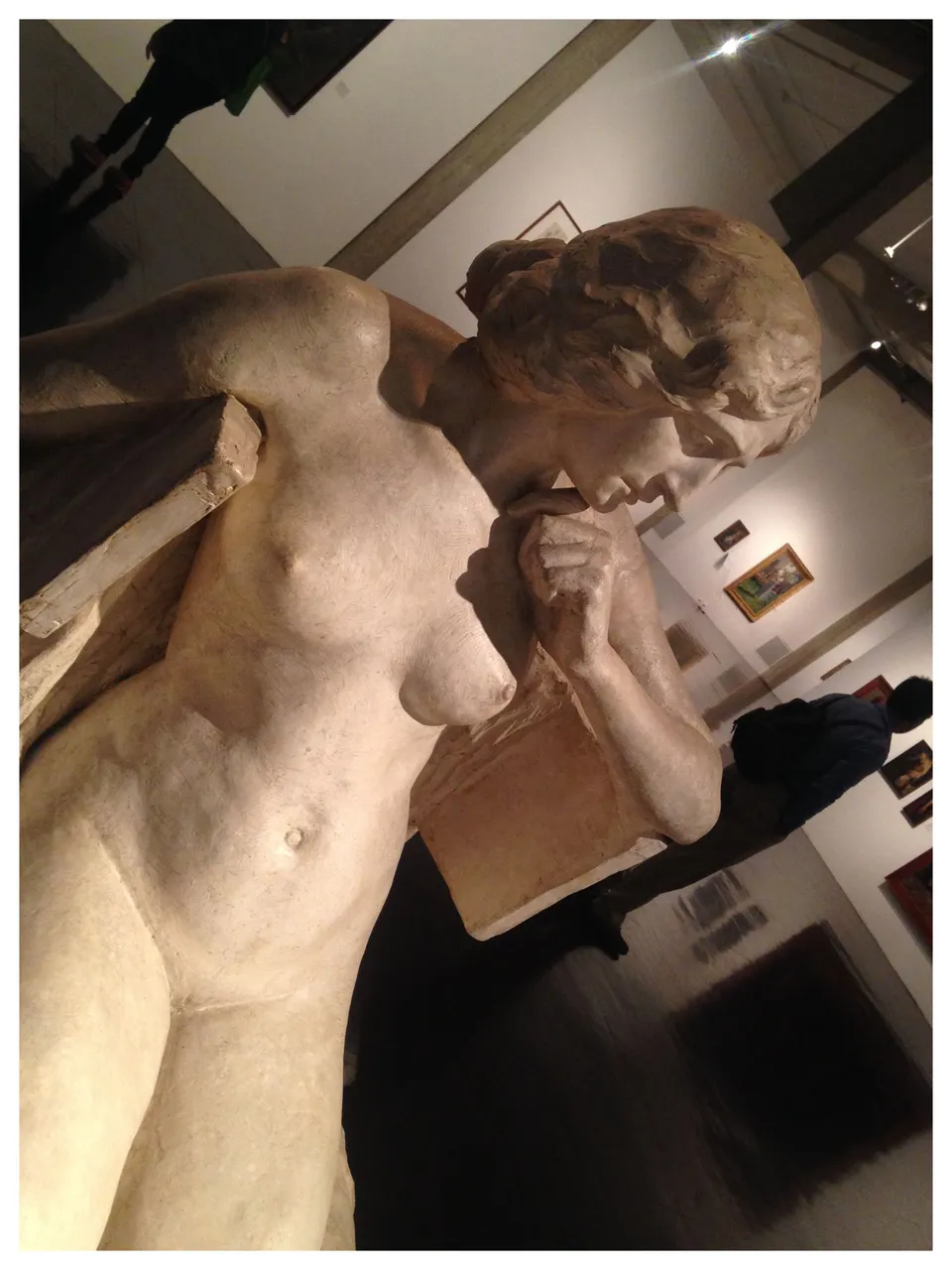

Hello everyone! Today I will dedicate this article to one of the most important cultural spaces in my country, Venezuela, it is the National Art Gallery (GAN) located in Caracas in the so-called Bellas Artes area. I made this tour around the year 2018, where I was able to observe a part of the works of the permanent collection from the nineteenth to the twentieth century, where the masters of Venezuelan academic art stand out. So, join me on this fruitful visit and let's get started!
First of all, I consider it relevant to make a small aside about the history of this building. The National Art Gallery was created in 1974 and opened its doors for the first time in 1976. At first, the GAN did not have its own headquarters, so it was located in the old building of the Museo de Bellas Artes, which was designed by the architect Carlos Raúl Villanueva, who was also in charge of the artistic creation of several other historic buildings in Caracas. It was not until 2006 that the GAN was able to have its own space and begin the first stages of the building. In 2009 the building was finally inaugurated.
¡Hola a todos! El día de hoy dedicaré este artículo a uno de los espacios culturales más importantes de mi país, Venezuela, se trata pues de la Galería de Arte Nacional (GAN) ubicada en Caracas en la llamada zona de Bellas Artes. Este recorrido lo realice alrededor del año 2018, dónde pude observar una parte de las obras de la colección permanente del siglo XIX al XX, donde destacan los maestros del arte académico venezolano. Así que, acompáñame a esta fructífera visita y ¡Comencemos!
Antes que nada, considero relevante hacer un pequeño inciso sobre la historia de este edificio. La Galería de Arte Nacional fue creada en el año 1974 y abre sus puertas por primera vez en el año 1976. En primera instancia, la GAN no tenía una sede propia por lo que se ubicó en el antiguo edificio del Museo de Bellas Artes , el mismo fue diseñado por el arquitecto Carlos Raúl Villanueva, quién también fue el encargado de la creación artística de varios otros edificios históricos de Caracas. No es sino hasta el año 2006 que la GAN consigue tener un espacio propio y comenzar con las primeras etapas del edificio. En el 2009 se inaugura finalmente el edificio.


Now, this museum project aims to recover, safeguard, preserve, conserve, manage, demonstrate, consolidate, promote and disseminate Venezuelan art. It houses around 9,000 works that gather four centuries of artistic creation, from colonial times to contemporary times. We will find therefore, varied exhibitions throughout the year, where artists such as Arturo Michelena, Antonio Herrera Toro, Cristobal Rojas, Carlos Cruz Diez, Miguel Cabré stand out. The exhibition I attended was called 'Crossed Histories', a sample of works from the 19th to the 20th century.
The building is really big, occupying an area of about 30,000 square meters. All made in materials such as concrete, iron, glass and steel. The building is divided into three levels (each of them has a double height) of which have been subdivided several areas for the administration of the museum, recreation (a small coffee shop) and meeting of cultural events, art store, basement and of course, the exhibition halls that are located in the central area. The latter includes two rooms where the permanent exhibition is located and the other where new artists are exhibited. If you attend the guided tour hours, you can enjoy and learn a little more about the history of each artist and his work.
Ahora, este proyecto museístico tiene como objetivo recuperar, resguardar, conservar, administrar, evidenciar, consolidar, fomentar y divulgar el arte venezolano. Por lo que alberga alrededor de 9000 obras que recogen cuatro siglos de creación artística; desde la época colonial hasta la contemporánea. Encontraremos por tanto, exhibiciones muy variadas durante todo el año, dónde destacan artistas como Arturo Michelena, Antonio Herrera Toro, Cristóbal Rojas, Carlos Cruz Diez, Miguel Cabré. En la exhibición a la cual asistí, se llamaba 'Historias Cruzadas', una muestra de obras del siglo XIX al XX.
El edificio es realmente grande, ya que ocupa un área de unos 30.000 metros cuadrados. Todo hecho en materiales como el hormigón, el hierro, el vidrio y el acero. El edificio se divide en tres niveles (cada uno de ellos posee una doble altura) de los cuales se han subdividido varias áreas destinadas a la administración del museo, la recreación (una pequeña tienda de café) y encuentro de eventos culturales, tienda de arte, sótano y por supuesto, las salas de exposición que se encuentran en el área central. Está última recoge dos salas donde se encuentra la exposición permanente y la otra dónde se exhiben nuevos artistas. Sí asistes a las horas del recorrido guiado, podrás disfrutar y aprender un poco más sobre la historia de cada artista y su obra.


Spaces like this not only serve for the mere contemplation of the various great artists and their works but also as part of the documentation that exemplify, reiterate and evidence the existence of the different periods through which Venezuela went through (the historical context) and how the creative process was according to the time and its product. The difference from one era to another. It is therefore a reference space. An example of this can be seen in the set of drawings by Camile Pisarro made during his stay in Venezuela (landscape painting) and how this influenced several artists, the light of Armando Reverón, a defeated Miranda captured by Arturo Michelena (Miranda en la Carraca), La Miseria by Cristóbal Rojas, Martín Tovar y Tovar, Emilio Boggio and a long etcetera. It will always be necessary to resort to the past to understand our present.
As I mentioned, works of new trends in visual arts that correspond to a contemporary core are also exhibited. This broadens the panorama and allows new artists the opportunity to exhibit at the magnificent GAN. Also, depending on the calendar of events, you can attend lectures, workshops and other cultural phenomena. Although it was the second time I visited the museum (which is not much either), I can not help but feel a lot of joy and nostalgia for having the opportunity to witness the brushstrokes of our illustrious Venezuelan visual artists. I can only tell you that if you want to know Venezuela, go to its museums, art galleries, art galleries, libraries, squares, theaters and cultural spaces that will surely give you more than one answer. A giant hug, thanks for stopping by.
Espacios como este no solo sirven para la mera contemplación de los diversos grandes artistas y sus obras sino también como parte de la documentación que ejemplifican, reiteran y evidencian la existencia de las diferentes épocas por las que atravesó Venezuela (el contexto histórico) y cómo era el proceso creativo según el momento y su producto. La diferencia entre una época a otra. Es por tanto un espacio de referencia. Ejemplo de ello lo vemos en el conjunto de dibujos de Camile Pisarro realizados durante su estadía en Venezuela (paisajismo) y como este influenció a varios artistas, la luz de Armando Reverón, un Miranda derrotado captado por Arturo Michelena (Miranda en la Carraca), La Miseria de Cristóbal Rojas, Martín Tovar y Tovar, Emilio Boggio y un largo etcétera. Siempre será necesario recurrir al pasado para entender nuestra actualidad.
Como mencione, también se exhiben obras de nuevas tendencias en artes visuales que corresponden a un núcleo contemporáneo. Esto amplia el panorama y permite que nuevos artistas tengan la oportunidad de exponer en la magnífica GAN. Así como también, dependiendo del calendario de eventos, podrás asistir a charlas, talleres y demás fenómenos culturales. Aunque era la segunda vez que visitaba el museo (que tampoco es mucho), no puede evitar sentir mucha alegría y nostalgia por tener la oportunidad de presenciar las pinceladas de nuestros ilustres artistas plásticos venezolanos. No me queda más que decirles que si desean conocer Venezuela, recurran a sus museos, galerías de arte, pinacotecas, bibliotecas, plazas, teatros y espacios culturales que de seguro, te van a dar más de una respuesta. Un abrazo gigante, gracias por pasar por aquí.


Photographs taken by me/Fotografías hechas por mí.