

✍️✍️ENGLISH VERSIÓN ✍️✍️
One day I read a post in a community that I found quite interesting, especially because of the topic it dealt with.
The article very fluently described the environment of a small park with a sculpture in the center.


Well, parks almost always have a sculpture around which the entire urban and social dynamic revolves, and in this one that unwritten rule is fulfilled.
I could continue expanding on the essence of this place, providing complementary data, but I already told you that in cast bronze it pays homage to the first Japanese who set foot on Cuban lands back in 1614. (17th century)
I was recently passing by the port avenue and I remembered a post about the aforementioned Nippon, which was not only recorded as a historical event, but also attests to the visit of a samurai to the Caribbean island.

The samurai were very fearsome warriors in their time; Basically, they were a kind of royal squires or high dignitaries. For that, you have to review historical documents. In the Asian filmography of the seventies, there is quite a bit of reference to these ancient characters. It is true that the cinema magnified on a scale of myth and legend, to the point of creating a character who, despite being blind or having some visual limitation, cut a fly into four pieces with his sword or fought with half a battalion of well-prepared opponents without getting a scratch.
Sato Ichi was unsurpassed, and everyone commented: "If he is blind like that, say with twenty twenty in his sight!" 😃

And I wonder: has this samurai from Avenida del Puerto met any of those extraordinary warriors, or has he fought with a clean sword? This swordsman from the land of the rising sun arrived in the emerging Cuban capital by chance, as he was going to Europe on a diplomatic mission, carrying an embassy to the kings of Spain on behalf of the Japanese emperor.
The galleon that was taking him to the old continent made a stopover in Havana port and gave the opportunity for the samurai ambassador to set foot on Cuban soil, being the oldest recorded history of making an appearance on the island.

The monument is simple and it unites the classic and modern, since the sculpture of the samurai in a life-size and quite realistic style, which rises on a modest pedestal, is located in the center of a circular structure, topped by segments of short walls, with slightly higher panels, but in a geometric style that gives it the spirit of modernity.
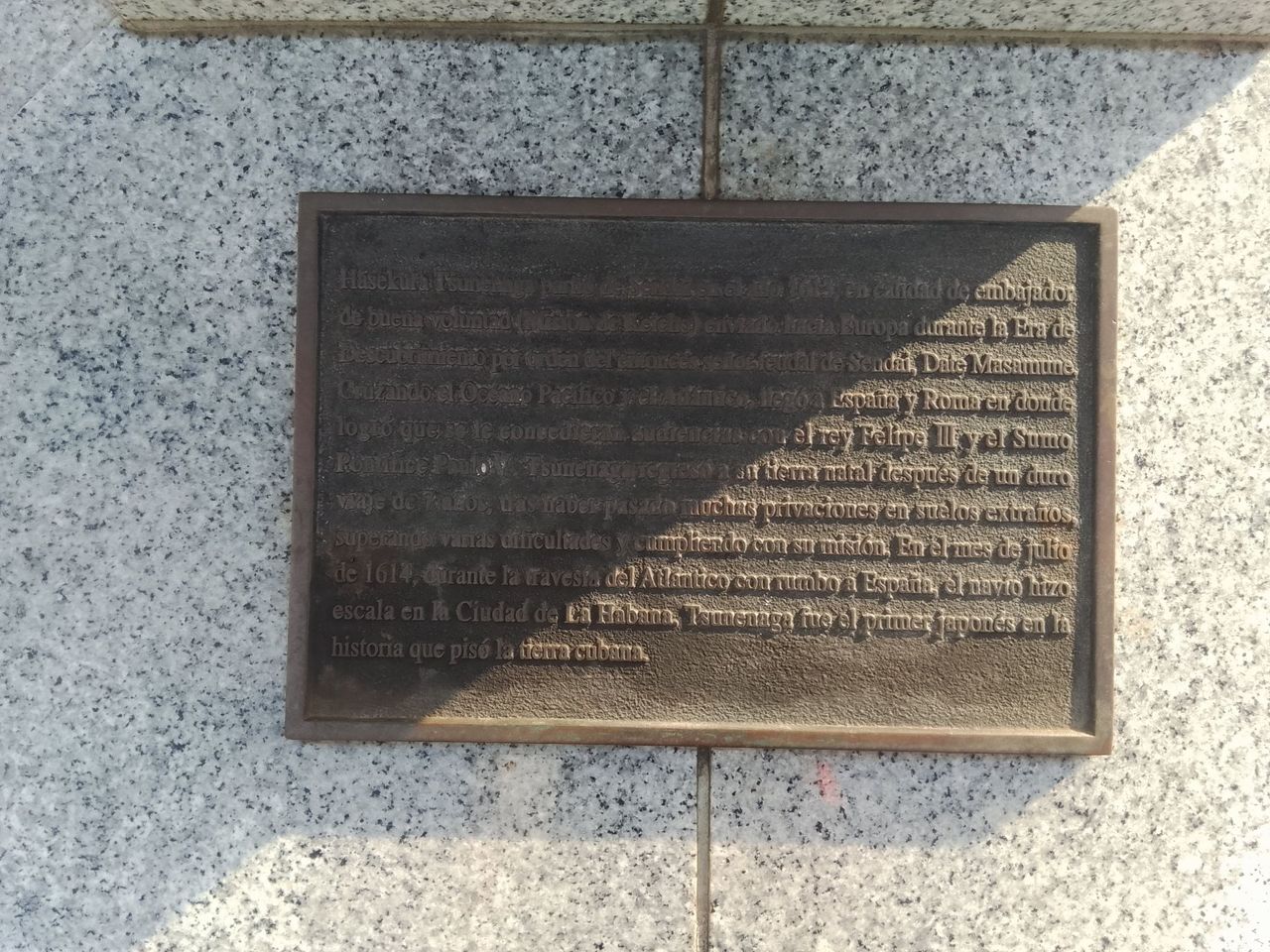
The samurai is represented standing, with his left hand near the hilt of the sword, while he raises his right hand in which he holds a classic fan, pointing in the distance, perhaps the place where he came from to fulfill his mission, from which he returned, as recorded on a tablet on one of the sides of the pedestal, seven years later.

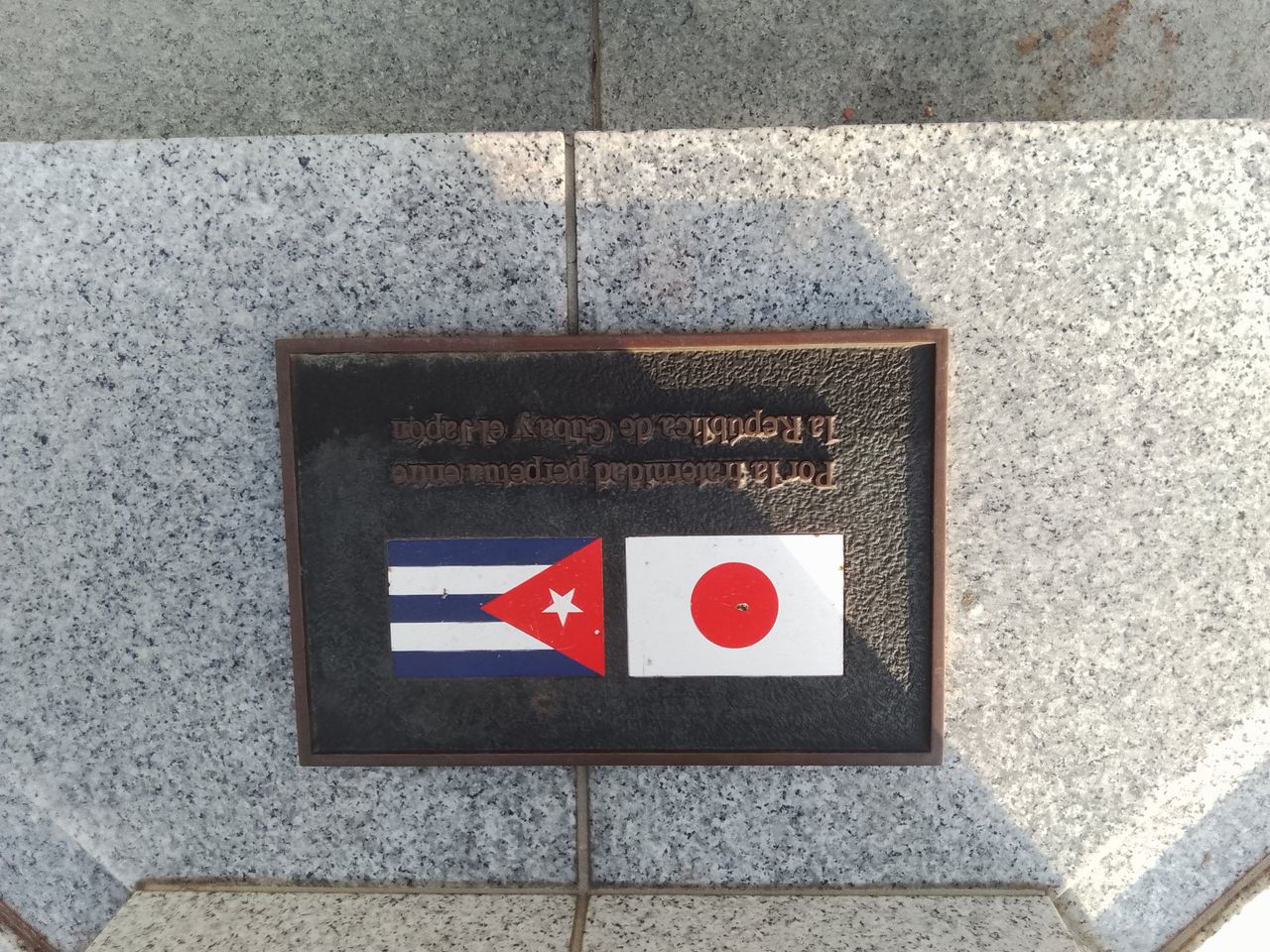
There it also says that the sculpture was donated by a junior high school in Japan on April 25, 2001, and was made by the sculptor Mizuko Tsuchura, to memorize the date on which Hasekura Tsuneranga (Samuray) united xonsua ambassador sandals two distant islands in the geography of the planet.
It really moved me to be in that place and see how in a simple monument the intention of perpetuating the spirit of brotherhood between peoples is condensed.

A Samuray in Havana is also something exotic for the Cubans, no longer ok for those who do not know the history behind the image that from its well-cast bronze raises an arm to say: I come from there.
Thank you for coming with me to visit a place as interesting as this and to discover others.
Full text of my authorship.
All rights reserved.
©
✍️✍️VERSIÓN EN ESPAÑOL ✍️✍️
Un día leí un post en una comunidad que me resultó bastante interesante, sobre todo por la temática que trataba.
El artículo describía con mucho fluidez el entorno de un pequeño parquesito con una escultura en el centro.
Bueno, casi siempre los parques tienen una escultura alrededor de la cual gira toda la dinámica urbanística y social, y en este se cumple esa regla no escrita.
Podría seguir dilatando la esencia de este lugar, aportando datos complementarios, pero ya les digo que en bronce fundido rinde homenaje al primer japonés que pisó tierras cubanas allá por el año 1614. (S. XVII)
Hace poco pasaba por la avenida del puerto y recordé un post sobre el susodicho Nipón, que no solo fue registrado como un acontecimiento histórico, sino que también da fe de la visita de un samurái a la isla del Caribe.
Los samuráis fueron guerreros muy temibles en su época; básicamente, eran una especie de escuderos reales o de altos dignatarios. Para eso, hay que revisar documentos históricos. En la filmografía asiática de los años setenta, hay bastante referencia a esos personajes de la antigüedad. Es verdad que el cine magnificó a escala de mito y leyenda, al extremo de crear un personaje que, a pesar de ser ciego o de tener alguna limitación visual, cortaba con su espada una mosca en cuatro pedazos o se batía con medio batallón de contrarios bien preparados sin que le hicieran un rasguño.
Sato Ichi fue insuperable, y todos comentaban: "Si ciego es así, ¡digan ustedes con veinte veinte en la vista!" 😃
Y yo me pregunto: ¿y este samurái de la Avenida del Puerto habrá conocido a alguno de aquellos extraordinarios guerreros, o se habrá batido a espada limpia? Este espadachín de la tierra del sol naciente llegó a la incipiente capital cubana por casualidad, pues iba a Europa en misión diplomática, llevando una embajada a los reyes de España de parte del emperador japonés.
El galeón que lo llevaba al viejo continente hizo escala en puerto habanero y dio la posibilidad de que el samurái embajador pisara tierra cubana, siendo el antecedente más antiguo registrado de hacer acto de presencia en la isla.
El monumento es sencillo y en él se unen lo clásico y lo moderno, pues la escultura del samurái a tamaño natural y de estilo bastante realista, que se eleva sobre un modesto pedestal, está ubicada en el centro de una estructura circular, rematada por segmentos de muros bajitos, con paneles un poco más altos, pero en un estilo geometrizante que le aporta el espíritu de modernidad.
El samurái está representado de pie, con la mano izquierda cerca de la empuñadura de la espada, mientras que levanta la mano derecha en la que sostiene un clásico abanico, señalando en la lejanía, quizás el lugar de donde vino para cumplir su misión, de la cual regresó, según consta en una tableta en una de las caras del pedestal, siete años después.
Allí también reza que la escultura fue donada por una escuela secundaria básica de Japón el el 25 de abril de 2001, y fue realizada por el escultor Mizuko Tsuchura, para memorizar la fecha en que Hasekura Tsuneranga ( Samuray) unió xonsua sandalias de embajador dos islas distantes en la geografía del planeta.
A mí el realmente me conmovio estar en aquel sitio y ver como en un sencillo monumento se condensa la intención de perpetuar el espiritu de hermandad entre los pueblos.
Un Samuray en la Habana no deja también de ser una cosa exotica or los cubanos , ya no uch ok más para los que desconocen la historia que hay detrás de la imagen que desde su bien fundido bronce levanta un brazo para decir : desde allá vengo.
Gracias por venir conmigo a visitar un lugar tan interesante como este y a descubrir otros.
Texto íntegro de mi autoría.
Todos los derechos reservados.
©
