
Destinations lead to destinations, awesomeness to awesomeness, or... a nice way of saying how we ended up by mistake in front of a unique and strange natural formation from Romania.
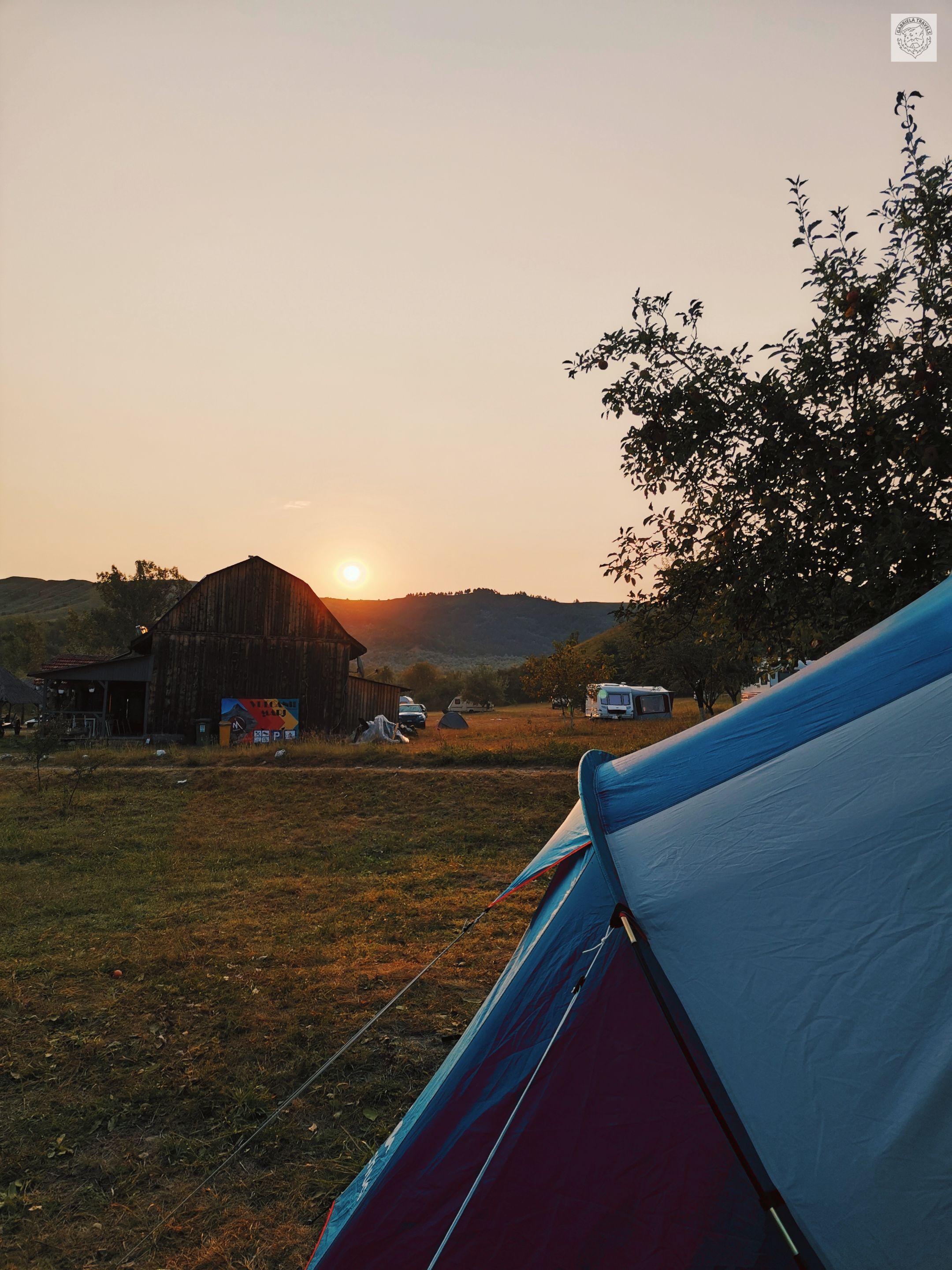
After we spent the other day visiting the famous mud volcanoes from Buzau county which are amongst the most popular sightseeing attractions someone can see while he's on this part of Romania, we decided to begin the new day pretty early in the morning by taking the breakfast quickly and get ready for more unknown and less people because overall, discovering places that are less known by people is what make us the most enthusiastic.
The sun was just announcing his presence by hiding behind the hills we climbed in my previous article when we were consulting our notepad with things we wanted to see during our days spent in Buzau, along with the map that showed us more or less the paths we should follow.
Anyway, the interesting part here is that we were actually heading to a completely different place when we ended up spending lots of hours on unpaved roads that made our car hit the ground countless times and get scarred enough that we will get stuck there, in a place that was representing, literally, nothing, because there were no houses, no people, no cars, no roads, no indicators, no nothing.
But just like we always have one of those moments when we sort of get lost and think like "that was it!" because we weren't able to meet any other driver or people to ask for details if we are on the right road or not, we tried to calm down since there was nothing we could do because of the narrow path that wasn't even allowing us to turn the car around and get back to where everything started.
After a long while spent being lost, we finally managed to reach a tiny village with not too many people you could notice on the streets but where we were happy to be back to civilization and see more things around us other than a narrow path that seemed like it won't even lead somewhere.
 |  |
|---|
Click on the images to see them in full resolution
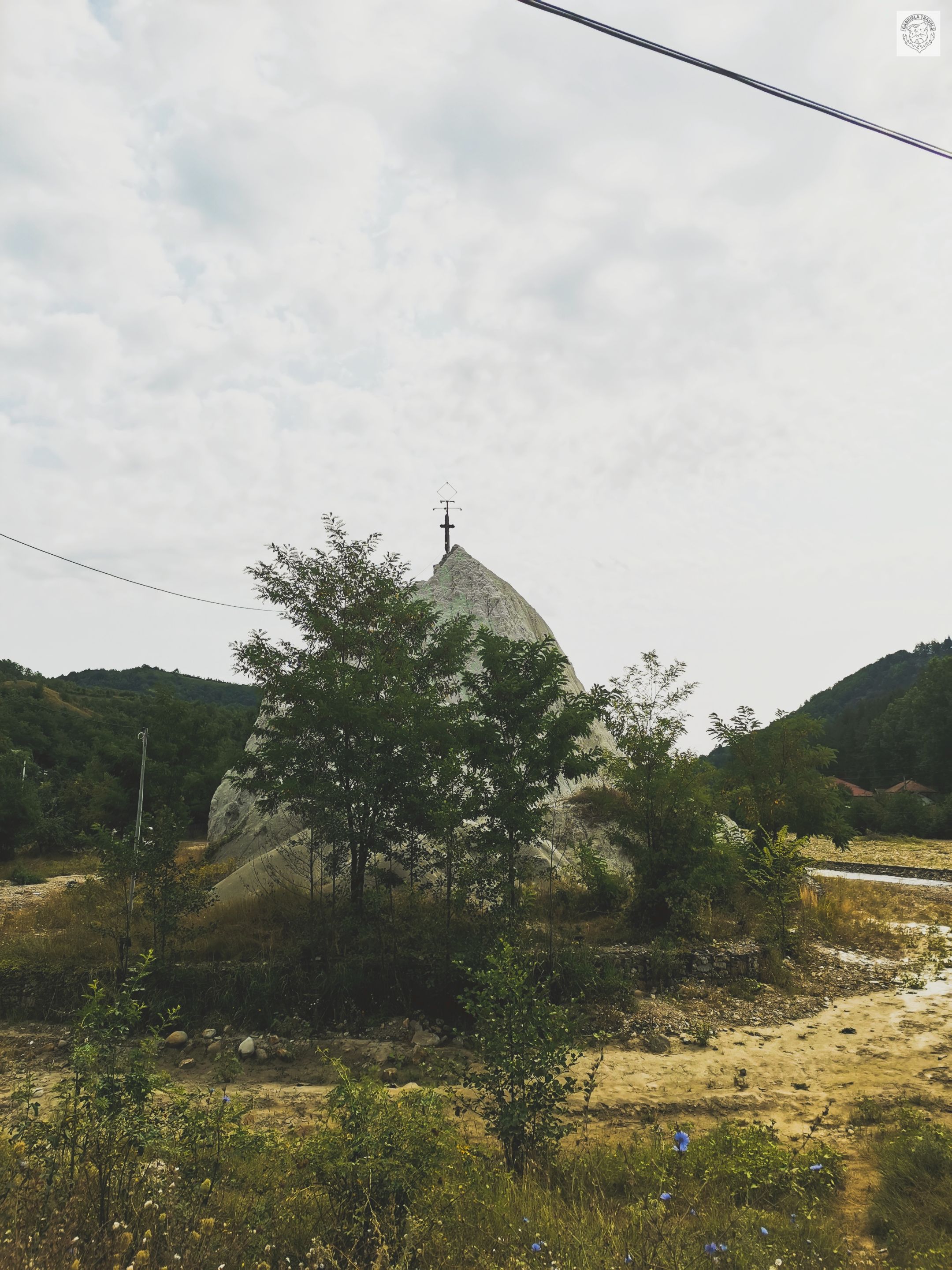
Anyway, as soon as we were back on the road, still following what the silly GPS was saying about the roads we should follow, I looked out of the window for a moment and that's when I saw a strange monument that seemed like being made of salt but which was located right next to the road so it was a good moment to stop the car and see what's everything about.
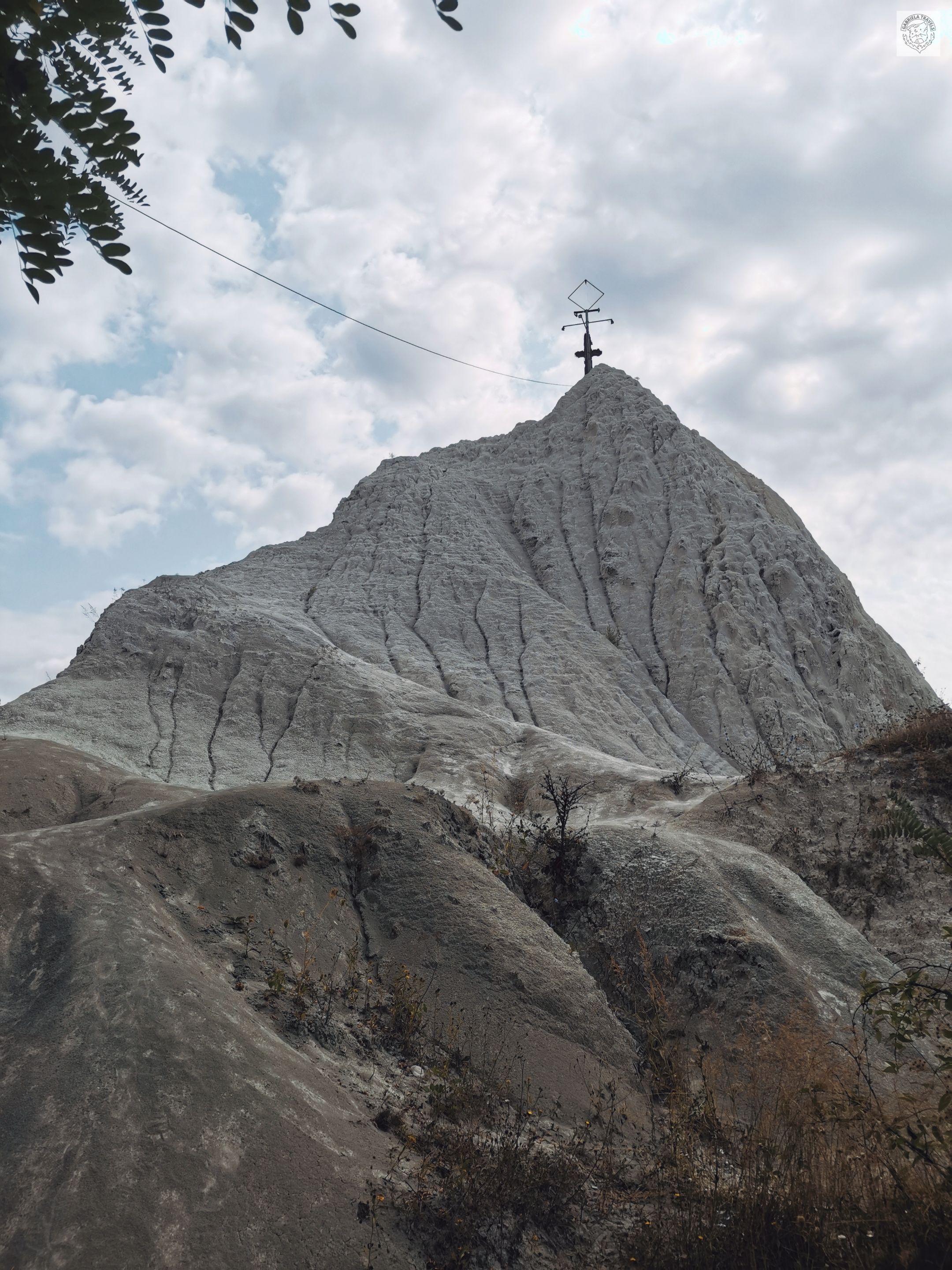
There were some road signs mentioning about some mysterious mountains made entirely of salt which were also in the village we were crossing but which we couldn't find any indication or details about what way we should follow in order to reach them, so at first, we thought it's what we were having in front of us, but after a little bit more research, we found out that the big white rock you see in the pictures is called La Grunj or Grunjul de la Mânzălești and it represents a natural monument that is composed of many layers of various compositions.
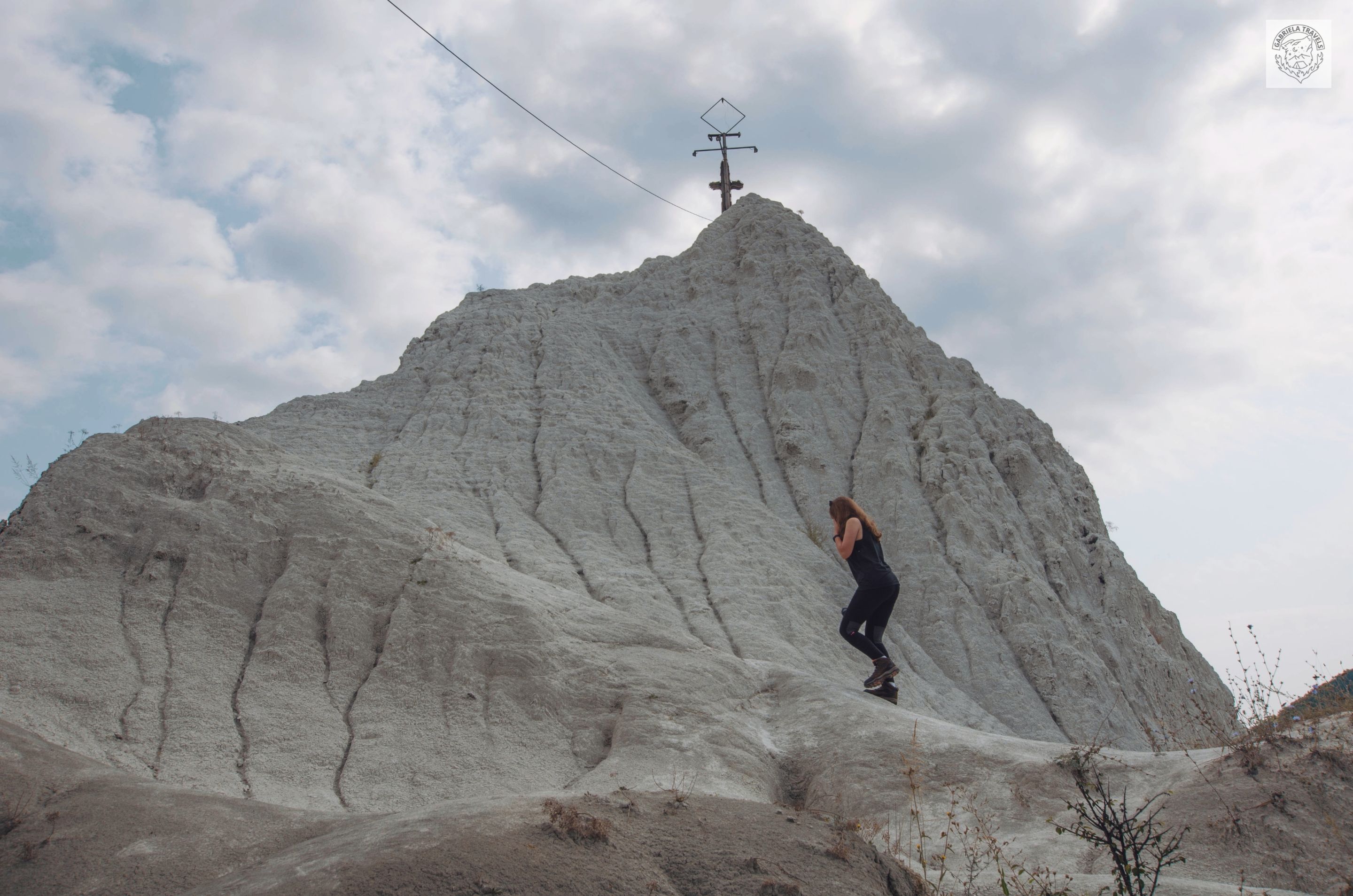
I have no idea if you ever get that kind of feeling while being on an adventure and you are completely surprised by nature with a different thing to visit than these you had on your list and you simply start running all over the place, but that's the way I felt and I simply couldn't keep my feets on the ground without wanting to climb the white rock right over and feel like being on top of the world, lol.
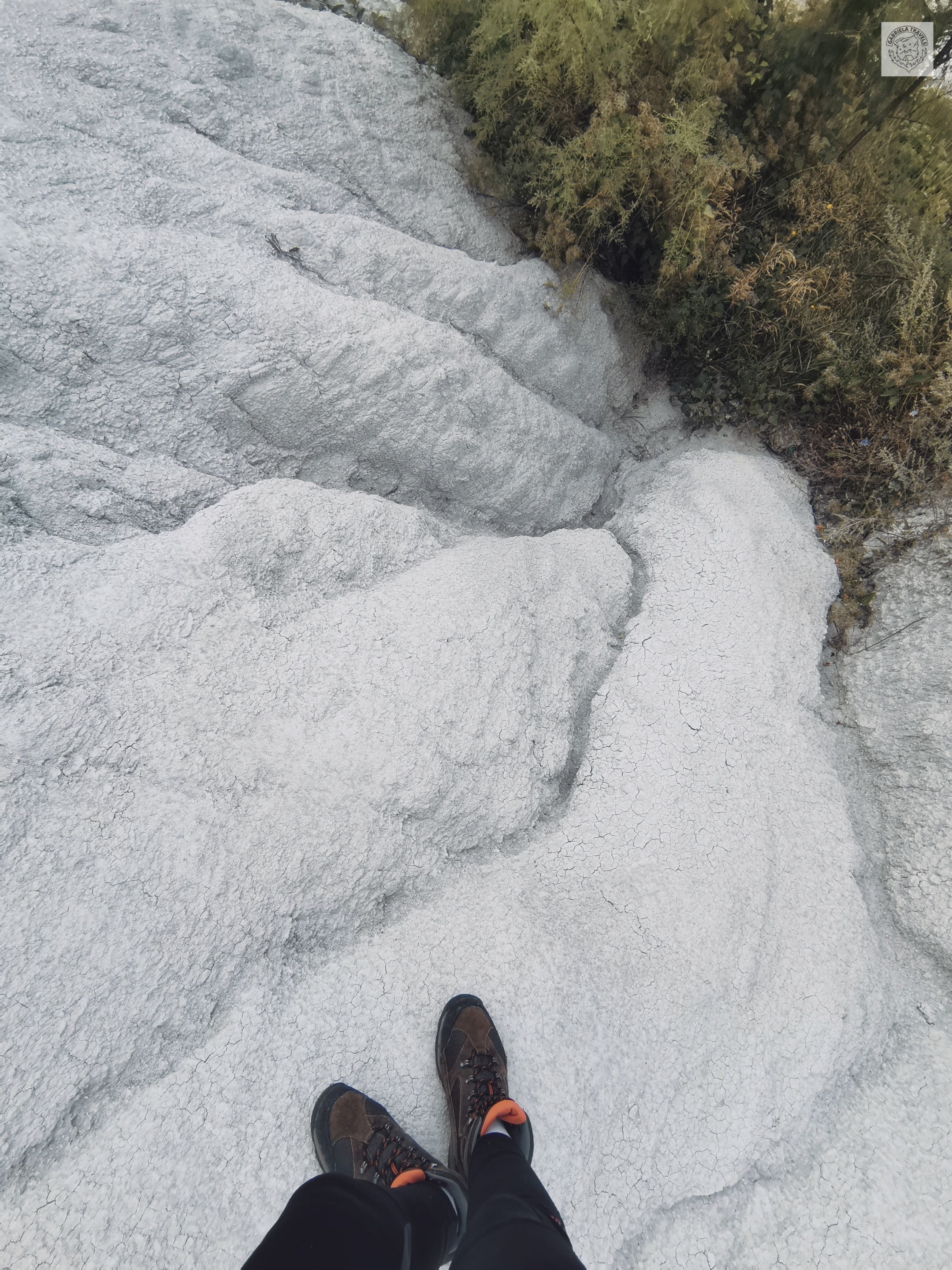
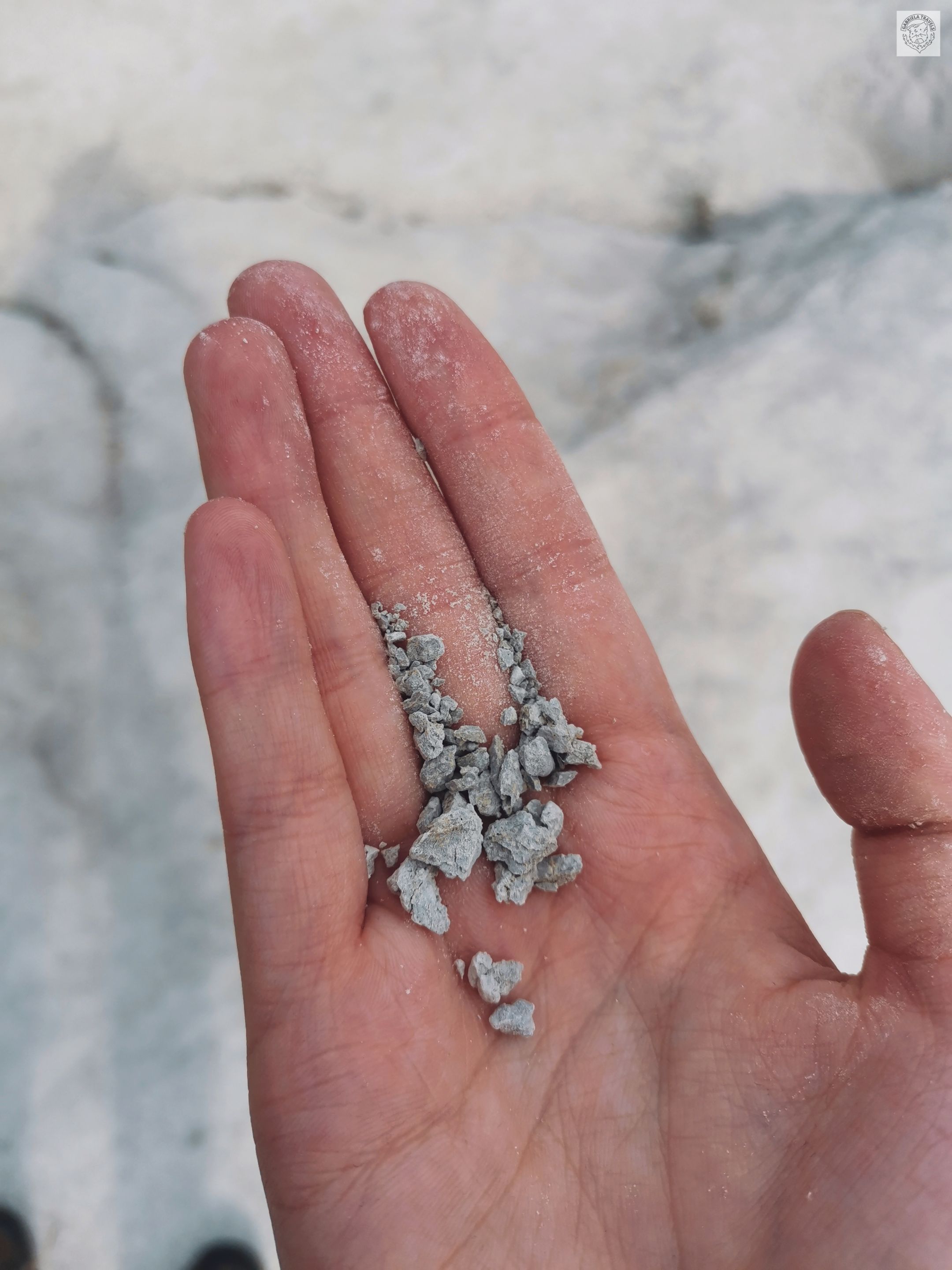
Do keep in mind though that the surface is pretty dusty and crumbly and that will come with the risk to slip over especially if you don't have some hiking boots, but as soon as you sort of become part of the mysterious white rock, you'll be able to touch its surface and even keep some of it as a memory when getting back home.
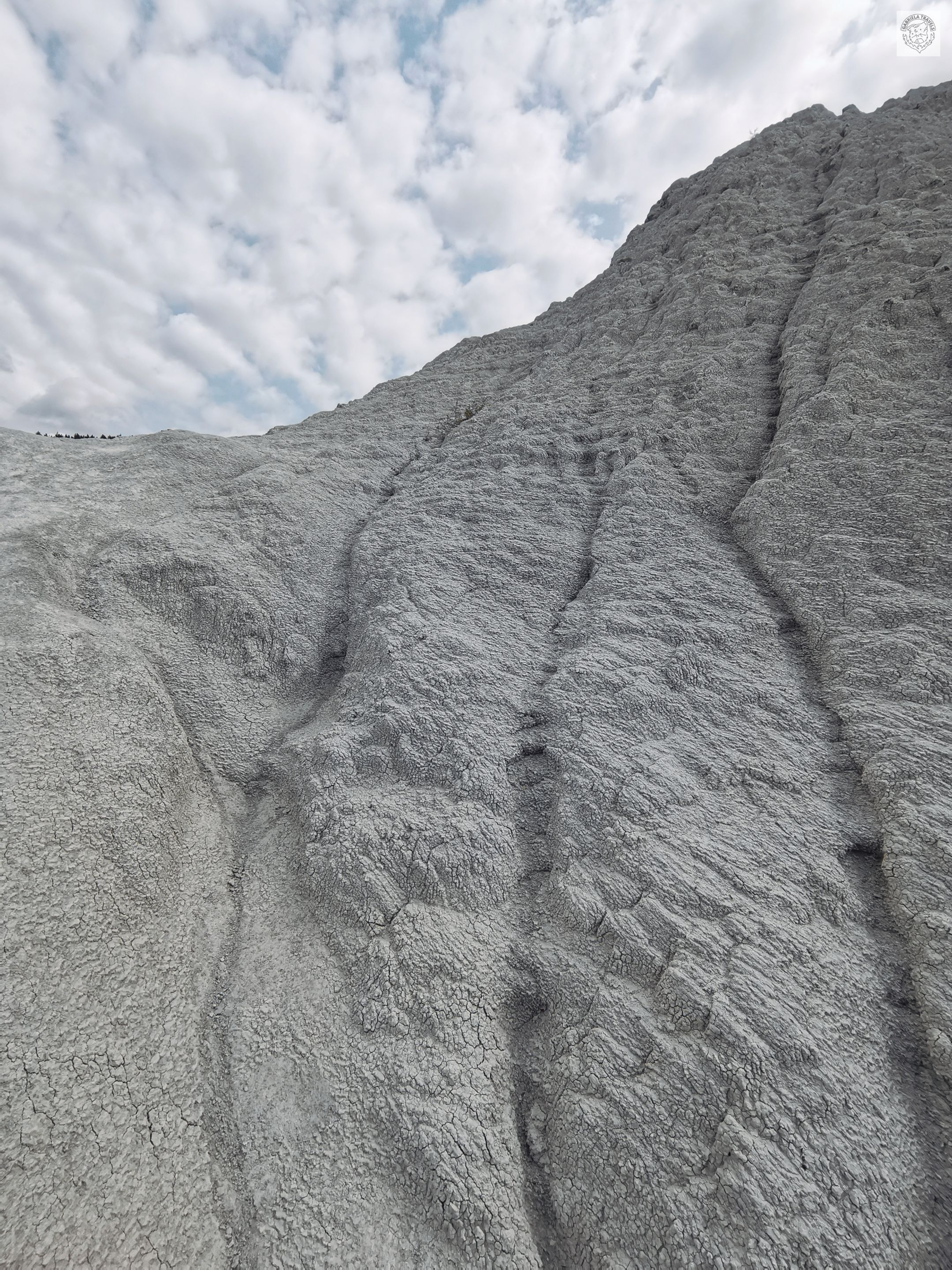
Anyway, a little bit before I said something about being a rock that's formed from many layers of different compositions, and that's because Grunjul de la Mânzălești is known as a witness of hydraulic and wind erosion composed of magmatic stones of different colours: white, grey, yellow; that are over 16 millions of years old.
All these types of stones are linked to each other through cineritic sheets and sandstones with an almost vertical position with micropediment appearance.
Now I know these are perhaps some very technical details that not everyone will understand but it's important to mention them because they do contribute on every person's knowledge and I absolutely love to learn something new from every place visited. If I would have the power to learn everything I can only by travelling and facing some of the most interesting creations of nature, I'd happily spend the rest of my life doing that.
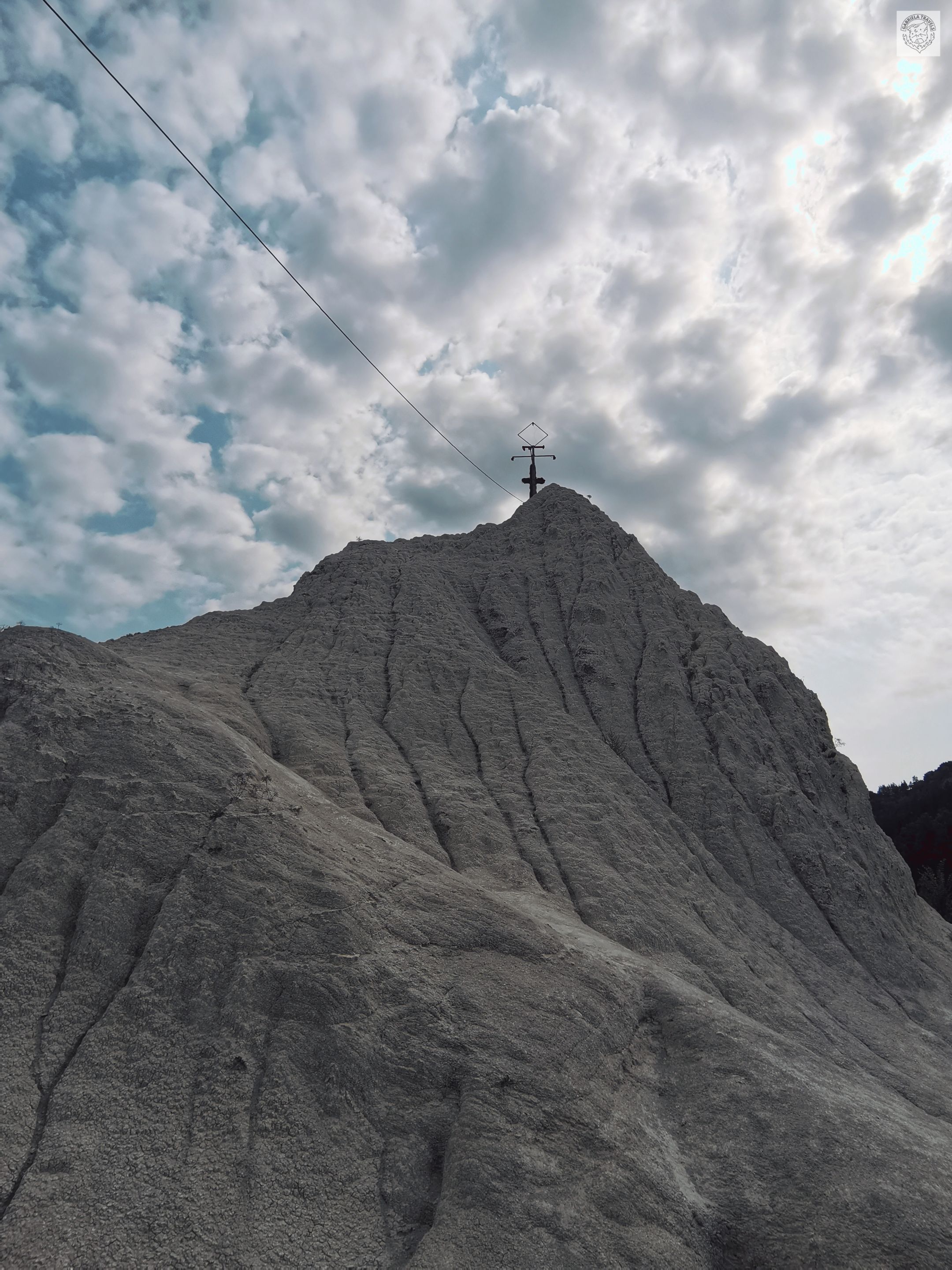
Anyway, while in some pictures The White Rock seems big and in some pretty little, do keep in mind that it's around 30 meters high and its diameter is no less impressive measuring 15 meters.
The whole formation is ending with a strange cross that was fixed on top of it but which no one really knows its meaning or why it was left there, so that brings another touch of mystery to the sightseeing attraction that even though is so close to the street, not too many people know about it.
 |  |
|---|
Click on the images to see them in full resolution
After many types of research and analyses made by the geologists, they came to the conclusion that Grunjul de la Mânzălești was formed in the same period when the Carpathian mountains were 'born' that are crossing Romania, Serbia, Ukraine, Hungary, Slovakia, Czech Republic, Poland and Austria.
Another interesting piece of information is given by one of the most important tourist guides from Buzau who says that even though many people believe we are talking about a stone composed of salt, it's actually made of volcanic ash and it represents the bottom of the Tethys sea where it used to be an underground volcano.
I keep saying that we are talking about a mysterious place because even though we've seen hundreds of beautiful locations in Romania, there was nothing like The White Rock from the attached pictures which can be both weird and interesting at the same time.
Though, as much as it survived during the millions of years since it was formed, as fast it seems like losing its shape and slowly getting deteriorated over the time because it was named as the symbol of the village and people started getting all kinds of small businesses around it in forms of booth that sell souvenirs and drinks but there is also this traditional dance called "horă" which is organized in the days of celebration.
 |  |
|---|
Click on the images to see them in full resolution
When we visited The White Rock though, we haven't seen any of the things mentioned above which I've read about on the internet so hopefully the locals are aware of the risks the natural monument is being subject of and do take care more of it so people get to see it even in a few hundreds of years from now.
I've never been to Brazil but this monument sort of reminds me of Copa Cabana from Brazil the single difference being the colour and what the rock is composed of. Don't you think so? 😃
Anyway, Grunjul de la Mânzălești is placed right next to the main road and it actually represents the intersection of Slănic and Jgheab streams with three roads, being located in Lopătari which is a village just 50 km away from the main city of the area, Buzau.
In order to reach The White Rock you should come from Slănic Valley that you can reach by following the national road DN2 which starts from the European road E85 and then get on the county road DJ203K. As a better landmark, here's the villages you should get through to meet the unique formation we've seen, Beceni – Vintilă Vodă – Mânzălești – Lopătari.
SEE YOU IN THE NEXT TRIP! 🗾
All rights reserved.
FIND ME ON:
↪ Blog: http://gabrielastravels.wordpress.com/
↪ Fiverr: https://www.fiverr.com/gabrielatv/
↪ YouTube: https://www.youtube.com/gabiivdesign
↪ Instagram: https://www.instagram.com/GabrielaTravels/
↪ TikTok: https://tiktok.com/@gabrielastravels/
↪ Discord: GabrielaTravels#0104
↪ Facebook: https://www.facebook.com/gabrielaistraveling/
↪ Twitter: https://twitter.com/GabrielaTravels
↪ PayPal/Contact: gabriela.valceanu19@gmail.com