
Saint Paul might have been apostolus gentium, but he didn't exactly have his sea legs. He shipwrecked, for instance, in St. Paul's Bay on Malta (talk about a stroke of luck, shipwrecking in a bay named after yourself, huh?), where his nautical escapades are commemorated to this day. And on Tabarca, a mere anchor's toss from the Spanish coast, rumor has it he made landfall... But why would he do that? The island is tiny, the smallest permanently inhabited one in Spain. And back then, it's highly likely no one lived there. Except for the birds. Did Paul decide to stash a secret message in a bottle here for the Barbary corsairs who moved in a few centuries later? Though to be fair, they would have probably expected a genie in a bottle rather than holy words...


Thanks to the efforts of Muslim pirates and slavers, the Island of Saint Paul gradually became the Flat Island (no body shaming here!) and eventually Tabarca. In honor of a city in Tunisia. The days of pirates are long gone, and human trafficking is off the menu. Trust me, I asked in one of the restaurants. So, if any traps await you now, they're strictly the tourist kind. Boats shuttle back and forth between Alicante and the tiny port on the north side of the island from dawn till dusk, and the island village has all the splendor and misery of a Potemkin-style historical village. Praise be to Instagram!


The island looks a bit like a peanut shell. The smaller lobe is the village. And the bigger one, well, that’s significantly more interesting. You’ll find beaches there that, even in high season, are perhaps a little quieter than the rest. Rare water birds nest here, and just sixty years ago, you could have even spotted skittish Mediterranean monk seals. But much like actual monks, monk seals don't appreciate being disturbed during their beachside meditations...


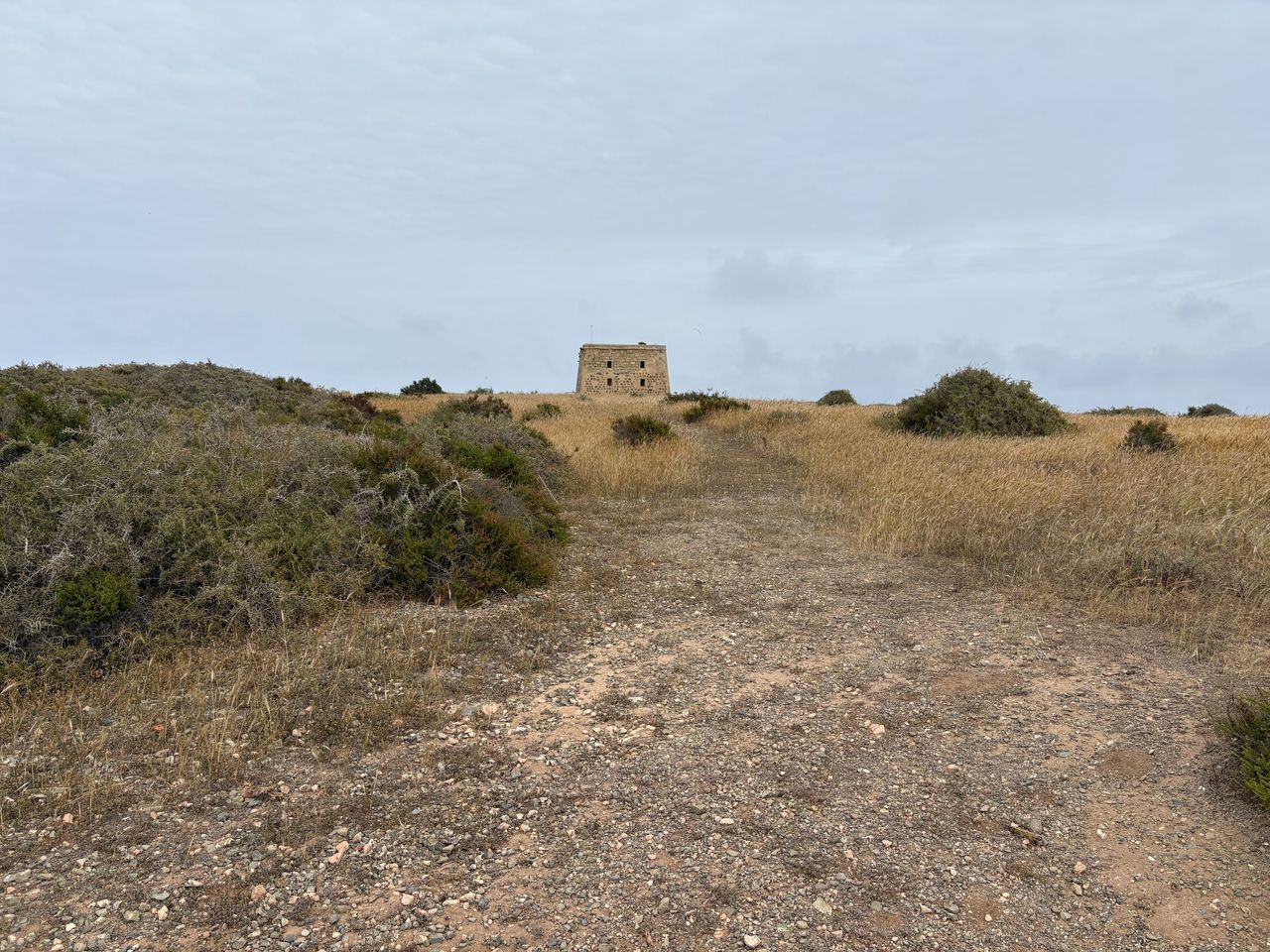
But my love and I were drawn more to human creations. Albeit the less flashy ones. Picking up trash along the way (I'll confess without the need for torture that it was only here and there, just so we wouldn’t miss the boat back), we ventured to the most remote end of the peanut shell. We couldn't care less about the Torre de San José, an 18th-century fortress. The Mediterranean is full of those. Nor the neoclassical lighthouse from the mid-19th century.



At the very end of the island, as far away as possible, lies a modest cemetery. Perhaps tucked away so the dead wouldn't remind the living of their mortality. Memento mori is not welcome here. It’s only a hundred years old, but it sits on the site of the original graveyard. And resting within it are hundreds of ancestors and predecessors of today's islanders. Generations of those who paved the way for modern Tabarcans. A place far more authentic than the village itself.


Surrounded by a massive wall to ensure the dead had peace even in wartime, the cemetery was, unfortunately, closed. The islanders will practically let you into their bedrooms if you pay well enough, but not into their family history. And rightly so! What business is it of anyone else's?

