

Translated from Lithuanian with Google.com
The monasteries on the island of Crete deserve special attention, even if you don’t consider yourself a particularly religious person. Today I'd like to tell you about a few amazing places we visited on our own. All those holy places are located on the island of Crete.
Kretos salos vienuolynai nusipelno ypatingo dėmesio, net jei nelaikote savęs itin religingu žmogumi. Šiandien norėčiau papasakoti apie keletą nuostabių vietų, kurias aplankėme savarankiškai. Visos šios šventos vietos yra Kretos saloje.>


The Monastery of Preveli has a rich history and is known for the monks who actively participated in many of the Cretan national battles for independence. This is why Cretans so revere this monastery. The monastery is located 37 km from the city of Rethymno. The entire route to it is a very steep climb. Still, the monastery's historical significance, the majesty of nature, the beauty of the mountains and gorges, the picturesque rivers, and the Libyan Sea compensate for this steep climb.
Prevelio vienuolynas turi turtingą istoriją ir yra žinomas dėl vienuolių, kurie aktyviai dalyvavo daugelyje Kretos nacionalinių kovų už nepriklausomybę. Štai kodėl kretiečiai taip gerbia šį vienuolyną. Vienuolynas yra 37 km nuo Retimno miesto. Visas kelias iki jo yra labai status kopimas. Vis dėlto vienuolyno istorinė reikšmė, gamtos didybė, kalnų ir tarpeklių grožis, vaizdingos upės ir Libijos jūra kompensuoja šį status kopimą.>

The monastery consists of two complexes. After a 20-minute steep climb up the mountain by car, you'll notice ancient buildings - the ruins of the Lower Monastery of Preveli. Unfortunately, this monastery was repeatedly destroyed and looted, but some ancient buildings dating back to 1594 are still visible. In our times, the complex was restored and opened to the public.
Vienuolyną sudaro du kompleksai. Po 20 minučių trukmės stataus kopimo automobiliu į kalną pamatysite senovinius pastatus – Žemutinio Preveli vienuolyno griuvėsius. Deja, šis vienuolynas buvo ne kartą griaunamas ir plėšiamas, tačiau kai kurie senoviniai pastatai, datuojami 1594 m., vis dar matomi. Mūsų laikais kompleksas buvo restauruotas ir atidarytas visuomenei.>


The upper complex consists of the functioning central church of St. John the Theologian. It was built in the 17th century, then destroyed and rebuilt. The monastery possesses the Miraculous Cross, a famous Cretan relic believed to cure many ailments, especially eye diseases. Photography is prohibited in the church and museum. The monastery is open to visitors only in the morning, and there is an entrance fee. Remember, it's a functioning monastery, so all women not wearing skirts will receive a veil at the entrance to cover their legs.
Viršutinį kompleksą sudaro veikianti centrinė Šv. Jono Teologo bažnyčia. Ji buvo pastatyta XVII a., vėliau sugriauta ir vėl atstatyta. Vienuolyne saugomas Stebuklingasis kryžius – garsi Kretos relikvija, kuri, kaip manoma, išgydo daugelį negalavimų, ypač akių ligų. Fotografuoti bažnyčioje ir muziejuje draudžiama. Vienuolynas lankytojams atviras tik ryte, įėjimas mokamas. Atminkite, kad tai veikiantis vienuolynas, todėl visos moterys, nedėvinčios sijonų, prie įėjimo gaus šydą, dengiantį kojas.>


Currently, only two monks live permanently at Preveli Monastery, but the monastery grounds are immaculately maintained, likely thanks to the staff. This place is unforgettable - it boasts breathtaking natural beauty, a sacred spirit, and historical significance. How wonderful it is that we didn't just drive past such a wonderful place, but visited it, seeing it with our own eyes and feeling the awe - a sensation that sent shivers down our spines - with every cell of our bodies.


Šiuo metu Preveli vienuolyne nuolat gyvena tik du vienuoliai, tačiau vienuolyno teritorija nepriekaištingai prižiūrima, tikriausiai personalo dėka. Ši vieta nepamirštama – ji gali pasigirti kvapą gniaužiančiu gamtos grožiu, šventa dvasia ir istorine reikšme. Kaip nuostabu, kad ne tik pravažiavome pro tokią nuostabią vietą, bet ir aplankėme ją, pamatėme ją savo akimis ir pajutome baimę – jausmą, kuris per nugarą nubėgo šiurpuliukai – kiekviena kūno ląstele.>

The monastery museum boasts a rich collection of icons, manuscripts, books, engravings, and religious vestments. But we didn't find it very engaging. We wanted to stroll around the courtyard, caress the old walls, and admire the vaults and flowers.
Vienuolyno muziejuje gausu ikonų, rankraščių, knygų, graviūrų ir religinių drabužių kolekcijos. Tačiau mums tai neatrodė labai įdomu. Norėjome pasivaikščioti po kiemą, paglostyti senas sienas ir pasigrožėti skliautais bei gėlėmis.>

Now, about one more holy place we visited on the island. The Monastery of St. George is located not far from the road. Having rented a car, we drove to the east coast of Crete, to Vai Beach and the surrounding area. Along the way, we stopped in Hersonissos, filled up at a gas station, and headed along the highway. We didn't drive long, about 20 km, when we saw a monastery on the right. Naturally, we didn't pass it by - we went inside. There's a beautiful entrance. And anyway, there's no one else on the premises, just signs telling us where we shouldn't go and what we shouldn't touch.
Dabar apie dar vieną šventą vietą saloje, kurią aplankėme. Netoli kelio yra Šv. Jurgio vienuolynas. Išsinuomoję automobilį, nuvažiavome į rytinę Kretos pakrantę, į Vai paplūdimį ir apylinkes. Pakeliui sustojome Chersonise, pasipildėme degalų degalinėje ir patraukėme greitkeliu. Neilgai važiavome, apie 20 km, kai dešinėje pamatėme vienuolyną. Žinoma, jo nepraėjome – užėjome vidun. Ten gražus įėjimas. Ir šiaip teritorijoje daugiau nieko nėra, tik ženklai, nurodantys, kur negalima eiti ir ko negalima liesti.>
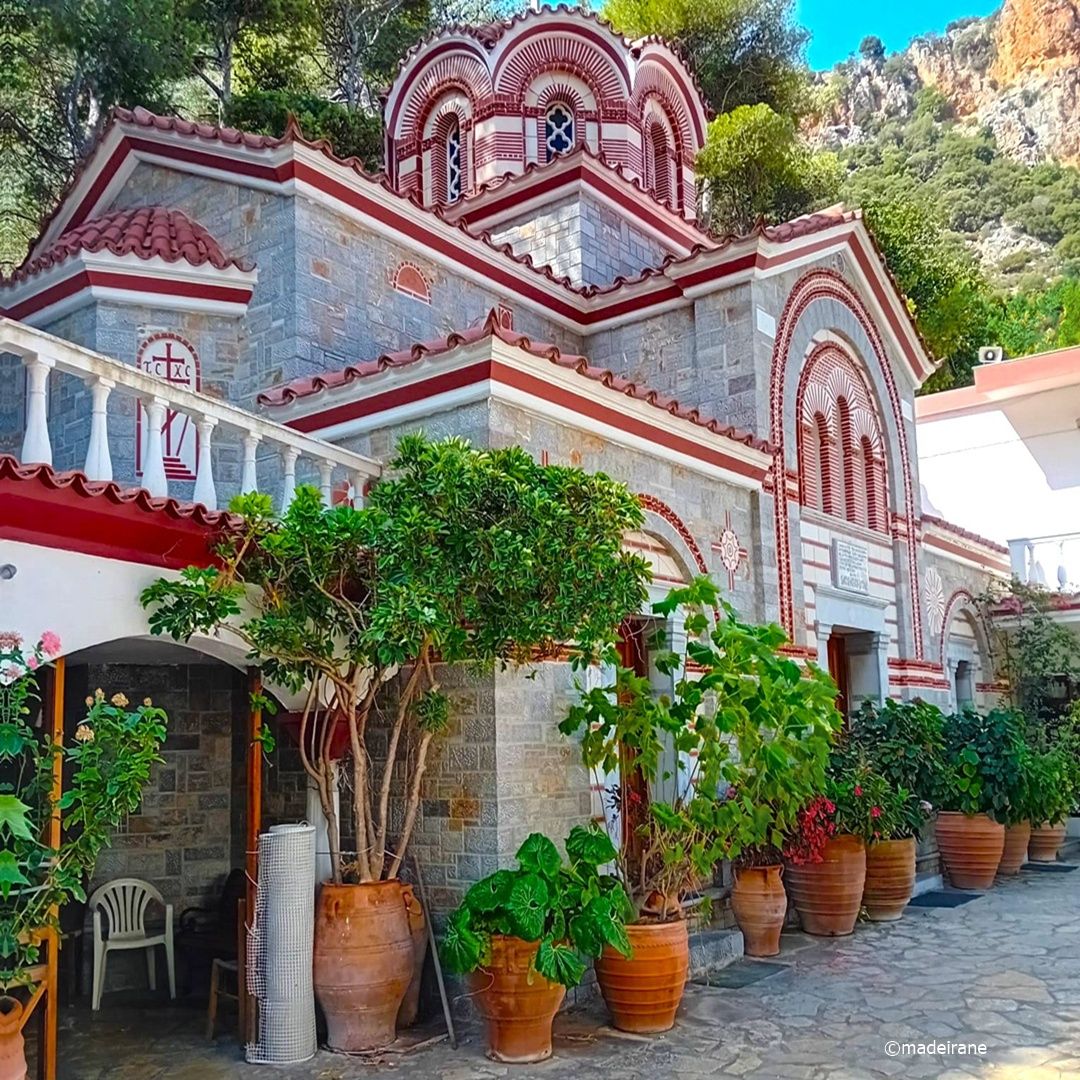

We left the car and walked up to the entrance - a very pretty one. The monastery is small, built in the Venetian architectural style. Our attention was attracted by potted flowers with all kinds of cacti, and what cacti! Soft, creeping, climbing...
Palikome automobilį ir nuėjome iki įėjimo – labai gražaus. Vienuolynas nedidelis, pastatytas Venecijos architektūros stiliumi. Mūsų dėmesį patraukė vazoninės gėlės su visokiais kaktusais, ir kokie jie! Minkšti, šliaužiantys, vijokliniai...>

There's a small chapel where people light candles. The exit from the chapel leads to a gallery - a small, charming courtyard. We could not go beyond the fence - it's the monks' and priests' territory. But actually, there's nothing to see here for long. It's simply a beautiful and picturesque place.
Yra maža koplyčia, kurioje žmonės uždega žvakes. Išėjimas iš koplyčios veda į galeriją – nedidelį, žavų kiemelį. Negalėjome peržengti tvoros – tai vienuolių ir kunigų teritorija. Tačiau iš tikrųjų čia ilgai nėra ko žiūrėti. Tai tiesiog graži ir vaizdinga vieta.>

The mountain views are amazing. You can see both the bell tower and the small monastery church. Below is the road and the mountain gorge. In the distance, you can see a patch of sea. The monastery territory is very green. Palm trees, cacti, and some grass that reminds me of wormwood grow in pots here. And this plant, against the background of the mountains, impressed me with its harmonious and peaceful appearance.
Kalnų vaizdai nuostabūs. Matosi ir varpinė, ir maža vienuolyno bažnyčia. Apačioje – kelias ir kalnų tarpeklis. Tolumoje matyti jūros lopinėlis. Vienuolyno teritorija labai žalia. Čia vazonuose auga palmės, kaktusai ir kažkokia žolė, primenanti pelyną. O šis augalas kalnų fone mane sužavėjo savo harmoninga ir ramia išvaizda.>


Behind the chapel is a gallery covered in flowers. To the right is a small church. It's open and can be visited. It's believed to have been built in the 12th century, making it the monastery's oldest building. The other buildings are practically contemporary - 20th-century, pseudo-Byzantine style. And although some (including my husband) believe that modern monasteries have no historical value, I really like this style and the fact that the monastery was built at all.
Už koplyčios yra gėlėmis nuklota galerija. Dešinėje yra maža bažnyčia. Ji atvira ir ją galima aplankyti. Manoma, kad ji pastatyta XII amžiuje – tai seniausias vienuolyno pastatas. Kiti pastatai yra praktiškai šiuolaikiniai – XX amžiaus, pseudobizantinio stiliaus. Ir nors kai kurie (įskaitant mano vyrą) mano, kad šiuolaikiniai vienuolynai neturi jokios istorinės vertės, man labai patinka šis stilius ir tai, kad vienuolynas apskritai buvo pastatytas.>


I can't resist posting a few photos - how beautifully everything is decorated with potted plants! And there aren't any particular blooms; everything is subdued, surrounded by tranquil greenery, very dignified.
Negaliu atsispirti pagundai įkelti keletą nuotraukų – kaip gražiai viskas papuošta vazoniniais augalais! Ir nėra jokių ypatingų žiedų; viskas santūru, apsupta ramios žalumos, labai oru.>


The inside of the church is very simple and attractive. The icon of St. George the Victorious is hung with silver icons. I don't know the significance. Incidentally, this is a copy, and the miraculous icon itself is located in the monastery's holy of holies - the church, which is closed to the public.
Bažnyčios vidus labai paprastas ir patrauklus. Šv. Jurgio Nugalėtojo ikona kabo sidabrinėse ikonose. Nežinau jų reikšmės. Beje, tai kopija, o pati stebuklingoji ikona yra vienuolyno švenčiausiojoje – bažnyčioje, kuri uždaryta visuomenei.>

We continue walking through the truly breathtaking grounds. Mere mortals don't even bother walking through this gallery - it's off-limits! The monastery must have some privacy, away from the ubiquitous tourists! Well, we don't need to go there; we'll go back and look at the water reservoir with holy water.
Toliau einame per išties kvapą gniaužiančią teritoriją. Paprasti mirtingieji net nesivargina vaikščioti po šią galeriją – ji draudžiama! Vienuolyne turi būti šiek tiek privatumo, atokiau nuo visur esančių turistų! Na, mums ten nereikia eiti; grįšime ir apžiūrėsime vandens rezervuarą su šventintu vandeniu.>


We looked at the monastery church, which is also closed to us. Incidentally, it's here that the miraculous icon of St. George of Selinaris is kept, moved to the small church once a year. We'll also admire the monastery bell tower. I can imagine the ringing of the bells echoing through the gorge, and the monastery is located in the Selinaris Gorge!
Apžiūrėjome vienuolyno bažnyčią, kuri mums taip pat uždaryta. Beje, būtent čia saugoma stebuklingoji Šv. Jurgio Selinariečio ikona, kartą per metus perkeliama į mažąją bažnytėlę. Taip pat pasigrožėsime vienuolyno varpine. Galiu įsivaizduoti varpų skambėjimą, aidintį tarpeklyje, o vienuolynas yra Selinaris tarpeklyje!>


Across from the monastery, on the other side of the gorge, is the tomb of the hermit who founded it. The cross is visible from the monastery, but unfortunately, there's no photograph available. On the second floor, in the galleries, there's a museum with icons, church books, and more, for connoisseurs and enthusiasts, and most importantly, for those who understand. The monastery also has a church shop with the usual church goods.
Priešais vienuolyną, kitoje tarpeklio pusėje, yra jį įkūrusio atsiskyrėlio kapas. Kryžius matomas iš vienuolyno, bet, deja, nėra jo nuotraukos. Antrame aukšte, galerijose, yra muziejus su ikonomis, bažnytinėmis knygomis ir kitais eksponatais. Žinovams ir entuziastams, o svarbiausia – tiems, kurie supranta. Vienuolyne taip pat yra bažnyčios parduotuvė su įprastomis bažnytinėmis prekėmis.>


I really liked the monastery - very beautiful and quiet. It's a lovely place, don't pass it by, I highly recommend it!
Man labai patiko vienuolynas – labai gražus ir ramus. Tai nuostabi vieta, nepraeikite pro šalį, labai rekomenduoju!>

💝💝💝💝💝💝💝💝💝💝

Photos are taken by me.
© 2026