

Despite the pleasant acquaintance with the "Underwater Odyssey" and the books of the explorer of the World Ocean and the inventor of aqualung Jacques-Yves Cousteau, I was not particularly eager to see the "land" place of his work - the Oceanographic Museum of Monaco. Both on the territory of the principality itself and on the territory of the Cote d'Azur of its "neighbor" France, I identified many other objects and places that were more significant to me than this one. Therefore, the question of visiting the Oceanographic Museum was decided as follows: if we are lucky to get there, then it’s good, but if not - I won’t be upset.

Having got off at the Place d'Armes stop, we again climbed to the top of the cliff in Monaco-Ville to get acquainted with the famous museum, which this small-format European state is proud of.

A beautiful building, which (if you do not look at the billboards and signs hanging on it) can easily be mistaken for a princely palace, was designed by the architect P. Delefortri at the end of the 19th century. However, due to the desire of the Principality to preserve the nearby St. Martin's Gardens and the architectural values of the Old Town, adjustments were made to the project, as a result of which construction lasted until 1910. And in 1957, the famous scientist Jacques-Yves Cousteau, who managed this post for forty years - until his death, became the head of the museum.

The building houses the Institute of Oceanography and the Aquarium with six thousand specimens of marine life: fish, invertebrates, corals.
Prince Albert I of Monaco, nicknamed the "Prince of the Sea" for his passion for scientific research and sea expeditions, was at the origin of the Institute of Oceanography and the Oceanographic Museum. In principle, you can save money if you buy combined tickets for visiting the Princely Palace and the Oceanographic Museum.

While getting to know Monaco in general gave us great pleasure, the museum turned out to be the only place in the principality with which we managed to “make friends” only partially.
Due to its venerable age and cramped territorial conditions (there is simply nowhere to expand: remember the size and topography of the country), the museum literally chokes on legions of tourists. If in the halls where various equipment for studying the ocean or collections collected during sea expeditions are exhibited, we could move around without traffic jams, and no one breathed down our necks, then the Aquarium, located in the basement of the museum, resembled a vestibule of an electric train on a Friday evening at the height of the summer season. The Aquarium was unbearably crowded, noisy and stuffy.

Getting acquainted with the museum, conceived by its creators as the "Temple of the Sea", we could not help but appreciate the elegant decor of its halls. The themes of floor mosaics, wall panels, paintings and chandeliers are naturally connected with the seas and the oceans.


As I already said, when heading to the Aquarium, stock up on iron patience. You will be able to get close to the places with the inhabitants of the seabed that you are interested in only on the eighth-ninth-tenth attempt, if the crowd pushing behind you does not take you to another place.

So «walk in the Aquarium» - the wording is absolutely incorrect. In this case, it is more correct to use other verbs and expressions. Almost all the time of our stay in the Aquarium, a multi-voiced children's choir sounded: if one baby starts crying, dozens of others will immediately support him. Heat at thirty-five degrees plus a rich tourist program invented by parents are quite capable of leading to such results.


Glass tunnels, as is done in oceanariums of the new generation, do not exist in Monaco. "Living exhibits" are placed either in a large-sized "container" that needs to be walked around in a circle, or in aquarium niches. Therefore, this block of the Oceanographic Museum of the Principality is certainly inferior in terms of spectacle to its modern foreign counterparts.

However, the size of the existing collection, the scientific value and the appearance of the specimens included in it cannot fail to attract attention. Corals, by the way, are grown directly in the institute.

I note that the administration of the Aquarium of Monaco came up with a rather interesting action for visitors, aimed at protecting the "inhabitants" of the sea. Anyone can take custody (or, if you wish, “adopt”) a “character” they like from the list published on the museum’s website: any fish (including sharks), seahorses, an octopus or a turtle.


Under the terms of the action, the "guardian" comes up with a name for his pet and gets the right to free visits to him during the year. That is - the possibility of free admission to the museum. This pleasure, of course, is far from free and very expensive. So, for example, "guardianship" of a clown fish or a tulle apogon will cost 100 EUR, "adoption" of an octopus - 1000 EUR, sharks - 3000 EUR, and turtles - 5000 EUR.

Well, welcome, ladies and gentlemen. On the catwalk - underwater beauties from Monaco. Clown fish, angel fish, cardinal fish, arotrons, lionfish, surgeonfish, tangerine fish, royal grams and many, many others.

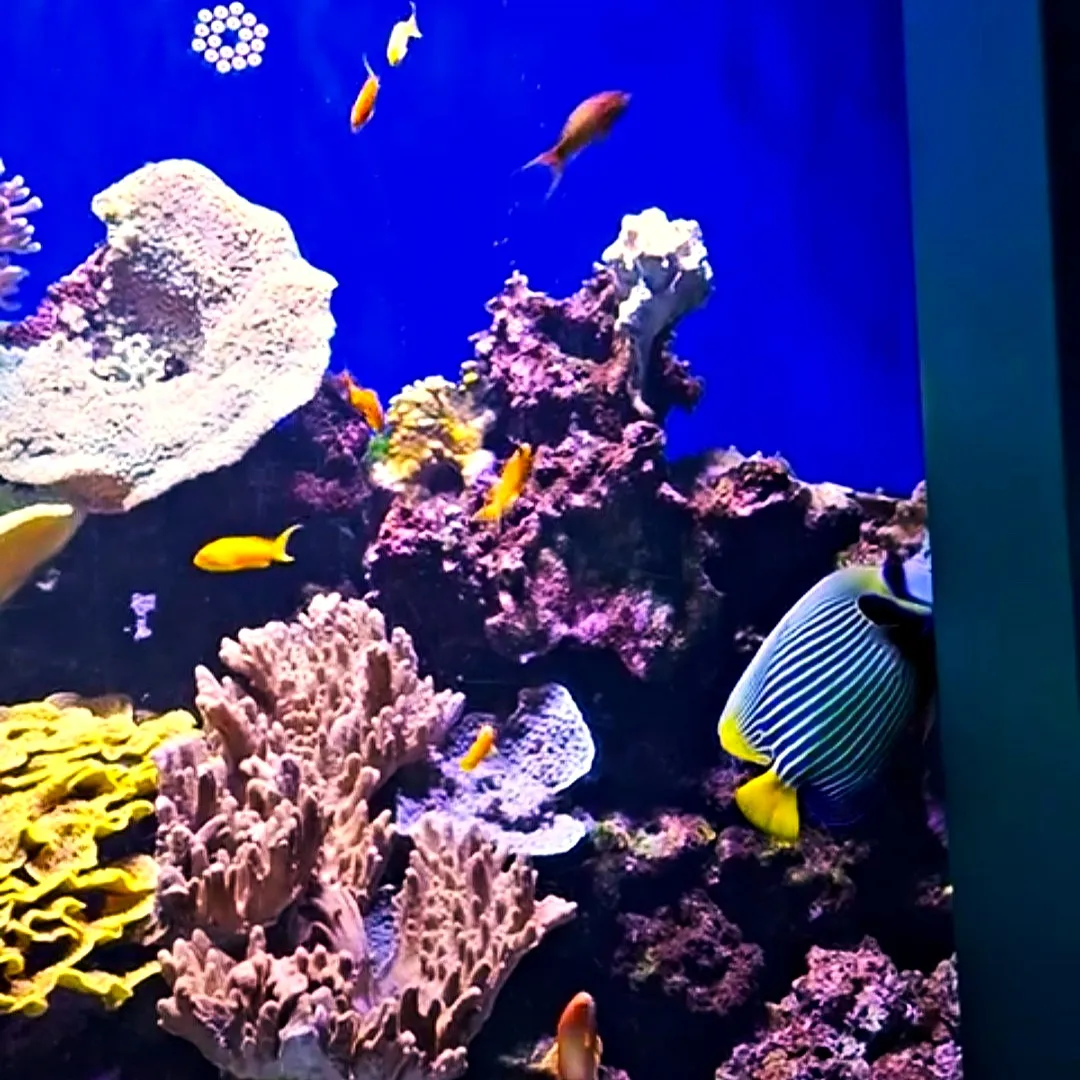
Trilingual information support in the Aquarium is certainly on top, but alas, it is unrealistic to read the text displayed on the screen because of the crowds, noise and children's crying. Not to mention the ability to capture something nicer because of the mass of people.

These cute orange and white babies are one of the varieties of clownfish:

This bristling important "lady" is a red lionfish:


Some Aquarium characters are smiling and energetic, others are thoughtful and self-absorbed:

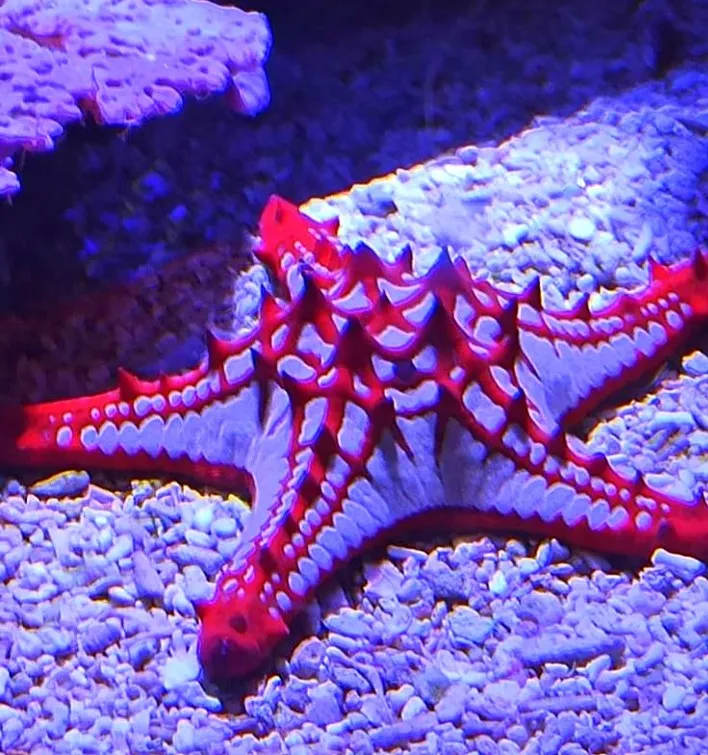
Someone is definitely bright, someone, on the contrary, is reservedly elegant or generally modest and inconspicuous.


Sharks swam past us at an increased rate. I wonder if they found "adoptive parents"?

Next came a company of cute seahorses. We wanted to stay around her a little longer, but the people “squeezed” us out of this sector.


I must say that the Aquarium hosts shows in the outdoor pool where you can stroke small live sharks and some other sea creatures, but under the circumstances described and because of my headache, my husband and I decided to refrain from participating in this action, and also from climbing to the roof.


Unfortunately, either because of fatigue or because of a headache, I did not find any exhibits related to the activities of Jacques-Yves Cousteau, director of the museum. And, to be honest, I have not found information about their availability anywhere. The fact is that Jacques-Yves Cousteau not only managed the museum, he, one might say, gave it a new and a stormy life after many years of desolation (the descendant of the deceased Albert I did not share the interests of his father, not to mention the two wars that "hit" on economy of the principality).


The Albert I Room is dedicated to the research career of the prince. It contains photographs, archival documents and reports on 28 expeditions organized by him in the period from 1885 to 1915, as well as models and elements of equipment of the ships on which he sailed. In the distance, in a niche, a laboratory is recreated, equipped on the prince's most "advanced" yacht - the Hirondel II. The fate of this yacht was tragic: after the death of Albert I, the ship was sold to filmmakers during a period of lack of money, and they, according to the script, blew it up during filming.

Skeletons and stuffed animals of various marine mammals are placed in the Hall of the Whale: whales, killer whales, narwhals.


The museum management took care of the most convenient, visual and accessible presentation of information about the exhibits, and visitors, as we have noticed, appreciated it:

In this museum's cabinet of curiosities, finds from expeditions, books, laboratory equipment, ship models, skeletons and dummies were demonstrated:


It is a pity that we were not able to capture the old types of spacesuits and, in particular the famous Klingert spacesuit, designed at the end of the 18th century and allowing you to stay for several minutes at a depth of 12 meters. And these rare exhibits certainly deserve attention.


I could feel all the beauty and richness of the Aquarium only at home: when viewing photos on the monitor. In reality, it was one of the most difficult objects in my travel experience. But despite all the inconveniences described, I do not regret visiting this interesting museum.

💝💝💝💝💝💝💝💝💝💝
