


There are as many as three sites from the UNSECO World Heritage List in Agra. Our paths lead us to one of them to Red Fort.
W Agrze znajdują się aż trzy obiekty z Listy Światowego Dziedzictwa UNSECO. Nasze drogi wiodą nas do jednego z nich do Red Fort.

Agra is one of India's greatest tourist attractions, but only because of its monuments. The city is big, unpleasant, dirty, full of smog, hustlers and crooks. Nevertheless, Red Fort is worth seeing.
Agra jest jedną z największych atrakcji turystycznych Indii, ale tylko ze względu na zabytki. Miasto bowiem jest duże, nieprzyjemne, brudne, pełne smogu, naciągaczy i cwaniaków. Niemniej Red Fort warty jest zobaczenia.

It is very easy to get to Agra from Delhi. It is located about 200 km from the Indian capital and has great bus and train connections. The journey takes approximately 3 hours.
Do Agry bardzo łatwo dostać się z Delhi. Jest oddalona około 200 km od stolicy Indii i ma świetne połączenia autobusowe oraz kolejowe. Podróż trwa około 3 godzin.
Agra Fort, or Red Fort in Agra
Agra Fort, lub Red Fort w Agrze

Agra Fort is one of the most beautiful Indian forts, it looks impressive from the outside, but according to many people it is not very interesting from the inside.
Agra Fort jest jednym z piękniejszych indyjskich fortów, wygląda imponująco z zewnątrz, ale według wielu osób nie jest zbyt ciekawy od środka.
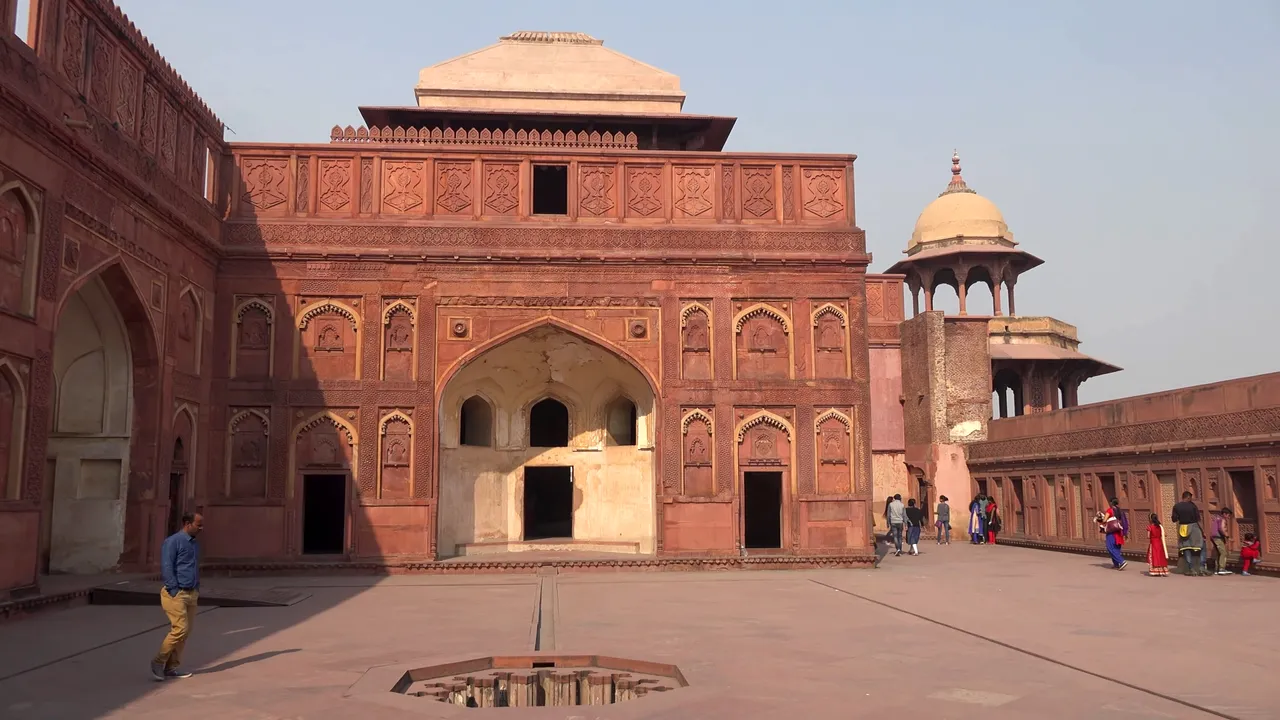

Red Fort is located on the Yamuna River and its origins date back to the 10th century. Initially, it was a fortress built of mud and bricks laid along the river.
Red Fort leży nad rzeką Yamuna i jego początki datowane są już na X wiek. Początkowo była to forteca zbudowana z błota i cegły ułożonych wzdłuż rzeki.

Its heyday and heyday fall on the reign of Akbar (1564-1570) of the Mughal dynasty. Then it was rebuilt. Originally, the building functioned as a fortress, but with time it was changed into a palace during the reign of Shah Jahan, who lived in the fortress and died there as a prisoner of his own son.
Lata świetności i rozkwit przypadają na czasy panowania Akbara (1564-1570) z dynastii Mogołów. Wtedy to został przebudowany. Pierwotnie budowla funkcjonowała jako forteca, ale z czasem zmieniona została na pałac za panowania Szahdżahana, który mieszkał w fortecy i tam też zmarł jako więzień własnego syna.

Beautiful architecture of the Red Fort
Piękna architektura Czerwonego Fortu


The architecture of the Mughal Palace reached its greatest boom during the construction of the Red Fort in Agra. The fort was built for many centuries under the rule of various rulers and, like many buildings in India, it is the work of many different artists and architects. Fort Agra is a structure built on the basis of red sandstone, from which, moreover, it got its name.
Architektura pałacu Mogołów osiągnęła największy rozkwit w okresie budowy Czerwonego Fortu w Agrze. Fort powstawał przez wiele stuleci pod panowaniem różnych władców i jak wiele budowli w Indiach jest dziełem wielu różnych artystów i architektów. Fort Agra to budowla powstała na bazie czerwonego piaskowca, od którego zresztą wzięła się jego nazwa.


The fortress is divided into residential and defensive parts. In the time of Akbar, outer walls were built. They have two gates: Amar Singh and Delhi.
Twierdza dzieli się na część mieszkalną i obronną. W czasach Akbara wybudowano mury zewnętrzne. Posiadają one dwie bramy: Amar Singh i Delhi.


The Delhi Gate is located to the west and was originally the main entrance, but nowadays it is the south gate or Amar Singh that is the entrance to the fort. The gates are surrounded by red sandstone and have characteristic towers.
Brama Delhi znajduje się na zachodzie i była pierwotnie głównym wejściem, ale w dzisiejszych czasach to brama południowa czyli Amar Singh stanowi wejście do fortu. Bramy otoczone są czerwonym piaskowcem i posiadają charakterystyczne wieże.


The interior of the fortress is largely empty. The exception are the residential buildings facing the river, built in the times of Shah Jahan. The earliest of these buildings, Jahangiri Mahal, was a quarters for women and has a predominantly Hindu character.
Wnętrze twierdzy jest w dużej mierze puste. Wyjątek stanowią zwrócone w stronę rzeki budynki mieszkalne zbudowane w czasach Szachdżahana. Najwcześniejsza z tych budowli - Jahangiri Mahal, była kwaterą dla kobiet i ma ma głównie hinduski charakter.


Akbar Mausoleum
Mauzoleum Akbara

Sikandara - grobowiec cesarza Wielkich Mogołów Akbara to idealnie symetryczna budowla położona w centrum ogrodu. Gdy się jej przyjrzeć, to jest to budowla bardziej hinduska niż muzułmańska.


It does not have a dome, and the walls of the mausoleum consist of large windows covered with openwork stone slabs. Sikandara may be a summary of the life philosophy of Akbar - a ruler whose main goal was to integrate the Mughal Empire.
Nie posiada kopuły, a ściany mauzoleum składają się z wielkich okien przysłoniętych kamiennymi ażurowymi płytami. Sikandara może być podsumowaniem filozofii życiowej Akbara – władcy, którego głównym celem była integracja Imperium Mogołów.


Each of the tiles decorating the walls of the tomb is a true masonry masterpiece. It is a great art to make such precise decorations in such difficult materials as sandstone and marble.
Każda z płyt zdobiących ściany grobowca jest prawdziwym arcydziełem kamieniarskiej. To wielka sztuka wykonać tak precyzyjne zdobienia w tak trudnych materiałach jakimi są piaskowiec i marmur.

Akbar's sarcophagus is hidden deep in the building, and its cenotaph is located on the highest terrace, under the dome of the sky.
Sarkofag Akbara ukryty jest w głębi budynku, a jego cenotaf umieszczono na najwyższym tarasie, pod kopułą nieboskłonu.

Itimat Ud Daulah (Baby Taj)
Itimat Ud Daulah (Baby Taj)


This is a 21 m side tomb, built in Agra for the vizier and ruler of the Mughal Jahangir.
To grobowiec o boku 21 m, zbudowany w Agrze dla wezyra i władcy Wielkich Mogołów Dżahangira.


White marble inlaid with precious stones such as onyx, topaz, azurite, jasper, carnelian and agate were used for the construction.
Do budowy wykorzystano biały marmur inkrustowany kamieniami szlachetnymi takimi jak onyks, topaz, azuryt, jaspis czy karneol i agat.

Enjoy 😉
