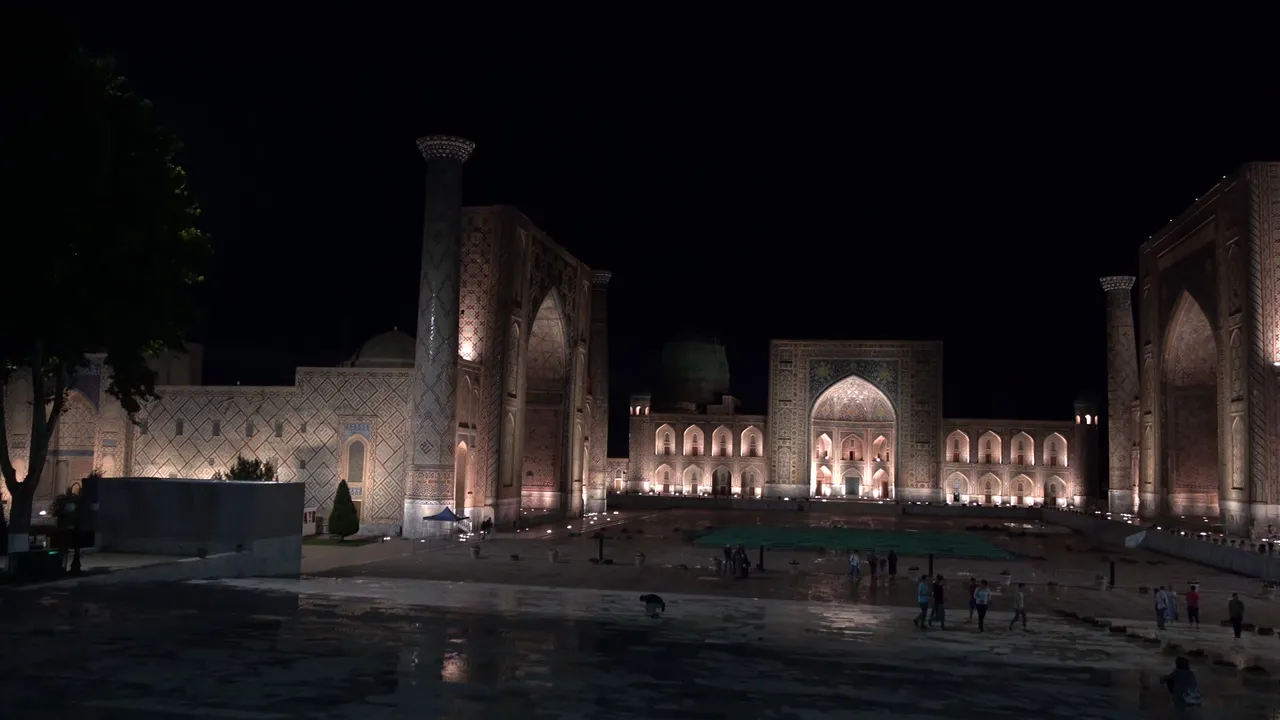
Samarkand is the heart of Uzbekistan, and a place that brings to mind the famous Silk Road. Walking the streets of Samarkand, you can feel the spirit of ancient times, because little has changed in the city itself for hundreds of years. Samarkand is one of the oldest cities in the world, dating back to 1500 BC
Samarkanda to serce Uzbekistanu, i miejsce które przywodzi na myśl osławiony Jedwabny Szlak. Spacerując uliczkami Samarkandy można poczuć ducha zamierzchłych czasów, bo w samym mieście od setek lat niewiele się zmieniło. Samarkanda to jedno z najstarszych miast na świecie, którego początki datowane są na 1500 r. p.n.e


Registan
Registan


The jewel in the crown is the wonderful Registan Square - an extremely noble, richly decorated public square from the times of Timur, known in Poland as Tamerlan. Similar places or influenced by Registan can be found in both Iran and India in Agra.
Perełką w koronie jest cudowny Plac Registan – niezwykle szlachetny, bogato zdobiony plac publiczny z czasów Timura, w Polsce znanego jako Tamerlan. Podobne miejsca lub pod wpływem Registanu można znaleźć zarówno w Iranie jak i w Indiach w Agrze.


Registan, the main square, is surrounded on three sides by madrassas - schools. On the west side there is Ulug Bega, completed in 1420. It is the most recognizable and, in fact, is the hallmark of Samarakanda. It is topped with two minarets. On the eastern side, there is the Szir Dar madrasah, which owes its name to the unique decorations on the facade with images of lions. The building was built in 1636. The last building on the north side is the Tillja Kari madrasah, the name of which refers to the beautiful intricate golden decorations inside the building.
Registan, czyli główny Plac otoczony jest z trzech stron medresami - szkołami. Po stronie zachodniej stoi Uług Bega, ukończona w 1420 roku. Jest najbardziej rozpoznawalna i w zasadzie jest wizytówką Samarakandy. Zwieńczona jest dwoma minaretami. Po stronie wschodniej znajduje się medresa Szir Dar, która swą nazwę zawdzięcza unikatowym zdobieniom na fasadzie z podobiznami lwów. Budynek powstał w 1636 roku. Ostatnia budowla po stronie północnej to medresa Tillja Kari, której nazwa nawiązuje do przepięknych misternych, złotych zdobień we wnętrzu budynku.

Ulughbek Madrasah
Ulugbek Madrasah


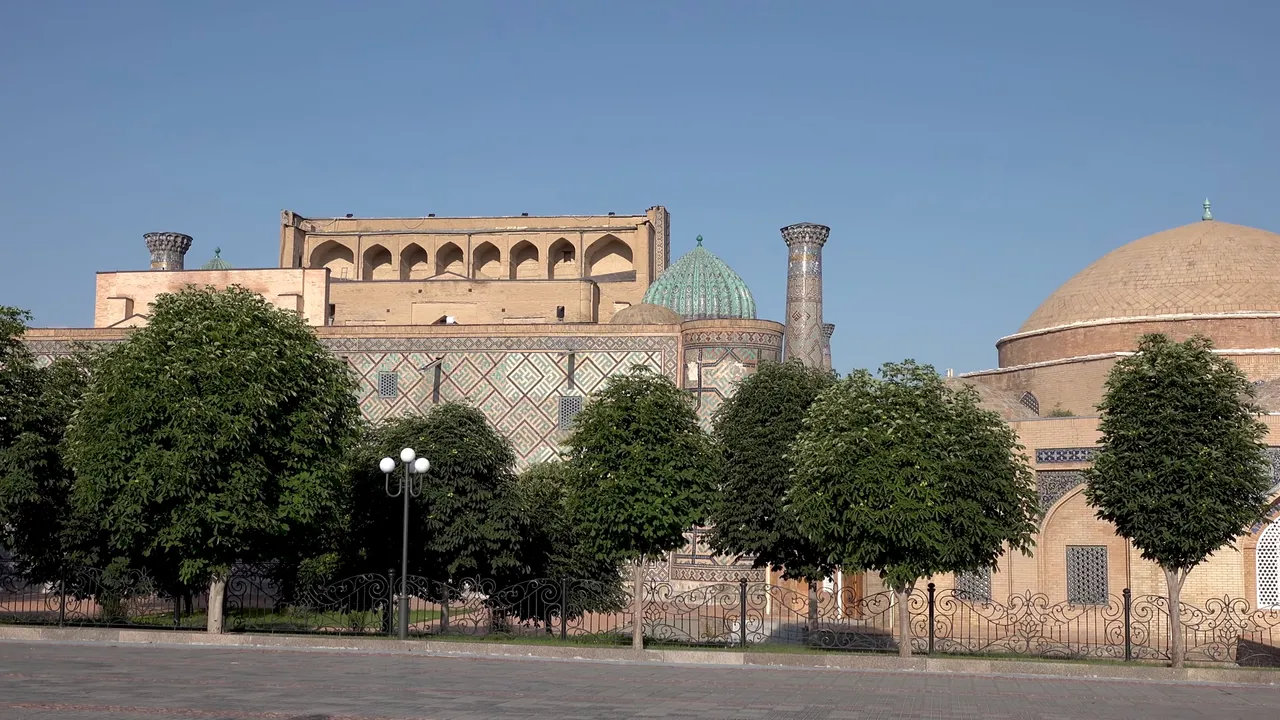
Due to its location, Samarkand attracted merchants, traders and travelers from all over the world. Over the centuries, the city was ruled by many nations. Persians, Mongols, Greeks, Turks, Chinese and Russians ruled. Even Marco Polo wrote about the beauty of this place.
Samarkanda z racji położenia przyciągała kupców, handlarzy oraz podróżników z całego świata. Miasto na przestrzeni wieków było pod panowaniem wielu nacji. Rządzili Persowie, Mongołowie, Grecy, Turcy Chińczycy czy Rosjanie. O pięknie tego miejsca pisał nawet Marco Polo.


The city was also affected by tragedies. In the 13th century, the city was heavily damaged by Genghis Khan, and almost fell, but in the 14th century it was rebuilt by Timur.
Miasta nie ominęły również tragedie. W XIII wieku miasto został mocno zniszczone przez Czyngis Chana, i prawie upadło, lecz w XIV wieku zostało odbudowane przez Timura.


The capital of Uzbekistan today is a cult place where beautiful architecture and art are mixed with religion and ethnic diversity. However, mainly Tajiks and Uzbeks live here, but you can also meet Russians, Azerbaijanis, Tatars, Armenians and Persians.
Dzisiejsza stolica Uzbekistanu, to kultowe dziś miejsce gdzie przepiękna architektura i sztuka miesza się religią i etniczną różnorodnością. Mieszkają tu jednak głównie Tadżycy i Uzbekowie, ale spotkać można również Rosjan, Azerów, Tatarów, Ormian czy Persów.


Tilya Kori Madrasah
Tilya Kori Madrasah
Its name means "The Golden Work" in reference to the kundal-style painting in the prayer room, which is adorned with gilded reliefs.
Jego nazwa oznacza „Złote Dzieło” w nawiązaniu do malarstwa w stylu kundal w sali modlitewnej, która jest ozdobiona pozłacanymi reliefami.


But Uzbekistan has not always been open to tourists. During the reign of President Islam Karimov, the country was isolated and brutally ruled. It was only in 2016 that the time of huge changes began in Uzbekistan. Thanks to its recent opening and liberalization, today it is the most dynamically changing country in the former post-Soviet republics.
Ale Uzbekistan nie zawsze był otwarty na turystów. Za rządów prezydenta Isloma Karimowa kraj był izolowany i rządzony brutalnie. Dopiero w 2016 w Uzbekistanie rozpoczął się czas ogromnych przemian. Dzięki niedawnemu otwarciu i liberalizacji, jest dziś najprężniej zmieniającym się państwem byłych republik poradzieckich.
Szir Dar
Szir Dar


Enjoy 😉