

The Fiesta...
It is the time of the year again…..Torrox celebrated its 40th Fiesta de las Migas last weekend.. It is an annual gathering that commences on the last Sunday before Christmas and this year on December 19, 2021. As the Pueblo is a car free zone during the festivities , the visitors came to town by buses that were stationed in Torrox Costa. Compared to the last time I attended the fiesta some 2 years ago, I think there were more than 40 thousand visitors who came in and celebrated with us, people came from neighboring towns, to enjoy...to see and to be see.... meet new and old friends as well as simply enjoy the festivities.
Es la época del año otra vez… ..Torrox celebró su 40ª Fiesta de las Migas el pasado fin de semana .. Es una reunión anual que comienza el último domingo antes de Navidad y este año el 19 de diciembre de 2021. Como el * Pueblo * es una zona libre de coches durante las fiestas, los visitantes llegaban al pueblo en autobuses que estaban estacionados en Torrox Costa. Comparado con la última vez que asistí a la fiesta hace unos 2 años, creo que fueron más de 40 mil visitantes que vinieron y celebraron con nosotros. Llegó gente de los pueblos vecinos, para disfrutar, para ver y para ser visto. conocer nuevos y viejos amigos y simplemente disfrutar de las festividades.]

The White-washed village of Torrox
Torrox is located Southeast of Malaga, or about 55 kilometers from the international Airport. The town comprises of the Torrox Pueblo and Torrox Costa which is along the Mediterranean Sea where its beaches are located. The population is about 17K including the registered foreigners who chose to live here , some of which stay during the winter months.
Torrox se encuentra al sureste de Málaga, o a unos 55 kilómetros del aeropuerto internacional. La ciudad se compone de Torrox Pueblo y Torrox Costa, que se encuentra a lo largo del Mar Mediterráneo, donde se encuentran sus playas. La población es de aproximadamente 17.000 habitantes, incluidos los extranjeros registrados que eligieron vivir aquí, algunos de los cuales se quedan durante los meses de invierno.

What is a Migas ?
It is a dish created by the pheasants out of sheer necessity.. Popular in the Alpujarras Region of Andalusia , this dish has only the most 3 basic ingredients which are oil , water and hard wheat flour.. In those days, before the pheasants go to work on the fields they eat this for breakfast .. Either eaten with chorizo, fish or meat, this is their basic food and Migas is heavy enough that gives strength to the field workers for the hard day labor. There are lots of other by-dish that can be served with Migas. This dish is actually similar to the couscous dish of Morocco.
Es un plato creado por los faisanes por pura necesidad .. Popular en la región de las Alpujarras de Andalucía, este plato tiene solo los 3 ingredientes básicos más que son aceite, agua y harina de trigo duro .. En esos días, antes de que los faisanes se vayan para trabajar en el campo lo comen en el desayuno. Ya sea con chorizo, pescado o carne, este es su alimento básico y las migas son lo suficientemente pesadas que dan fuerza a los trabajadores del campo para la dura jornada. Hay muchos otros platos que se pueden acompañar con migas. Este plato es en realidad similar al plato de cuscús de Marruecos.


Olive Oil
Olive oil is an important ingredient to make the Migas become tasteful. Since every farmer has its own olive trees on their fields, they use their own olive harvest, have them pressed at the local cooperative and they store them in bottles to use for their cooking. Depending on the olive quality of harvest, a liter of pressed native oil would require around 6 kilos of olives.
El aceite de oliva es un ingrediente importante para que las migas se vuelvan sabrosas. Dado que cada agricultor tiene sus propios olivos en sus campos, utilizan su propia cosecha de aceitunas, las prensan en la cooperativa local y las almacenan en botellas para usarlas en su cocina. Dependiendo de la calidad de la aceituna de cosecha, un litro de aceite nativo prensado requeriría alrededor de 6 kilos de aceitunas.

These are volunteers from the town who prepared the ingredients and cook them in each of their designated areas. The "cooks" are normally young men. The women were assigned to distribute the Migas and the salad at the counters where the visitors were waiting for their turn.


The visitors fall in line to get their free Migas with Tomato salad ....The distribution of the cooked Migas started at around 12:30 PM. Since I came in at about pat 1:00 PM most of the first lot visitors were already sitting on benches or on the road isle and quietly eating their share.


Each visitor can also get a free wine from this guy...one can have more than a glass. The wine is a sweet one and had been produced by the farmers of the town.
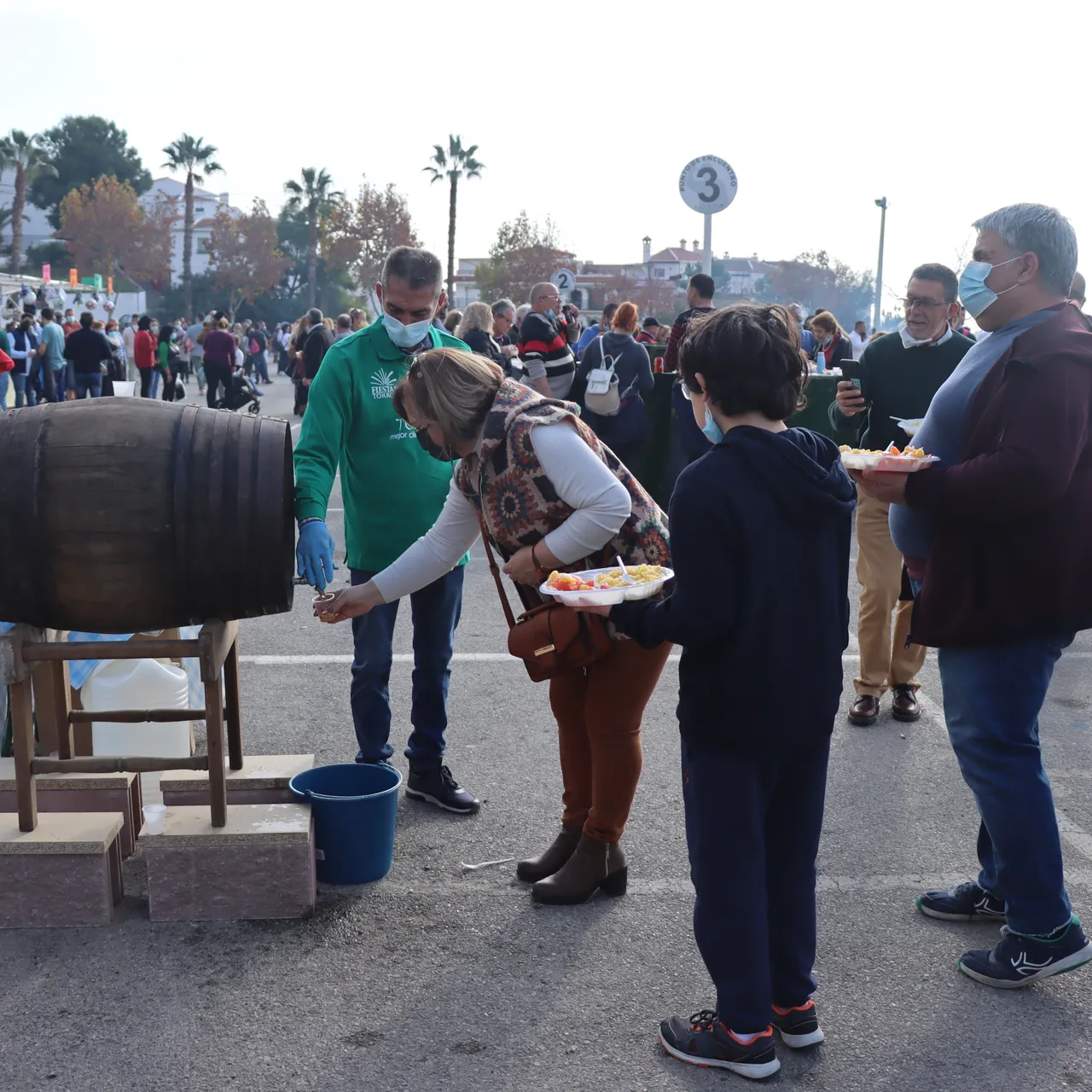

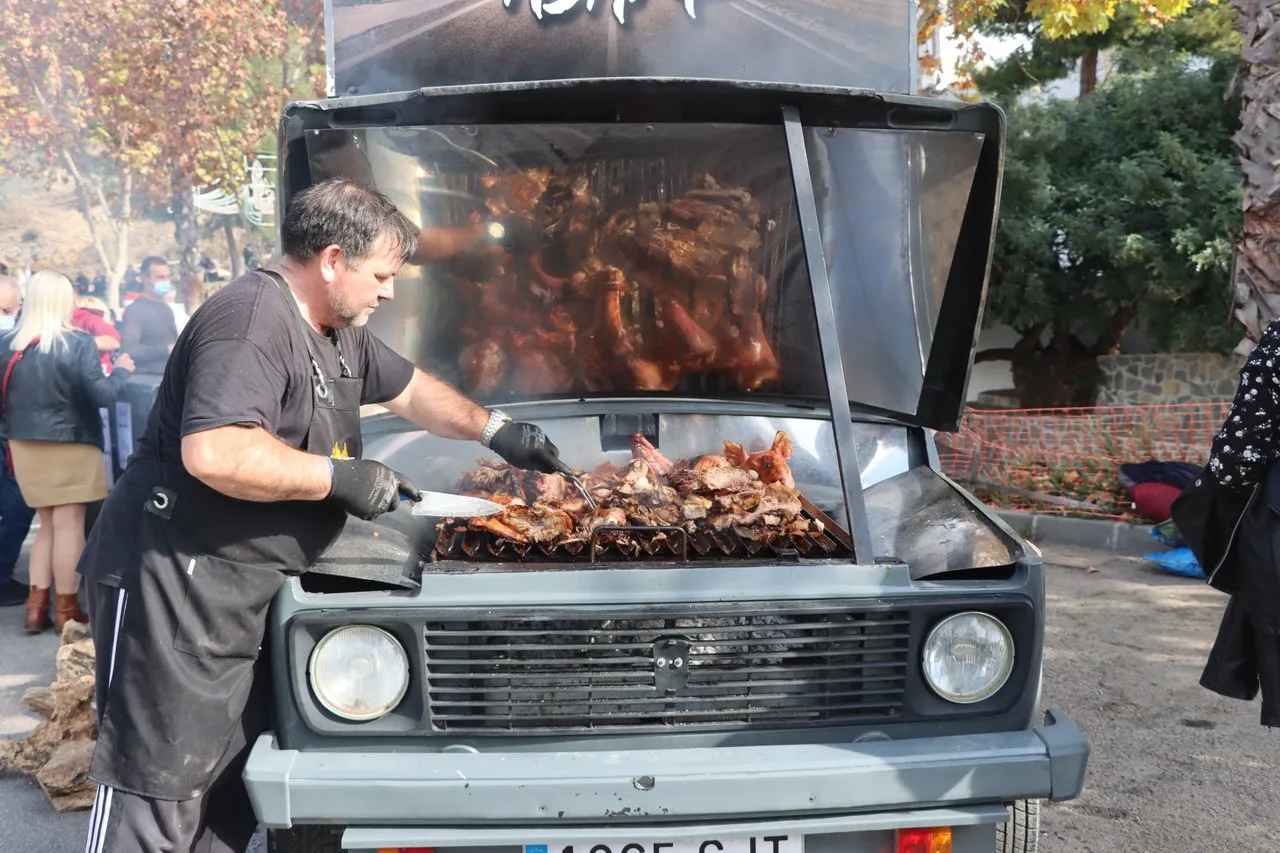
Aside from the free Migas + tomato salad + wine... some street food vendors were allowed to sell their own products. I have seen other food vendors as well as asador who sold their BBQ as well as other food along the street to the town Plaza.


This was a band that went around the narrow streets of the pueblo and played music with the women having castanets for added sounds.


The fiesta had been a success , the Plaza was so full , even to the last area to the right of the stage. All cafes have had their own music. It had been a delightful day and glad it did not rain.
Merry Christmas everyone ....Felices Fiestas a todos!
[//]:# (!pinmapple 36.752966 lat -3.952151 long Torrox Andalucia, Spain d3scr)


All images were photographed by me, 