
Heeeyho Readers! A post to reflect.
Long sigh. I close my eyes and try to remember that day... the computer is on, but I'm unable to unroll the words.
I hold these series of pictures as an emotional recollection from my 2018 winter bicycle tour across Europe. They are raw, unedited, unplanned. And they'll remain like so. It also never crossed my mind the world would go into flames, and that such images would need to see daylight to reinforce that we shall not let evil prevail — the main reason for posting them. Don't take this as a political-oriented post, but rather as a chance to reflect.

My body was unprepared after spending the previous day shivering with a 39°C fever. A severe sore throat made eating difficult, whereas a minor surgery in my index finger required care ― terrible conditions to wander around.
But… as the other adventures I had faced, there was nothing else to do other than start cycling and adapt along the way. No plans, no schedules, no accommodations arranged. Only a bicycle, a tent, cooking gear, and a map with Oświęcim pinned.
The EuroVelo 4 guided me westward alongside the Vistula river for the most part. The azure sky inspired me to continue. Progress was slow, painful, and soon I ran out of water. I finally reached Oświęcim the next day, after camping amid the bushes.
Oświęcim is a town in the Lesser Poland province of southern Poland, situated 50 kilometers west of Krakow, near the confluence of the Vistula and Soła rivers. The town is known internationally for being the site of the Auschwitz concentration camp during World War II. ― Wikipedia
I found shelter at this lovely hostel where I was the only guest. The owner, whose grandparents had lived in a Jewish ghetto back in the days, briefly explained their history and inspired me to visit the concentration camps. "A place to reflect," she said. "We preserve Auschwitz as testament of the past and to avoid committing the same mistakes in the future." I'd already planned to go the other day. So, I did.
Ghettos were often enclosed districts that isolated Jews by separating Jewish communities from the non-Jewish population and from other Jewish communities. ― Holocaust Encyclopedia
With camera in hands, I hoped once again on the bicycle and found my way through the city towards Auschwitz I.

I knew visiting Auschwitz would be reflective; a one-of-a-kind opportunity to see for my own eyes the results of vile acts of mankind. I didn't know, however, how powerful the energy would be.

A former World War I camp for transient workers and later a Polish army barracks, Auschwitz I was the main camp (Stammlager) and administrative headquarters of the camp complex. Around 1,000 m long and 400 m wide, Auschwitz consisted of 22 brick buildings, eight of them two-story. ― Wikipedia

I joined a guided group to better understand what happened there. The guide, a middle-aged woman of soft voice, walked us through the complex, explaining each building. At this point I was only taking external photos since what I saw inside was to powerful or mostly forbidden to photograph. Bear with me here, but I'll let the photographs speak for themselves.

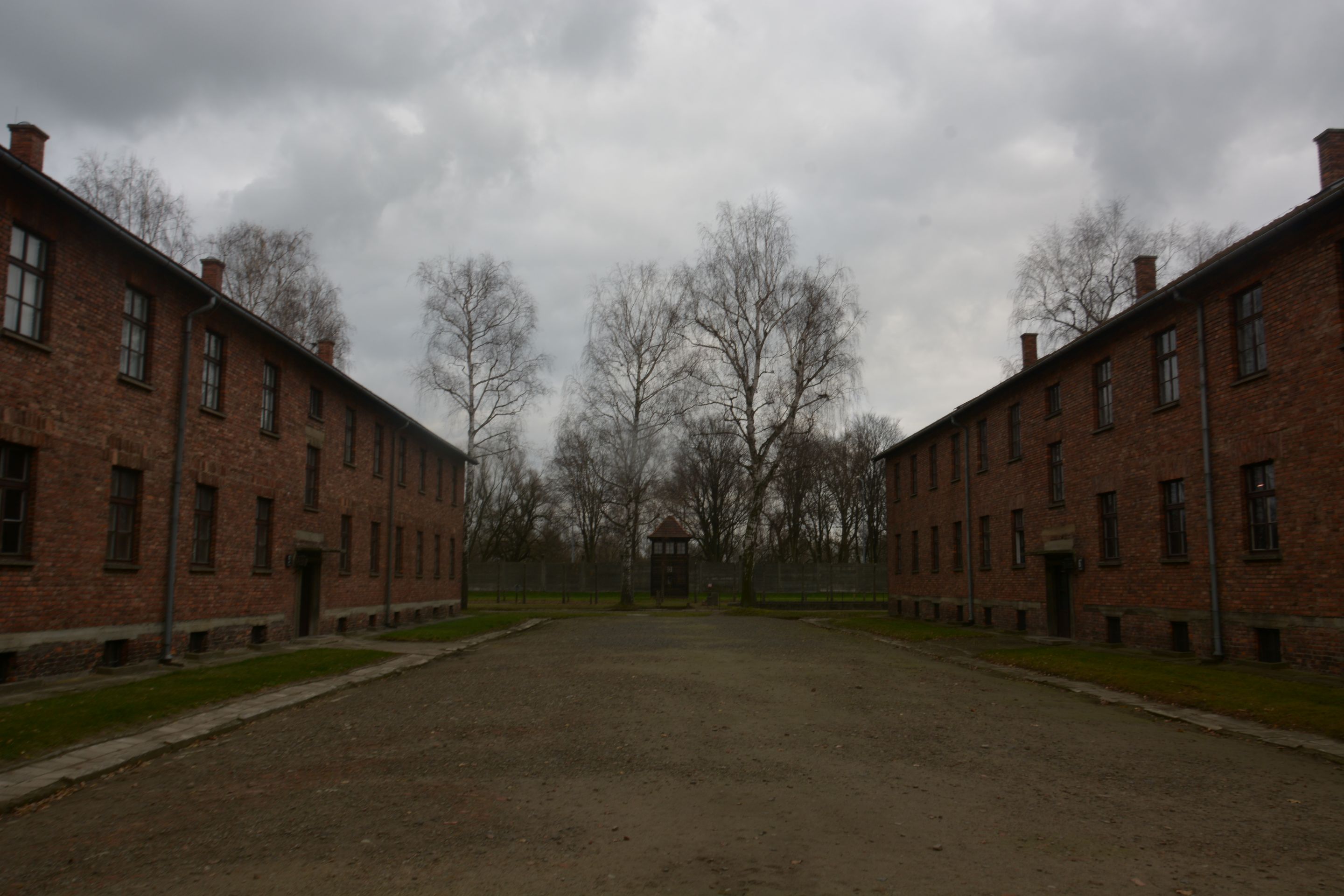
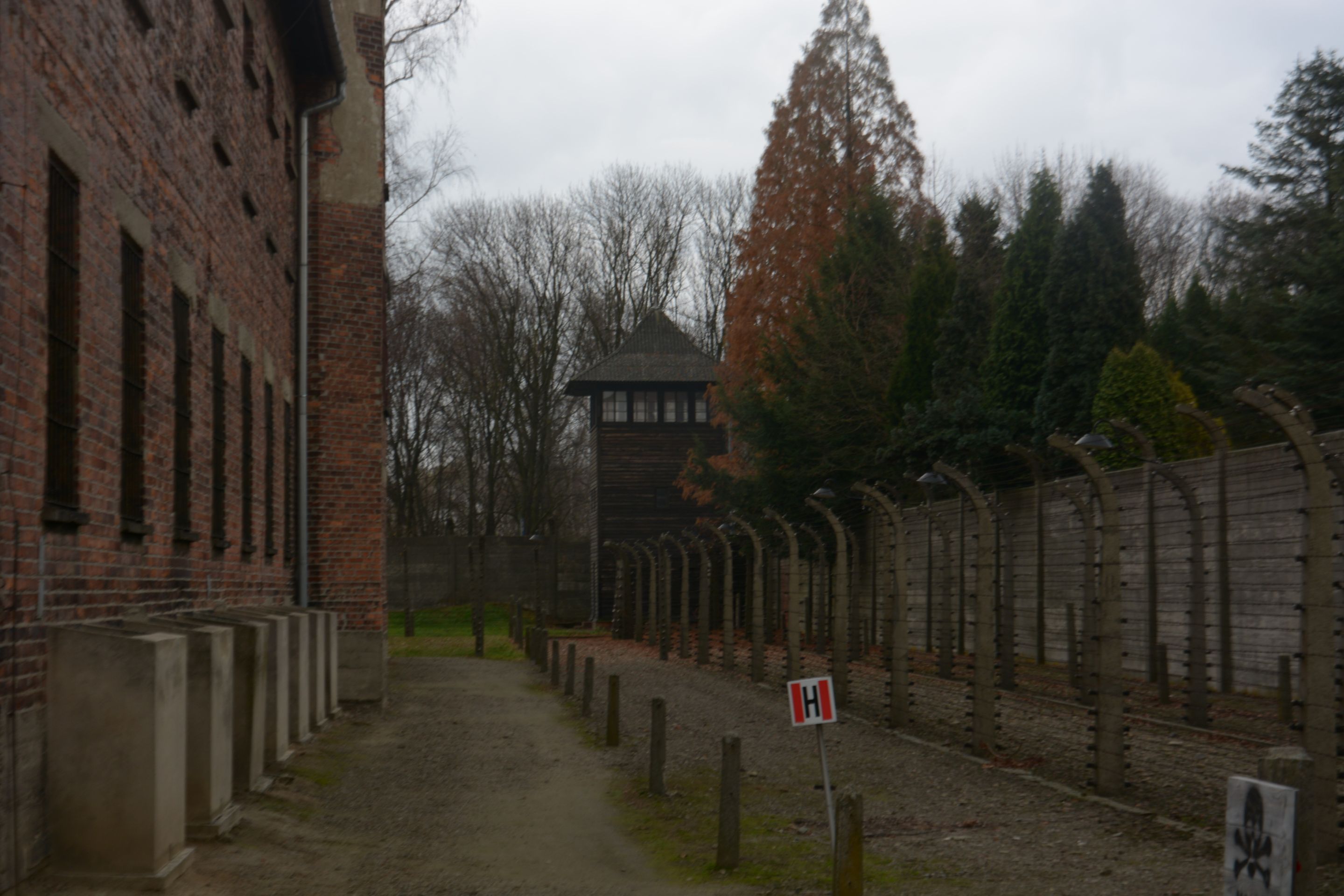

The first mass transport — of 728 Polish male political prisoners, including Catholic priests and Jews—arrived on 14 June 1940 from Tarnów, Poland. They were given serial numbers 31 to 758. ― Wikipedia


After visiting Auschwitz I the group hopped on a bus towards Auschwitz II-Birkenau. I was still trying to digest what I'd just seen while staring outside the window. When we got to our destination I immediately recognized the image I'd seen on history books and movies. I shivered.

From this point onward I was unable to photograph. My throat dried and I contained myself as we entered the barracks. Our guide advised the group: "The buildings we are going to visit are not advisable for sensitive people." I won't go into details, but I hope you understand why I don't have pictures.
Back to the hostel, my host asked what were my takes from the visit. To this day, whenever I go through my photos to compose posts for this blog, I skip the Auschwitz folder. People ask me how that place feels like. Words don't come. It's a mix of anger with empathy. It's a repulse to the totalitarianism the central control of the economic power tends to produce. It's an anxiety to study as much as I can to be as self-critical as I can. That's the only way we can stop evil.
I hope this post doesn't disturb you. Let's reflect.
Peace.
Did you know that I have a book out? Check this!
Access Link: https://www.amazon.com/dp/6500272773?

If you enjoyed this post consider leaving your upvote for a hot coffee.
Find me on Twitter: https://twitter.com/mrprofessor_
~Love ya all,

Disclaimer: The author of this post is a convict broke backpacker, who has travelled more than 10.000 km hitchhiking and more than 5.000 km cycling. Following him may cause severe problems of wanderlust and inquietud. You've been warned.
