
Hi Hi! I stop by here again to leave you a post about a beautiful park called "Quinta da Fidalga", we are talking about a recreational and agricultural structure that has been preserved for more than 500 years and has 80% of its original and intact structure! walking here makes me think how the common Portuguese citizen spent his free time in nature!🙂🙂
Hola hola! nuevamente me paso por aqui para dejarte un post sobre un hermoso parque llamado "Quinta da Fidalga", estamos hablando de una estructura recreativa y agricola que se preservan con mas de 500 años y posee el 80% de su estructura intacta y original! pasear aqui me hace pensar como el ciudadano Portugues comun pasaba su tiempo libre dentro de la naturaleza! 😏😏


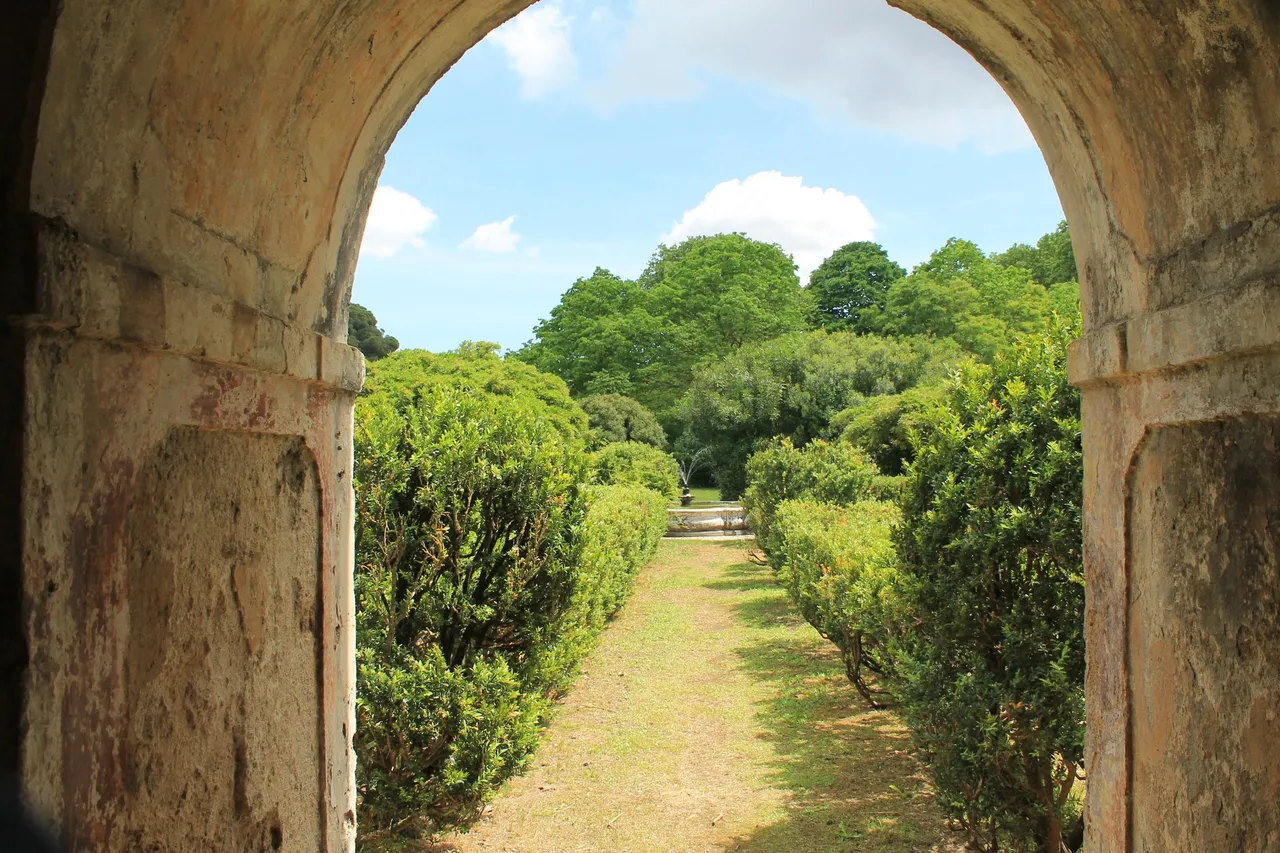
The Quinta da Fidalga has approximately 1 hectare shares several natural spaces whose main theme is "water" referring to the sustainability of the life cycle!😚😚
La Quinta da Fidalga tiene aproximadamente 1 hectaria comparte varios espacios naturales cuyo tema principal es el "agua" haciendo referencia a la sustentabilidad del ciclo de vida!🌊💧


In the 17th and 18th centuries, the connection to the Gama Lobo family is documented, of which several members stood out in the royal service, especially as secretaries of the Finance Council.🚩🚩
En los siglos XVII y XVIII está documentada la vinculación con la familia Gama Lobo, de la que varios miembros destacaron en el servicio real, especialmente como secretarios del Consejo de Hacienda.🤴👸


Still in the 18th century, it already stood out for its excellent citrus groves, streets covered with wild trees and grapevine vines. Two wells equipped with daisies provided water for irrigation and to feed three springs. It is also distinguished by the tidal lake, which is a rare or almost unique monument in Portuguese hydraulic architecture.🙂🙂
Aún en el siglo XVIII, ya destacaba por sus excelentes plantaciones de cítricos, calles cubiertas de árboles silvestres y viñedos. Dos pozos equipados con margaritas proporcionaban agua para el riego y para alimentar tres manantiales. También se distingue por el lago de mareas, que es un monumento raro o casi único en la arquitectura hidráulica portuguesa.😮🤔




It also has a chapel that was integrated in the mansion in the middle of the 20th century to replace an older one. The interior walls are covered with tiles from the 18th century and reproductions also from this period.🤗🤗
También cuenta con una capilla que se integró en la mansión a mediados del siglo XX en sustitución de una antigua. Los muros interiores están revestidos con azulejos del siglo XVIII y reproducciones también de esta época.🤔😮


The mansion, large and robust, resembles a large country house. White, with reddish tiles, welcomed Paulo da Gama for a few long months and then his brother Vasco da Gama. The rich palace houses a chapel, integrated there in the 20th century, replacing an older one. The chapel is covered with Portuguese tiles from the 18th century. Above the door, a frieze remains, whose detailed and precise sculpture is one of the «ex-libris» of the Seixalese farm. It presents the arms of the Miranda Henriques family, and will have been brought from another property of the family, when the Gama Lobo Salema inherited the morgadios of the Counts of Sandomil, which included the manor of this family in Setubal among others.🚙🌍
La mansión, grande y robusta, se asemeja a una gran casa de campo. Blanco, con tejas rojizas, acogió a Paulo da Gama durante unos largos meses y luego a su hermano Vasco da Gama. El rico palacio alberga una capilla, integrada allí en el siglo XX, en sustitución de una antigua. La capilla está cubierta con azulejos portugueses del siglo XVIII. Sobre la puerta, queda un friso, cuya escultura detallada y precisa es uno de los «ex-libris» de la finca Seixalese. Presenta las armas de la familia Miranda Henriques, y habrá sido traída de otra propiedad familiar, cuando la Gama Lobo Salema heredó los morgadios de los condes de Sandomil, que incluían el señorío de esta familia en Setúbal entre otros.⛲⛲


«Ex-libris» is also the fountain that remains in front of this chapel, which, with the strange shape of a fish, was brought from India by Vasco da Gama. But Asian statues are not lacking, as they are scattered throughout the large farm. Almost all the fountains that embellish the gardens are enriched with some of these sculptures, some quite original, as is the case of the fountain that is located on the left side of the caretakers' house, where it is forbidden to stay. In 1952, the mansion and the streets of the farm underwent architectural interventions led by Raul Lino, who distributed some tiles, from different periods to various points of the property. And tiles are also not lacking as the gardens are full of tiles, mostly Hispanic-Arab.😍😍
«Ex-libris» es también la fuente que queda frente a esta capilla, que, con la extraña forma de un pez, fue traída de la India por Vasco da Gama. Pero las estatuas asiáticas no faltan, ya que están esparcidas por la gran finca. Casi todas las fuentes que embellecen los jardines están enriquecidas con alguna de estas esculturas, algunas bastante originales, como es el caso de la fuente que se encuentra en el lado izquierdo de la casa de los cuidadores, donde está prohibido alojarse. En 1952, la mansión y las calles de la finca sufrieron intervenciones arquitectónicas lideradas por Raúl Lino, quien distribuyó algunos azulejos, de diferentes épocas, a varios puntos de la propiedad. Y tampoco faltan los azulejos ya que los jardines están llenos de azulejos, en su mayoría hispano-árabes.😏😏


Through the gardens of the farm are scattered Portuguese architectural wonders of the mid-17th century, among them, a chapel covered with shells and pebbles, several seats with the same cladding, and fountains. These elements form magnificent designs and one of the fountains that is covered in this way alludes to the caravels that took the Portuguese eternal oste to Indian lands. However, the quinta is more often referred to as the summer resort of the ranges. Quinta da Fidalga has been owned by the City Council of Seixal since 2001.🤩🤩
Por los jardines de la finca se esparcen las maravillas arquitectónicas portuguesas de mediados del siglo XVII, entre ellas, una capilla cubierta de conchas y guijarros, varios asientos con el mismo revestimiento y fuentes. Estos elementos forman magníficos diseños y una de las fuentes que así se reviste alude a las carabelas que llevaron al eterno oste portugués a tierras indias. Sin embargo, la quinta se conoce más a menudo como el lugar de veraneo de las cordilleras. Quinta da Fidalga es propiedad del Ayuntamiento de Seixal desde 2001.😋😋


