
On Saturday morning I went on a tourist walking tour "Přerov bridges". The purpose was to go around the bridges in Přerov[CZ] (and one outside Přerov). The total length of the tourist march was 17 km.
The first bridge we visited together was the Legion Bridge. It was built as a temporary iron footbridge in 1910 and rebuilt in 1931 as a full-scale reinforced concrete bridge. In 2007, it was widened to double its width - simply a second bridge, equally wide, was built next to it. The name "Legion Bridge" was a thorn in the side of the local communists, so even though they didn't rename it, it was commonly referred to as "the bridge by the power plant". The power station, that's the building with the two chimneys. It operated from 1920 to 1965 and is currently being considered for reuse. It's a unique Art Nouveau building and it would be a shame to demolish it.
V sobotu ráno jsem šel na turistický pochod "Přerovské mosty". Smyslem bylo obejít mosty ve městě Přerov (a jeden mimopřerovský). Celková délka turistického pochodu byla 17 km.
První most, který spolu navštívíme, je most Legií. V roce 1910 byl postavený jako provizorní železná lávka a v roce 1931 přebudovaný na plnohodnotný železobetonový most. V roce 2007 byl rozšířený na dvojnásobek - prostě byl vedle něj postavený druhý most, stejně široký. Název "most Legií" byl trnem v oku místním komunistům, takže i když ho nepřejmenovali, běžně se o něm mluvilo jako o "mostu u elektrárny". Elektrárna, to je totiž ta stavba s dvěma komíny. Fungovala od roku 1920 do roku 1965 a v současné době se uvažuje o jejím dalším využití. Je to totiž unikátní secesní stavba a zbourat by jí bylo škoda.

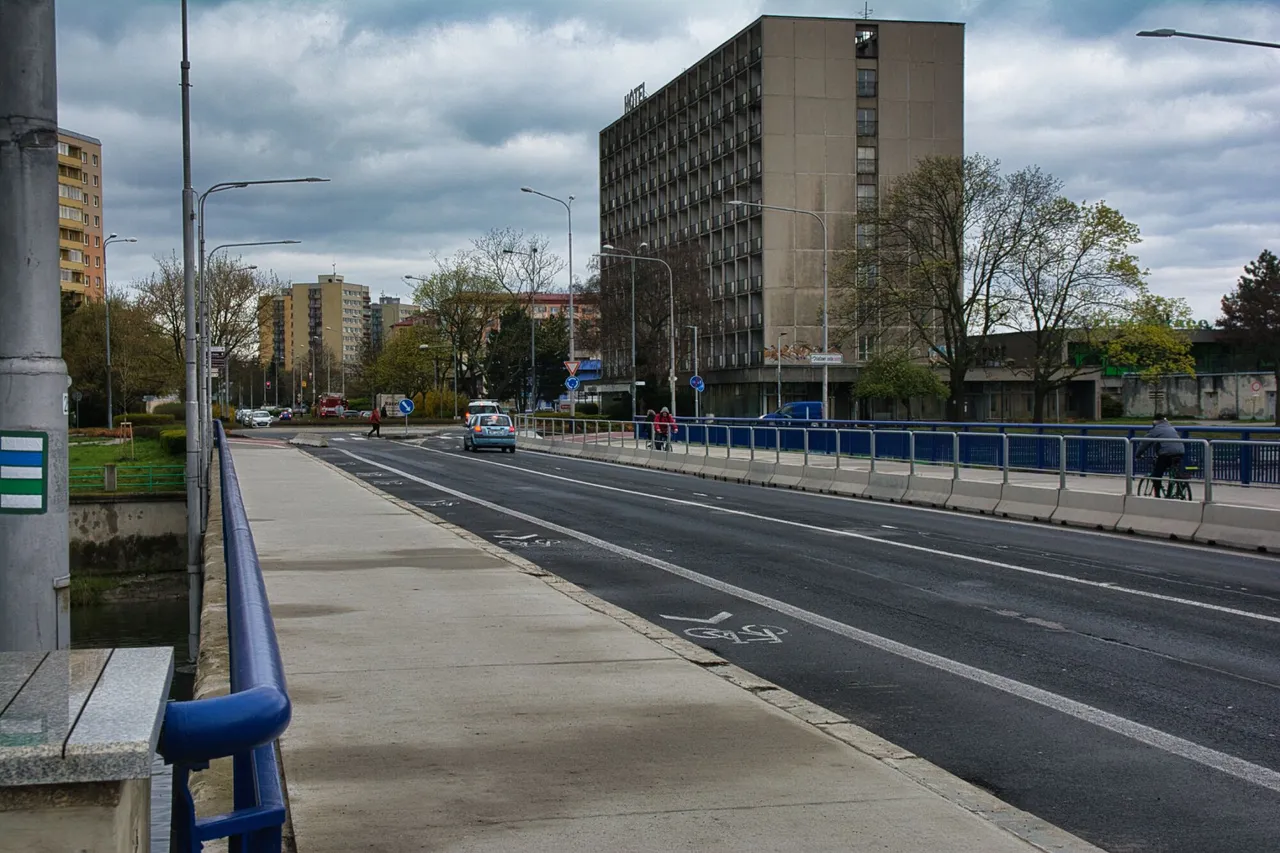
The next bridge on our walk is the Peace Bridge. It was built in 1953 both as a replacement for the war-destroyed Tyrš Bridge and as a reaction to the development of the town on the right bank of the Bečva River.
Dalším mostem na naší procházce je Most míru. Byl postavený v roce 1953 jednak jako náhrada za války zničeného Tyršova mostu, jednak jako reakce na rozvoj města na pravém břehu Bečvy.

The third bridge in the order is the Tyrš Bridge. The impressive neo-renaissance reinforced concrete bridge was built in 1903. In May 1945, however, the retreating German army shot it down. However, the post-war communist dominion proved its efficiency on this bridge. Just 20 years after the war, in 1965, a makeshift steel footbridge was erected on top of the original piers, which lasted another 47 years. It was not until 2012 that the bridge was finally restored. The bridge features sculptural decoration: trees, a bird and a bison - the symbol of the city.
Třetím mostem v pořadí je Tyršův most. Impozantní neorenezanční železobetonový most byl postavený v roce 1903. V květnu 1945 ho však ustupující německá armáda odstřelila. Poválečné komunistické panství však na tomto mostě prokázalo svou akceschopnost. Už pouhých 20 let po válce, v roce 1965, byla na původní pilíře postavená provizorní ocelová lávka, která vydržela být provizorní dalších 47 roků. Až v roce 2012 byl most konečně obnoven. Na mostě je sochařská výzdoba: stromy, pták a zubr - symbol města.


In addition to the three "big" bridges, there are also footbridges in Přerov. The one on the next photos is the footbridge near the boathouse. If you look at it, you may notice that the middle of the three pillars is sort of lower, and set on top. It is said that during World War II, an artillery shell exploded at the base of this pillar. On the face of it, nothing happened, the pillar survived, and the bridge functioned for the next 50 years as if nothing had happened. But in 1997, the millennium flood came and this war damage became apparent. The pillar collapsed almost a metre and the bridge broke with it. During the repairs, this collapsed pillar had to be rebuilt on top.
Kromě zmíněných tří "velkých" mostů jsou v Přerově i lávky pro pěší. Ta na dalších fotkách je lávka u loděnice. Když si ji prohlédnete, možná zjistíte, že prostřední ze tří pilířů je jakoby nižší, a nahoře nastavený. Totiž během 2. světové války prý u paty tohoto pilíře vybuchl dělostřelecký granát. Na první pohled se nic nestalo, pilíř to přežil, a most fungoval dalších 50 let jakoby nic. Ale v roce 1997 přišla tisíciletá voda a toto válečné poškození se projevilo. Pilíř se propadl téměř o metr a s ním se prolomil i most. Při opravě se tento propadený pilíř musel nahoře nadstavit.


The last bridge in this article is the bridge "At tennis", also called "Near the lagoon". It was originally built around 1980 as a wooden bridge, which was soon taken away by water. It was replaced by a suspension footbridge, which was thought to be more flood-resistant since it had no piers. However, the floods of 1997 and 2010 showed their strength and damaged the footbridge so badly that it had to be replaced with the current, hopefully now sufficiently solid, structure.
Poslední přerovským mostem v tomto článku je lávka "U tenisu", zvaná též "U laguny". Ta byla postavená původně kolem roku 1980 jako dřevěný mostek, který však záhy vzala voda. Byl nahrazený visutou lávkou, o které se předpokládalo, že když nemá pilíře, bude proti povodním odolnější. Ovšem povodně v roce 1997 a 2010 ukázaly svou sílu a poničily lávku tak, že musela být nahrazena současnou, doufejme že už dostatečně solidní konstrukcí.


The tourist march then continued through Grymov to the village of Prosenice, about 6 km away, and back. The total length of the route was 17 kilometres. The culmination was the climb to the roof of the hotel house Strojař (near the Peace Bridge, in the 2nd and 3rd photo). After seventeen kilometres we still climbed the stairs to the ninth floor. I have a feeling that the organizers have a bit sadistic tendencies. Nevertheless, the view of Přerov from the roof was worth it. We can see most of the bridges mentioned once again, from a bird's eye view.
Turistický pochod pak pokračoval přes Grymov do cca 6 km vzdálené obce Prosenice a zpět. Celková délka trasy byla 17 kilometrů. Vyvrcholením byl po návratu výstup na střechu hotelového domu Strojař (u mostu Míru, na 2. a 3. fotce). Po sedmnácti kilometrech ještě vyšlapat schody do devátého patra. Mám pocit, že organizátoři mají trošku sadistické sklony. Nicméně pohled ze střechy na Přerov za to stál. Většinu mostů, o kterých byla řeč, tak můžeme vidět ještě jednou, z ptačí perspektivy.


Thank you for taking the time to read this post, if you have any questions, criticisms or suggestions I would appreciate it if you would throw them in the comments box

Translated with www.DeepL.com/Translator (free version)