
You know when a tourist ad suggests you go and see some rocks and you're like, yeah nah, I'm not paying for that? Thing is, we had paid entry to Flinders Chase National Park, so we thought we may as well go and see Remarkable Rocks, being cynical about the name, because, well, how remarklable could they be?

Thing is, pretty remarkable.

I only ever half pay attention to tourist brochures and ads as I don't want plot spoilers or for people to tell me what it's like before I get there, so that way, I'm always pleasantly suprised. This was the case with these - cough cough - pretty remarkable rocks, which we could see at a distance as we came along the ocean road from the lighthouse.
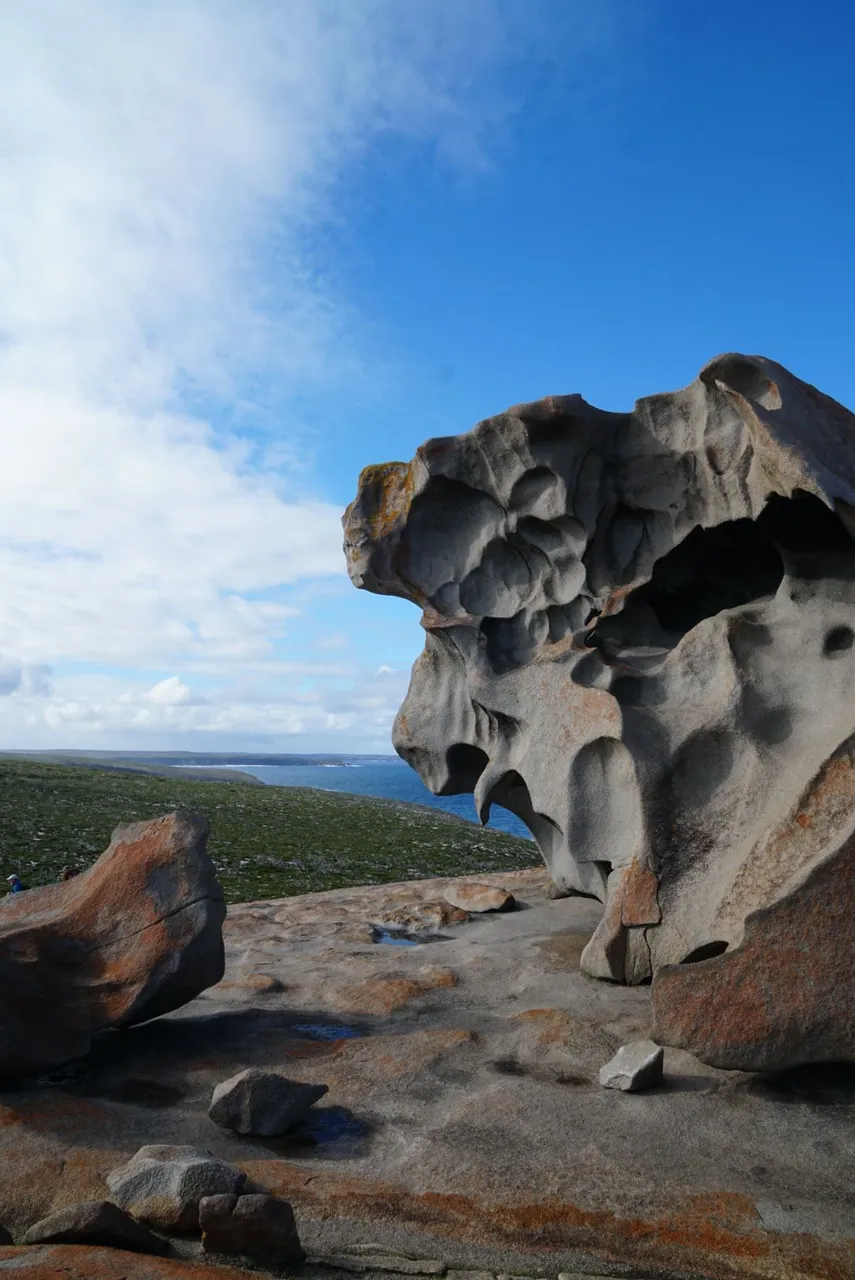
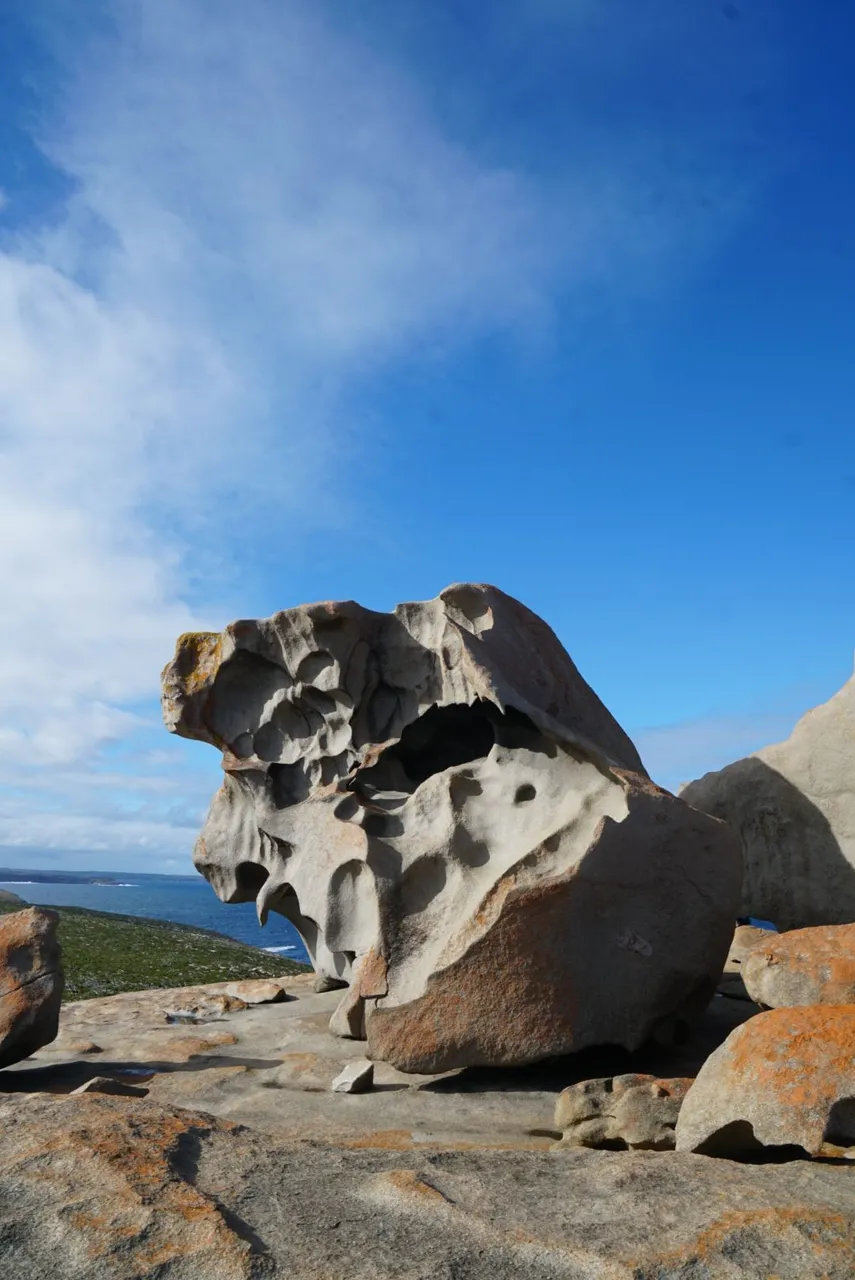


I loved them - they seemed like sculptures at some kind of modern art museum, and every time you turned around you'd get a different view. I was happy snapping but boy I wanted to come back at golden hour in the Autumn.


Although my photos don't show it, there was a few tourists around as by the time we got there it was midday. Luckily it was winter so not as busy as I imagine it gets in the warmer months.


Black mica, bluish quartz, and pinkish feldspar comprise most of the granite of Remarkable Rocks, and they are covered in sections by orange lichen, which appears to glow in the sun and lends a warmth to the inanimacy of the granite. I can only imagine the thousands of years of weathering that created such architecture.


No fewer than nine people have slipped to their death from these rocks. There are warning signs everywhere. There's a kind of black lichen that's deceptive and uber slippery, and if you try to climb down toward the sea for a different vantage point, it may well be your last. Survival of the fittest? Thing is, on one occasion two rescuers tried to save a guy who ultimately survived whilst they drowned. Try living with that for the rest of your life.


I'll leave you with this historical image of people visiting Remarkable Rocks, courtesy of the SA Historical Maritime Collection. Like me, I'm sure you're struck by a sense of time. Over a 100 years ago, people were visiting the same rocks as us, and might be doing so in a another hundred years, and another hundred, and another hundred. How much will the rocks change in those years, if at all?

With Love,

Are you on HIVE yet? Earn for writing! Referral link for FREE account here
