
As we travelled toward the top of Tassie to Devonpart to catch our ferry, we stopped at the Pine Lake. Whilst we've been here three times] now, this is the first time we'd seen it with blue skies. In fact, one New Year's Day here it was snowing as we did the walk!
The plants here really struggle to survive, and have adapted to suit their environment. Freezing temperatures caused these plants to huddle densely together to form a cushion. Some of these cushion bushes are over a hundred years old. Think about that for a second.

The closest relatives of a lot of the plants on this walk are those found in South America and New Zealand, because it used to be part of a huge supercontinent called Gondwanaland, which existed over a hundred million years ago. Tassie was actually the last place to be in contact with Antarctica. Plants like pencil pines only survive because it's so cool here and in fact when you look at the rock drifts or rivers that they're standing in, you can see that they'd form good protection against fire as well as collecting the heat of the sun for a bit of a microclimate. Anyway, a lot of the plants in this environment had their origins in Gondwanaland.
This is the native pepper berry bush - sorry about the blur but it was worth talking about. WE used to have two but they didn't survive in the hotter climate at my place. You can eat pepper berries in gourmet foods and it's pretty cool to find them in the wild.

We stopped for a lovely picnic as well, using up the last of our food before we got on the ferry. Plus a cheeky cider. Coming down the mountain later it'd be super stressful as teh brakes started screwing up and Jamie was having to do some pretty rad defensive driving to get us down the mountain, and even all the way back home. Needless to say he's redone the brakes since! But what a spot to stop. Last time we were here it was foggy and cloudy, so it was nice to stop on a hot day.

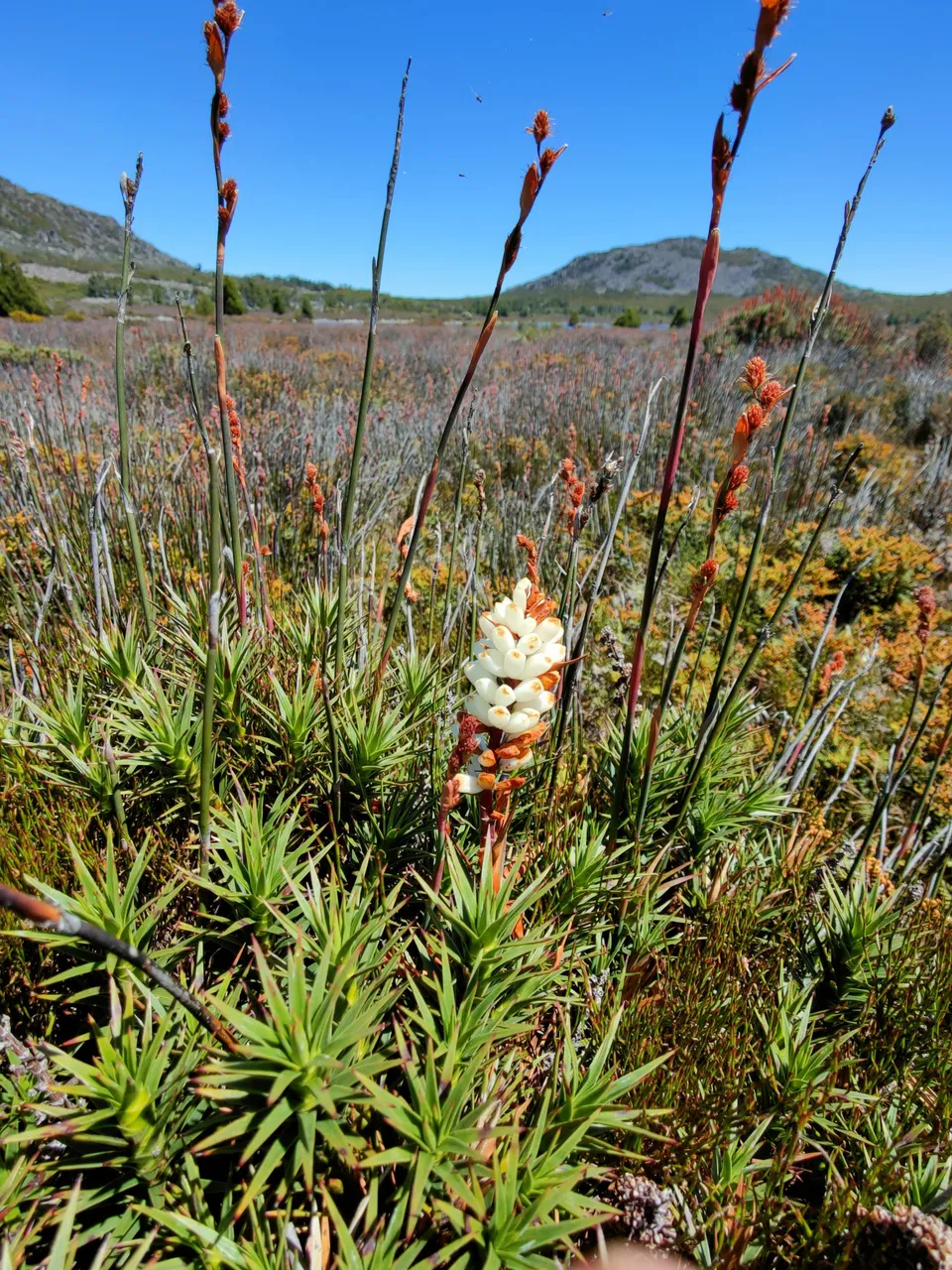


Summer is a lovely time to visit as the scoparia are out and the butterflies too. There's little yellow orbs of Billy Buttons, the white of flag iris, soldier beetles and more. A whole wild and abundant landscape. The pencil pines really do steal the show, though. Especially as this is the only place they are found and some are hundreds of years old. They were known as pencil pines because of the pointed branches, or perhaps the shape of the tree themselves. They're really super slow growing - apparently one tree they think is 1000 years old! They believe they survived the Ice Age because the leaves are small scales which tightly wrap around the branches, reducing heat and moisture loss that would kill other plants in similiar conditions.


Another cool thing I learnt is about the rock rivers, which help protect the pines from fire. The warm rocks would also protect them from the cold.


All and all it was a pretty special place to stop for lunch and have a walk through such an ancient, diverse and beautiful landscape. With climate change and more fires raging across Tasmania every year, it's an environment under threat. One day it may not be here.
With Love,

Are you on HIVE yet? Earn for writing! Referral link for FREE account here
