
Church of the Monastery in Sighisoara, Romania

As I've written in my other posts here in Sighisoara, the city of Sighisoara has managed to surprise me in a pleasant way so in today's post I want to introduce you to the second largest evangelical church in Sighisoara.
From the hotel to here we took an easy walk through the fortress, it's so nice to be able to walk freely through such places full of history.
The church is quite close, being right next to the Clock Tower (which you can see my post about here) and its first attestation was somewhere in 1298.


In one part of the church we found a statue of Vlad Țepeș, yes, you have heard of Dracula, he is also nicknamed Dracula.


Like the other tourist attractions the church is visited by many tourists who choose to come to the fortress.
At the entrance we were greeted by a lady who told us that to get inside we had to pay a fee.

The entrance fee was 10lei/2euro/person and after paying the fee I received a paper where I could read more information, but here in comparison with the Church on the Hill (I have a post here too) I had no guide.


Visiting hours are Wednesday to Sunday from 10am to 5pm, Monday and Tuesday closed.


Below I will leave you some very interesting historical data about the Monastery Church.
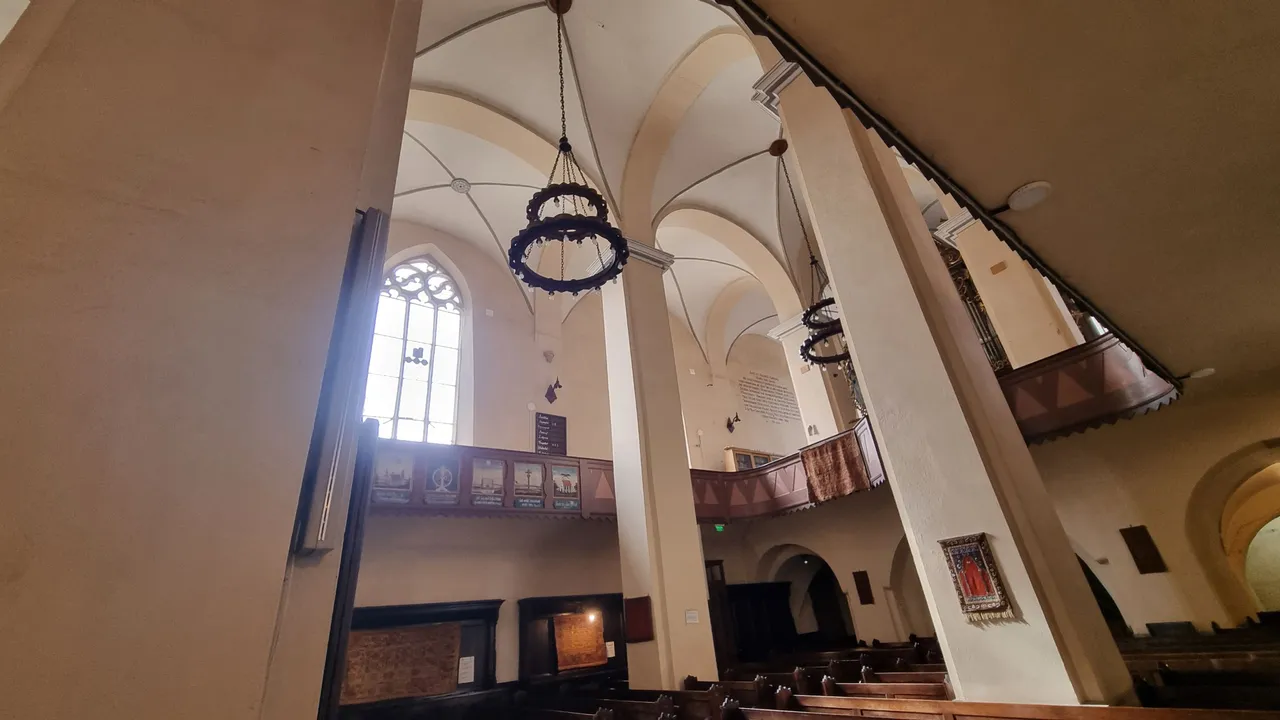
The Monastery Church is located near the Clock Tower and belonged to the Dominican Monastery built in the 13th century and demolished at the end of the 19th century. In its place was built the City Council. Only a corridor on the north side of the former monastery remains, and the present form of the church dates from 1677. The Gothic building has three naves of equal height. The dimensions of the church are 44.5 m long and 12.6 m wide.
Its interior houses a bronze font from 1440, made by the craftsman Jacob, and a doorframe, carved in 1570 by the stonemason Thomas. The altar and baroque organ were carved by Johann West and painted by Jeremias Stranovius. The organ is still used today for numerous concerts.
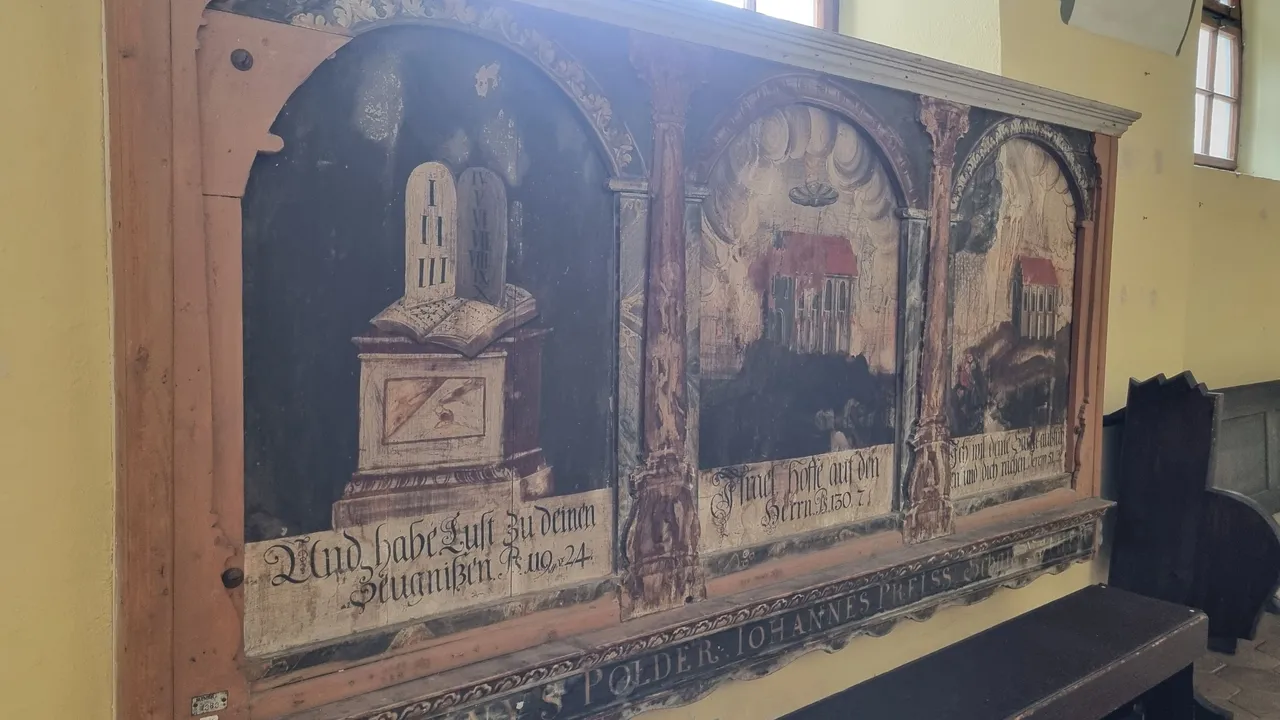
Interior paintings were banned after the adoption of the Reformation. So the building was adorned with pews and balconies richly decorated with carvings and oriental carpets. Thirty-five such carpets of great artistic value from the 16th and 17th centuries form the dowry and adornment of the evangelical church.
Now that we already know a lot of information about this Church, let's take a few steps inside it, let's enjoy and discover it together.


 |  |  |
|---|

Being a catholic church of the German Saxons most of the writings were in German and I unfortunately don't know German at all.


 |  |  |
|---|


The most important object in this church is made of bronze and was cast in 1440.


 |  |  |
|---|




In conclusion, this place deserves to be put on the map and visited, it is a place where you can find peace of mind, where you can sit and meditate, but at the same time you can learn an important history lesson from our predecessors.

THE END
If you liked what you saw and read here please don't forget to give a LiKe, Follow, reBlog or a Comment, for all this I thank you, and until the next post I say goodbye.
P.S. The attached pictures you have just seen are taken by me with my mobile phone, and the text is also designed by me.
