

Hola comunidad #worldmappin nuevamente regreso a esta comunidad.
Hoy continuo con la serie que nace de caminar sin prisa y mirar con intención.

Hoy la mirada se posa en un espacio moderno, grande, que desde su construcción prometía cambiar la forma de comprar en la ciudad: una tienda enorme en el área del viaducto.
La tienda recibe su nombre de Plaza Milanés-Ayllón, porque se encuentra en la intersección de las calles que llevan esos nombres.


Comparada con las demás tiendas de Matanzas, su tamaño impresiona. Todos pensaban que sería un beneficio para la ciudad, un punto de encuentro y abastecimiento. Sin embargo, la realidad es distinta: hoy vende en dólares y el cubano de a pie apenas puede comprar nada allí. Solo quien tuvo la suerte o la circunstancia de recibir divisas del exterior logra acceder.

Frente a la tienda se levanta un monumento a Bonifacio Byrne, con su asta de bandera. No es muy antiguo; fue colocado cuando se terminó el viaducto y remodelado para la inauguración de la tienda, más o menos en la misma época. Esa presencia llama la atención: un hombre que simbolizó ideales y lucha por la ciudad, mirando hoy hacia un espacio que habla de otra cosa.


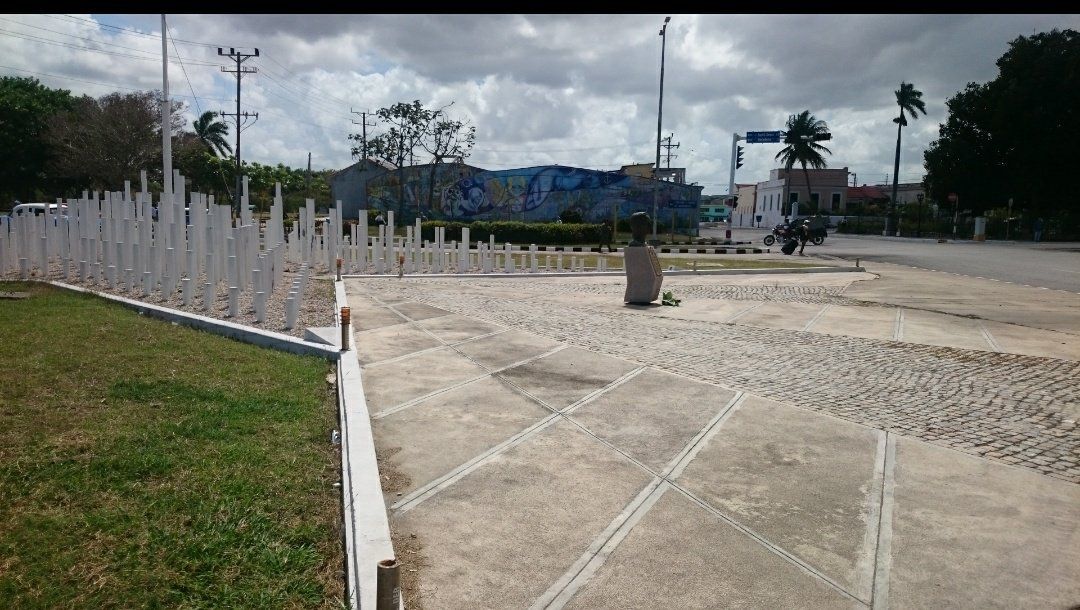
No es necesario hacer crítica dura para que la paradoja se perciba. La realidad habla por sí misma: un símbolo de memoria y orgullo frente a un espacio que no es accesible para todos. La ciudad construye, crece, innova… y al mismo tiempo deja claros límites, visibles a quienes miran con atención.
Caminar por aquí obliga a pensar en contraste y en tiempos superpuestos: lo que fue, lo que se construyó, lo que se disfruta y lo que queda fuera. No hay respuestas fáciles, solo observación.
La arquitectura moderna y el monumento histórico conviven en silencio. Uno proyecta esperanza, otro recuerda ideales. La ciudad se ve y se siente en ese diálogo.
Esta fue otra mirada.
Nos vemos el próximo fin de semana en otra mirada de Matanzas.
Las imágenes son de mi propiedad hechas con el móvil y la portada de la serie utilicé Canvas para editar la foto y acompañará toda la serie. Para la versión en inglés utilicé el traductor de Google.
English Version
Matanzas in 100 Views #11
What is Built and What is Left Out
Hello #worldmappin community, once again I return to this community.
This series is born from walking without haste and looking with intention.
Today the view rests on a modern, large space that, since its construction, promised to change the way people shopped in the city: a huge store in the viaduct area.
The store takes its name from Plaza Milanés-Ayllón, because it is located at the intersection of the streets that bear those names.
Compared to other stores in Matanzas, its size impresses. Everyone thought it would be a benefit to the city, a meeting point, and a place for shopping. However, the reality is different: today it sells in dollars, and the average Cuban can hardly buy anything there. Only those lucky enough—or perhaps unlucky, depending on the case—to receive remittances from family abroad can access it.
In front of the store stands a monument to Bonifacio Byrne, with its flagpole. It is not very old; it was placed when the viaduct was completed and later remodeled for the store’s inauguration, roughly at the same time. Its presence draws attention: a man who symbolized ideals and the city’s struggles, now looking toward a space that tells a very different story.
A harsh critique is unnecessary for the paradox to be felt. Reality speaks for itself: a symbol of memory and pride faces a space that is not accessible to all. The city builds, grows, innovates… and at the same time sets clear boundaries, visible to those who look closely.
Walking here invites reflection on contrast and overlapping times: what once was, what was built, what is enjoyed, and what is left out. There are no easy answers, only observation.
Modern architecture and the historic monument coexist in silence. One projects hope, the other reminds of ideals. The city is seen and felt in this dialogue.
This was another view.
See you next weekend in another view of Matanzas.
The images are my own, taken with my mobile phone, and the series cover was edited by me using Canvas and will accompany the whole series. For the English version I used the Google translator.