
Before it gets completely hot in here, let me share a memory of winter in Aomori.
On February 1, a Wednesday, my friends and I took a paid holiday at work to roam around Aomori since it was also our last day on our Winter Trip. It was snowing in Aomori and the road was slippery but we still walked and walked in the snow til we reach the famous museum in Aomori.

 |  |
|---|
Nebuta Museum Wa Rasse is a building of peculiar shape and it stands out in this snow white place. This museum features all about the Aomori Nebuta Festival, its history, its floats, and its personality. If you want to know more about the culture of Aomori, this place is perfect!

ねぶたがつなぐ、街、人、心 (Nebuta ga tsunagu, machi, hito, kokoro) means The town, people and hearts that the Nebuta Festival brings together
The museum's name: ねぶたの家 ワ・ラッセ (read as Nebuta No Ie Wa Rasse). This name was voted. Although 家 (ie) in Japanese means house, in this case, the museum is considered Nebuta's house where the Nebuta could coexist with the people of Aomori, for a year. Rasse came from the festival's chant which is rassera (the shorten dialect version of irasshai which means welcome), and Wa was added as prefix which means laughter (warai).
source: museum pamphlet

When we entered the museum, we were welcomed by this big and colorful apple, the symbol of Aomori. Aomori is known for its apples, which I believe I mentioned when we went to Aomori's A-Factory. This lantern is called Crazy Apple and I think this was once part of the festival.

We're not yet inside the exhibit but we already saw this. Made us so excited to witness what's inside.

The ticket office is on the 1st floor. We already got tickets so we just let them confirm that we have it and off we went to the 2nd floor, where the event hall is.


Before going inside the event hall, let's dress up as one of the participants of the festival. Do we fit in? 😂

Their costume is really amazing. Just look at that. The fabric is a thin fabric, I think, perfect for summer. Well of course, August is the peak of summer in Japan, it's very hot and the participants will have to endure the heat in the parade.

The room got dark but we're not yet inside the main event hall. Now we understood why it's needed to be dark. The lantern's colorful lights are so evident.
Covered in glass, these miniatures tell us about the structure of the festival and the parade.

Aomori Nebuta Festival happens every August and this year, it's on August 2 to August 7. It's a pretty popular summer festival in the north of Japan. One cannot miss the parade of huge lanterns followed by the loud drums, the dancers, the marching band, and many others.


There are roughly 70 people in one group. Probably more. I heard that one can join the Haneto dancers, the term for the dancers of this procession, when you dress up like them. I guess the steps are easy to learn.
Nebuta Tunnel
The Nebuta Tunnel is what you will see when you finally enter the main exhibit. We learned a lot about the history of Nebuta here. The only problem we had was it's all in Japanese. Our brain was struggling to read and understand them. It's still understandable, there were photos. 😆


Nebuta Festival is celebrated in different areas of the Aomori prefecture. You could just stay in Aomori for the whole month of July to August and travel where the festival is. Hope the dates won't overlap or else you have to choose where to go.


The winners of the yearly Nebuta Festival are also found here. It's so amazing to find that they have photos from the 60s.


Making the Nebuta is such a big work. These artists are awesome people! Did you know that until now, only 6 artists have the title of 名人 (read as meijin which means master)? These 2 meijins earned their title from contributing to the Nebuta Festival.

The 5th meijin is Sakuryu Chiba (千葉 作龍) and was 65 years old when he became the meijin.

The 6th meijin is Takashi Kitamura (北村 隆) and was 64 years old when he became the meijin.
Out of the 6 meijins, only these 2 remain alive. If you wanna more about the meijins, you can check this page (only in Japanese).
As we were descending, we can't help but be amazed at the lantern illuminating the way. The design is so Nebuta.

Still more faces shown on the way..


Nebuta Hall And Hands On Nebuta
We were still on the 2nd floor when we saw this large float. This was part of the procession of the latest festival. Every year, there are about 20 of these paraded in the city for people to see. Aren't they amazing?!


You probably thought the above was 2 floats. Actually, it's not. The designs on the front and the back are different. What a magnificent work of art, right?!

Footage of the Nebuta Festival is shown in this spacious hall. When we were there, we couldn't wait for its screen time though. It's better to be present at the festival than watch the footage, right? 😆

These were the taiko drums from the parade. They're big and make a loud sound.


There are so many theories on where the term Nebuta originally came from which you can read in Wikipedia. The most popular theory is:
It originates from the syncretism of the Tanabata Festival's Toro Nagashi and the custom of "Nemuri Nagashi". Nemuri Nagashi was seen nationally as a custom that was practiced to ward off the sleep demons - the enemies of formwork - which were said to cause drowsiness during the busy farming season of summer. Thus, it is thought that the word "Nebuta" is a corruption of the word "Nemuri" from Nemuri Nagashi.
source: museum pamphlet


The Nebuta's face, arms, legs, and feet were also shown as part of the exhibit. They're so huge as expected. I couldn't resist the opportunity to touch them.


 |  |
|---|


They're paper! And the artist will draw on each one!


Generation to generation float!


This bamboo float made in 2018. The 5th creat master Chiba Sakuryu made it, who have handled bamboos a long time ago. His father the late Chiba Sakutaro made original float in 1955 and Sakuryu remade it.
src: from the explanation in the above image
Some more floats..

 |  |
|---|

Faces Of Nebuta
There are so many faces of Nebuta displayed here, with the details of the artists who made them.

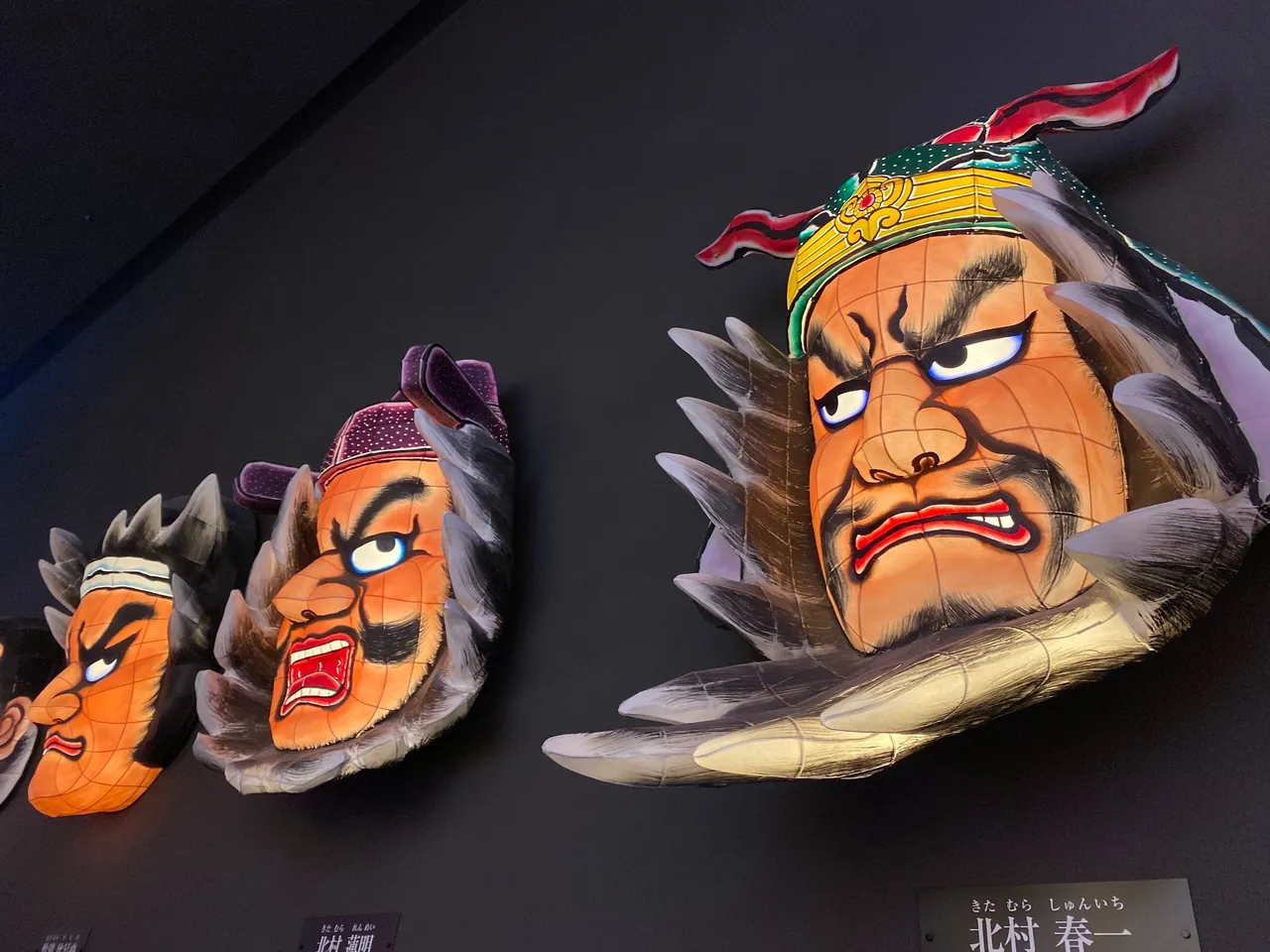
"Nebuta" refers to the float of a brave warrior-figure which is carried through the center of the city
src: Wikipedia - Aomori Nebuta Matsuri

If you look at it, Nebuta looks angry and fearsome all the time. 😅
 |  |
|---|

Nebuta Museum Access And Fees
Nebuta Museum is just a minute walk from Aomori Station but in a snowy day like this, it could take probably 5-10 minutes. Gotta be careful 😄

The museum's entrance fee is 620 yen (4.45 USD) for adults but we availed of the Bay Area pass where we got to visit 3 destinations, including the museum for 1,380 yen (9.91 USD). The 2 other destinations will be shared at another time. 😌
I truly got immersed in the culture of Aomori. I was hesitant to go at first because I wasn't sure what to see there but thankfully, I went along with my friends and now I've learned a lot about the Nebuta. Perhaps next is experiencing the Nebuta Festival this summer?
Thanks for reading!
See you around! じゃあ、またね!
With love,

All photos are taken using my phone unless stated otherwise.