
Hello, today I want to show you what the Bulgarian villages and neighborhoods looked like in the past. The place of our tour is the road between the town of Dryanovo and the town of Tryavna.

Of course we will not be able to see all the villages in Rashon and therefore we will divide our tour into two parts. In this part we will visit the villages on the south side of the Dryanovo-Veliko Tarnovo road.

We start the walk from the village of Shushnya. Our first impression is how ruined everything is. Most of the houses are almost completely ruined and there are many that cannot be reached due to the thick bushes.

On the lower side of the road, however, I saw this well-restored house, the view of which made me happy.**
At the end of the village we noticed more remains of houses.

This was from the village of Shushnya. According to the legends, the village bears the name of its founder, grandfather Shushnyo, who spoke shushnel (whispered).

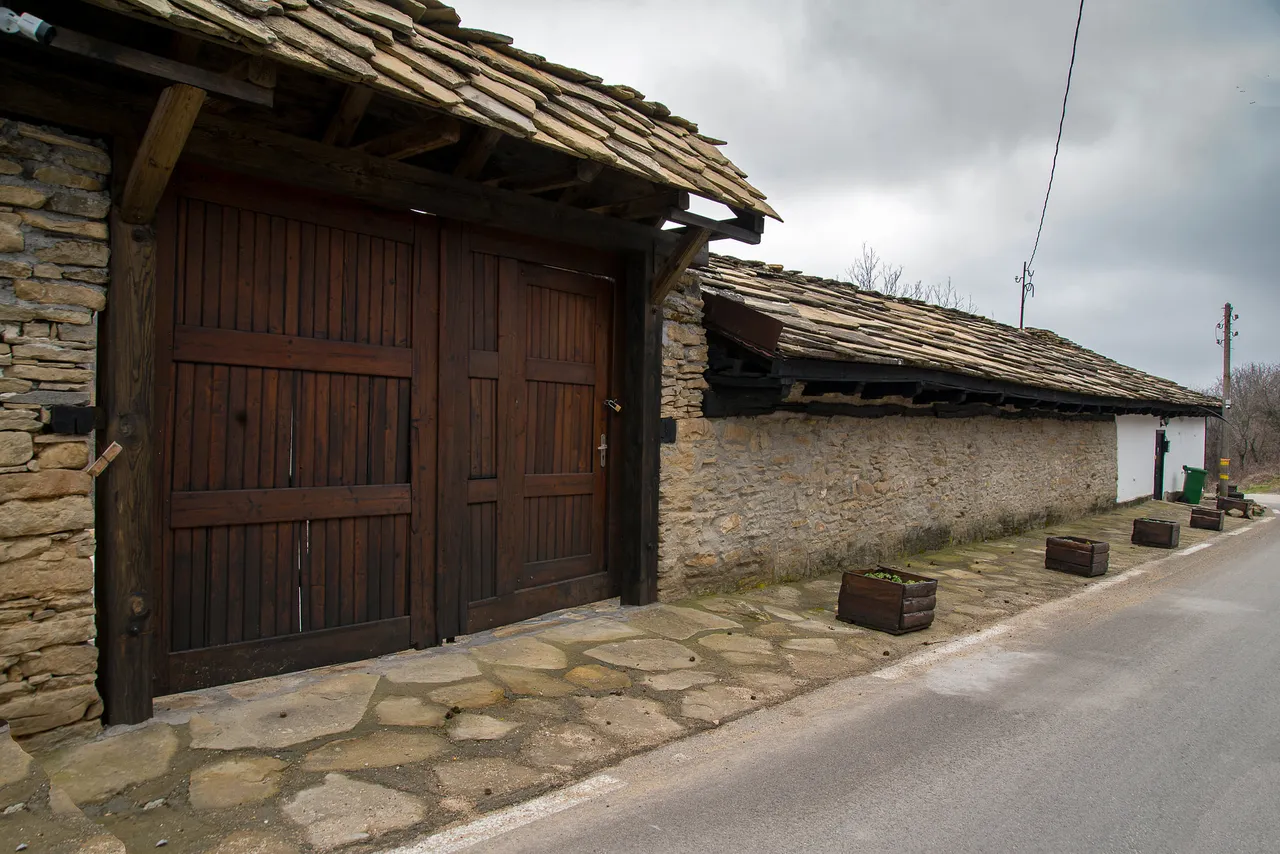
Upon entering the village of Kuklya we came across this beautiful and well-preserved house. The house is quite large and has a spacious yard. It turned out that it is even inhabited.


Old stone walls and huge trees surrounded the road. Although the village once had more than a hundred inhabitants, it is now completely deserted.


Everywhere around us there is a trace of the former life boiling here.


I can only guess how much work it took to make such a bike.

I managed to enter is one of the houses that was relatively well preserved. The stairs were made of massive stone blocks and the walls plastered with mud. However, the roof had fallen and everything inside was wet. In my opinion, there is not much life left on the house.


Our next stop is the village of Parsha. There is not much left of the former municipal center. Many of the properties in the village are maintained, although currently there are no permanent residents.


The place was originally inhabited by people fleeing an epidemic of plague in Dryanovo.


Continuing forward, a narrow winding road takes us to the village of Garnya.


The appearance of the village is typically mountainous.


And this extremely old house managed to grab our attention.


From here we head to the village of Mutsa.


The village is extremely small and cozy. The narrow cobbled streets convey a unique atmosphere.


Walking down in front of us, houses alternate in different states. We decide to enter one of them.


The next village on our route is the village of Zaya. Here at its entrance we are greeted by a beautiful fountain.

The village is scattered on several hills and it is evident from the houses that wealthy people lived here. Built mainly in the early twentieth century, most of the houses were in good condition.


Currently, several foreigners live in the village. They also manage the local shop.

The village of Zaya is beautiful and a large village has preserved the spirit of the times.


Our next stop is the village of Docha. The village also has its rich history and heritage, although currently only two inhabitants live there.


